
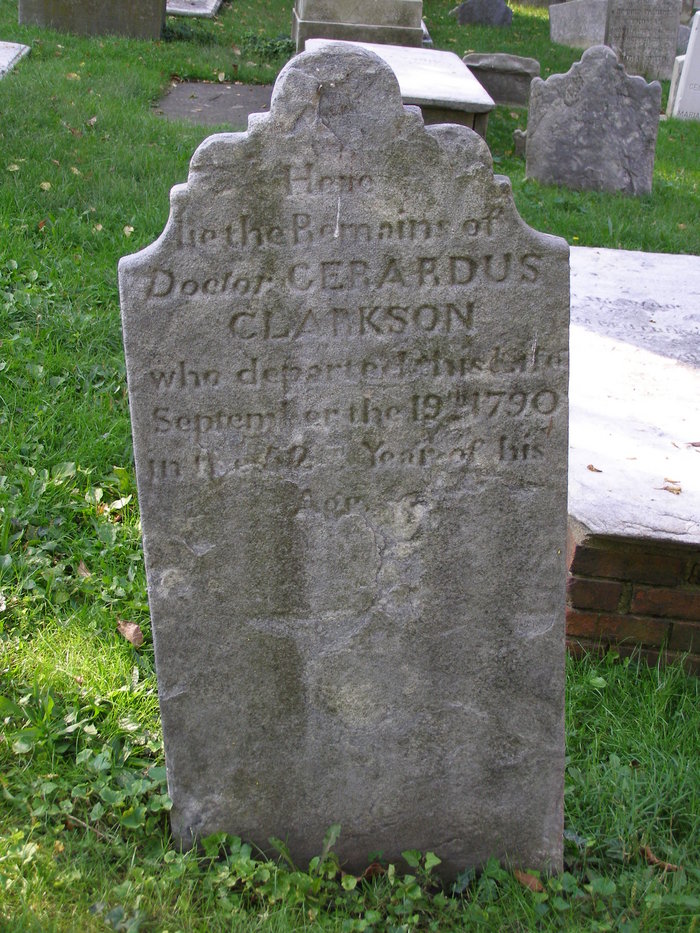
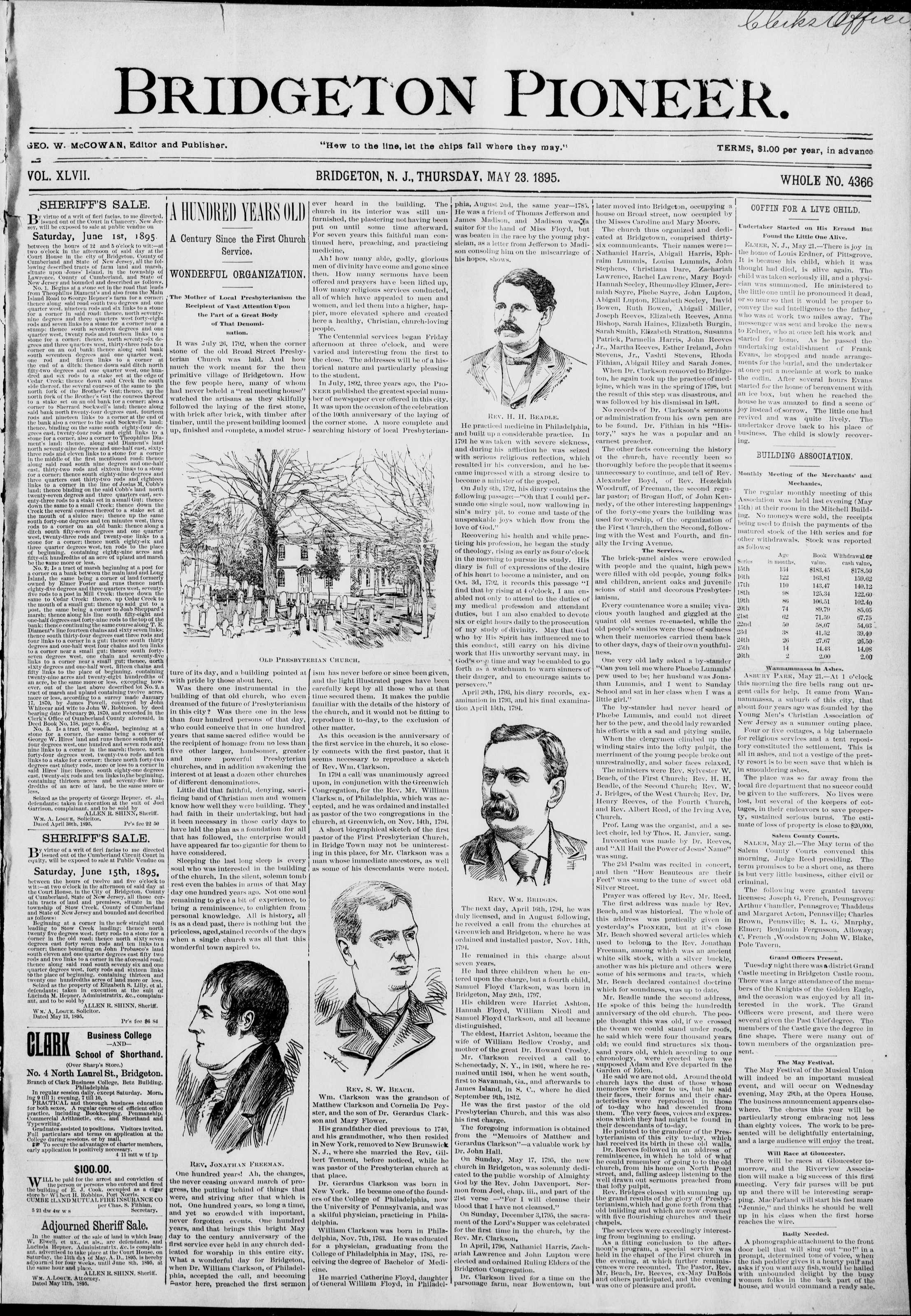
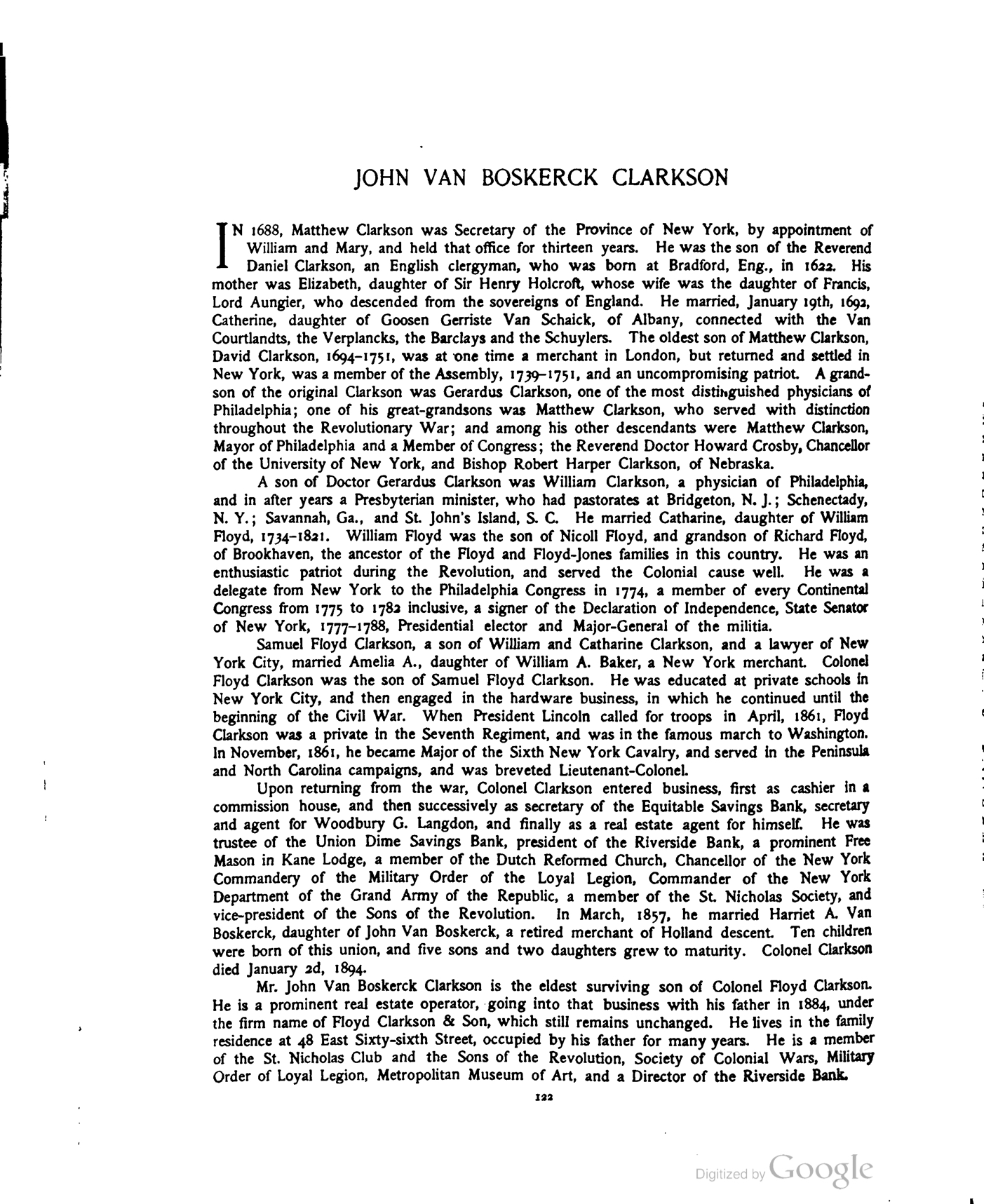
Memoirs of Matthew Clarkson of Philadelphia, 1735-1800 by his Great-Grandson John Hall, and of his brother Gerardus Clarkson by his Great- Grandson Samuel Clarkson. Published 1800
PG. 84
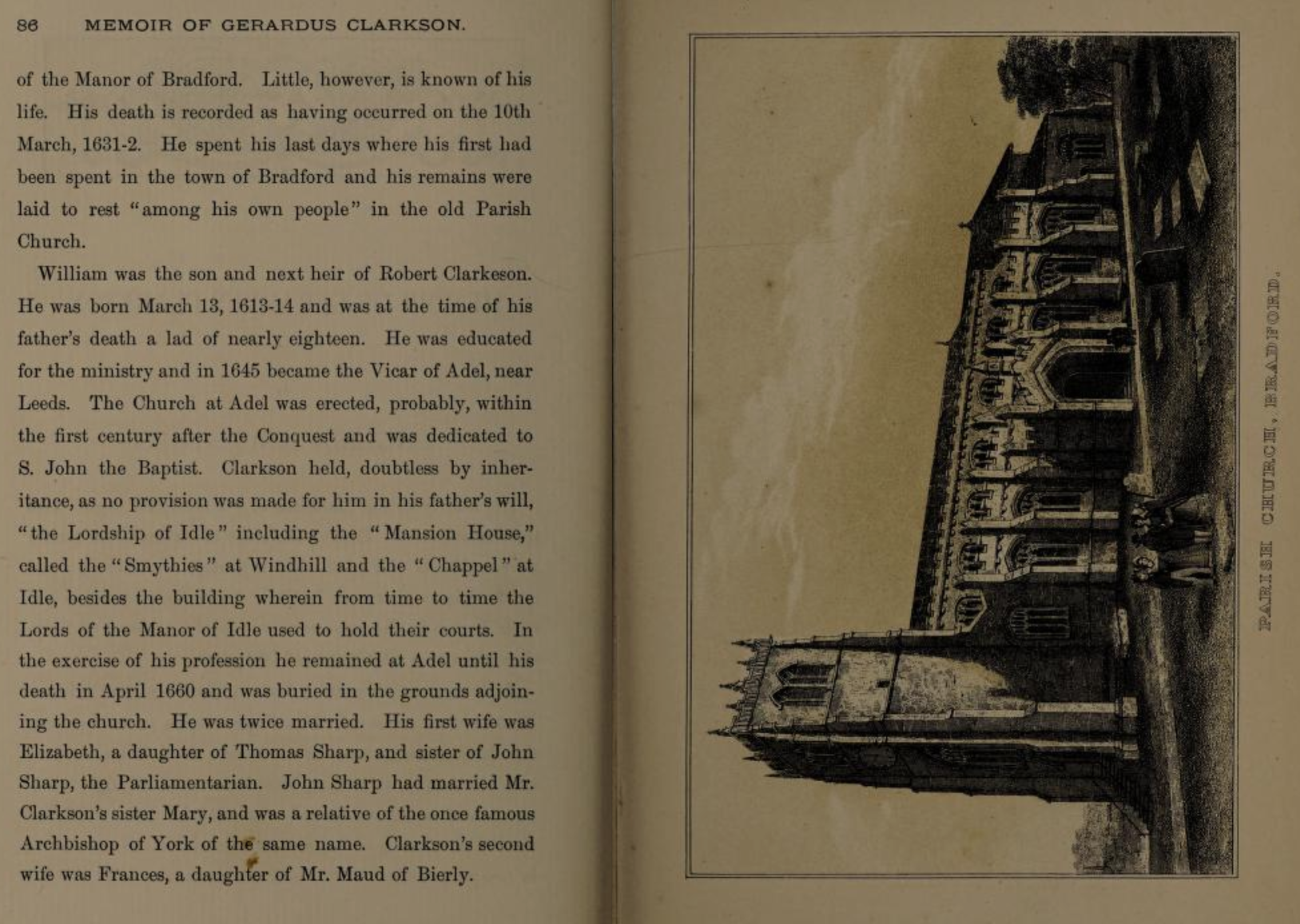
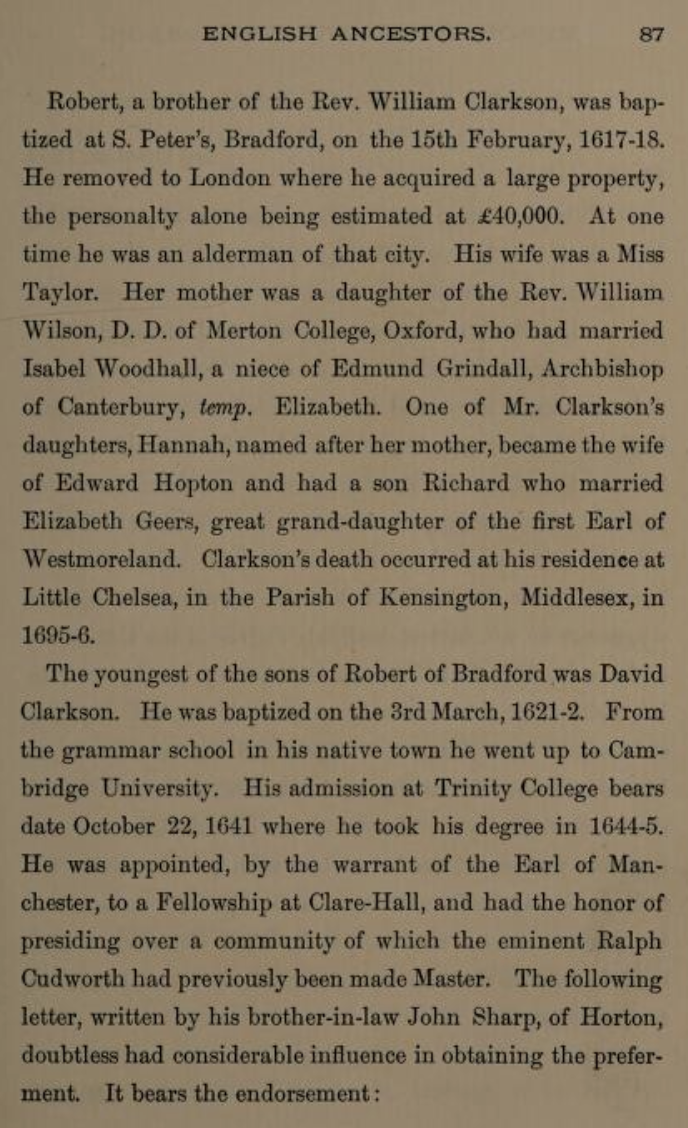
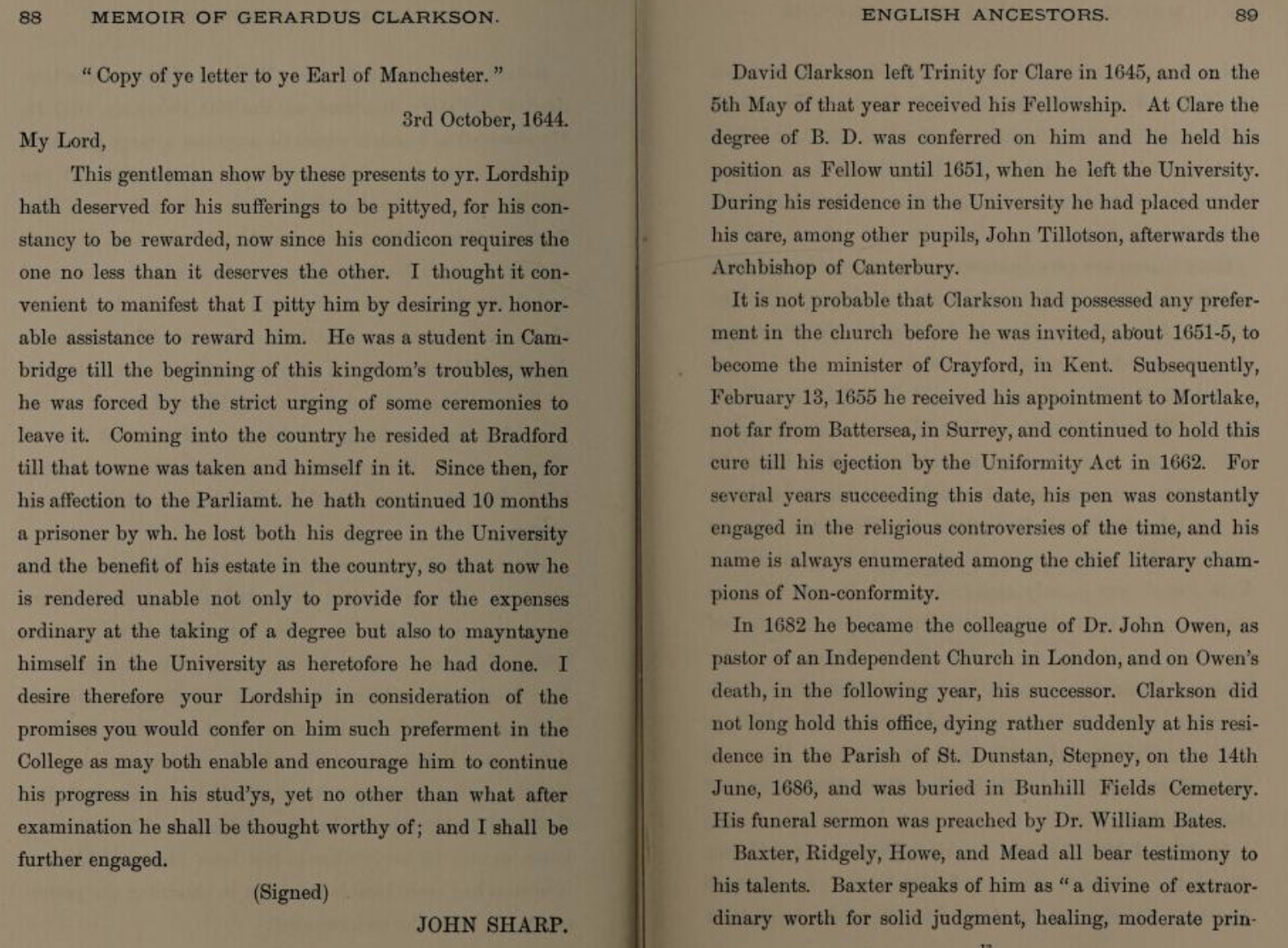
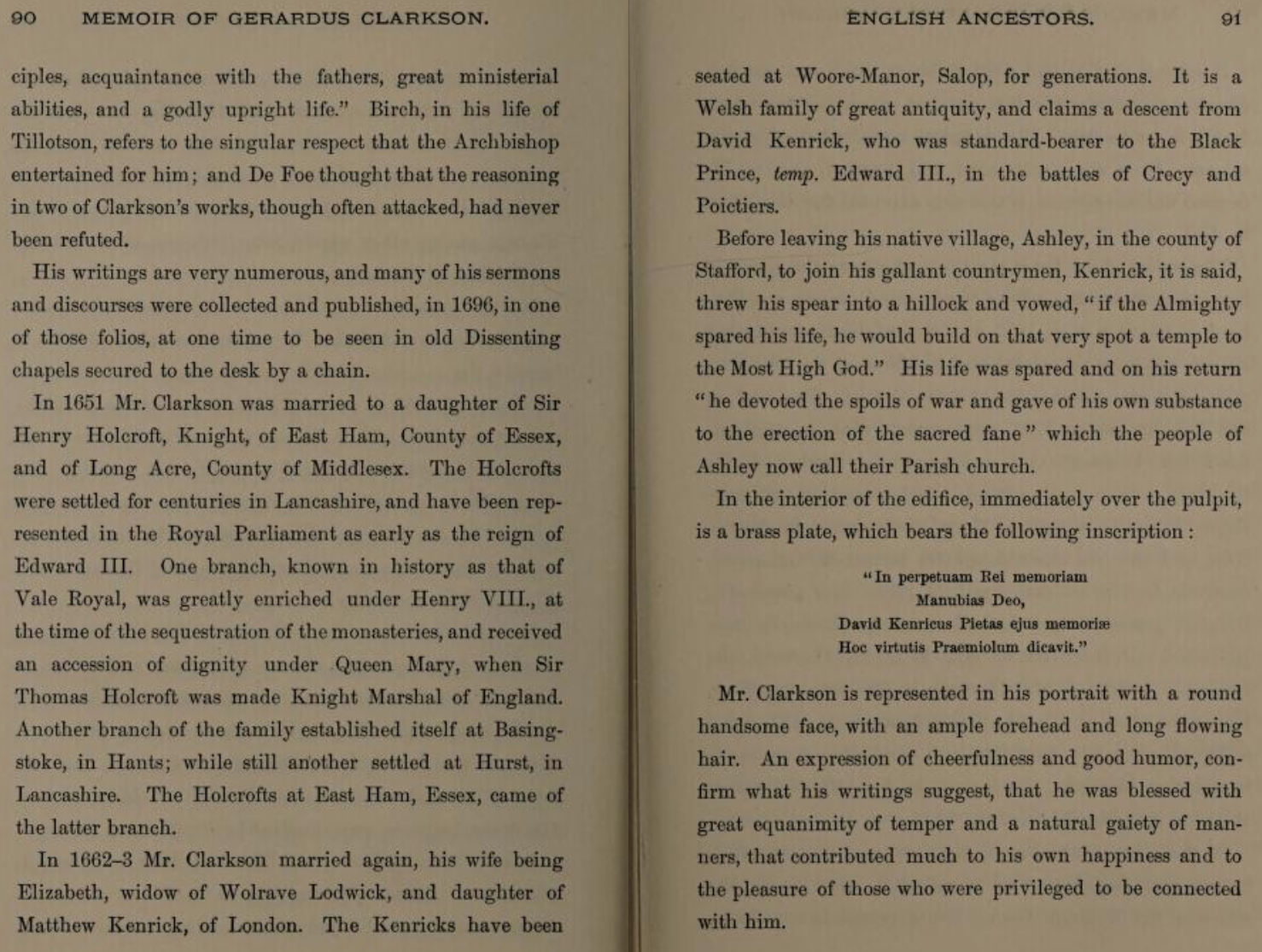
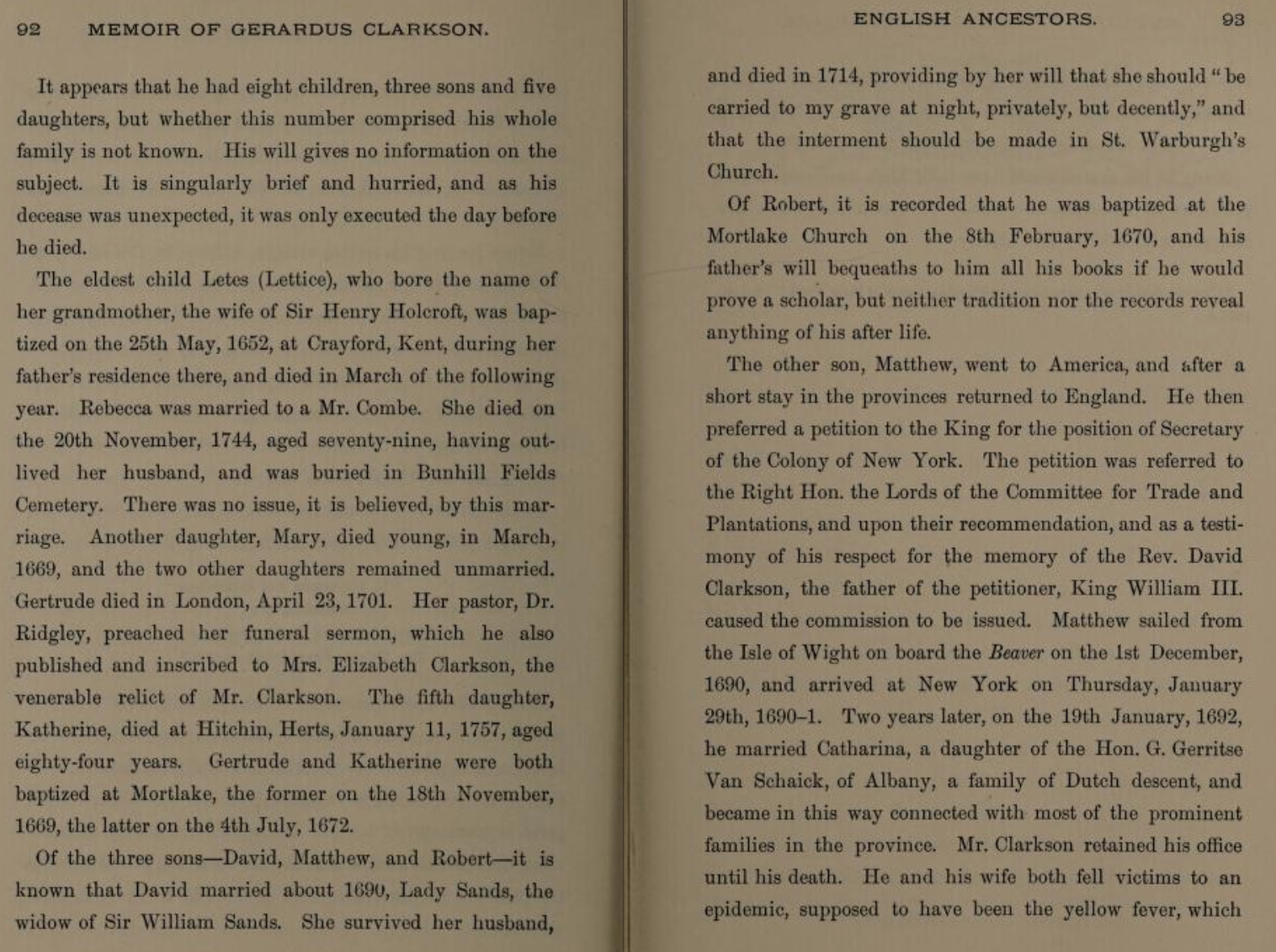
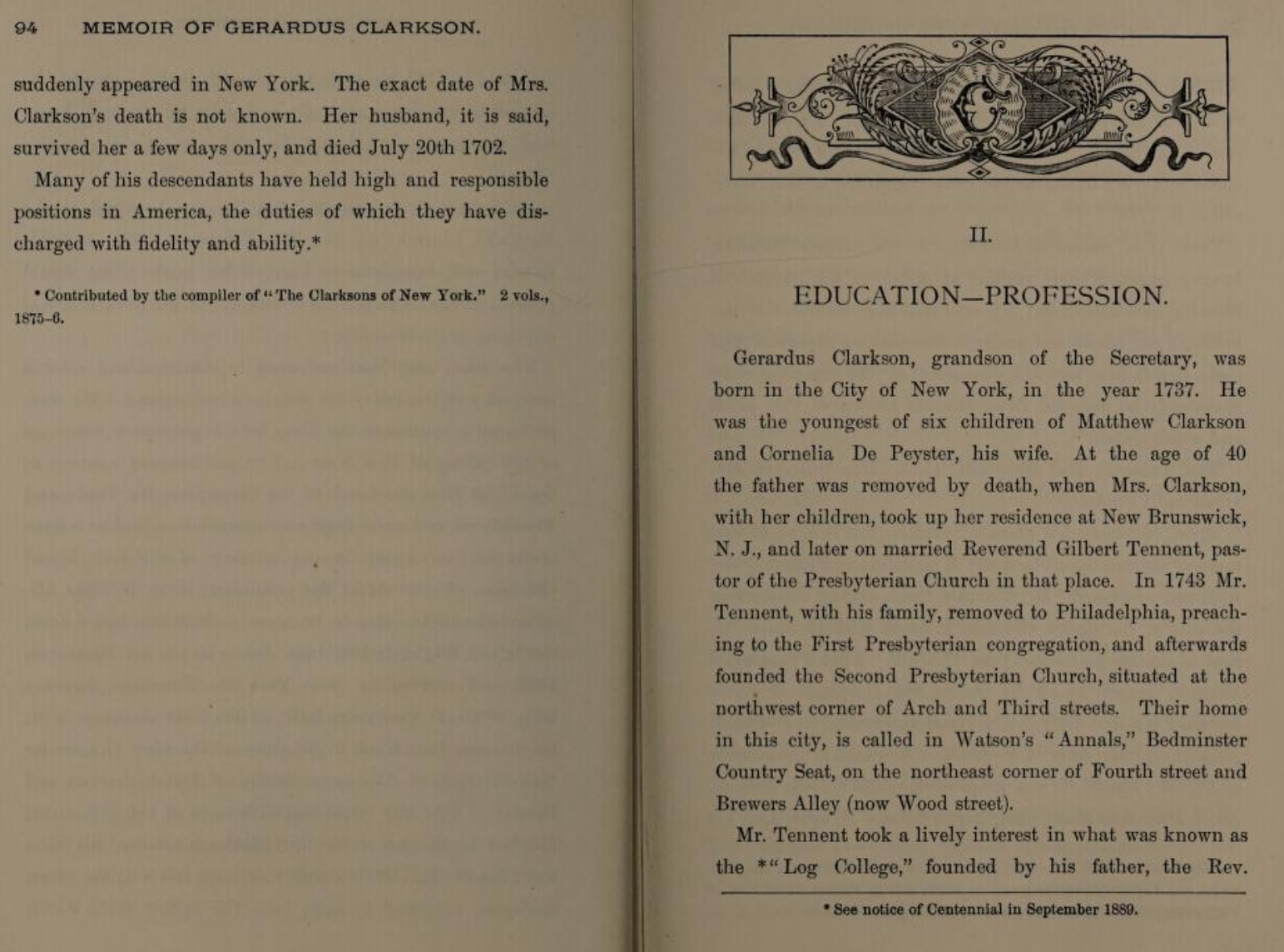
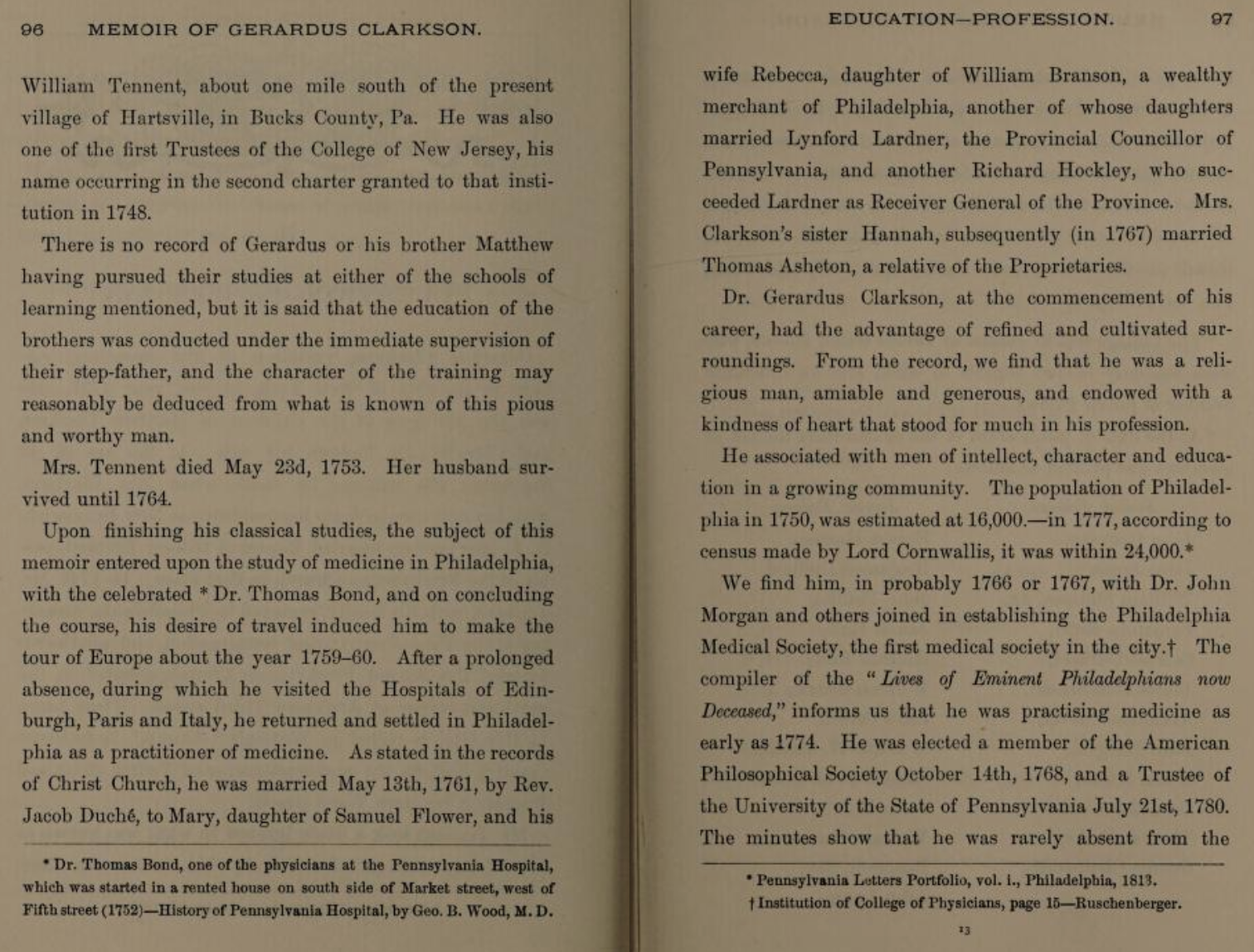
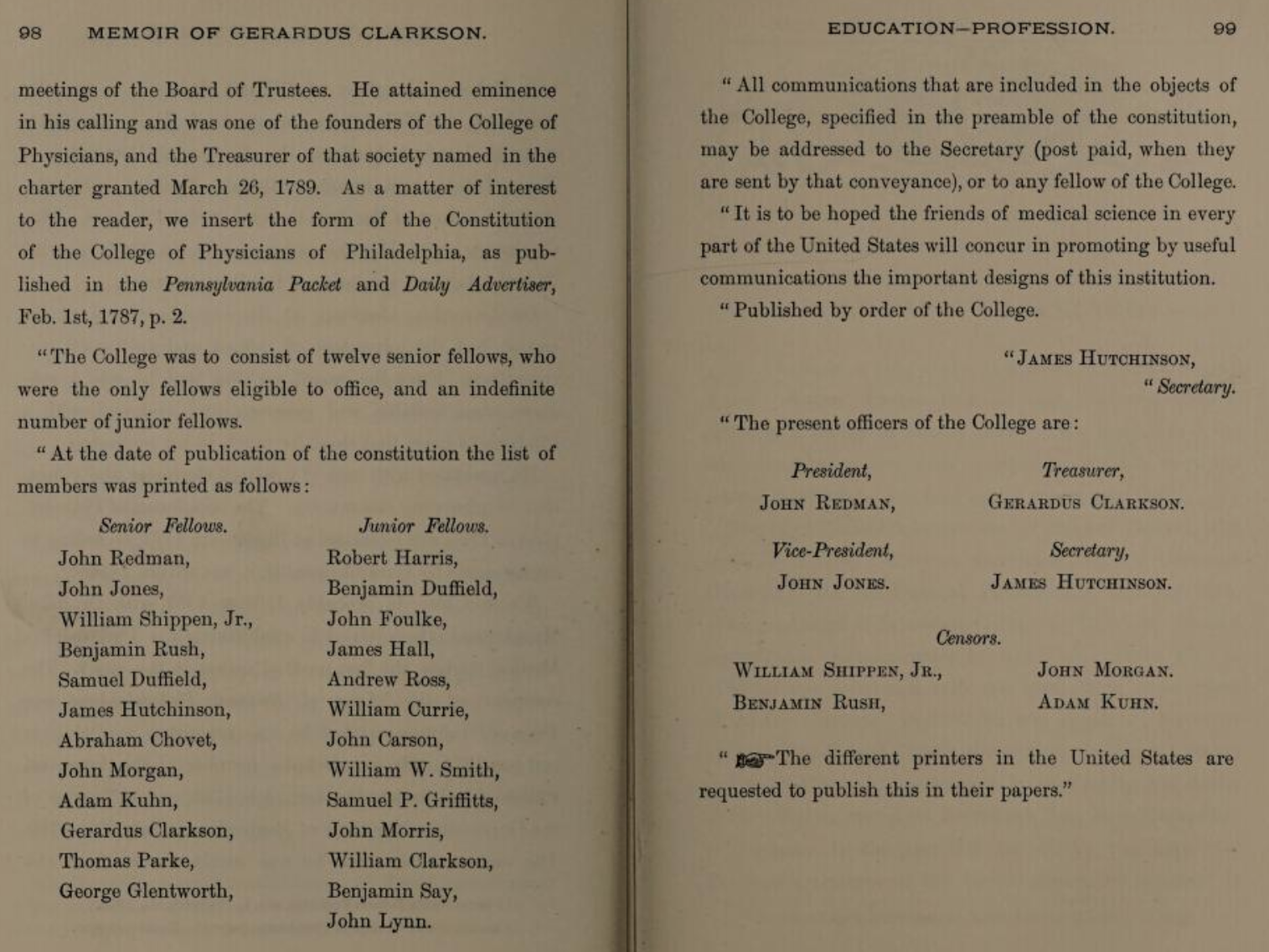
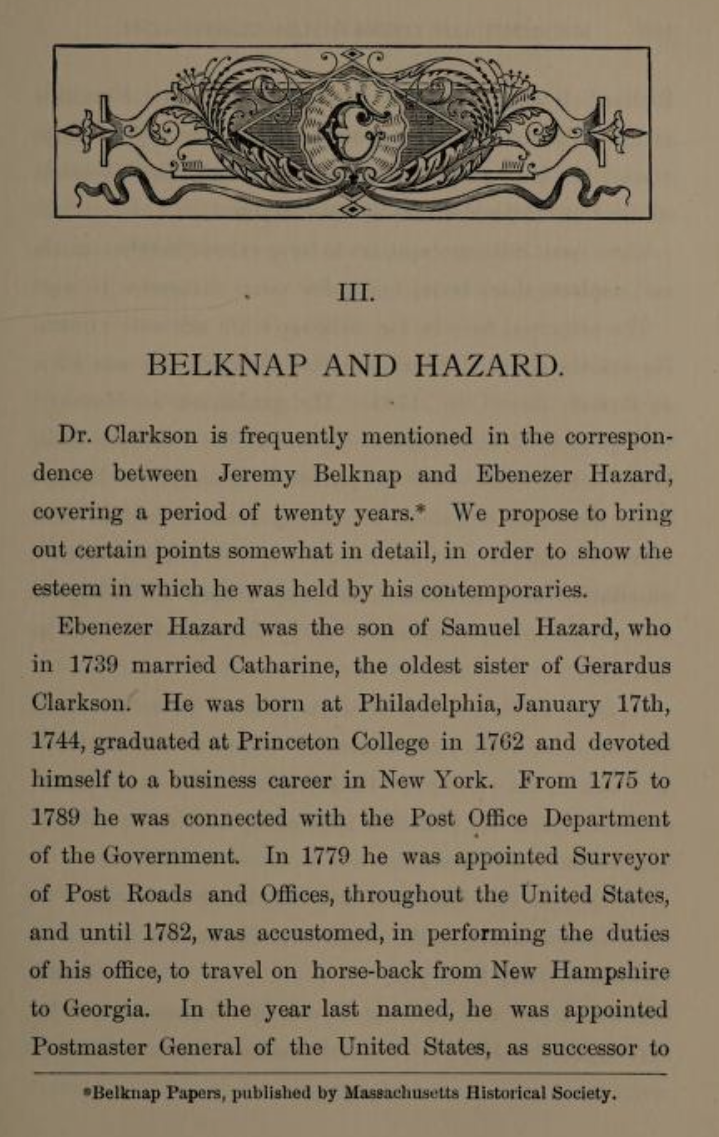
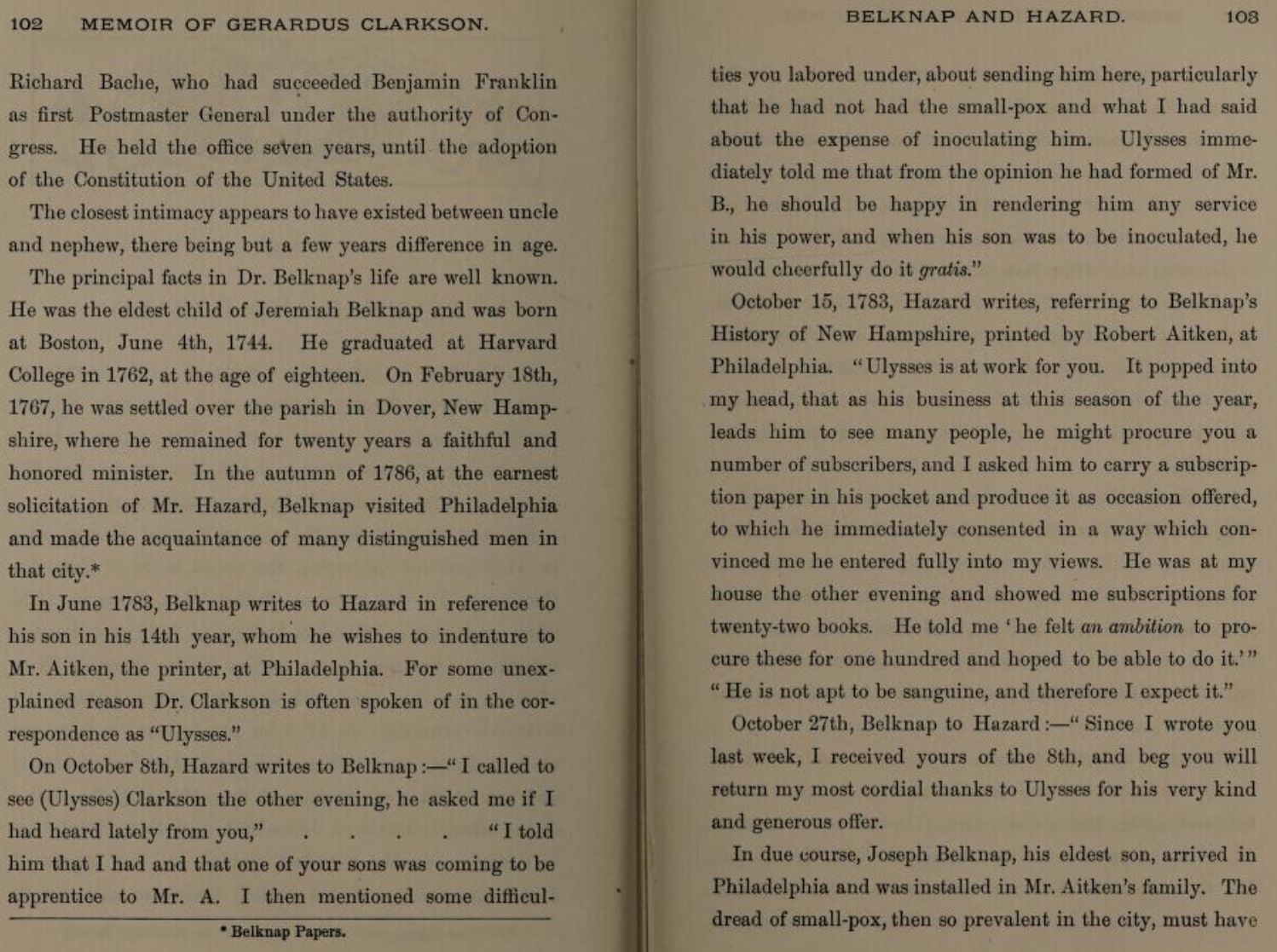
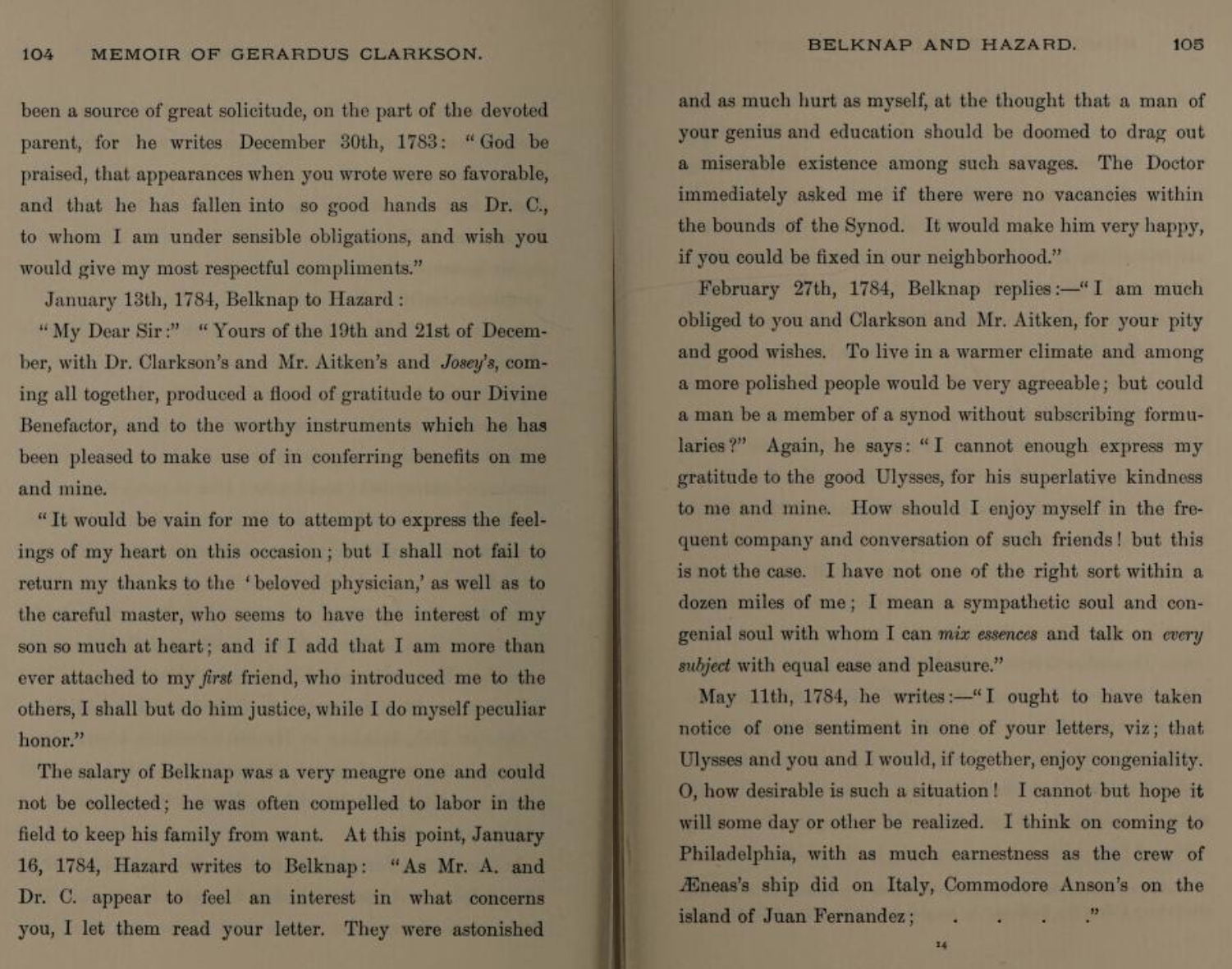
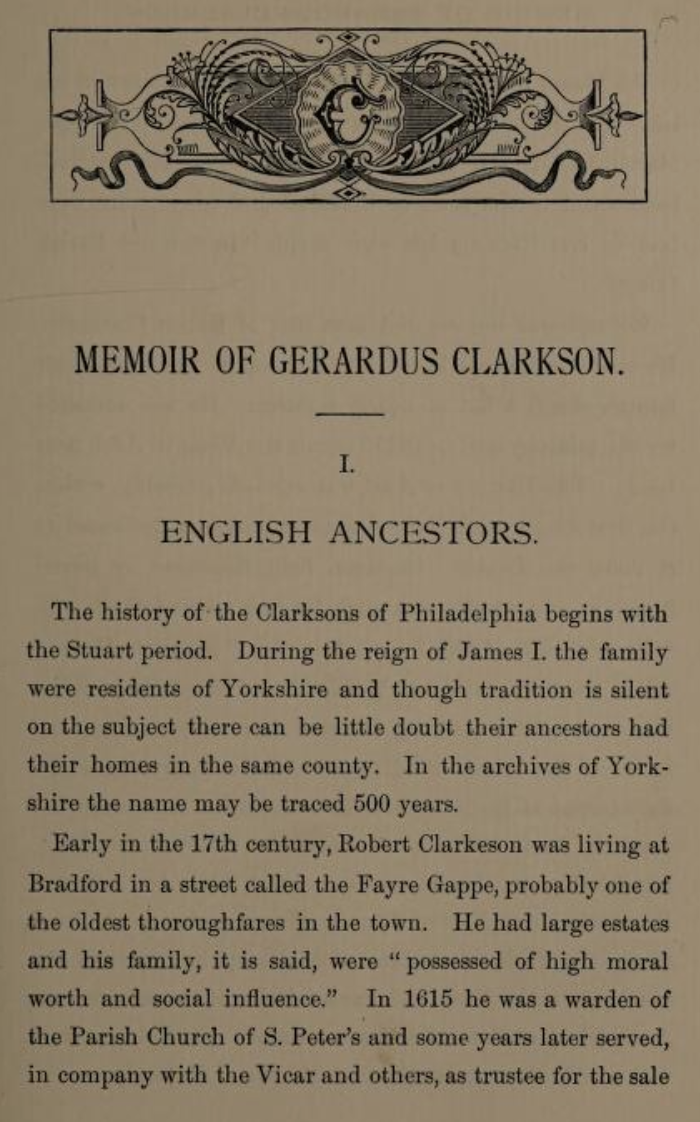
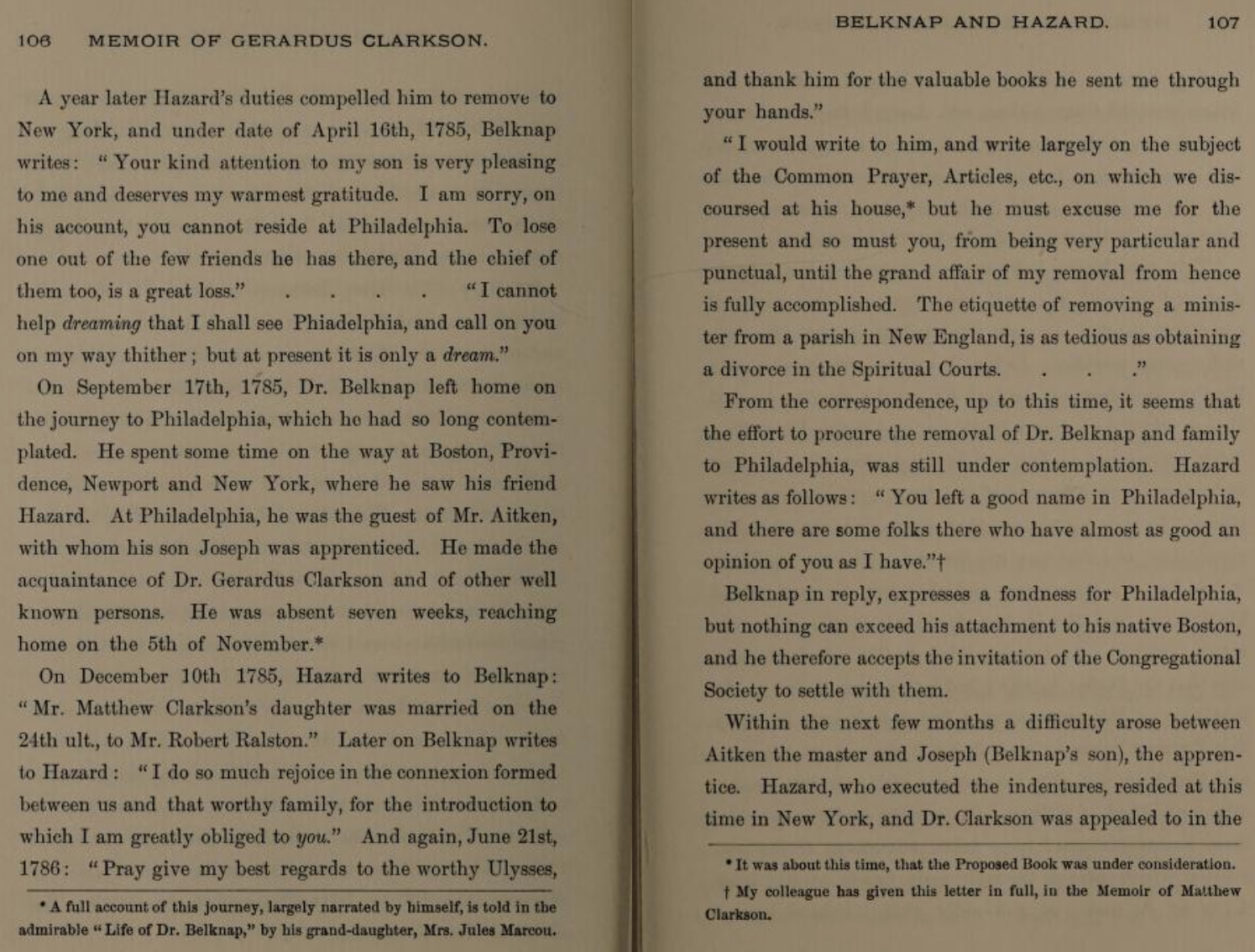
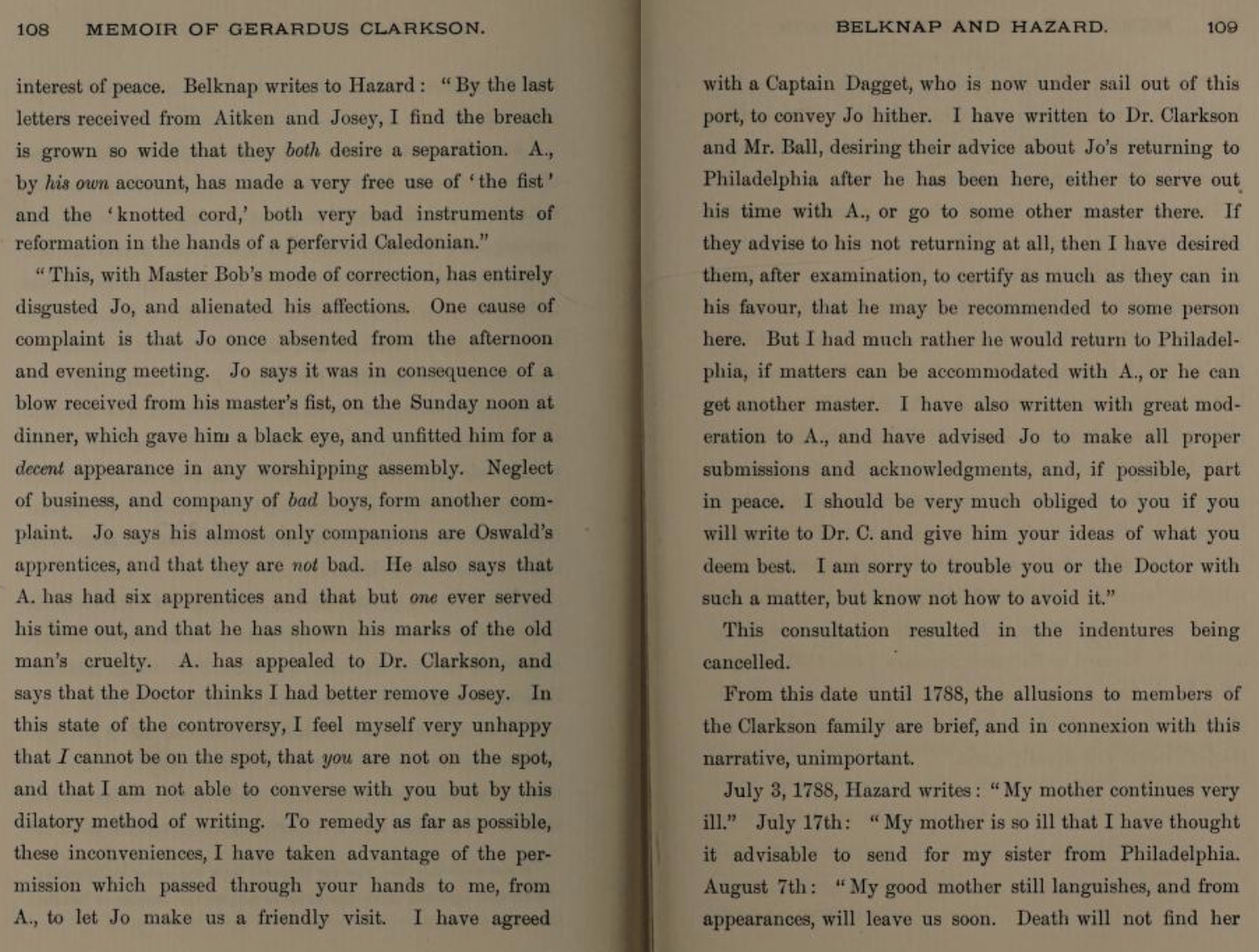
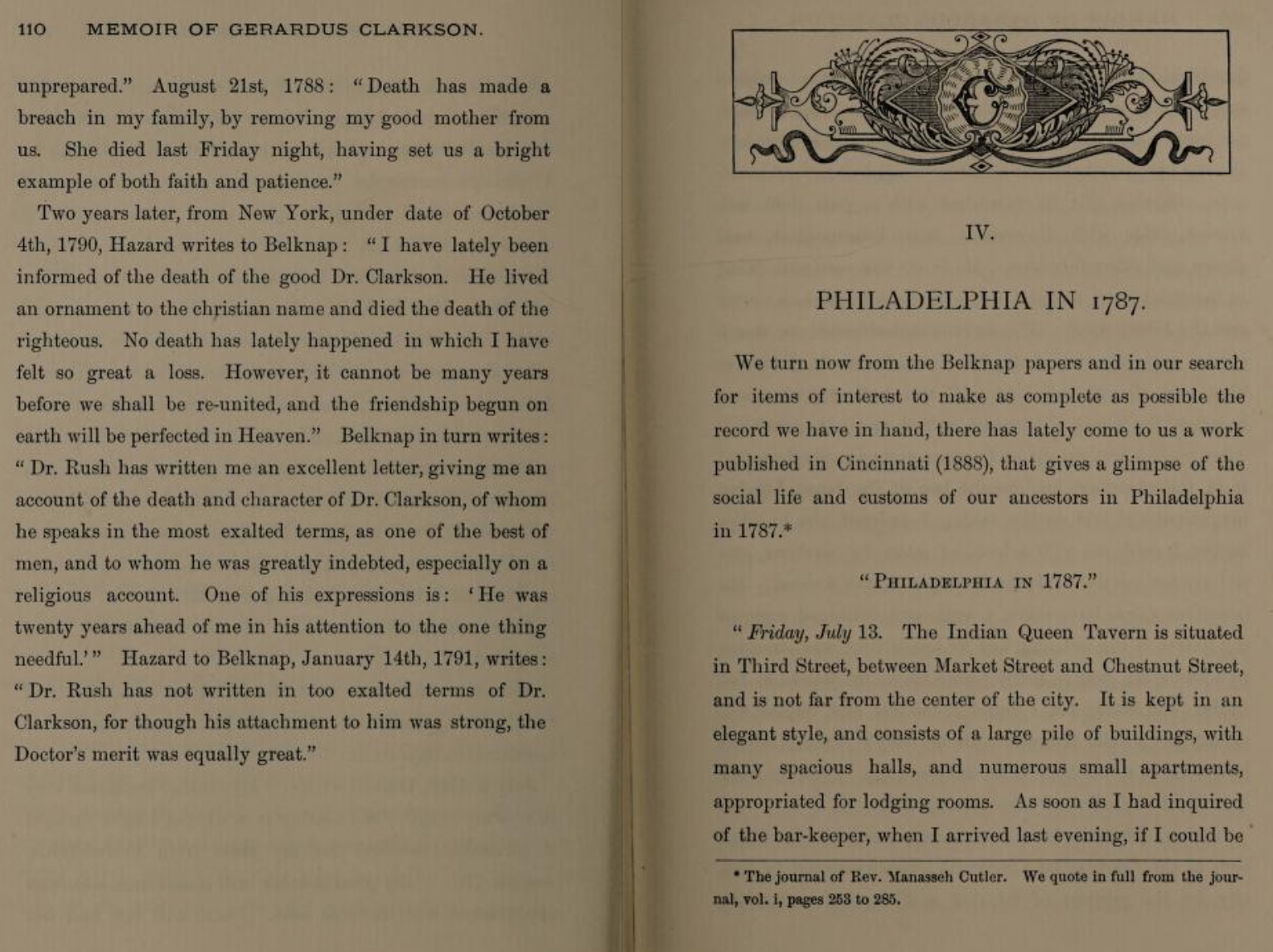
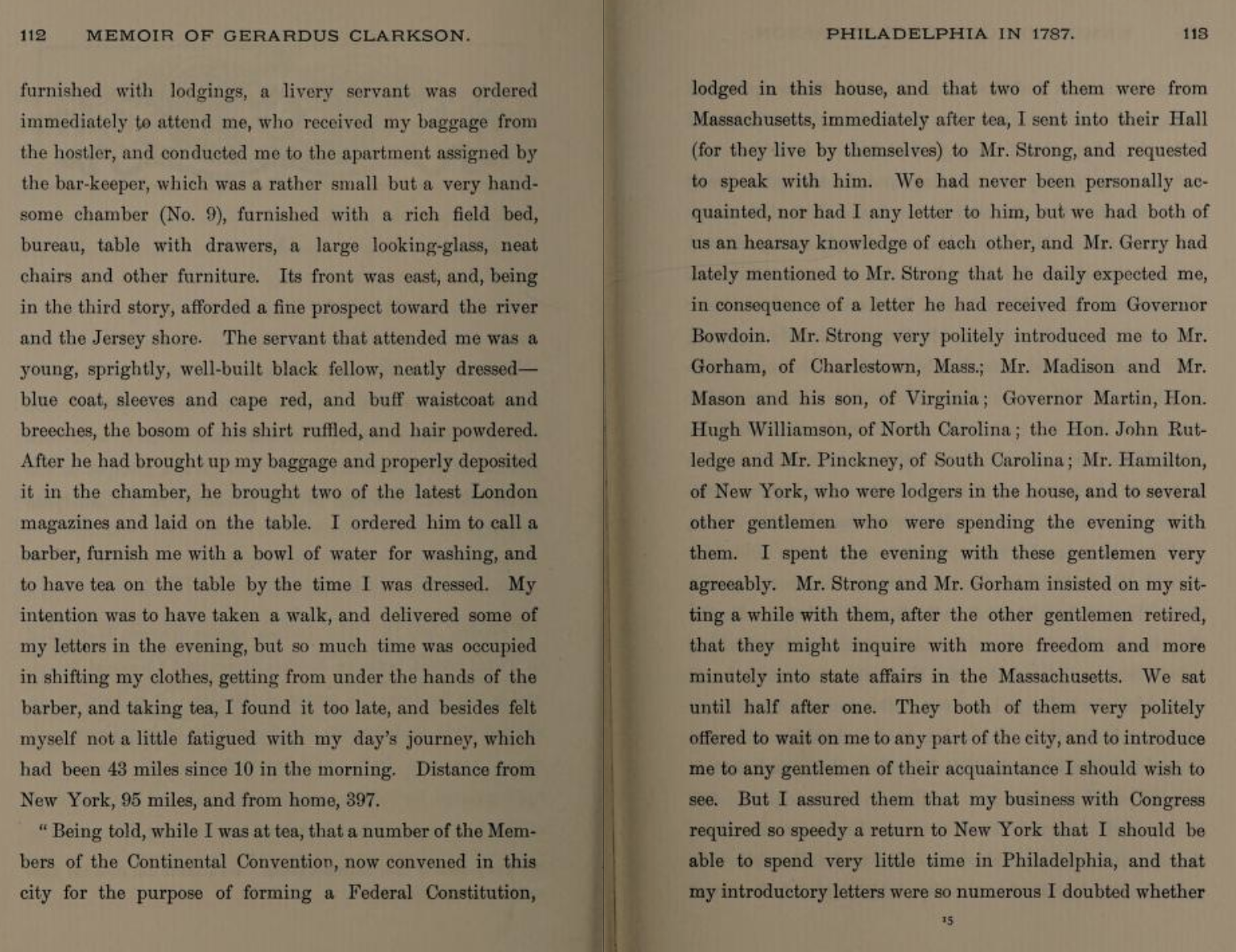
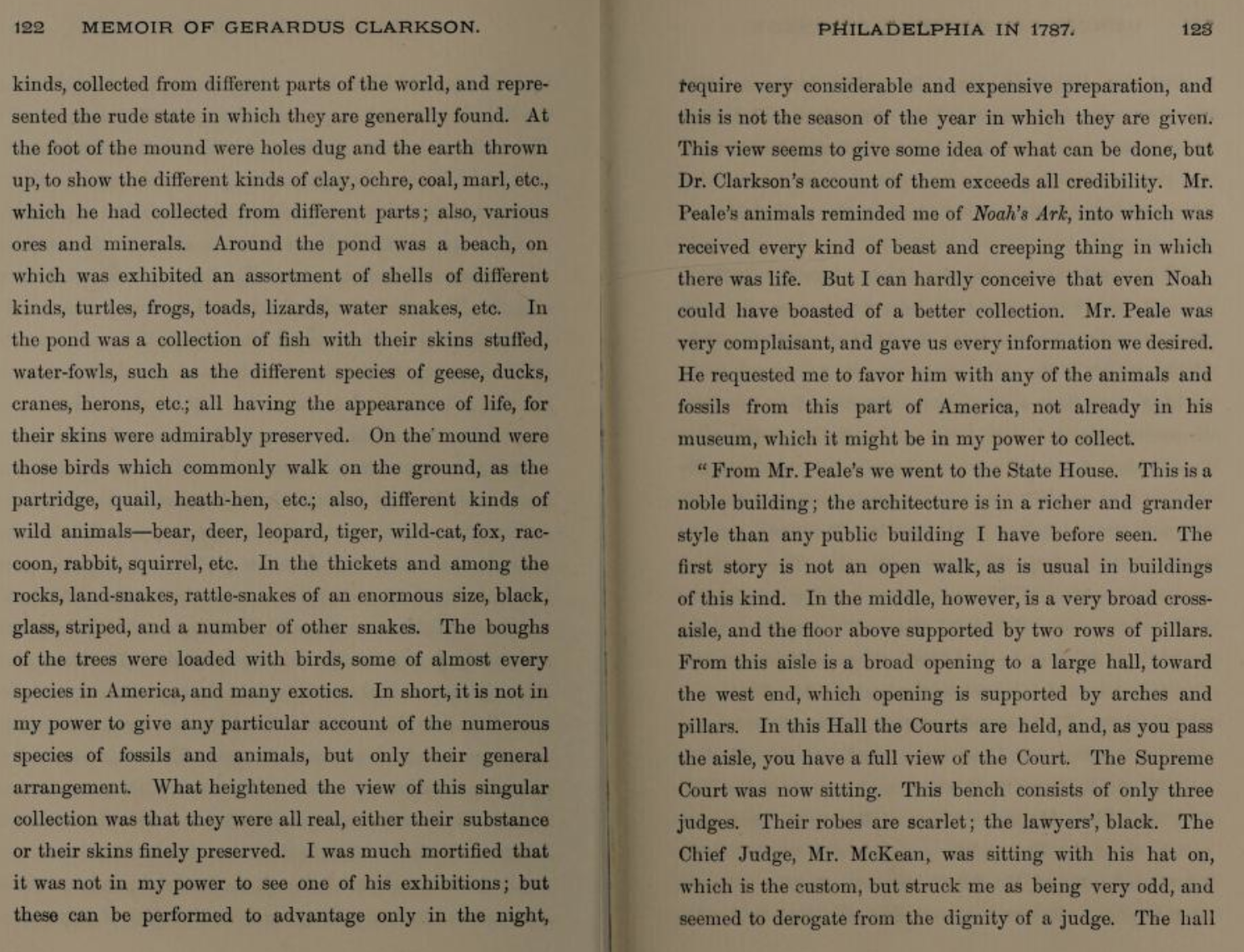
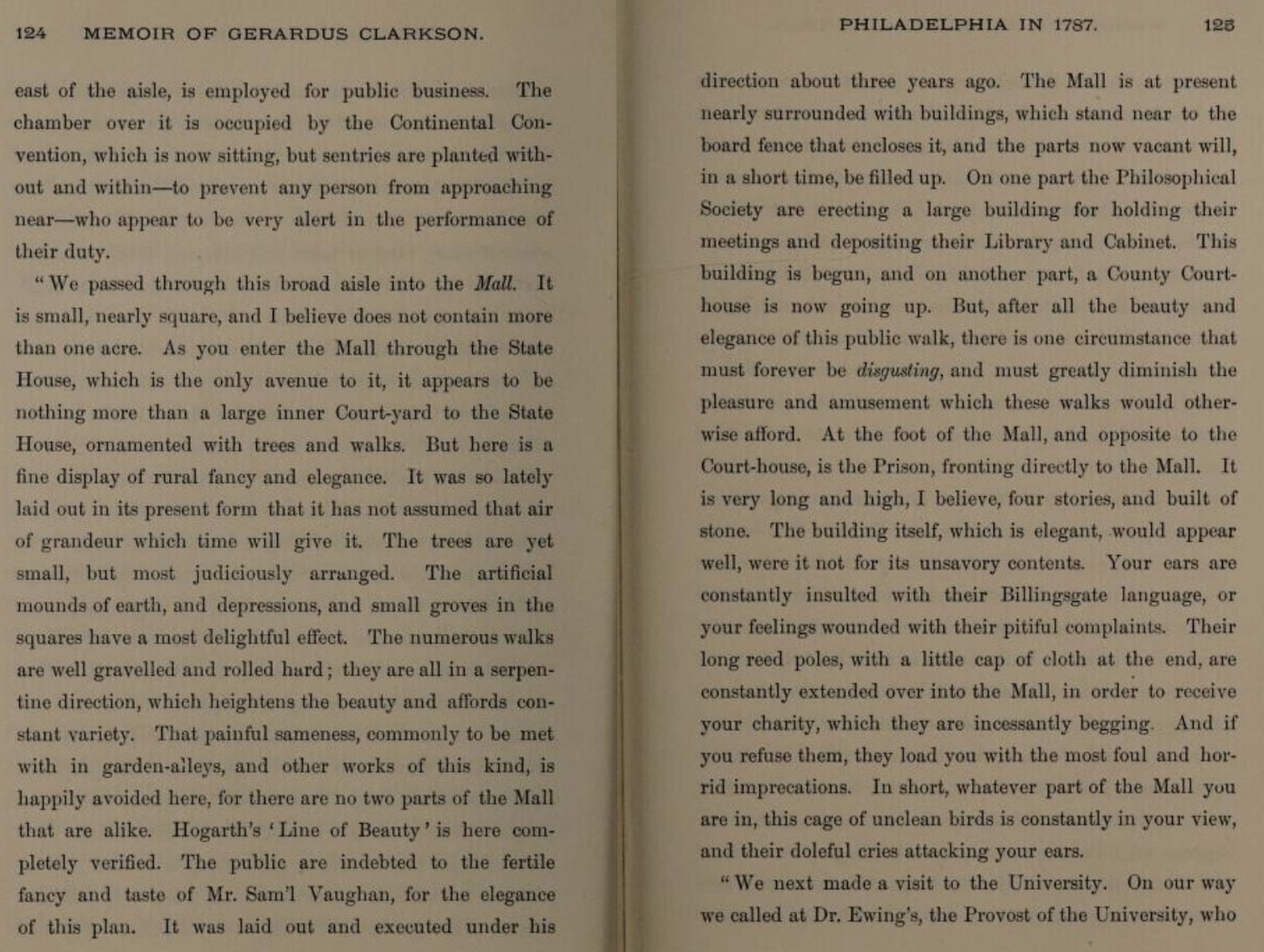
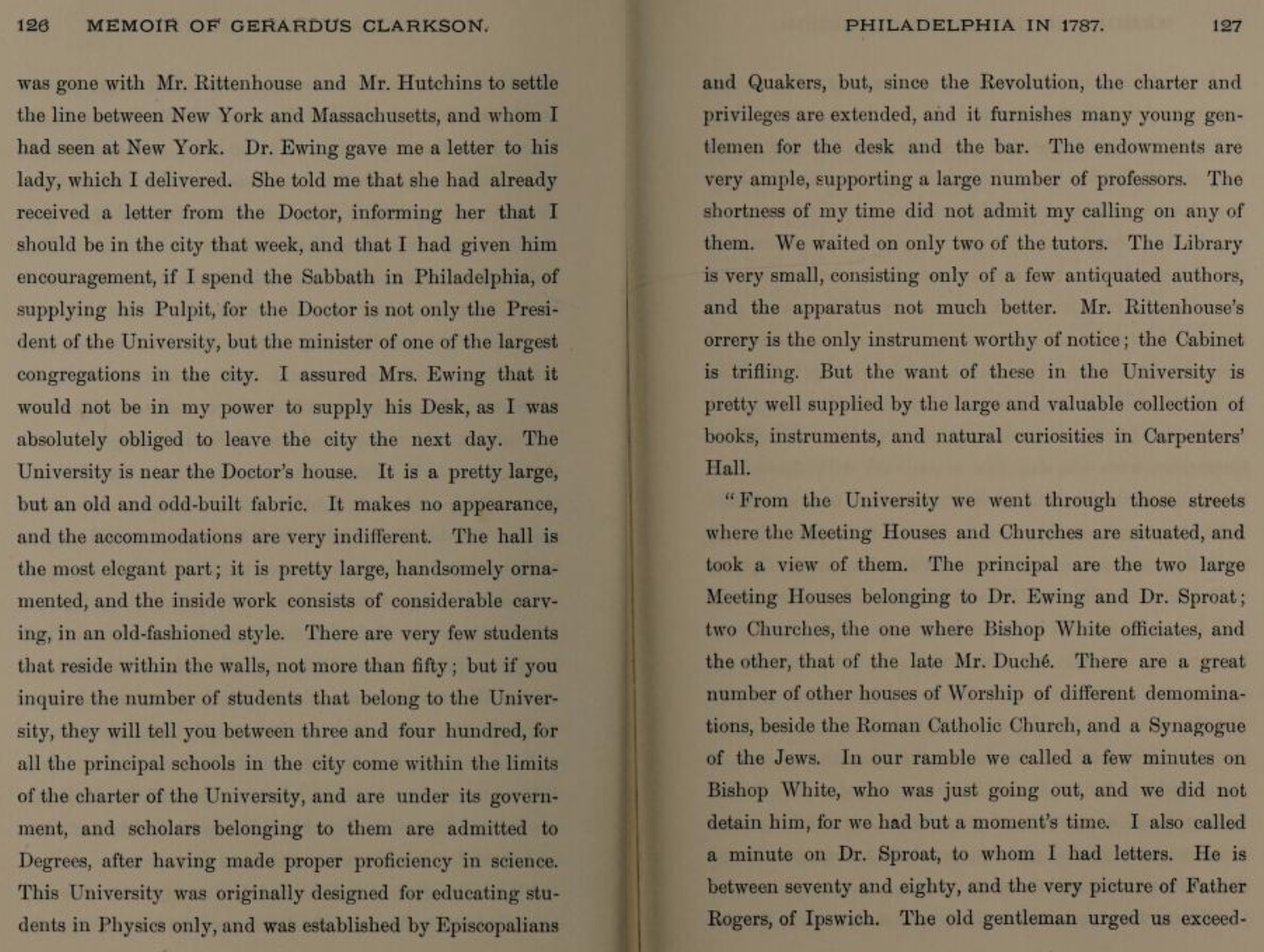
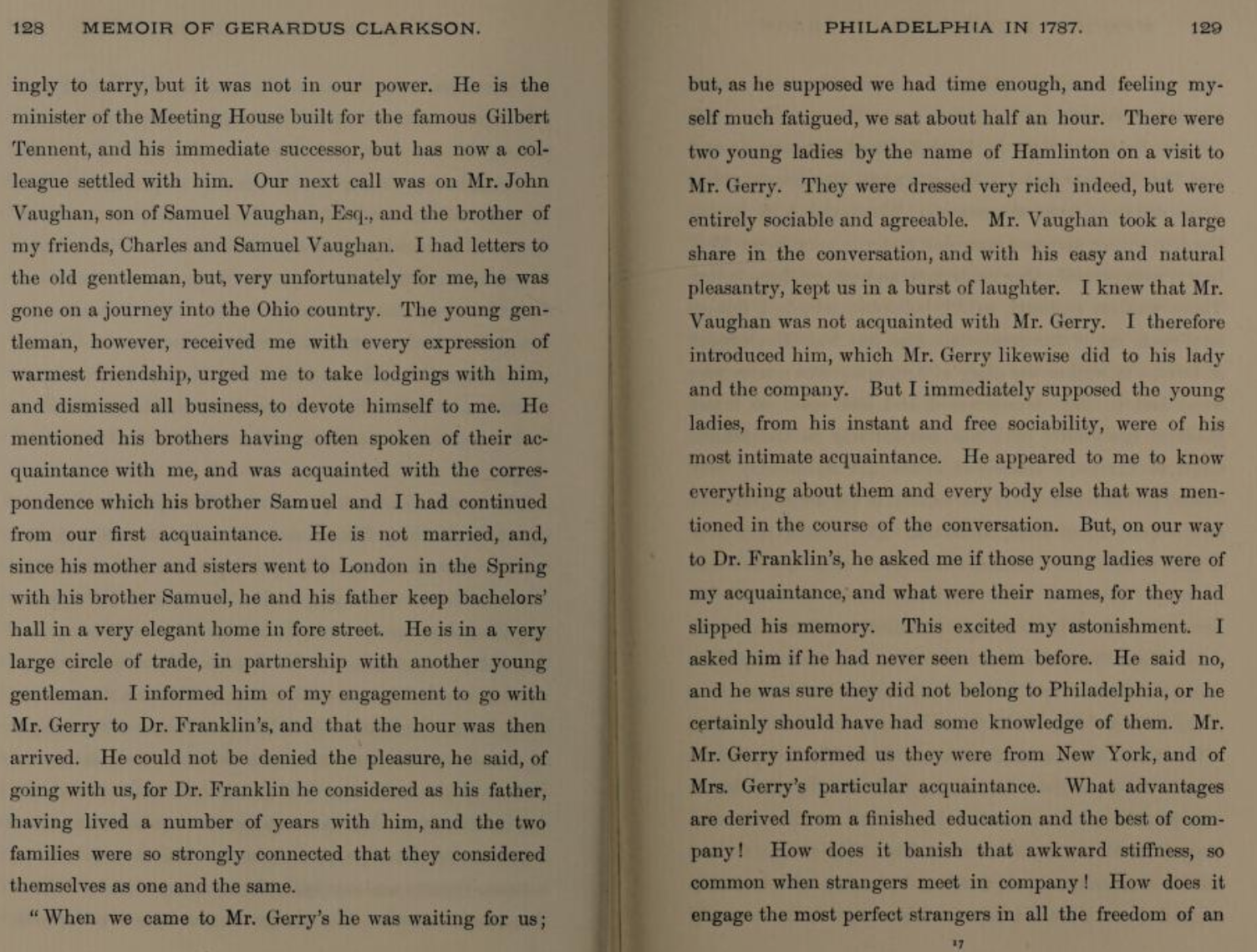
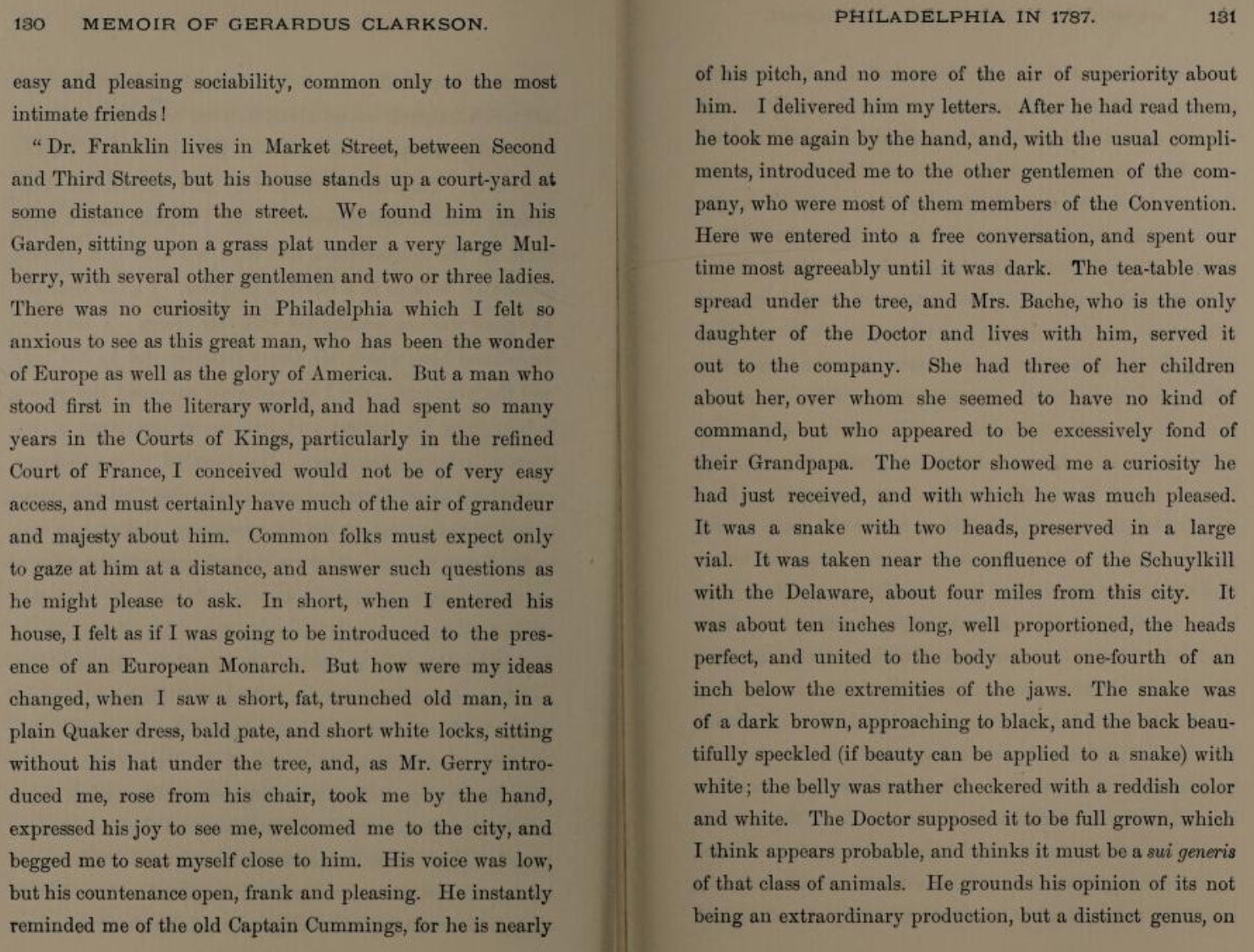
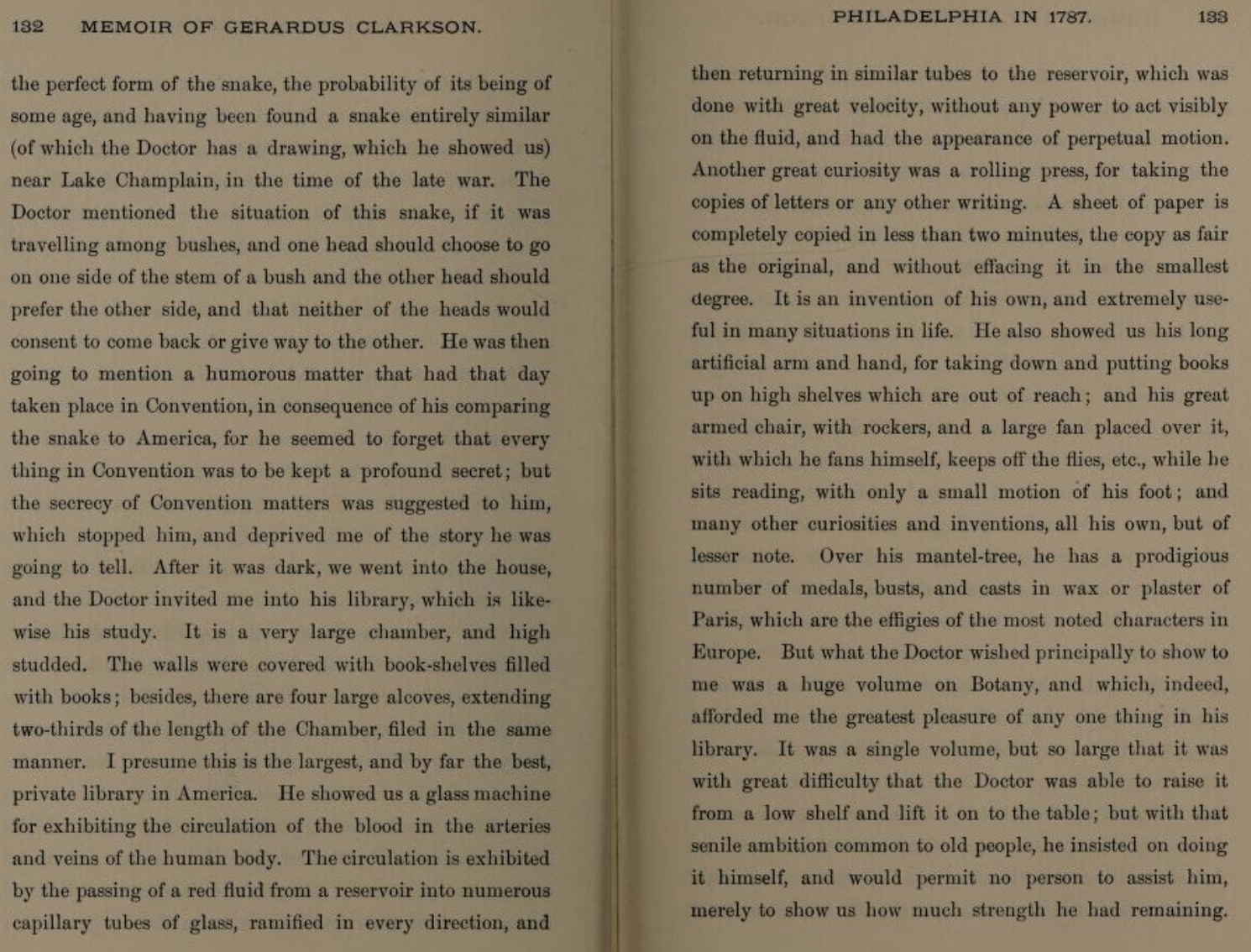
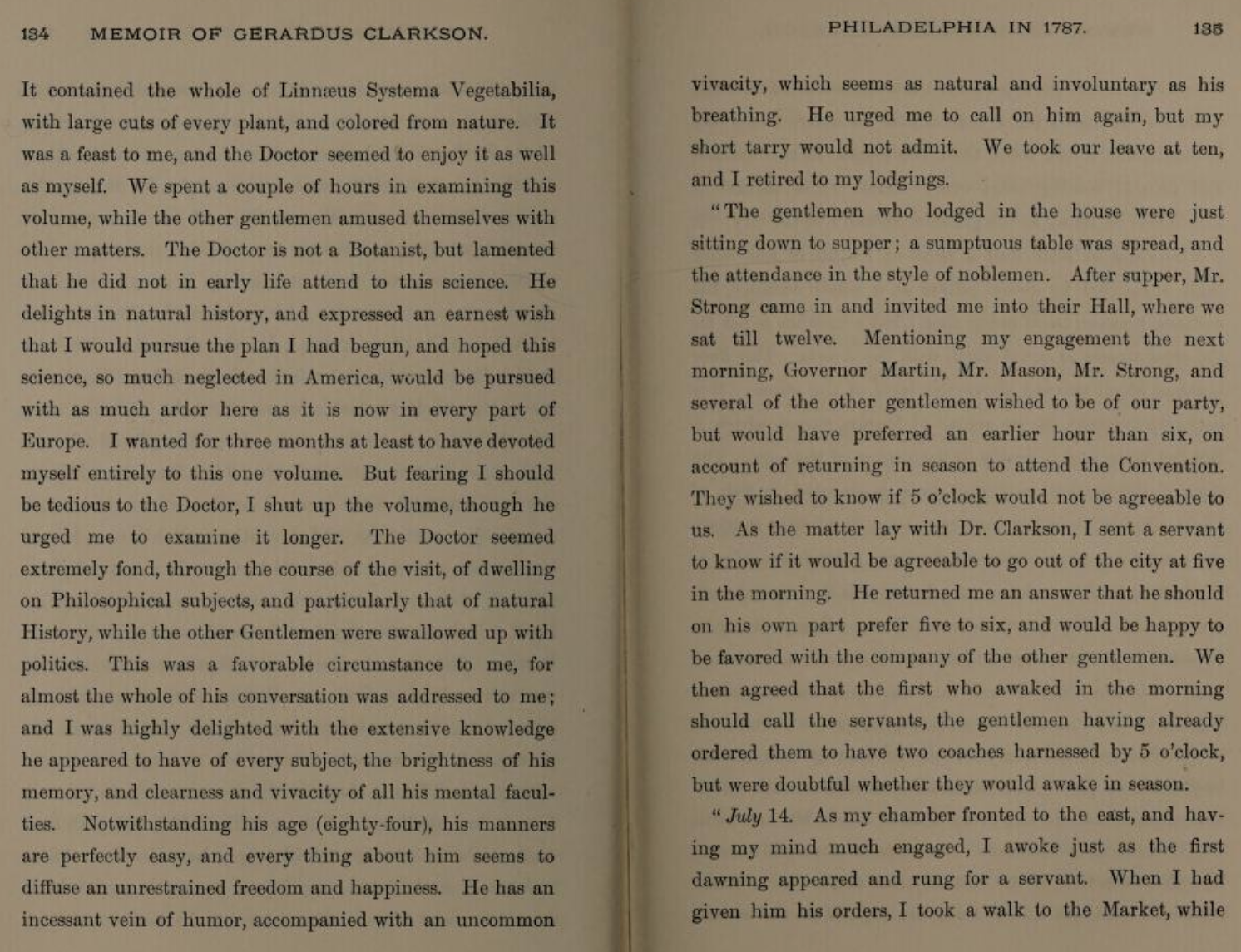
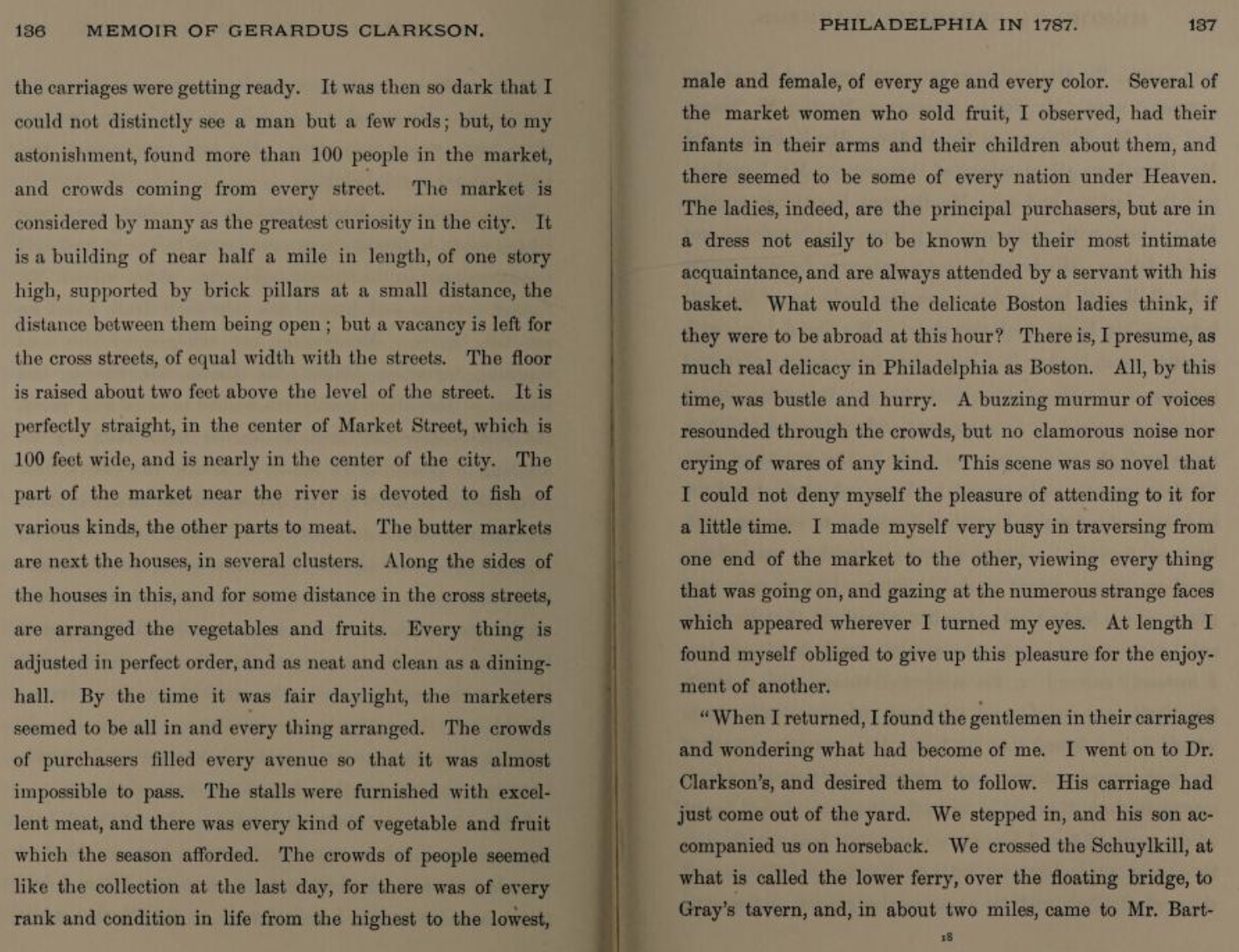
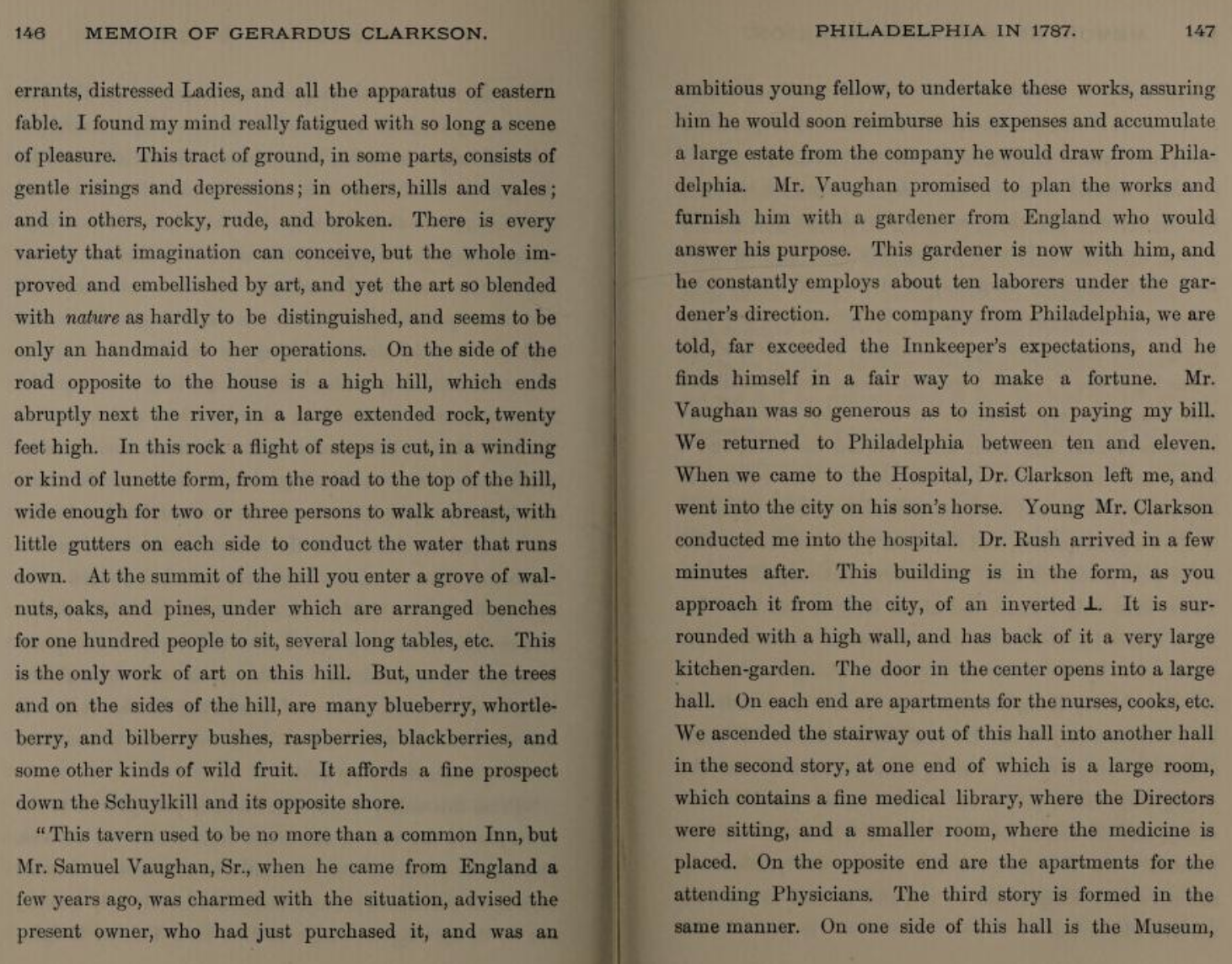
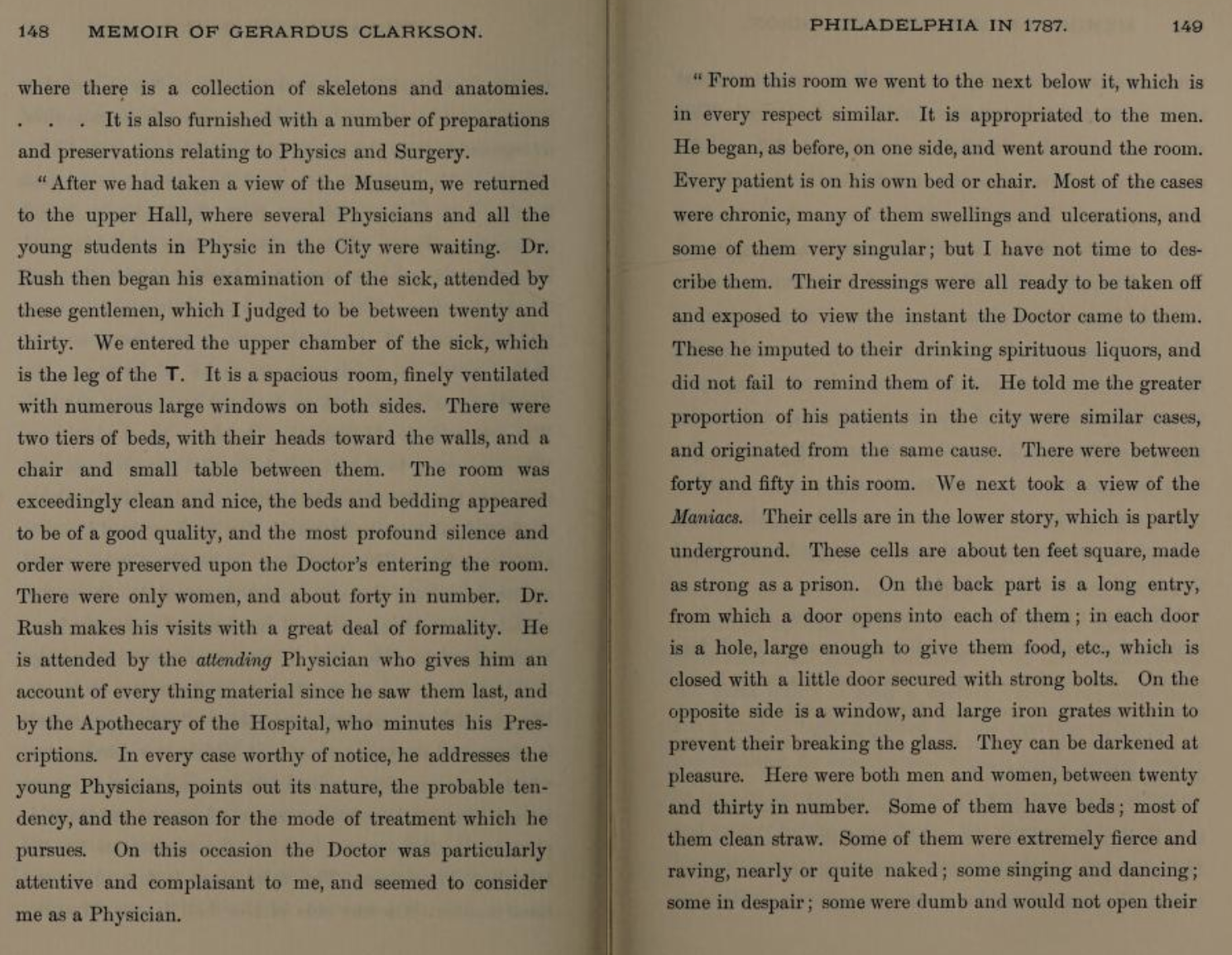
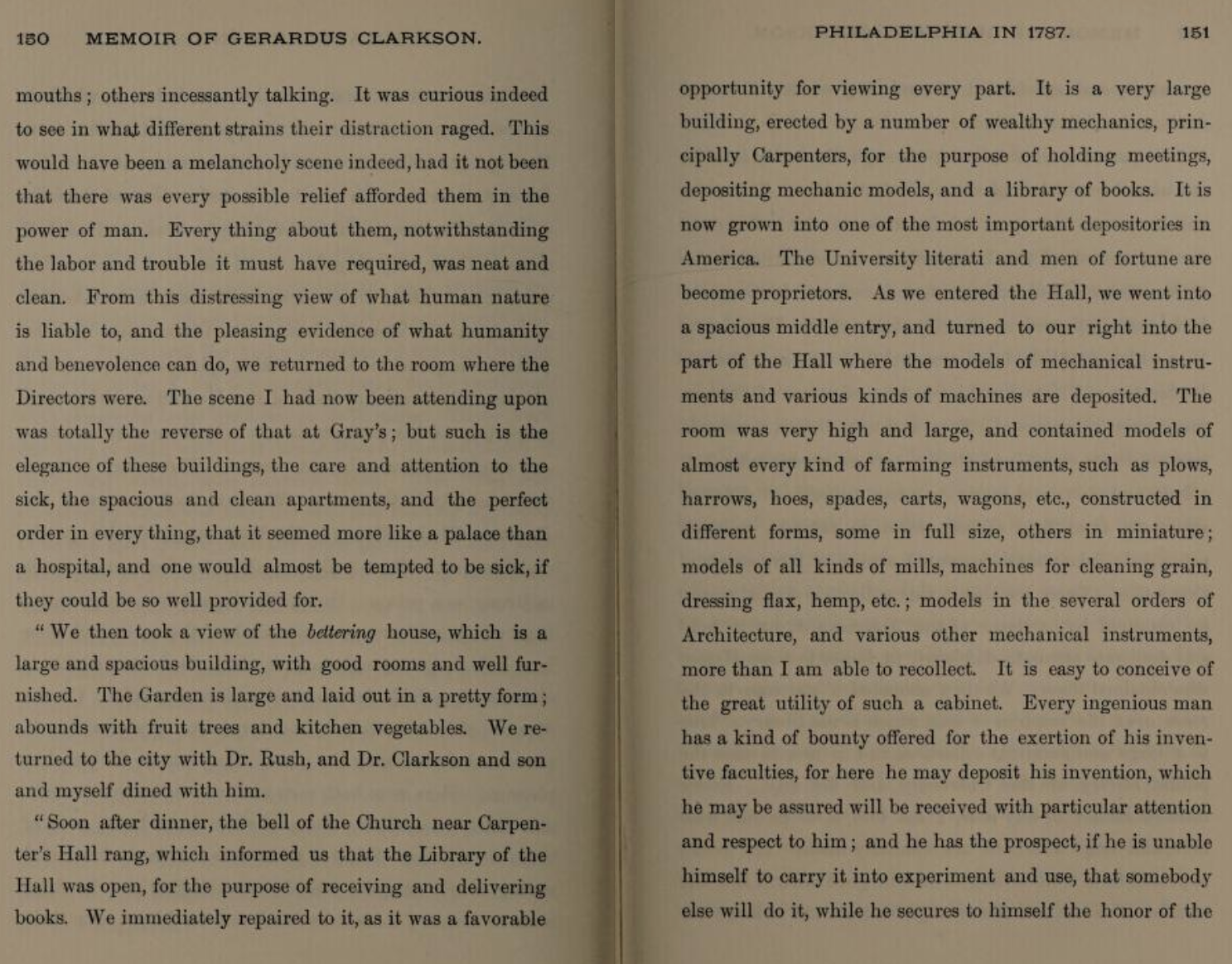
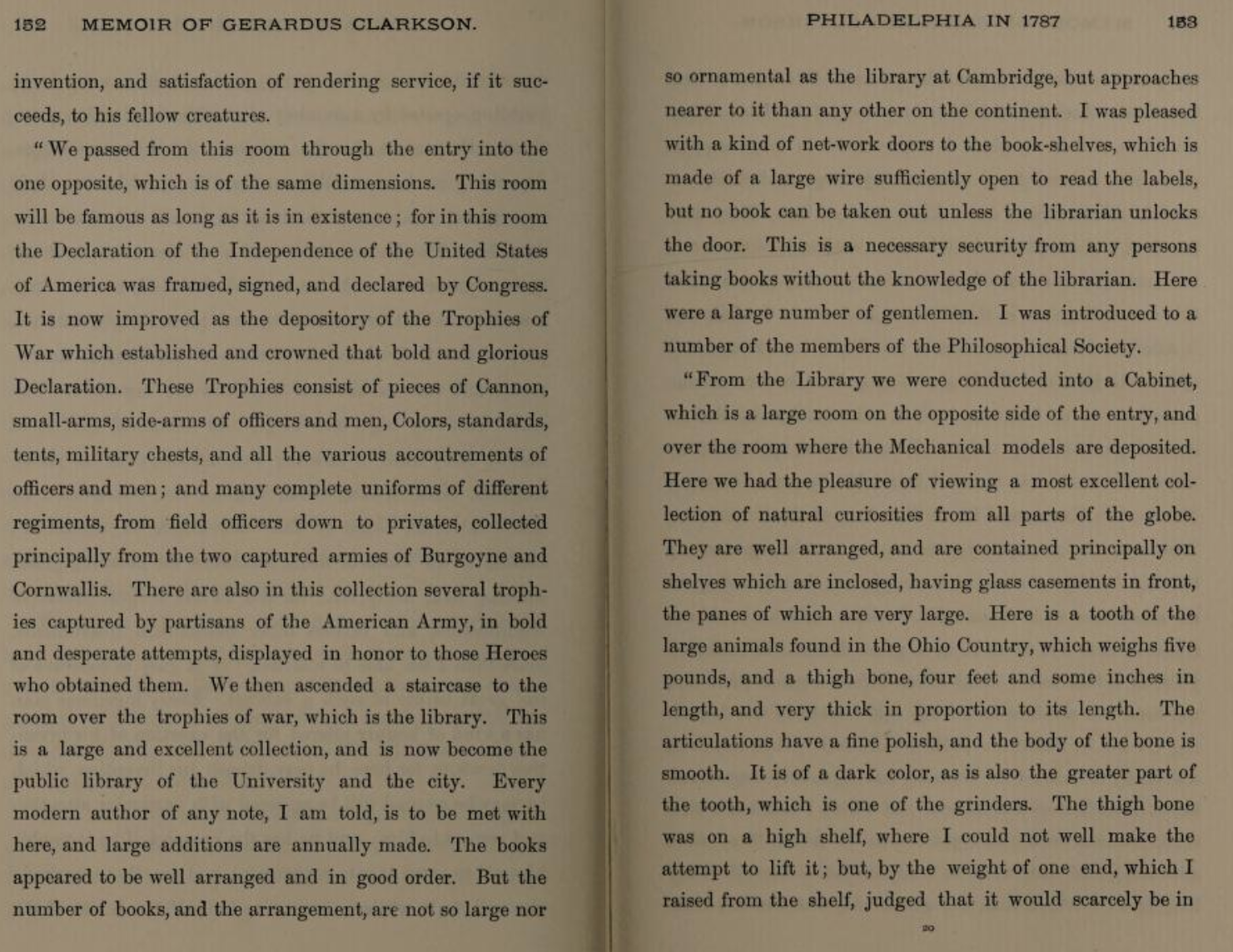

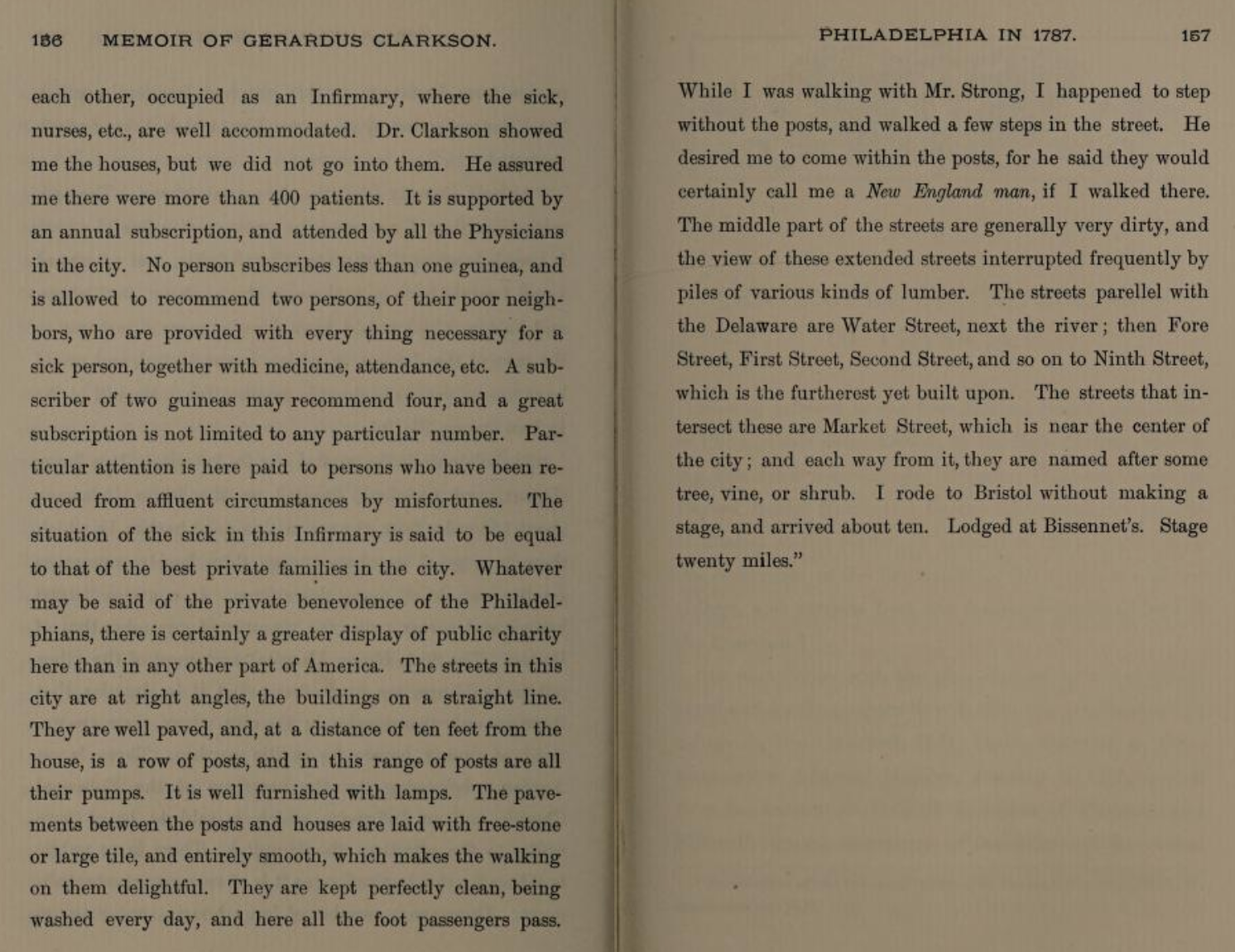
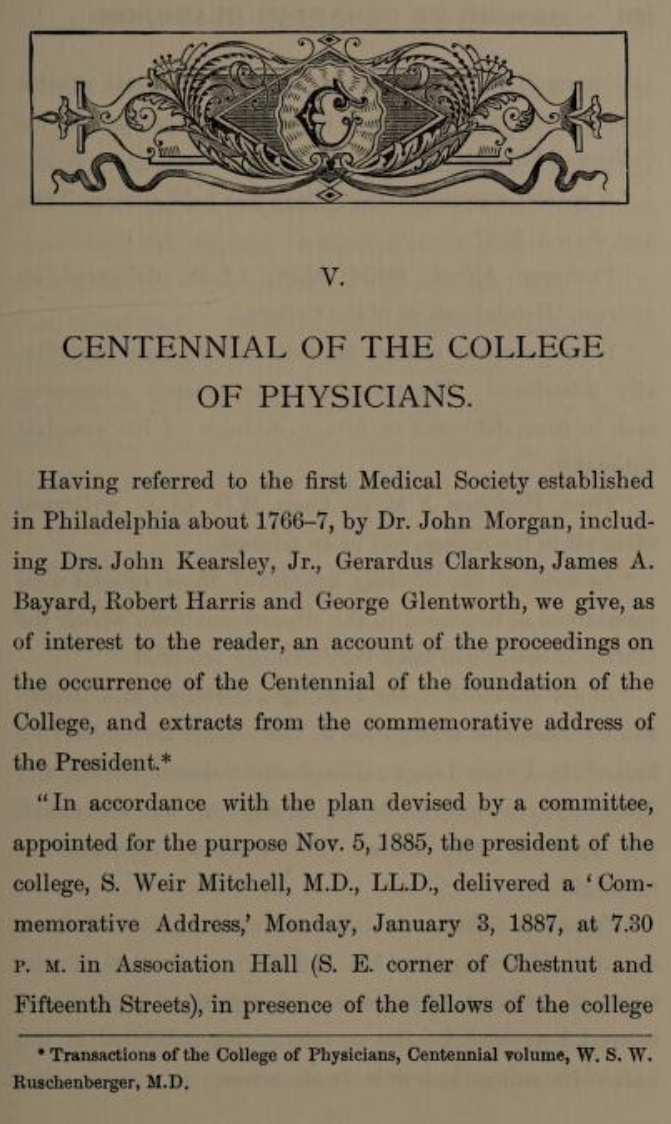
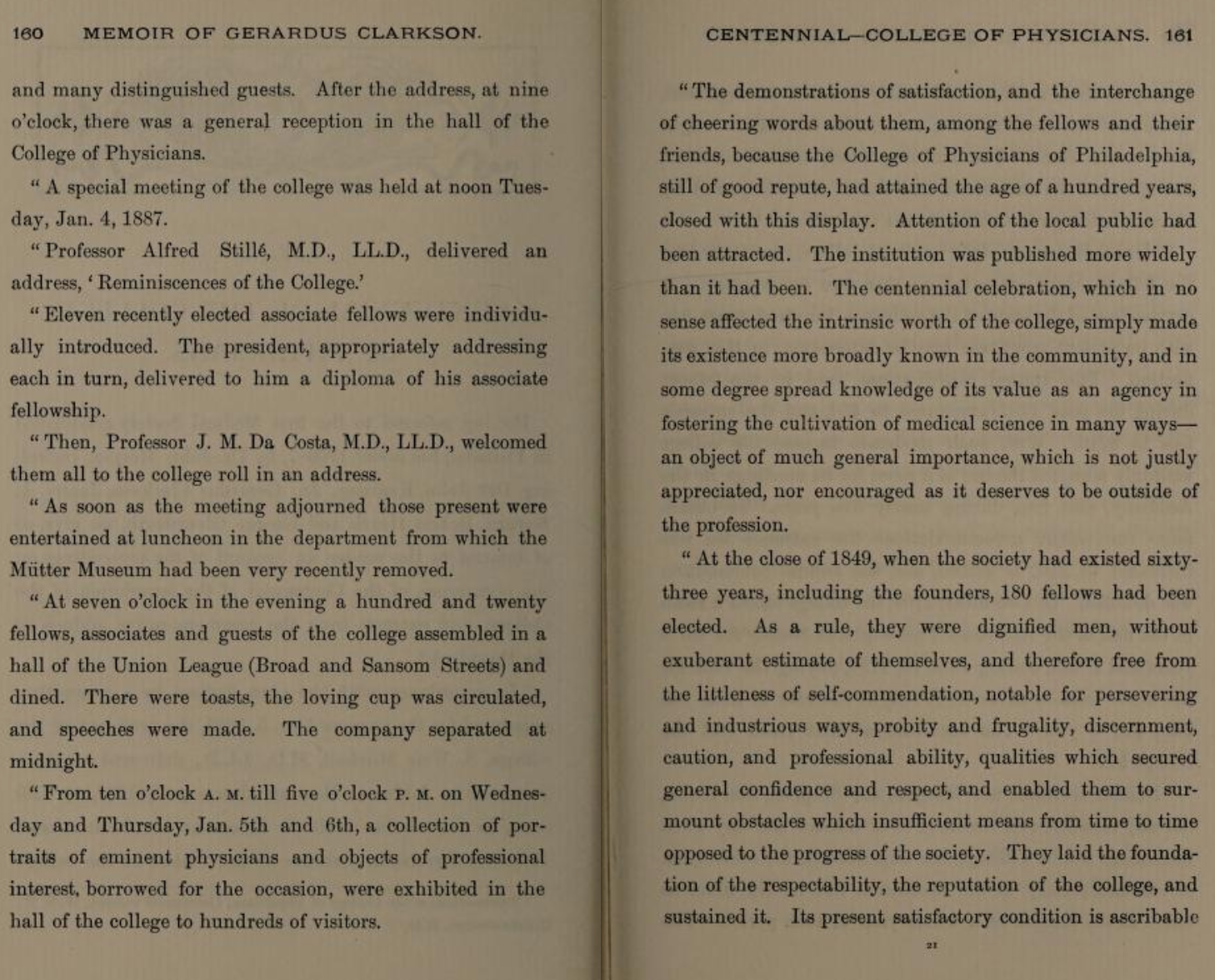
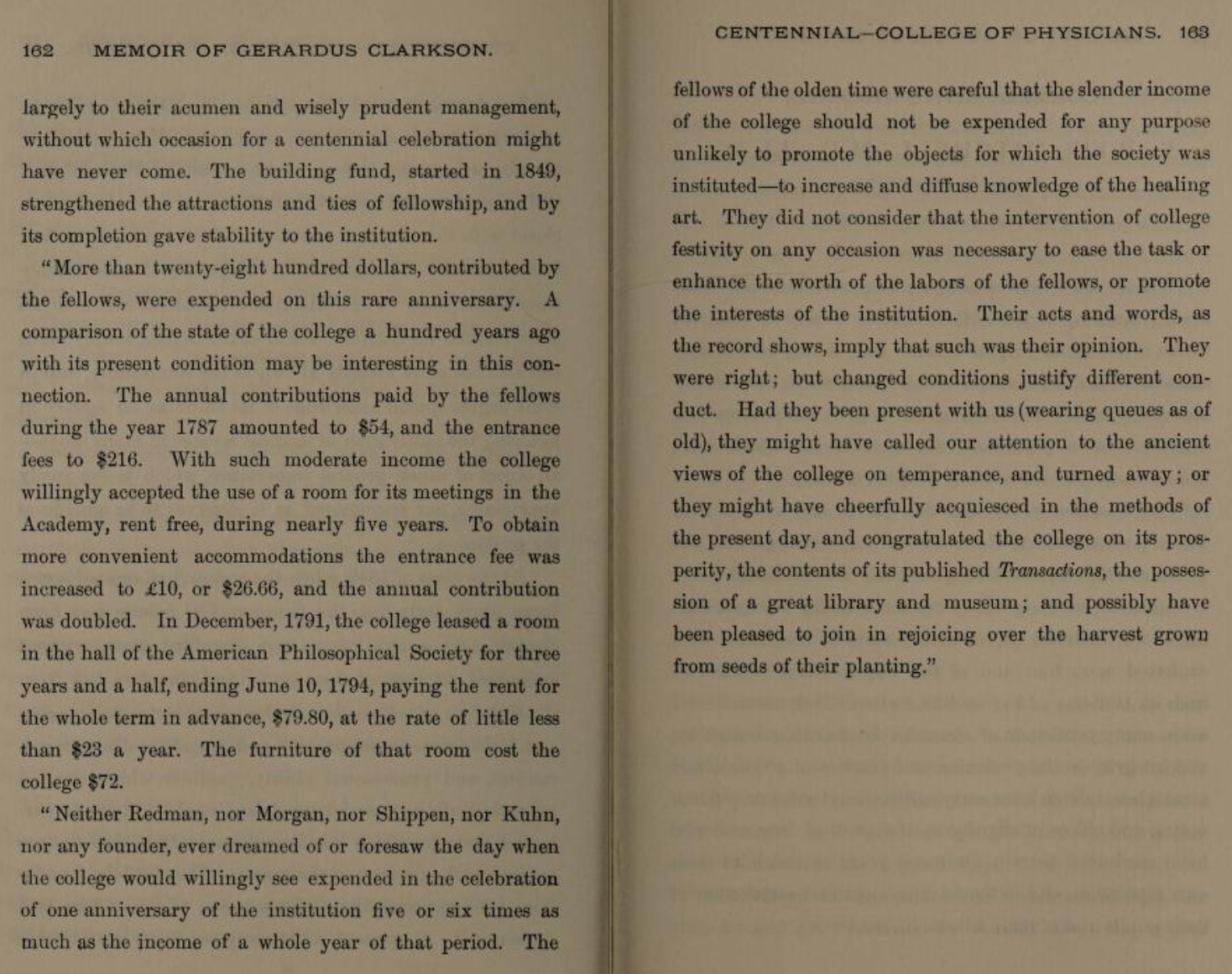
170-171
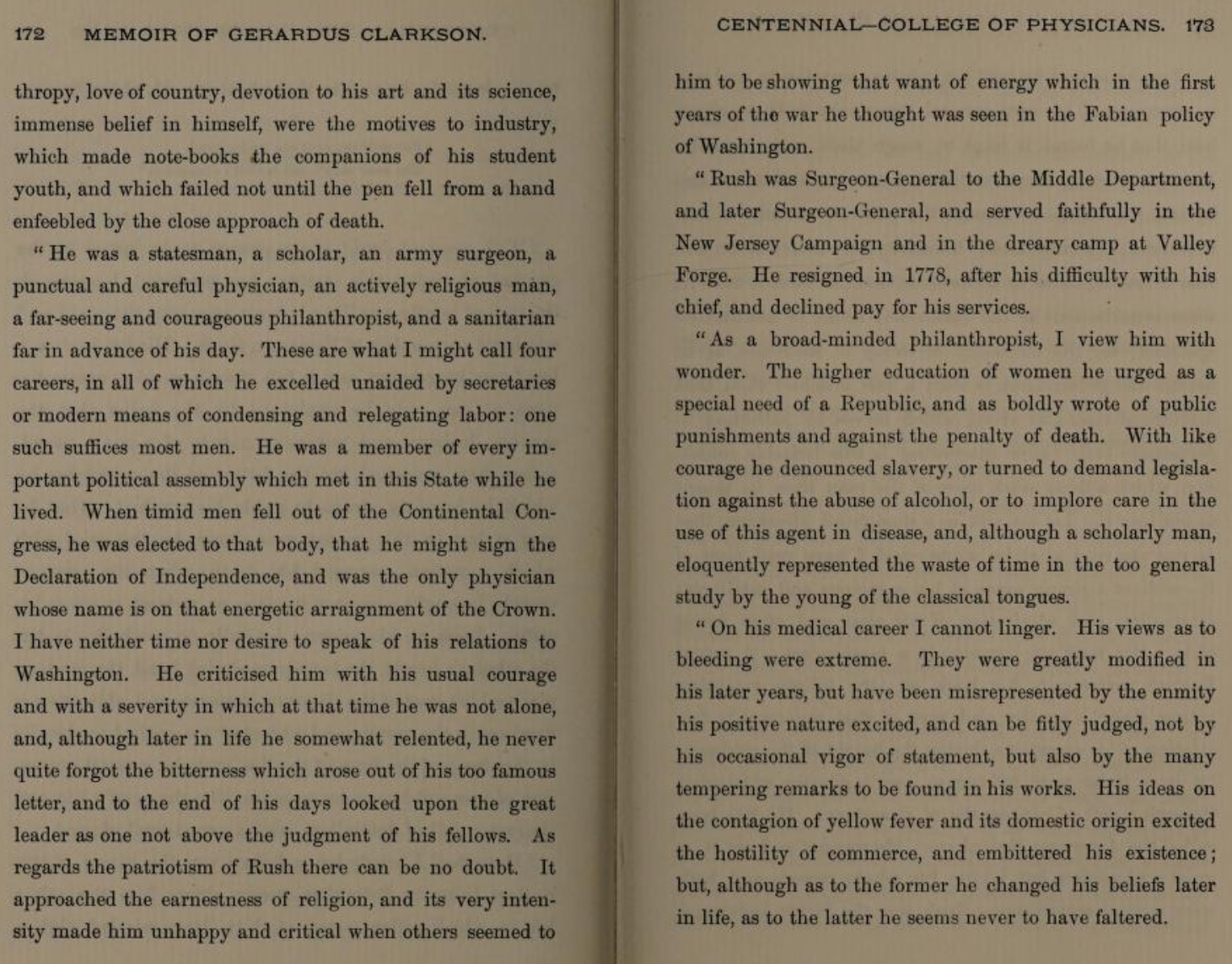
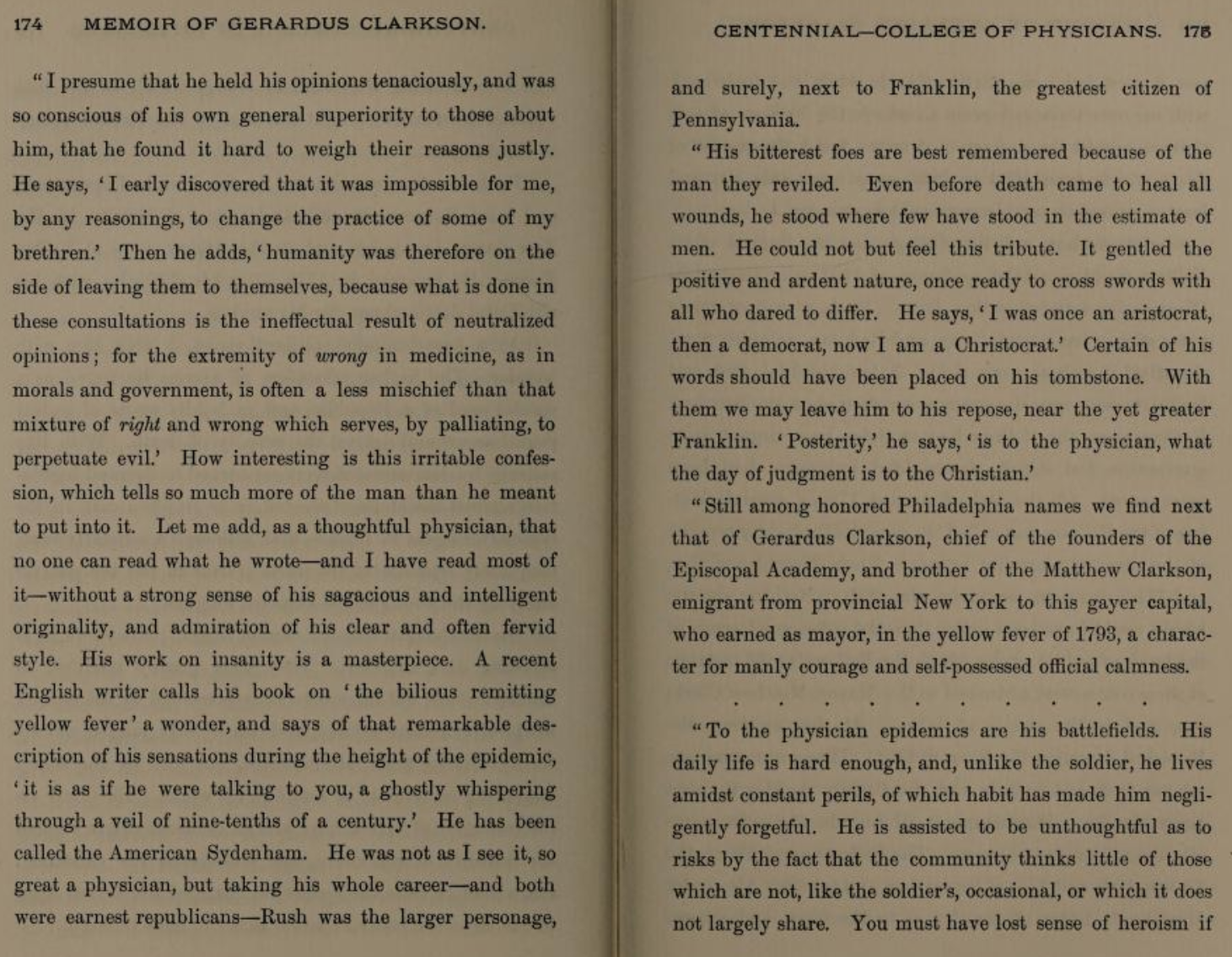
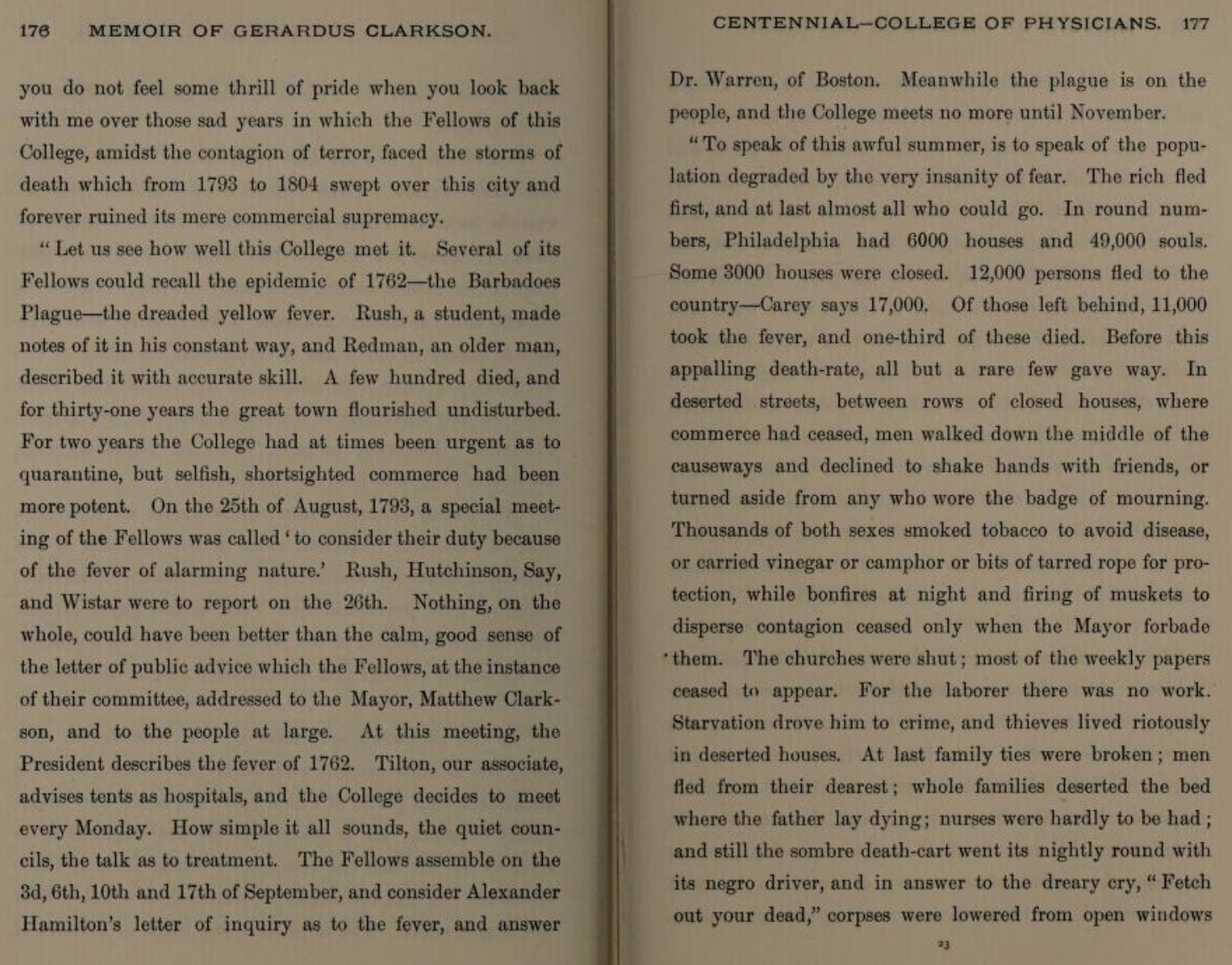
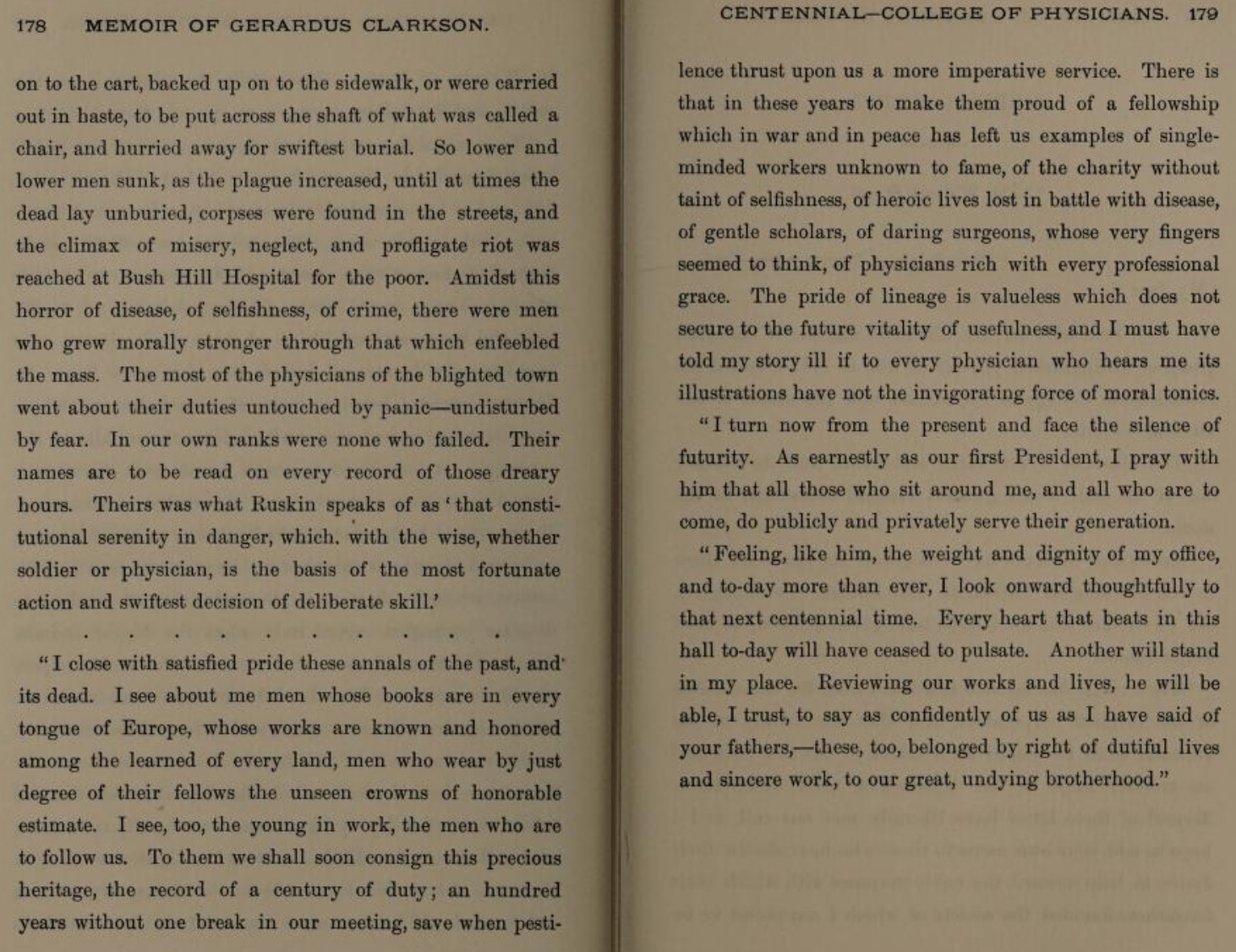
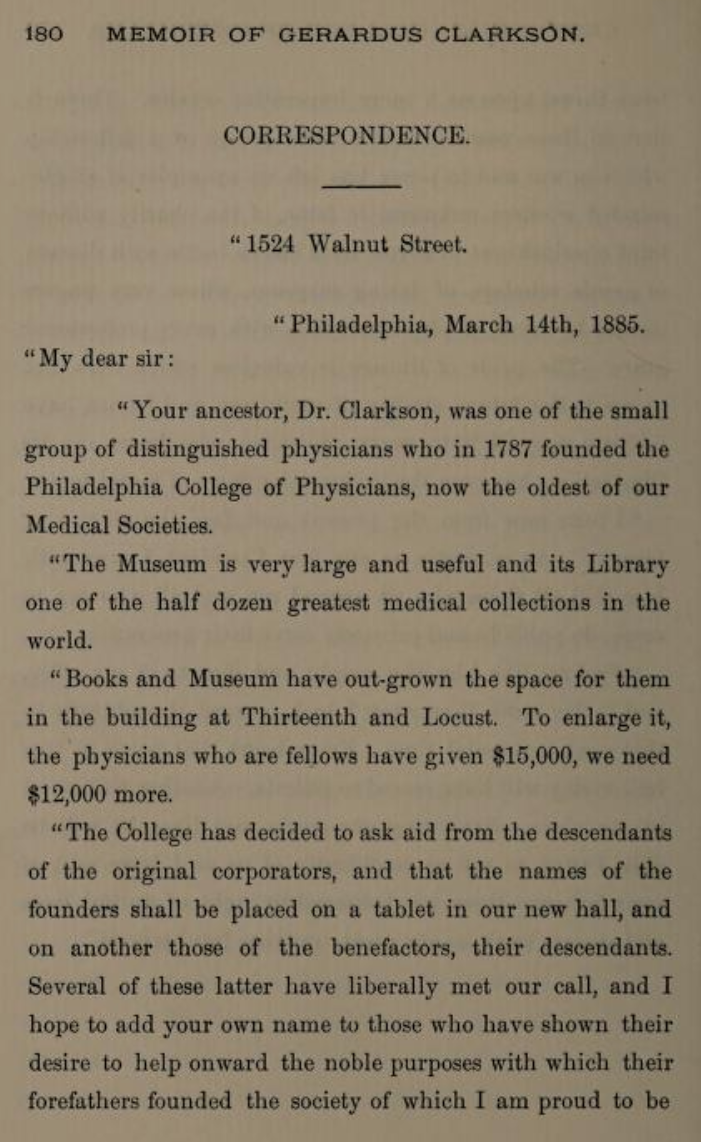
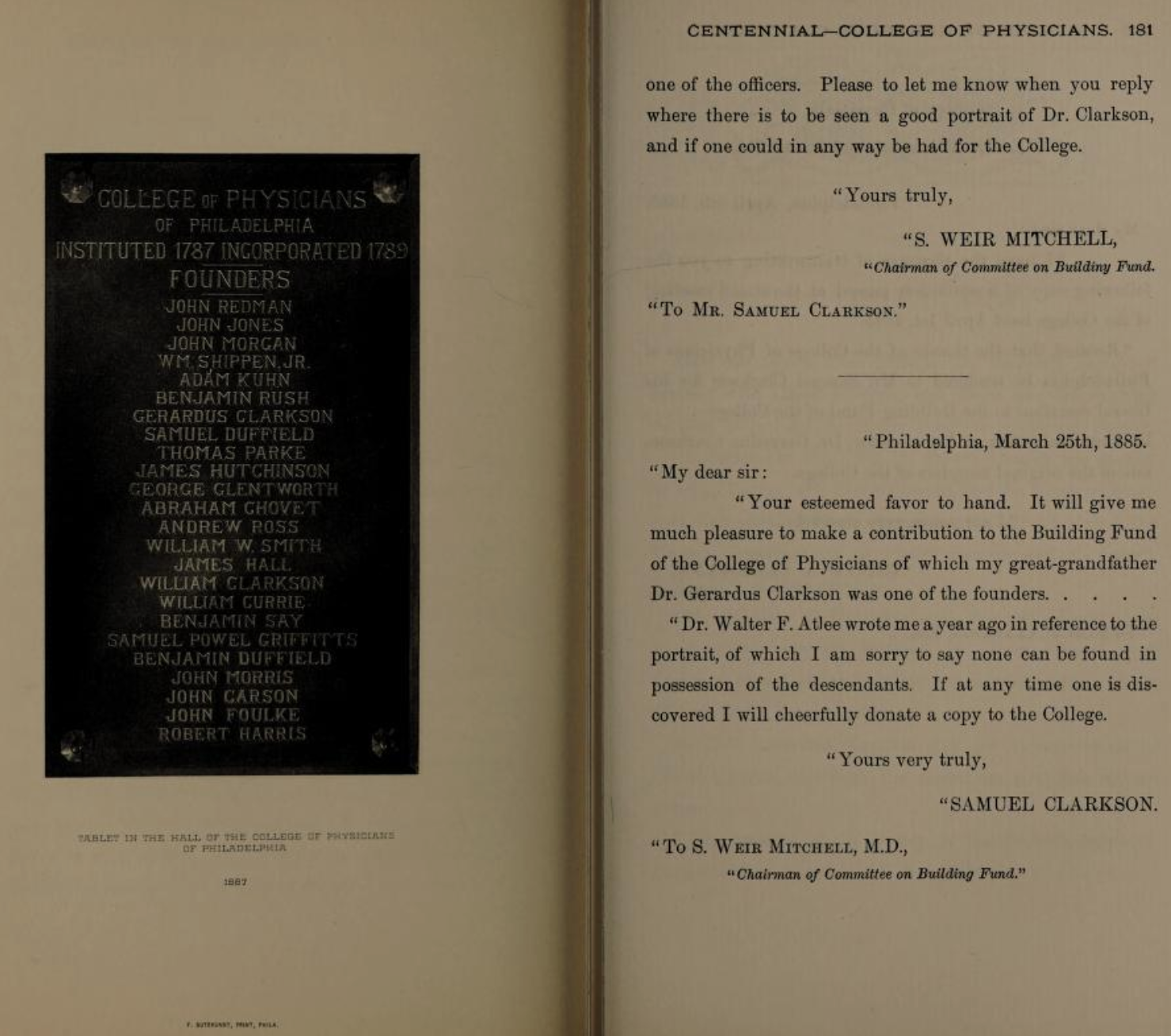
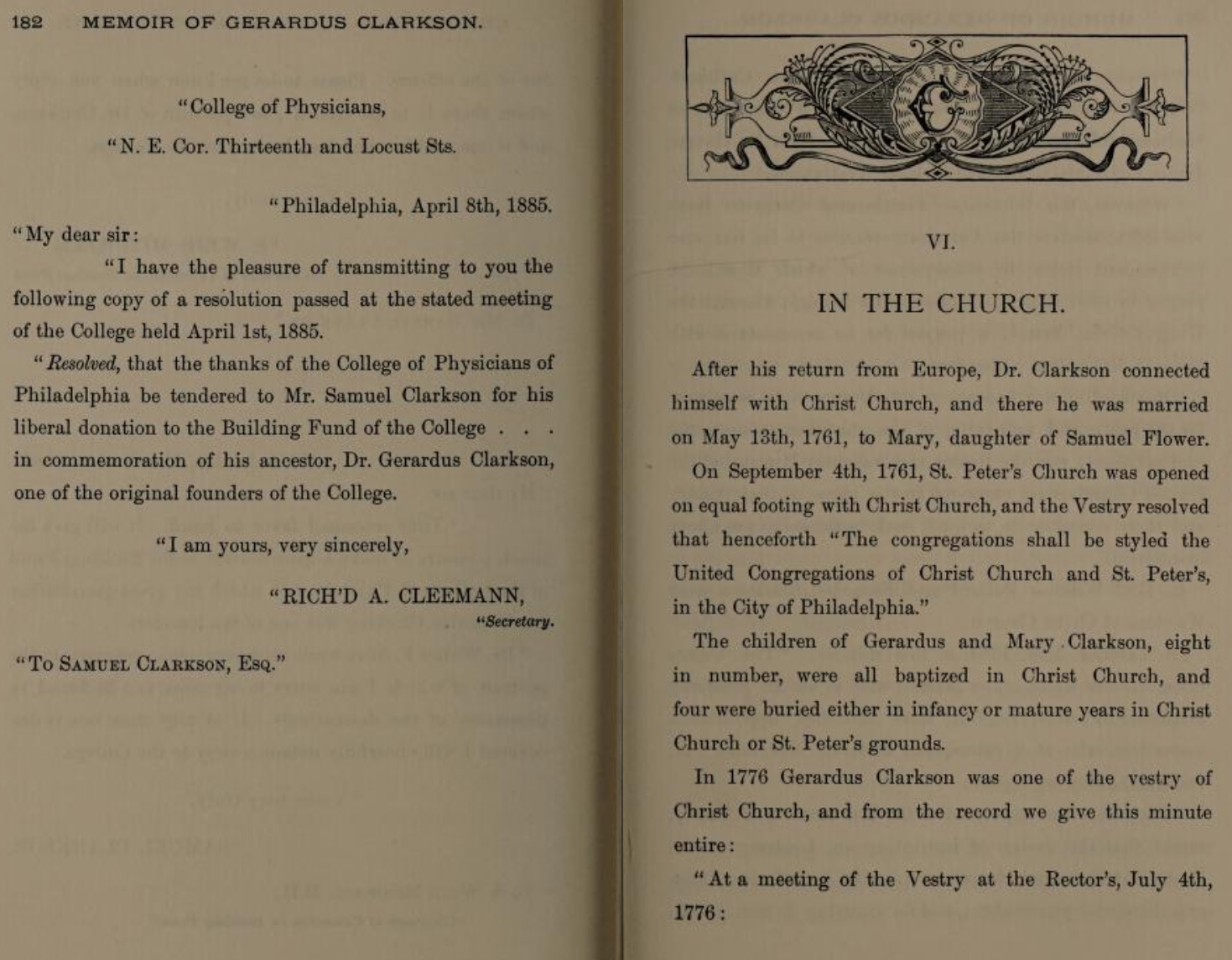
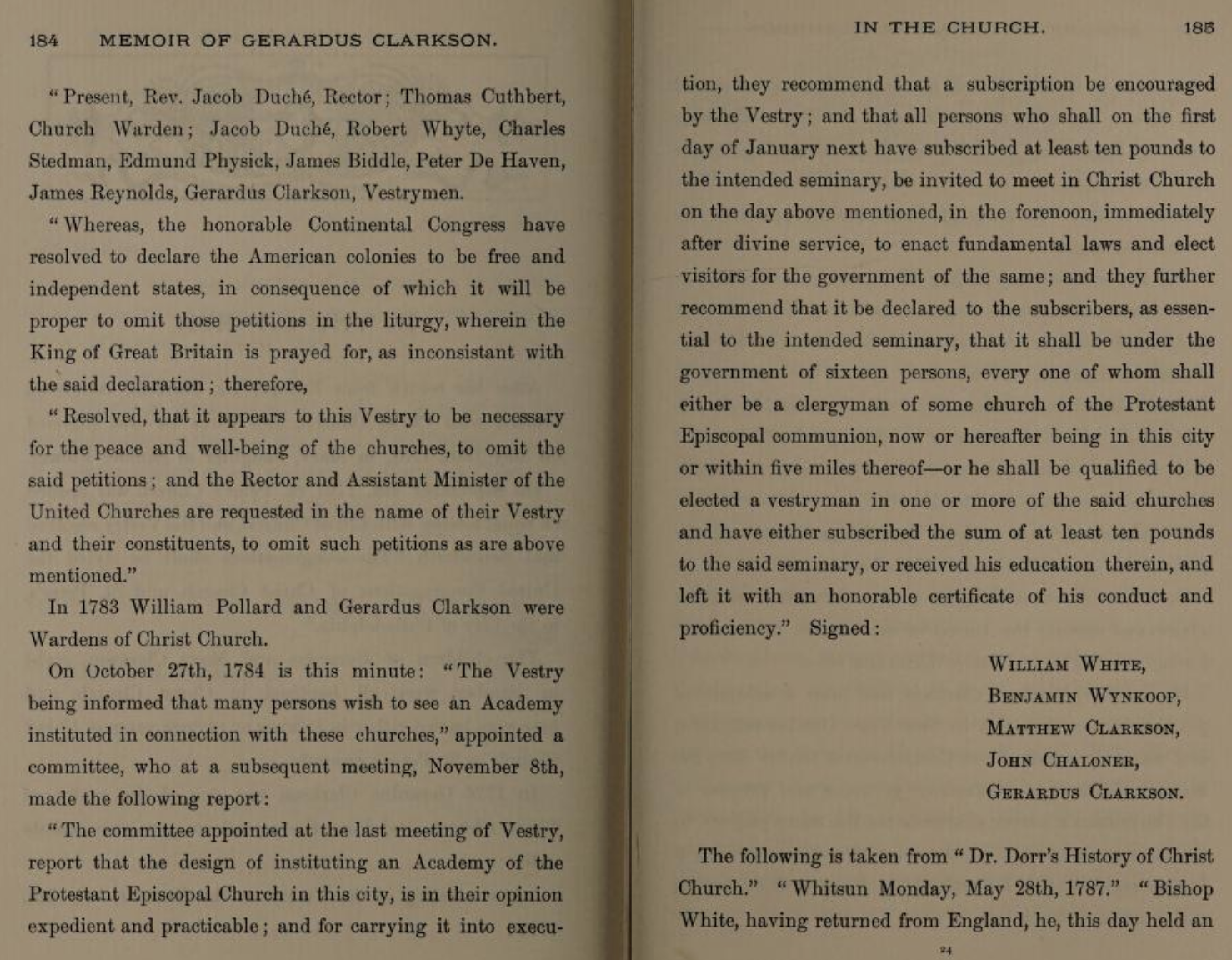
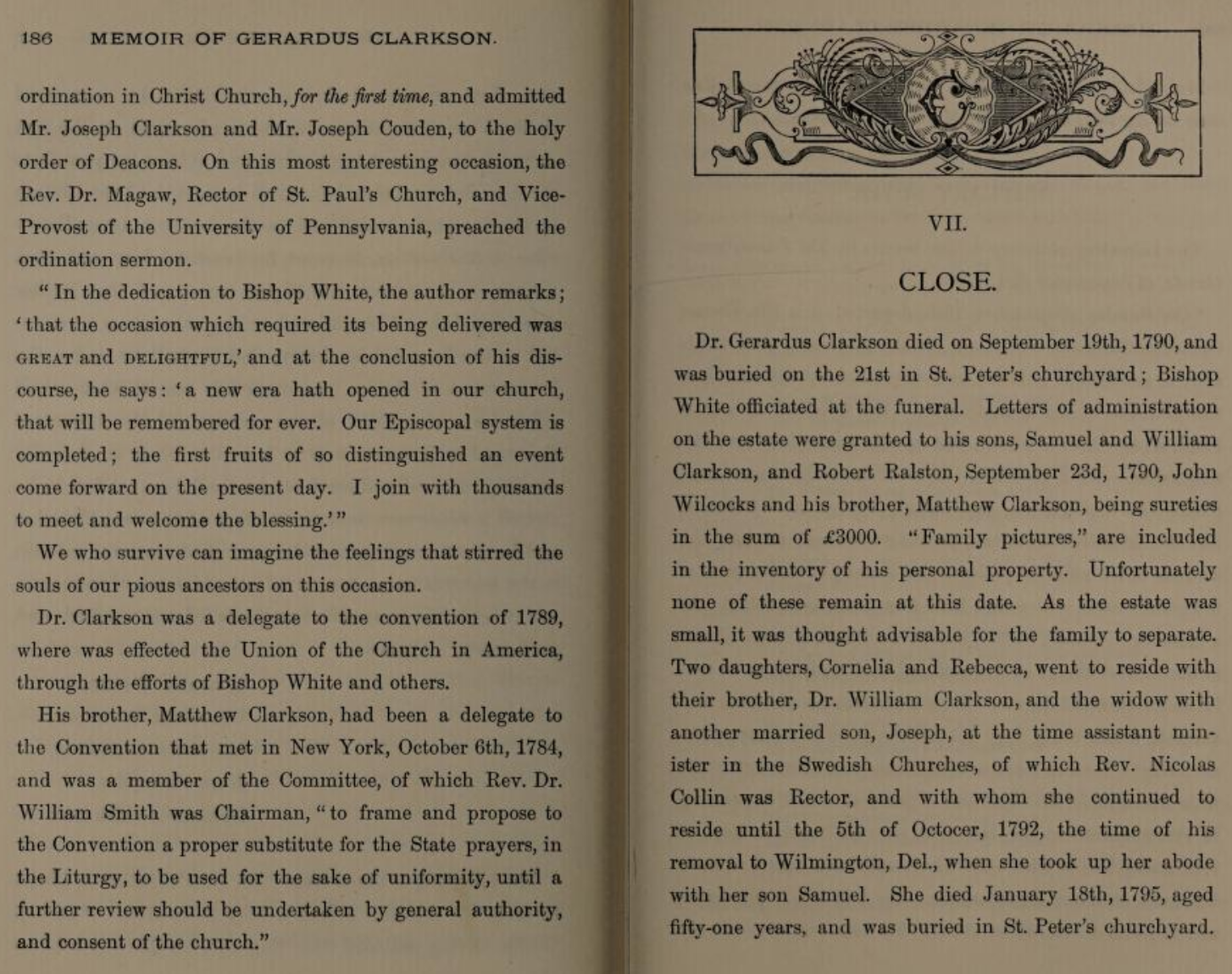
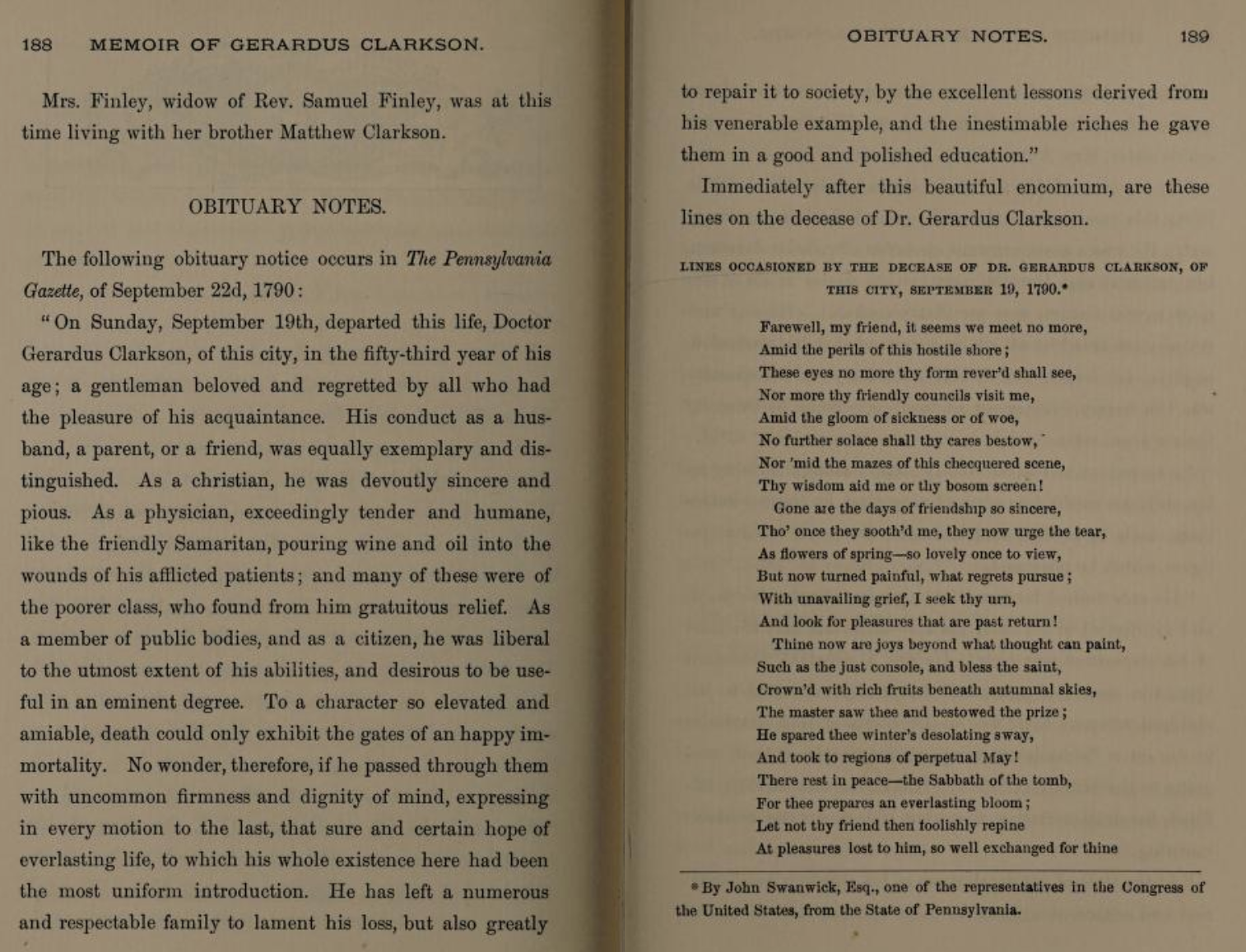
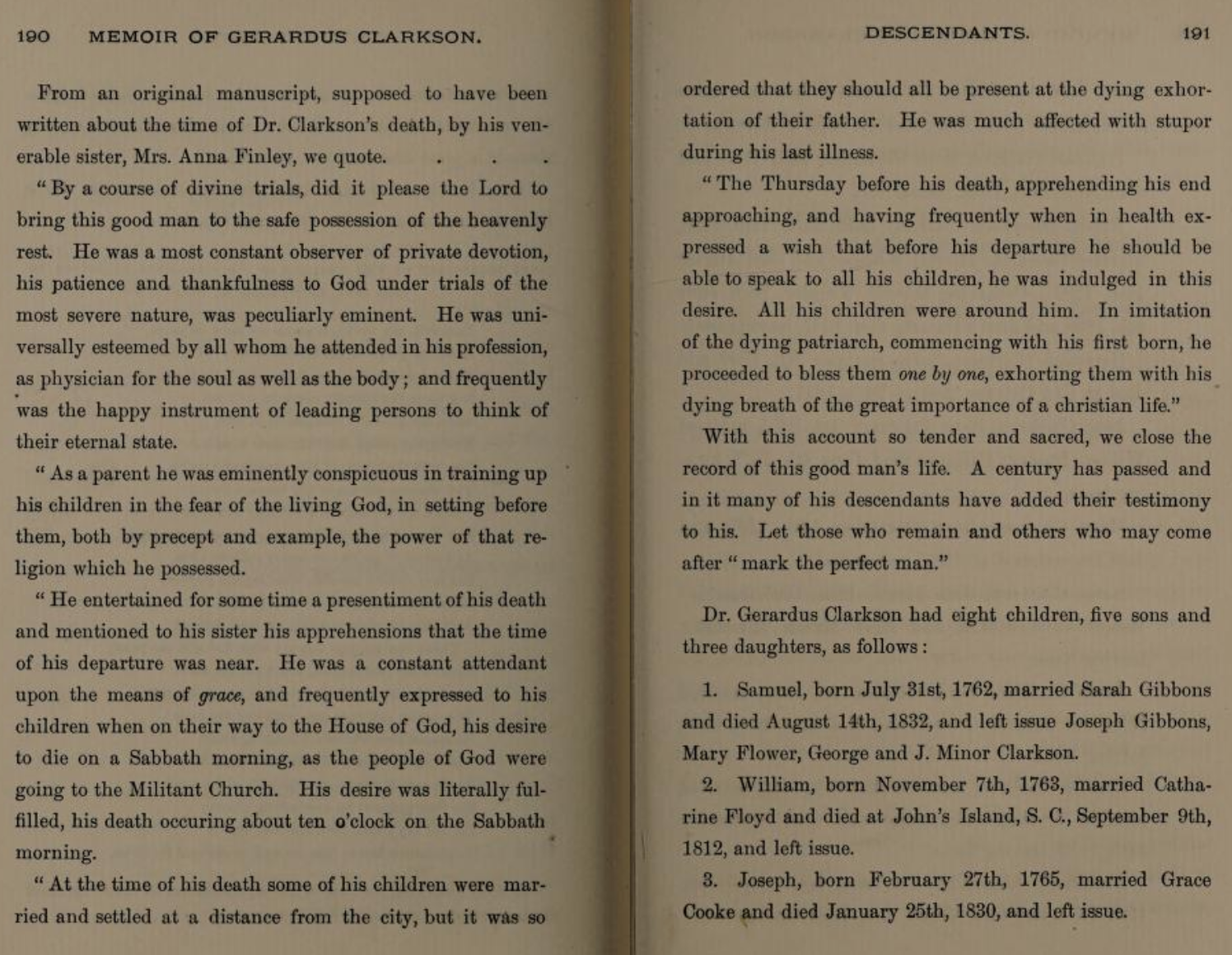
190-191

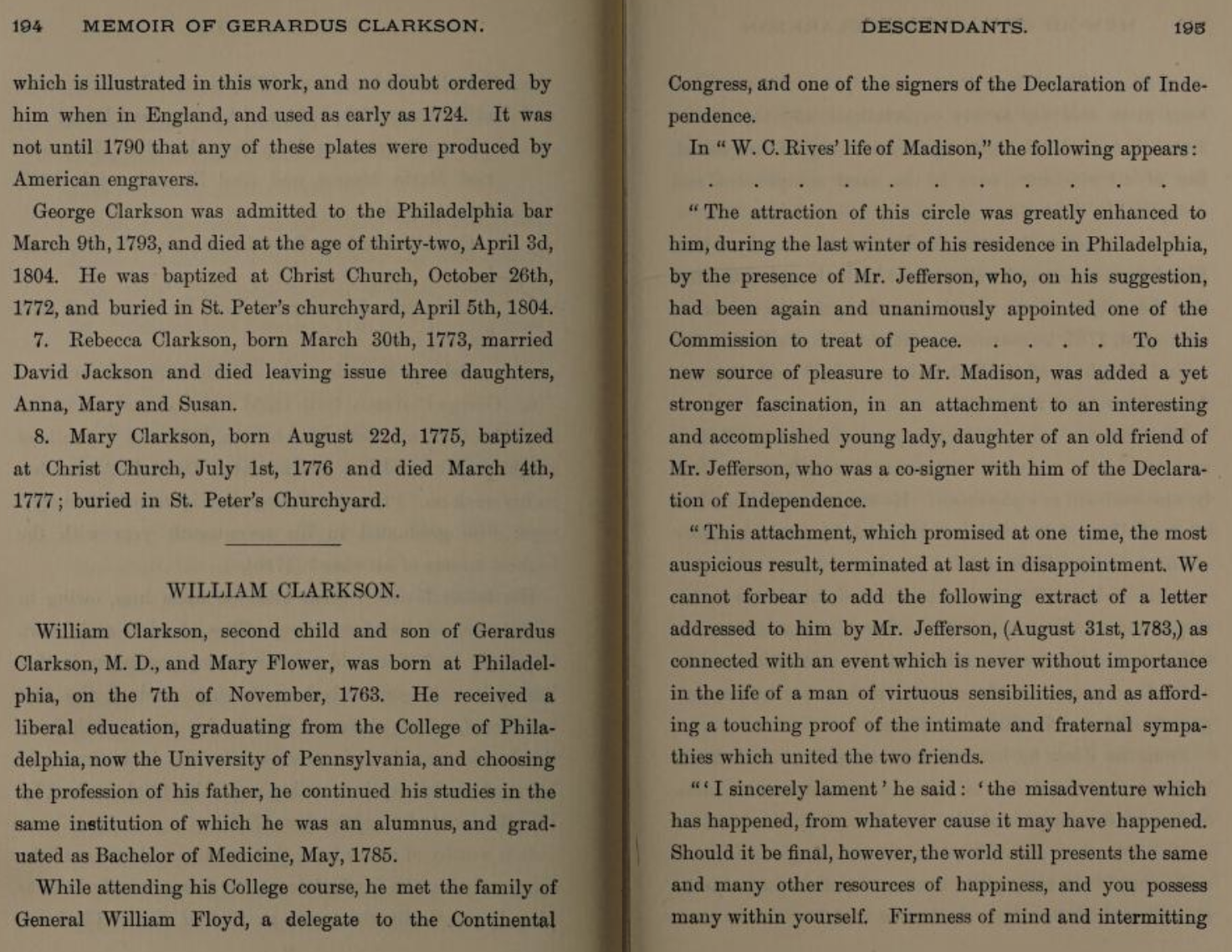
192-193
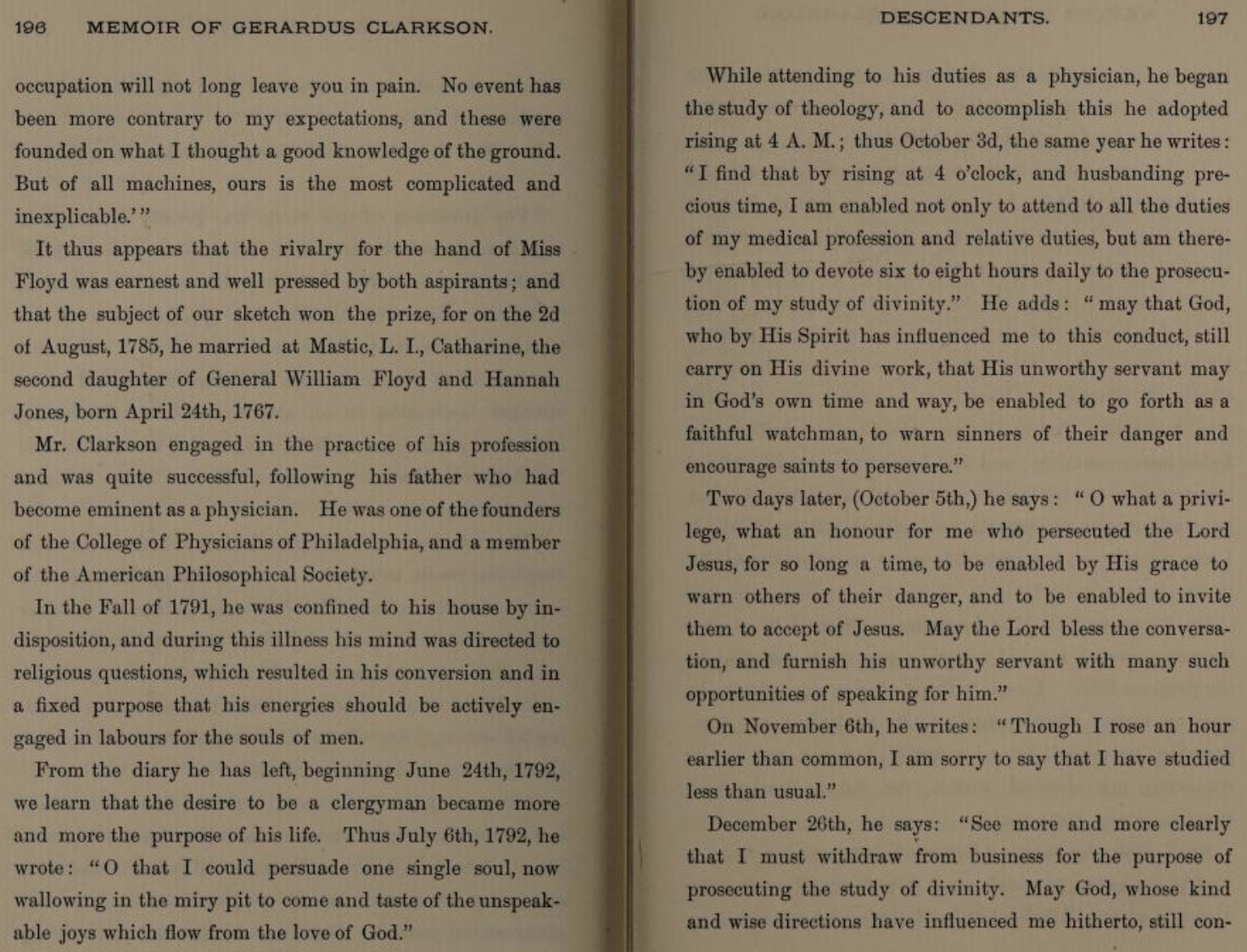
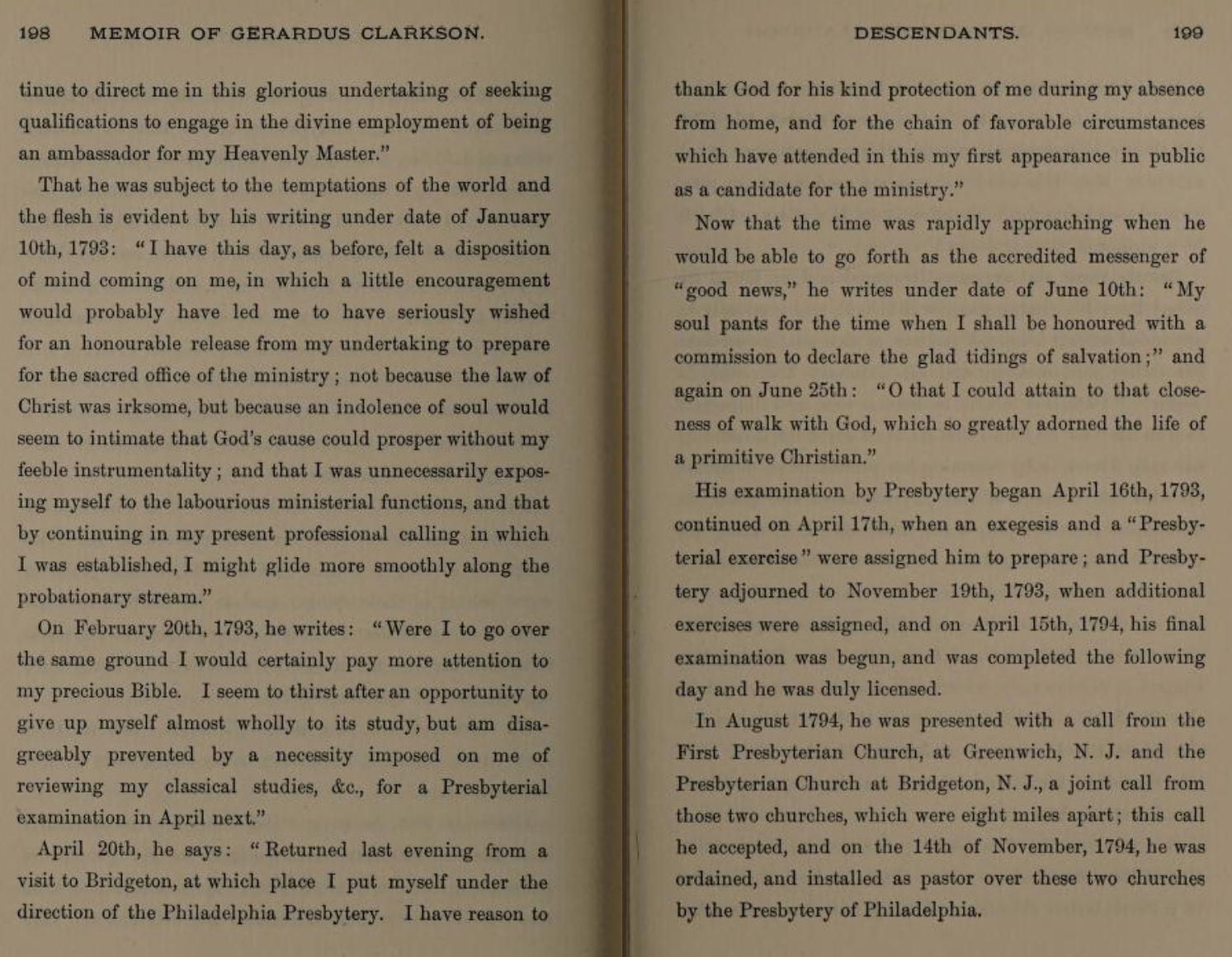
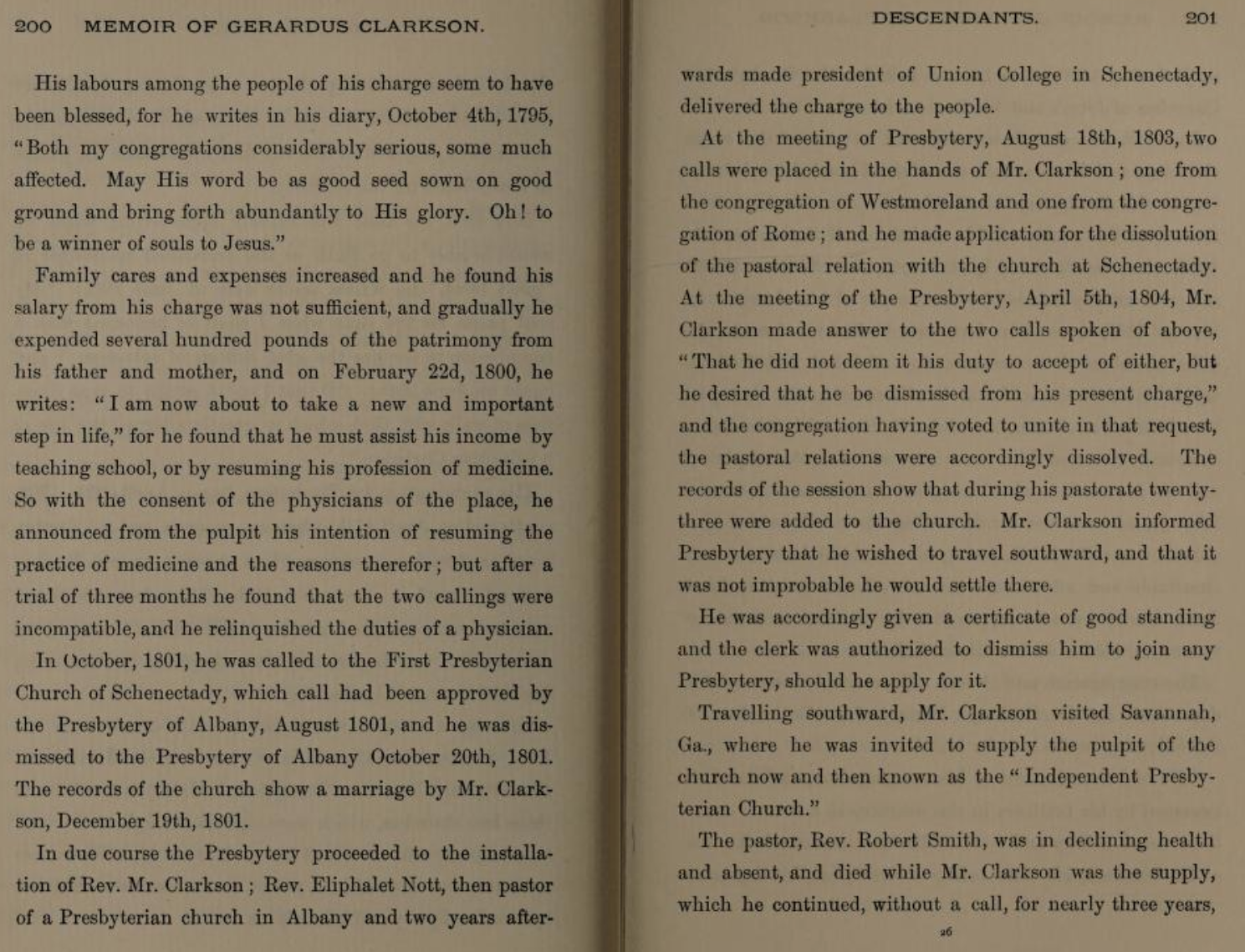
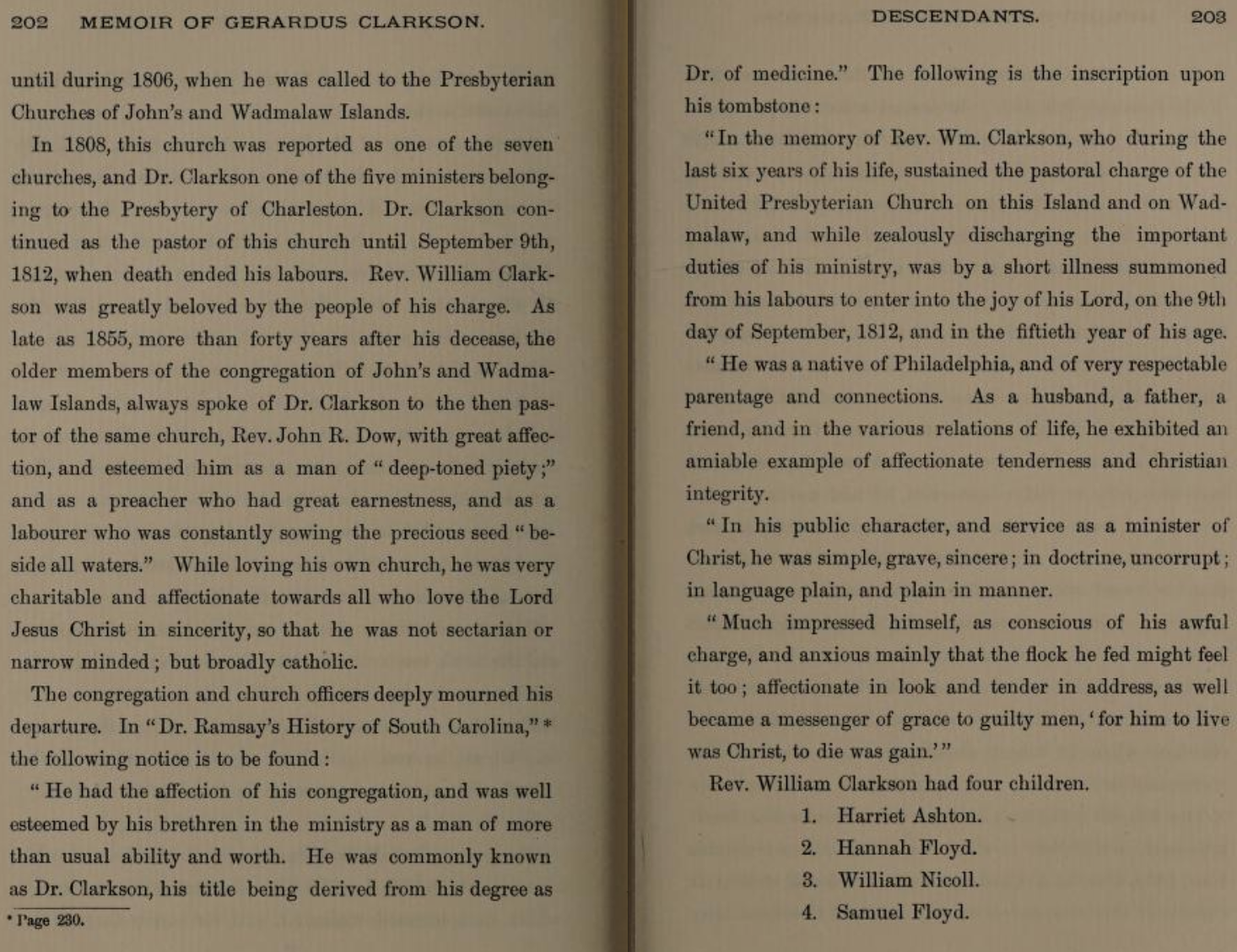
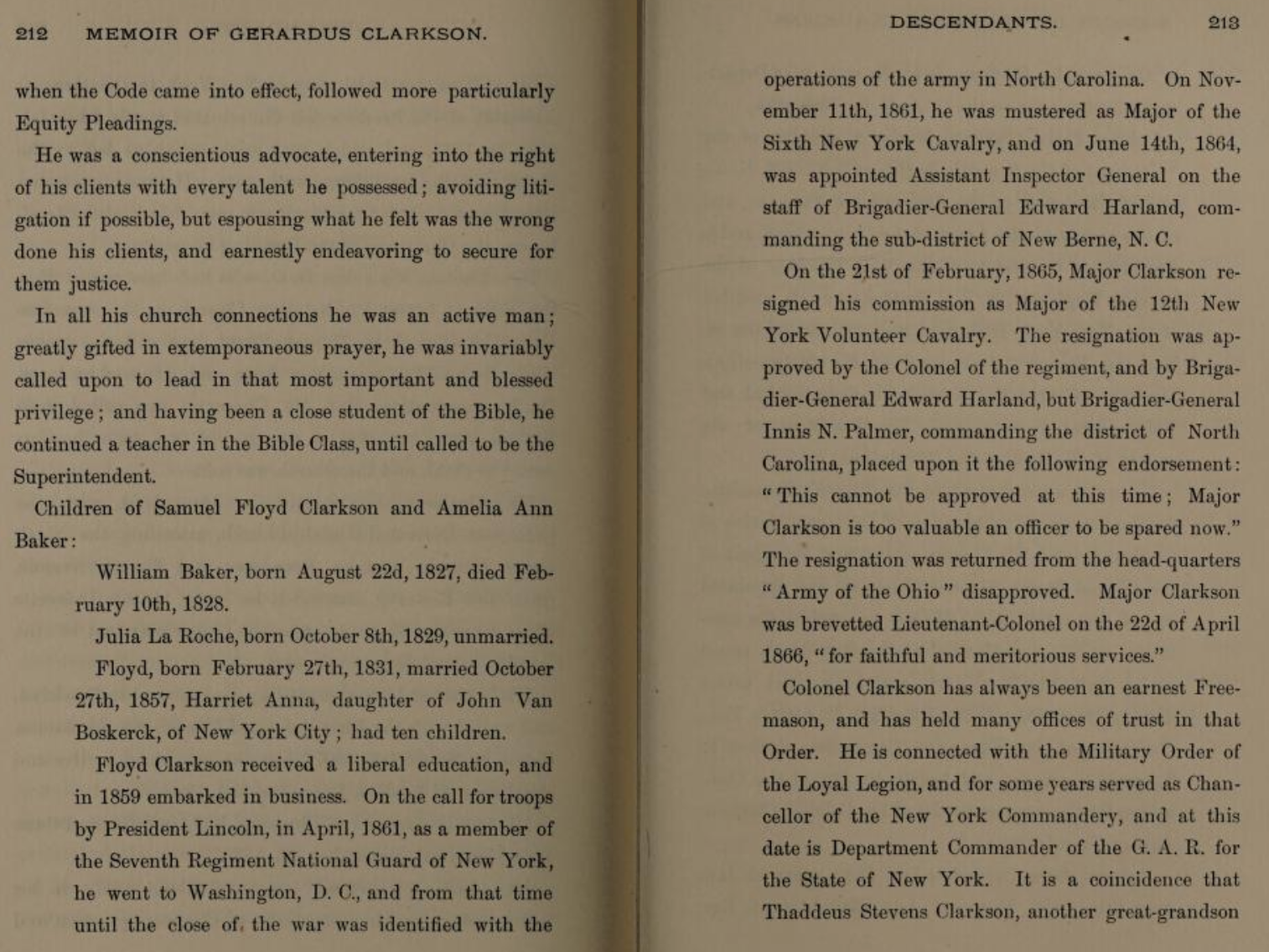
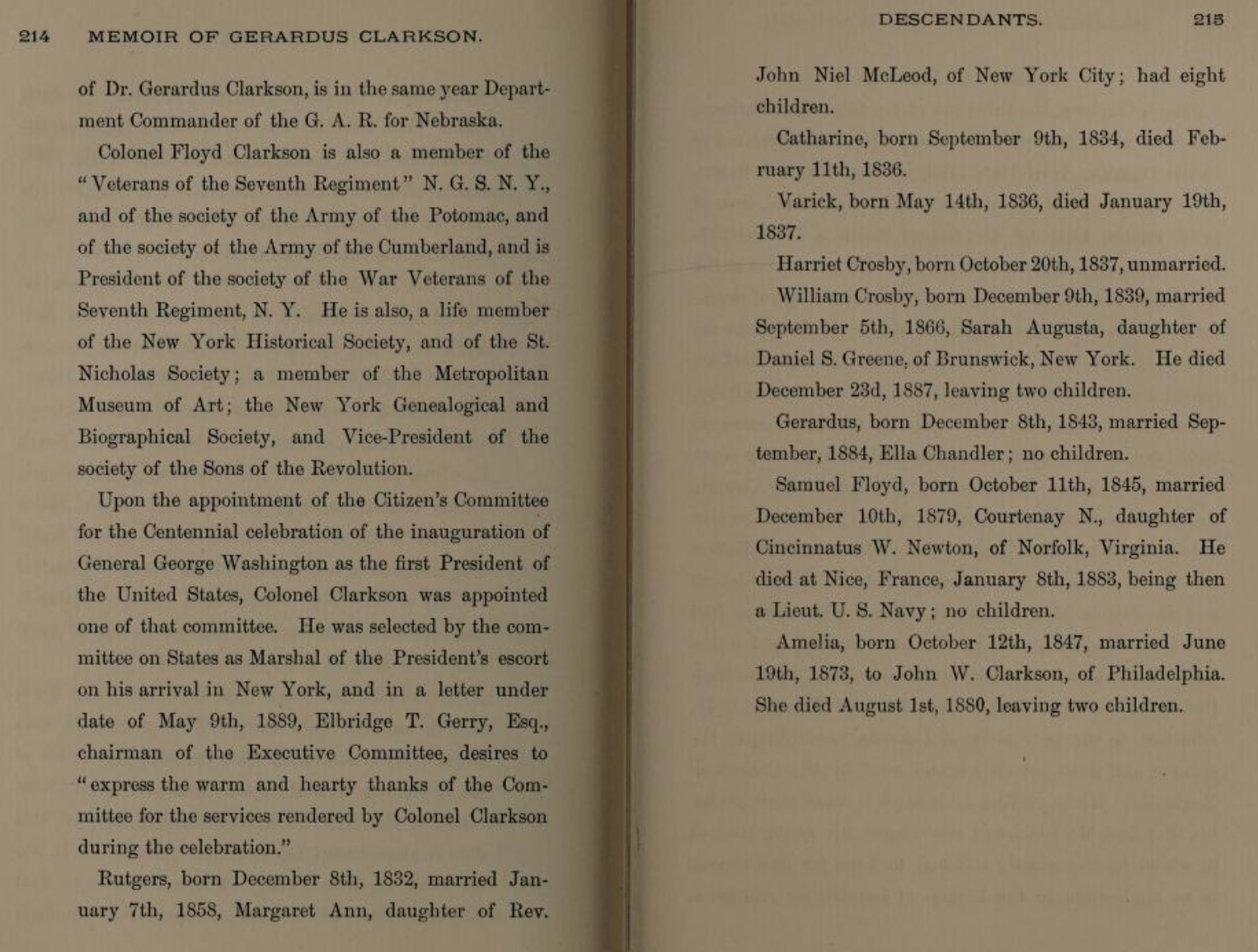
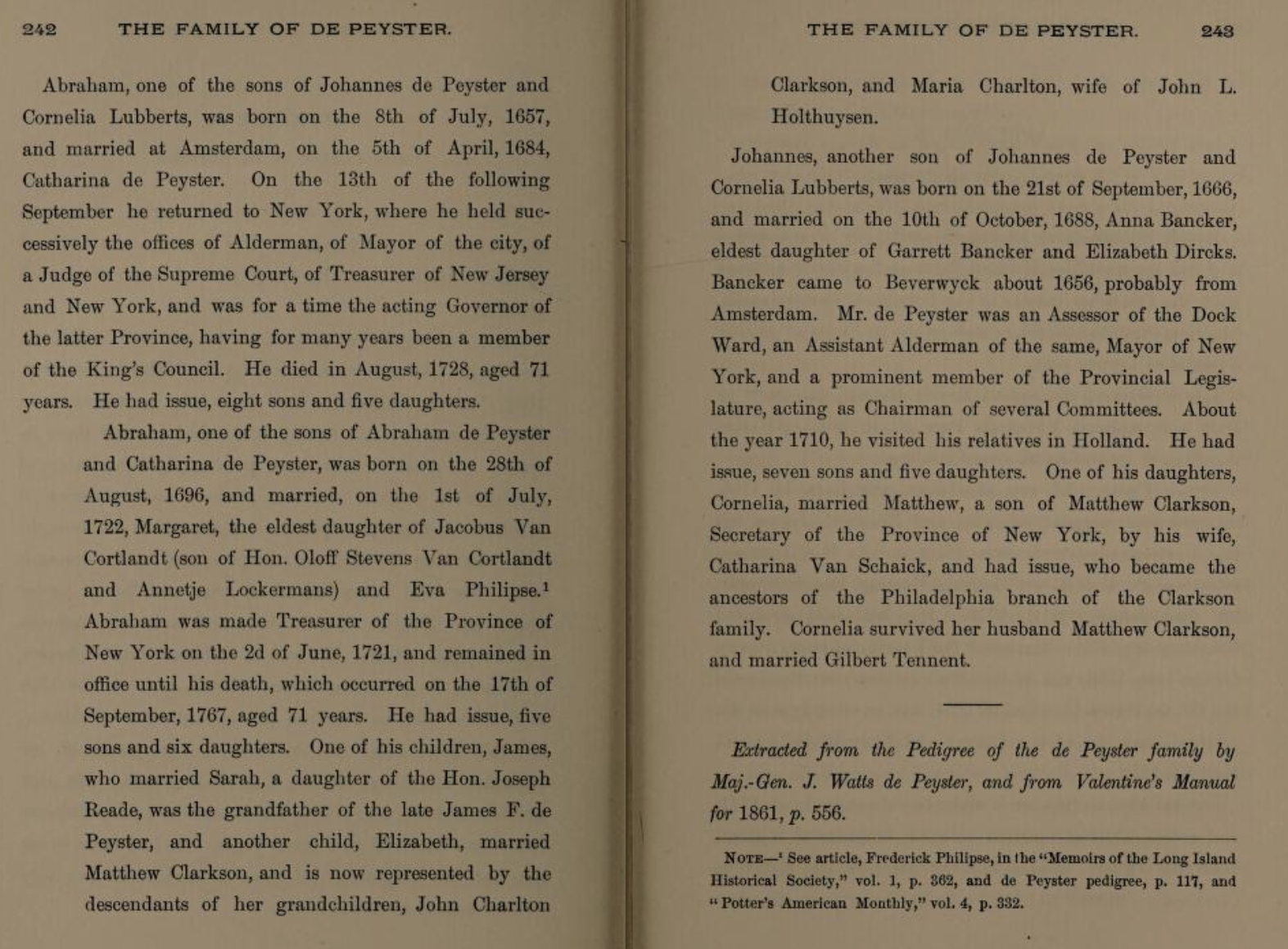
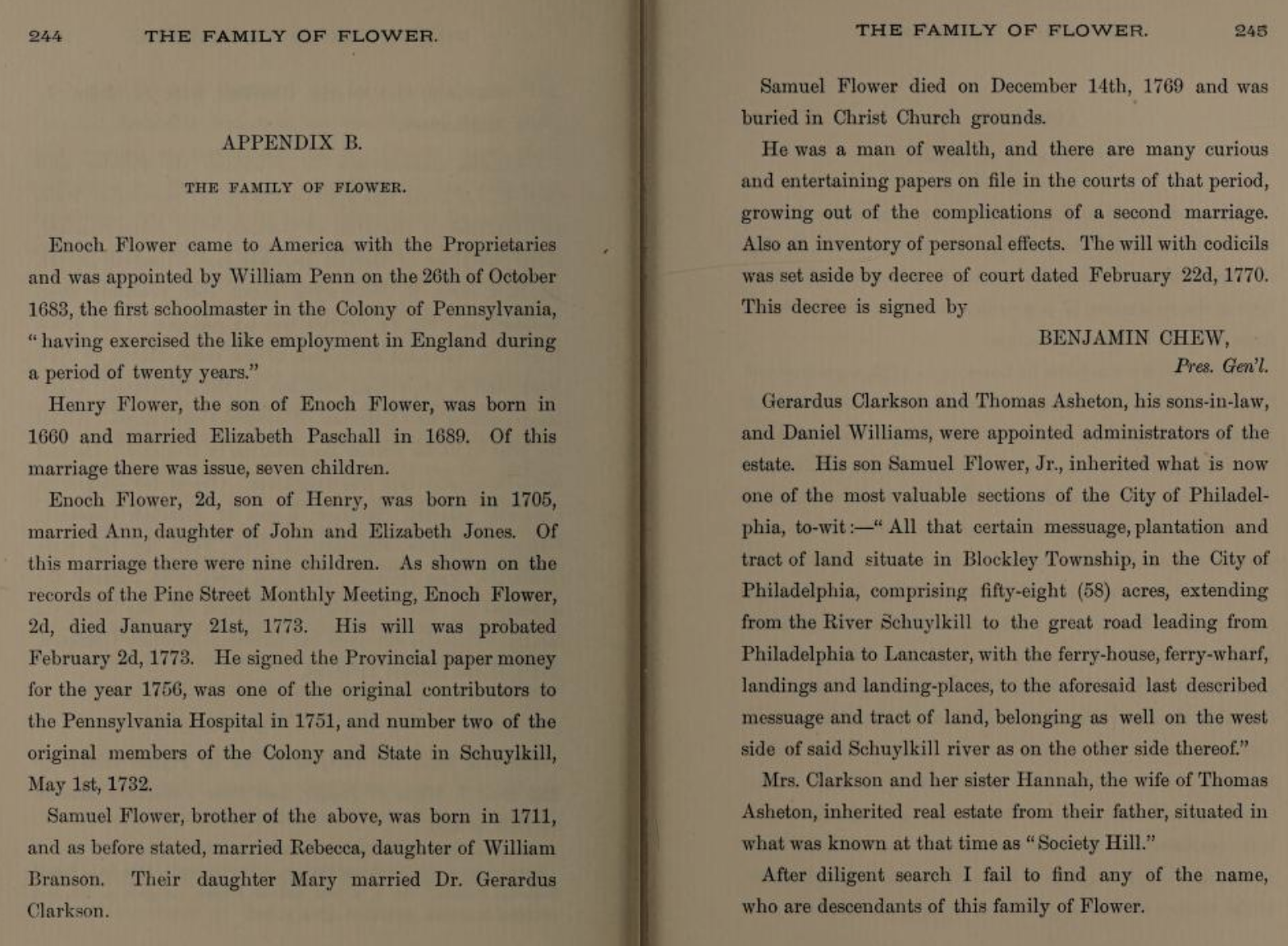
William Penn Connection to Dr. Gerardus Clarkson!!!
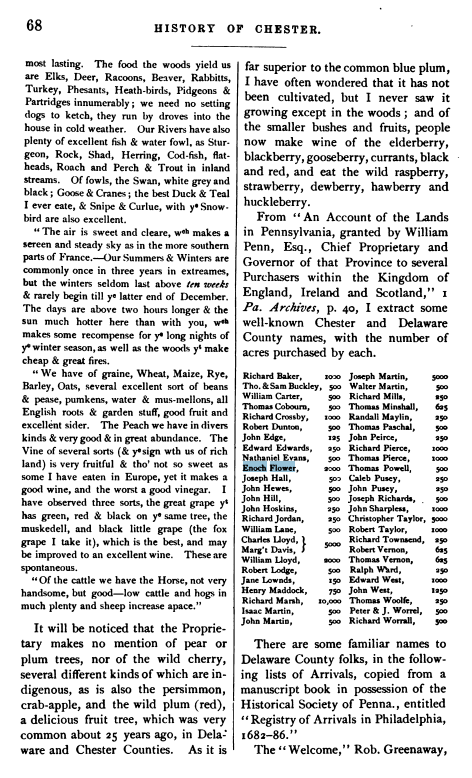
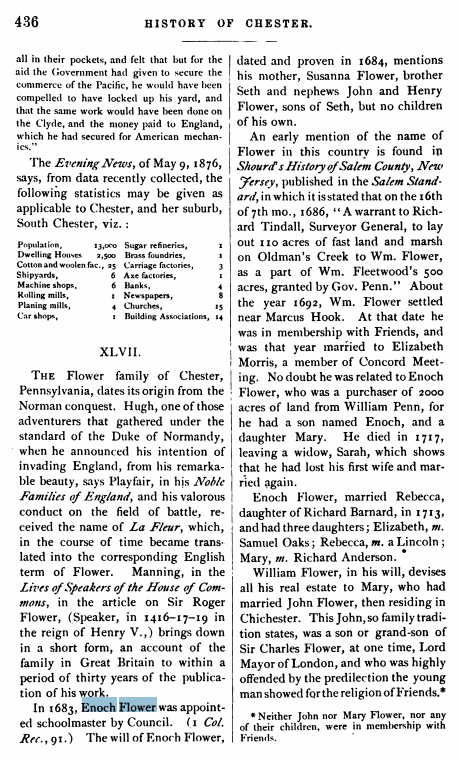
STUDY ENOCH FLOWER.
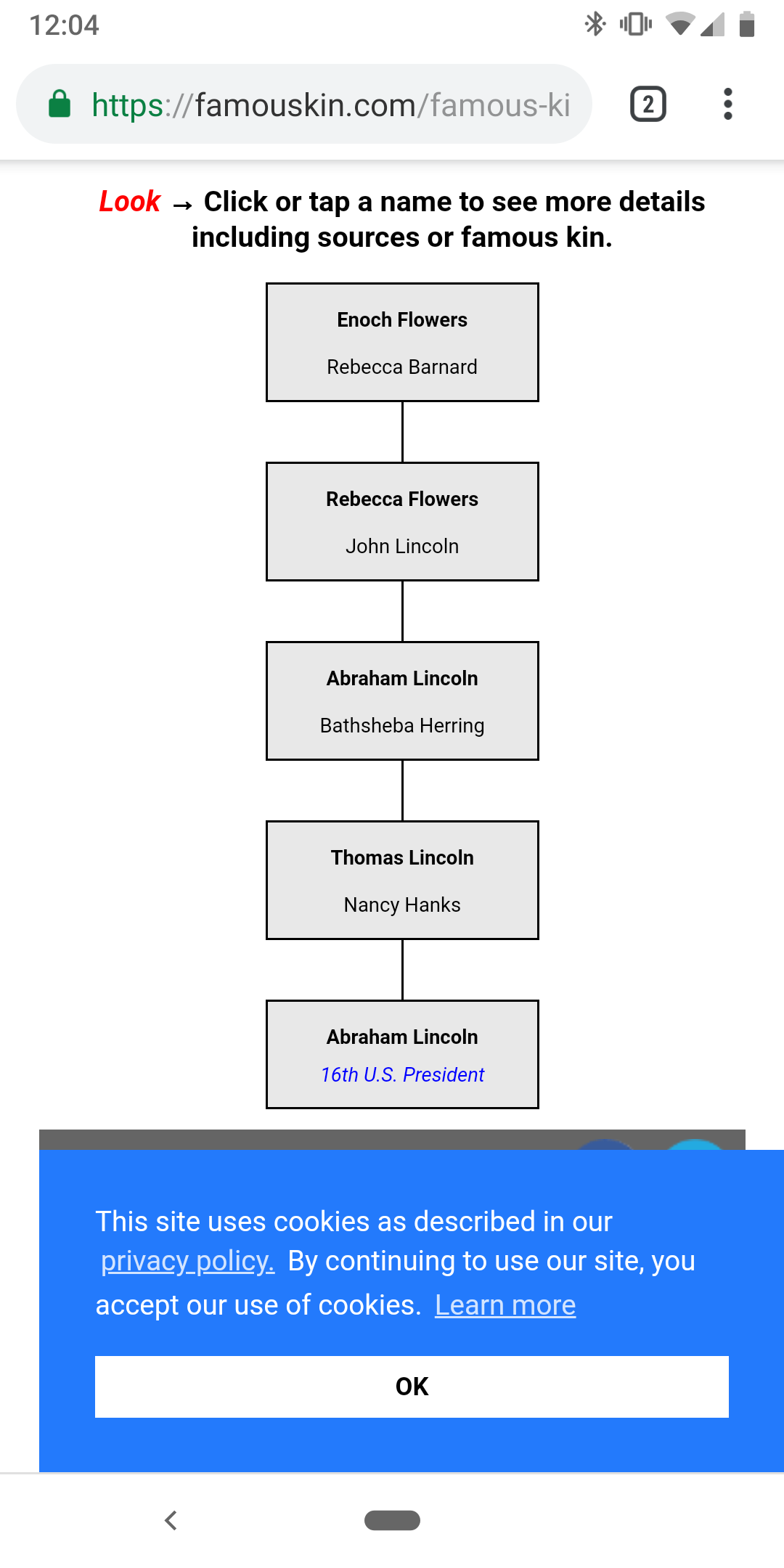
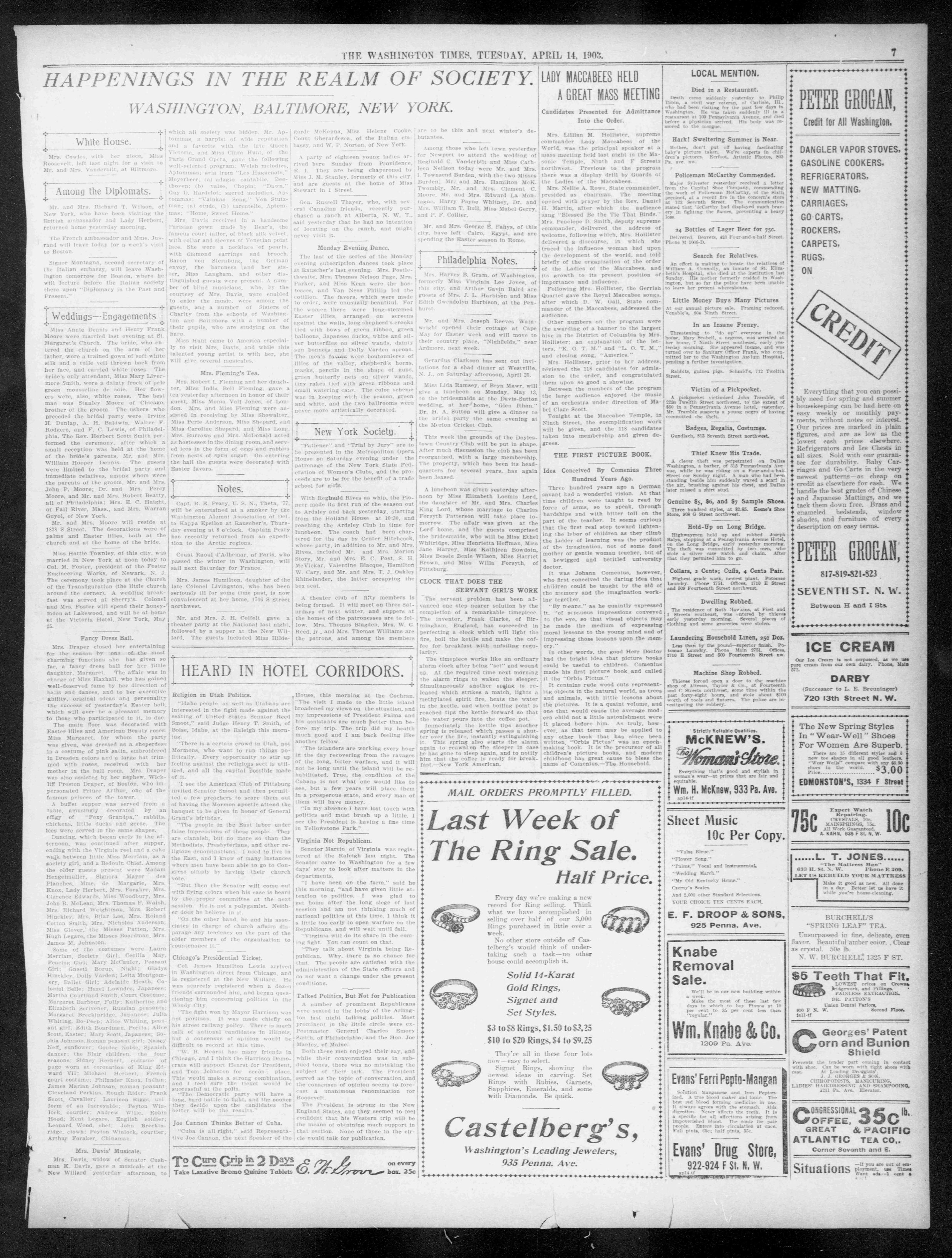
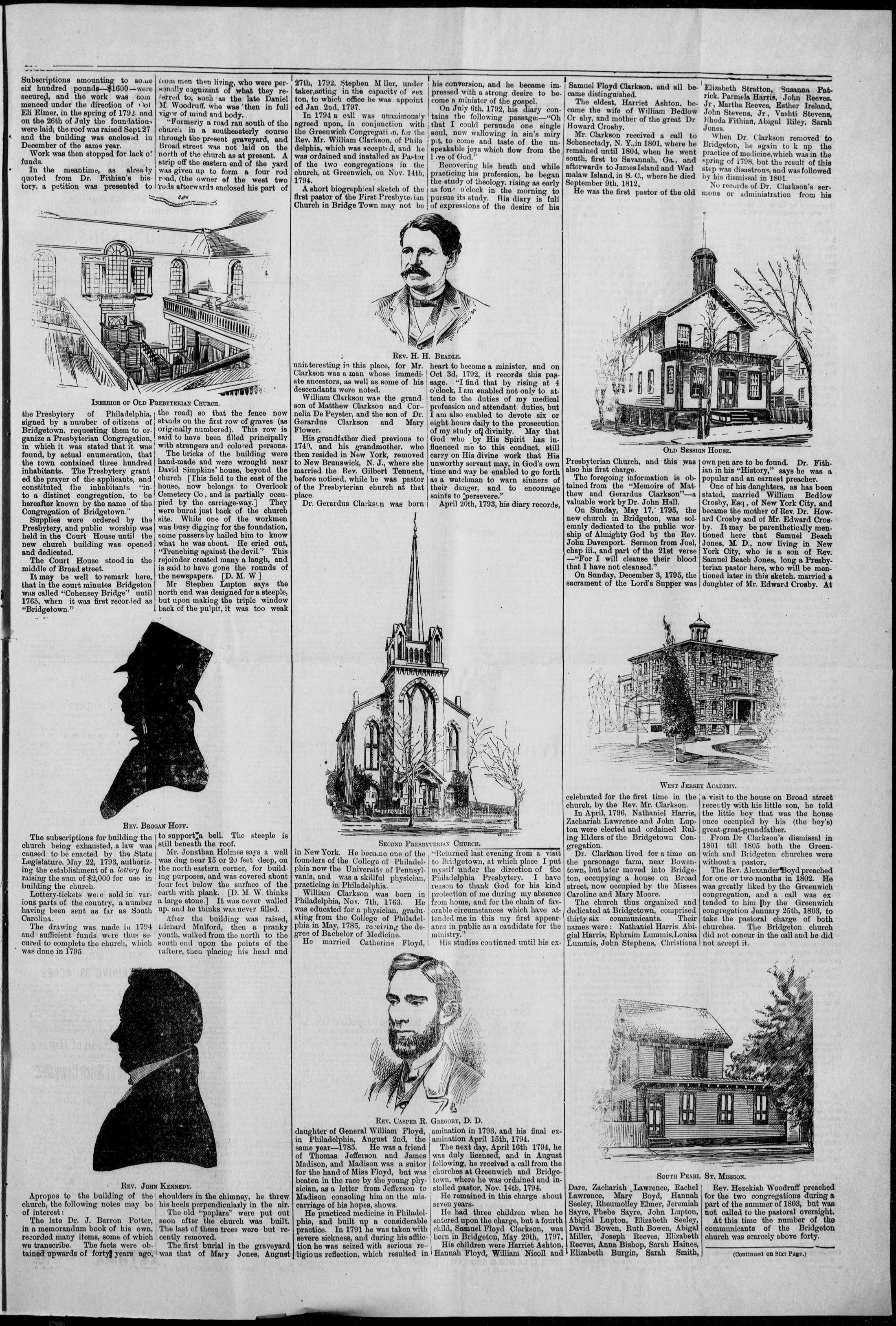
October 26th, 1683 – William Penn appointed Enoch Flower as the first school master in the colony of Pennsylvania. Enoch Flower purchase 2000 acres from William Penn in Philadelphia, His great-great grand-daughter Mary Flower married Dr. Gerardus:
Pennsylvania Prison Society:
History:
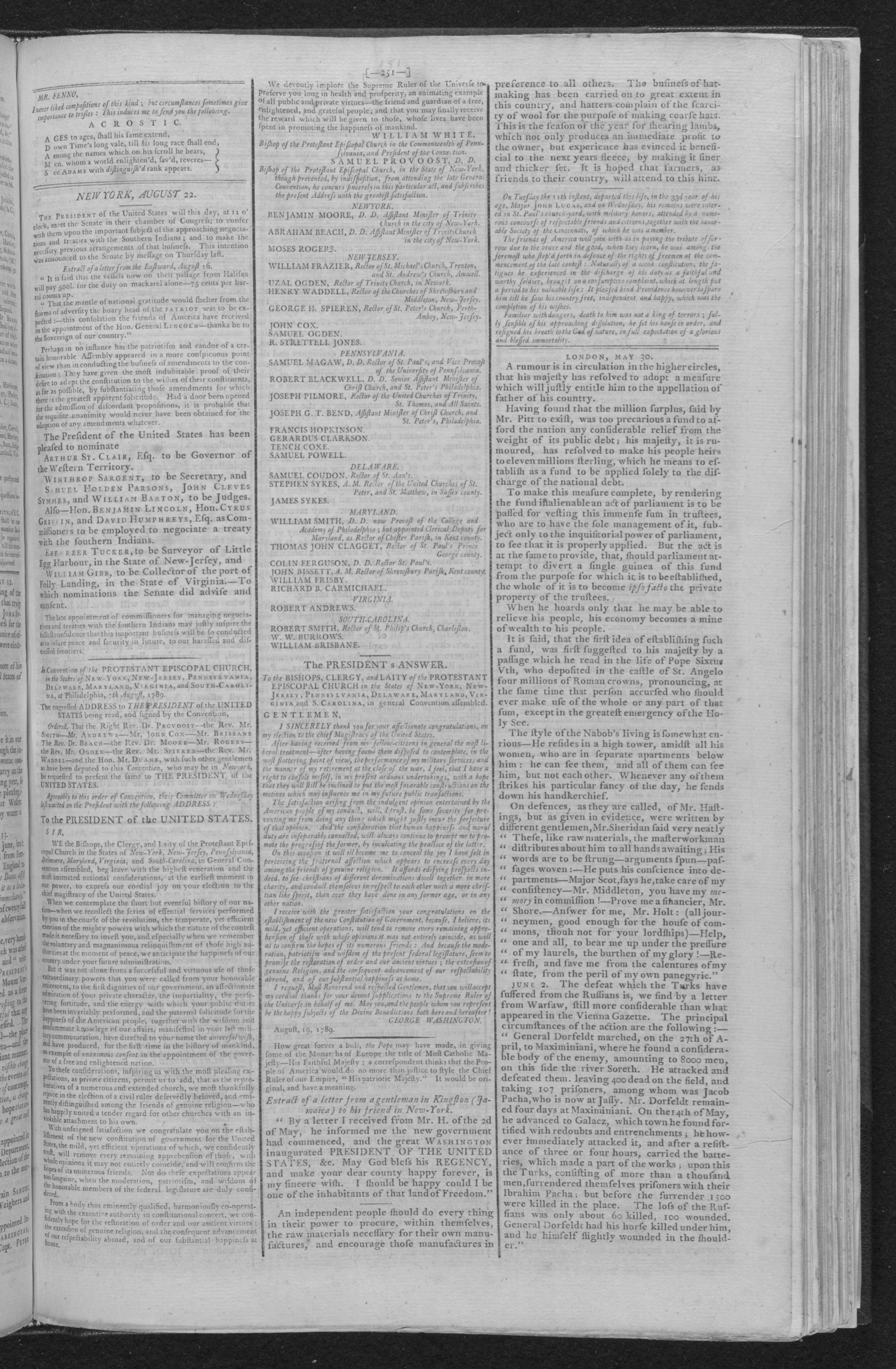
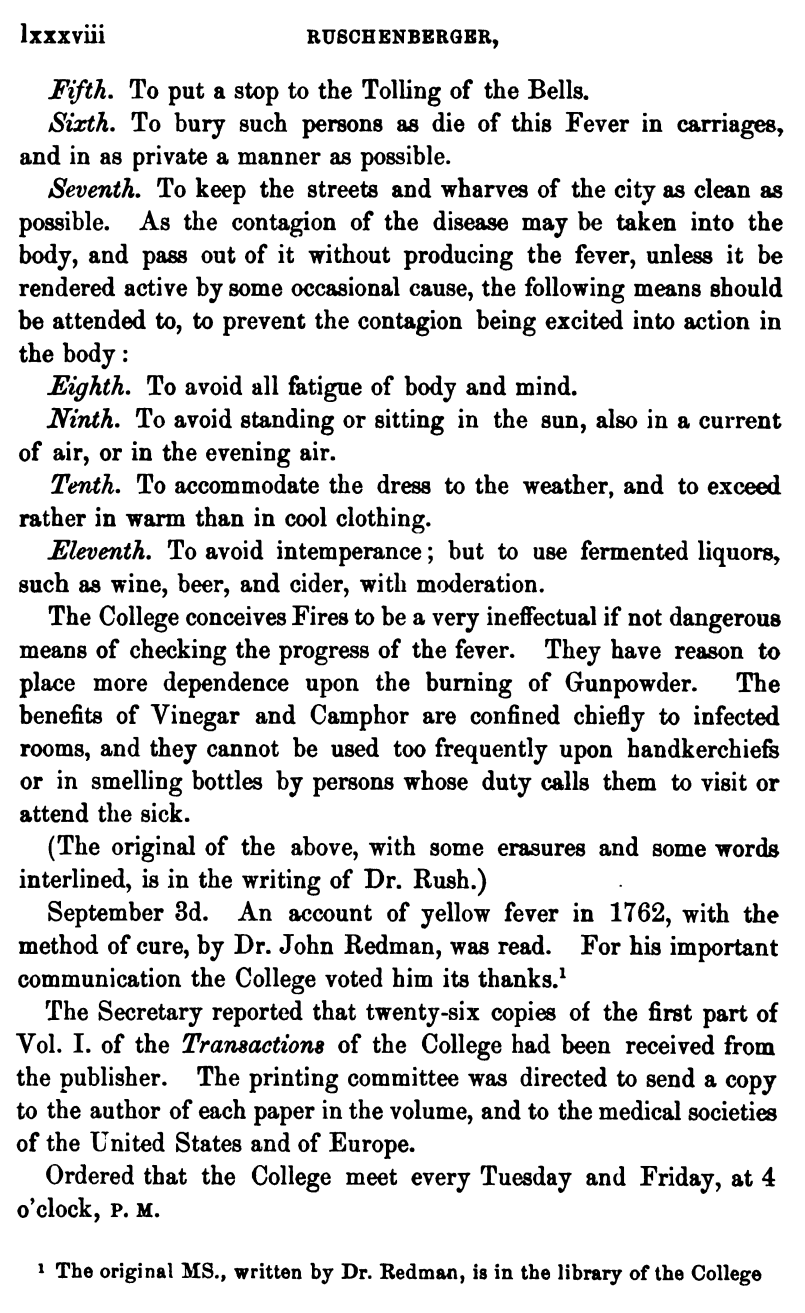
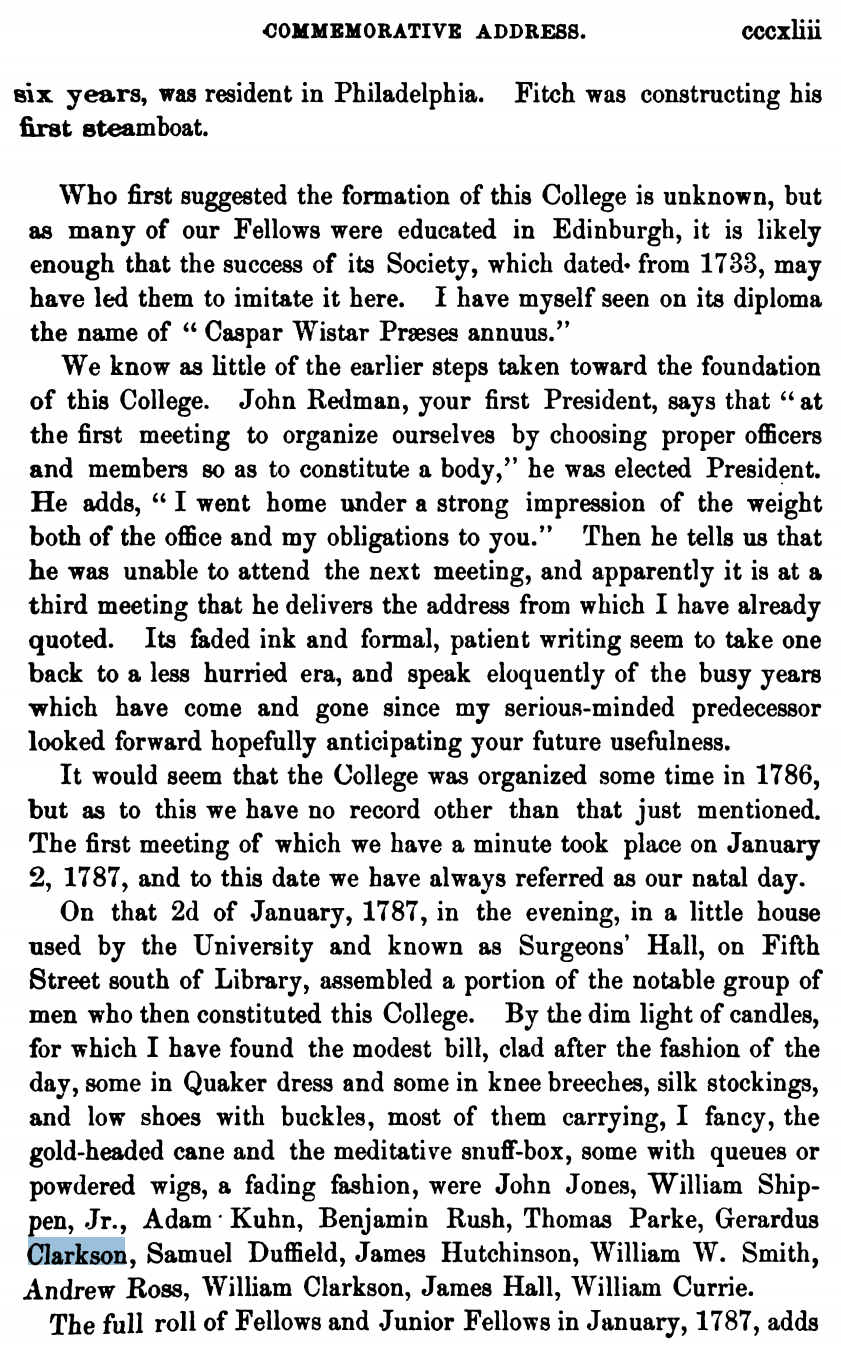
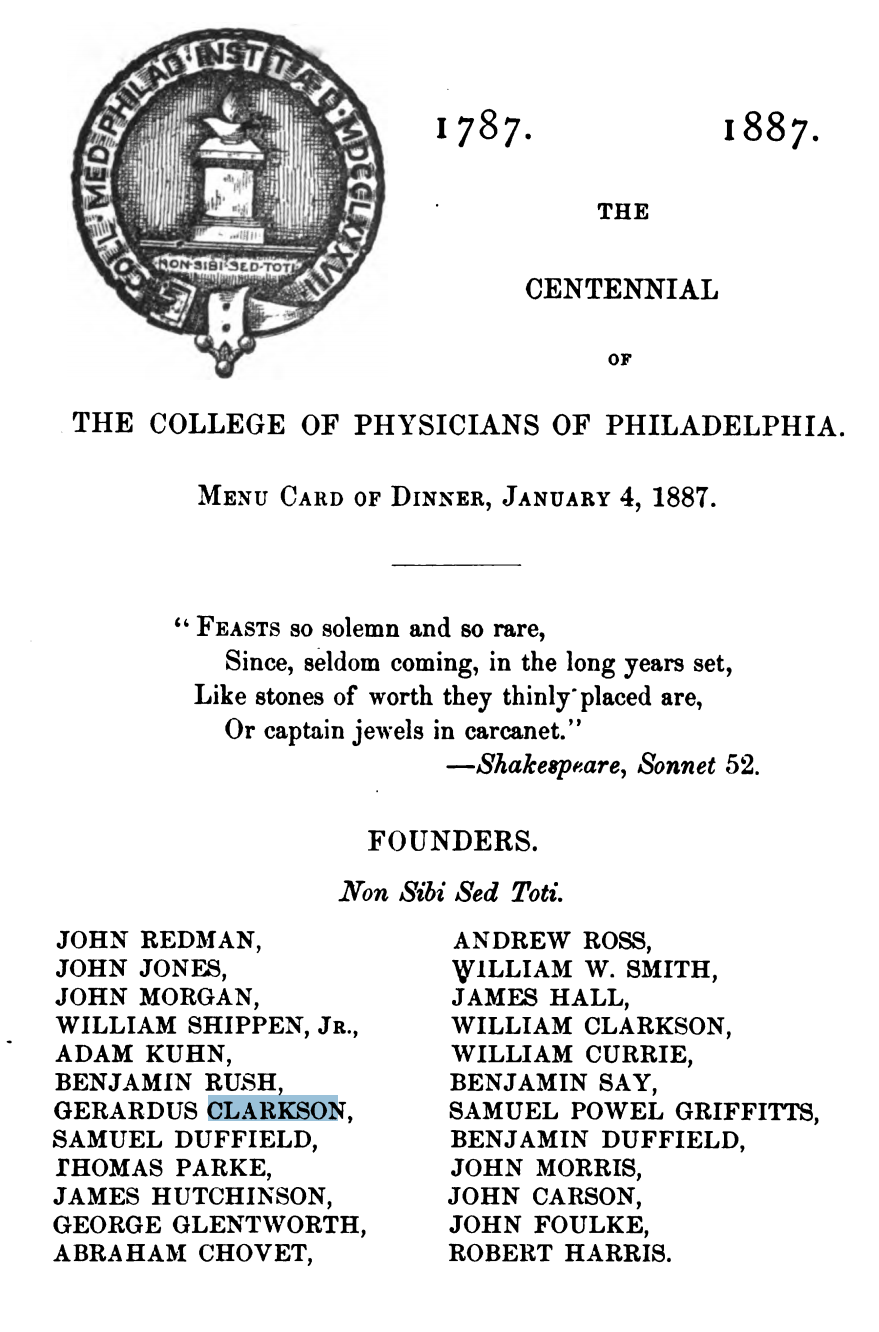
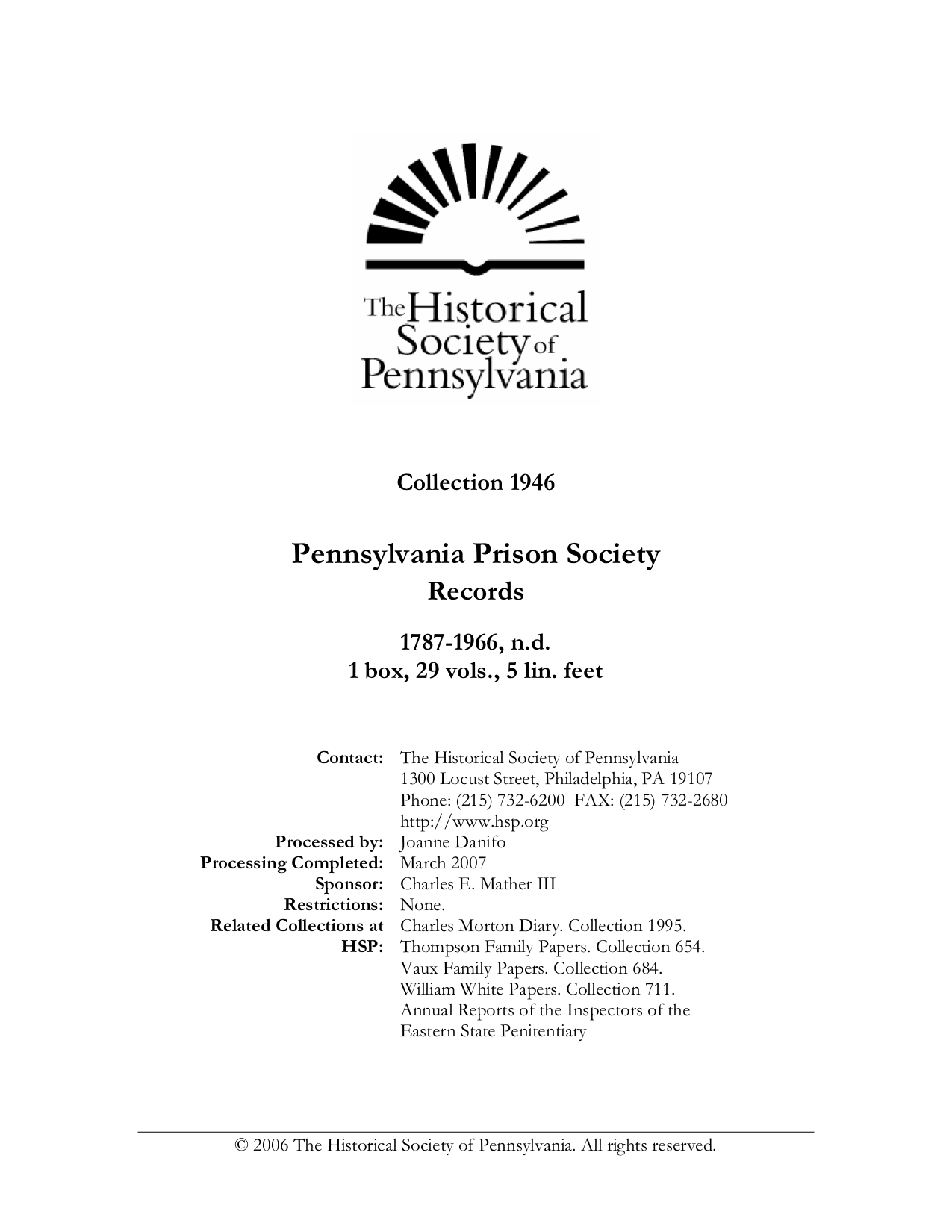
It was founded in 1787 as the Philadelphia Society for Alleviating the Miseries of Public Prisons,[1] a name which it retained for 100 years. Among its founders were Dr. Benjamin Rush, John Swanwick, John Morrison, Thomas Morrison, Tench Coxe, Zachariah Poulson, Thomas Lloyd, Joseph Moore, William Roger, John Haighn, James Whitehall, Richard Wells, Thomas Wistar, Jacob Shoemaker, Isaac Parrish, William Lane, Thomas Rogers, Samuel Griffiths, Francis Baily, Joseph James, Charles Marshall, John Olden, Caleb Lownes, Thomas Parkinson, John Morris, John Baker, Dr. George Duffield, James Reynolds, Benjamin Wynkoop, George Krebs, Dr. William White, Dr. Henry Helmuth, Dr. John Jones, Dr. William Shippen, Dr. Gerardus Clarkson, Jonathan Penrose, and Lawrence Sickle.[2] William White served as president of the organization for most of its early years.[1] In 1845, the Prison Society established the Journal of Prison Discipline and Philanthropy, which is still published today as The Prison Journal.
The Society’s main office is located at 230 S. Broad Street Suite 605, Philadelphia, Pennsylvania, 19102.[3] In addition, there are 43 chapters of the Pennsylvania Prison Society running Official Visitor programs[4] throughout the state.
References:
- “The Philadelphia Society for Alleviating the Miseries of Public Prisons”. The Library Company of Philadelphia. World Digital Library. Retrieved 4 January 2014.
- ^ “Pennsylvania Prison Society”, Pennsylvania Historical Society, 2006
- ^ “The Pennsylvania Prison Society”. Archived from the original on 2009-04-02. Retrieved 2009-04-10.
- ^ “Advocating for the just and humane treatment of prisoners”. The Pennsylvania Prison Society.
External links:
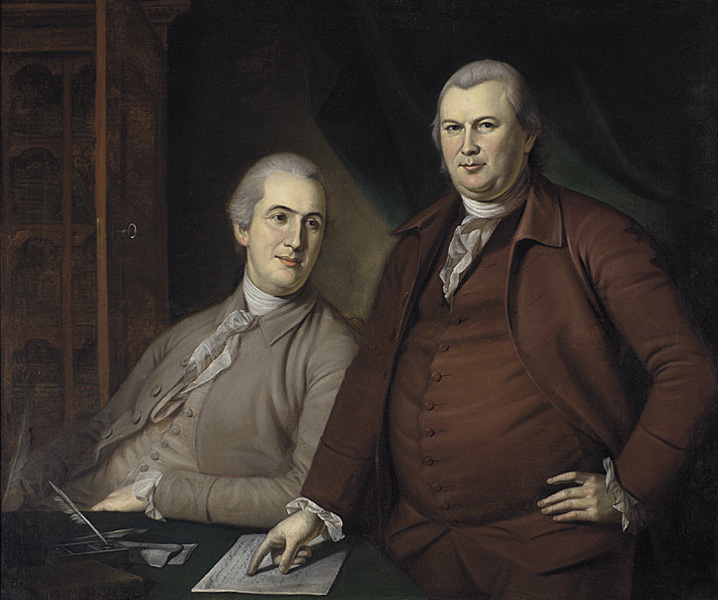
Robert Morris, Jr. (January 20, 1734 – May 8, 1806) was an English-born merchant and a Founding Father of the United States. He served as a member of the Pennsylvania legislature, the Second Continental Congress, and the United States Senate, and he was a signer of the Declaration of Independence, the Articles of Confederation, and the United States Constitution. From 1781 to 1784, he served as the Superintendent of Finance of the United States, becoming known as the “Financier of the Revolution”. Along with Alexander Hamilton and Albert Gallatin, he is widely regarded as one of the founders of the financial system of the United States.
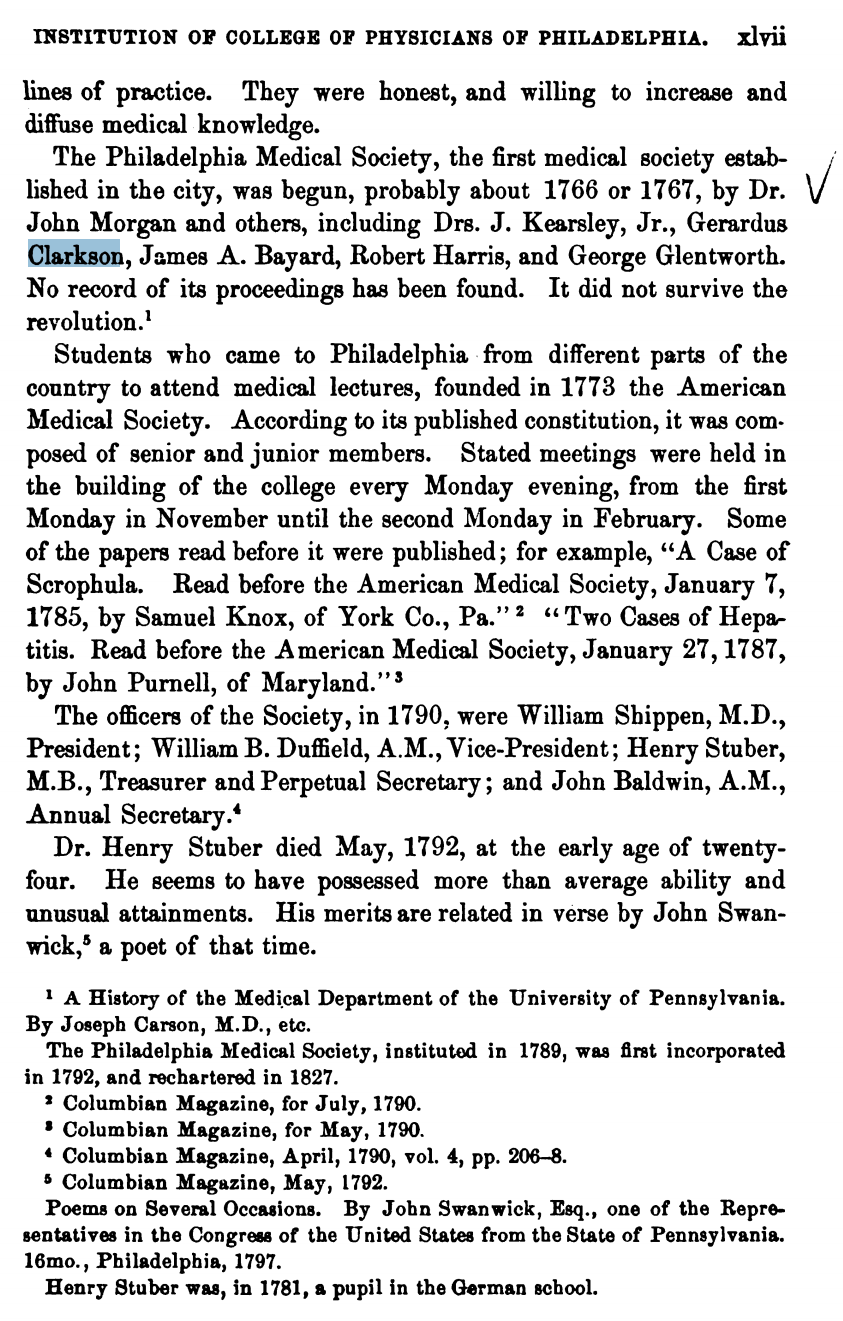
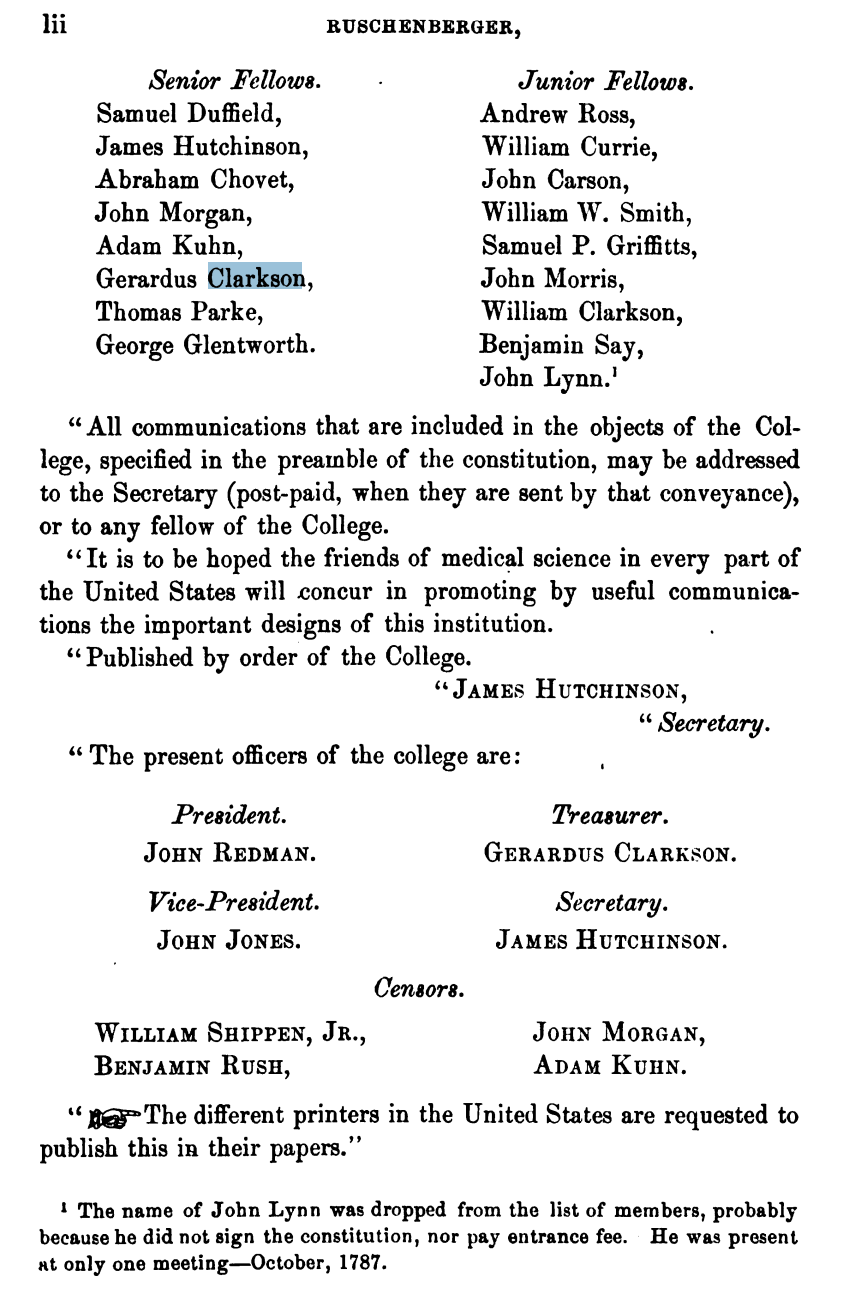
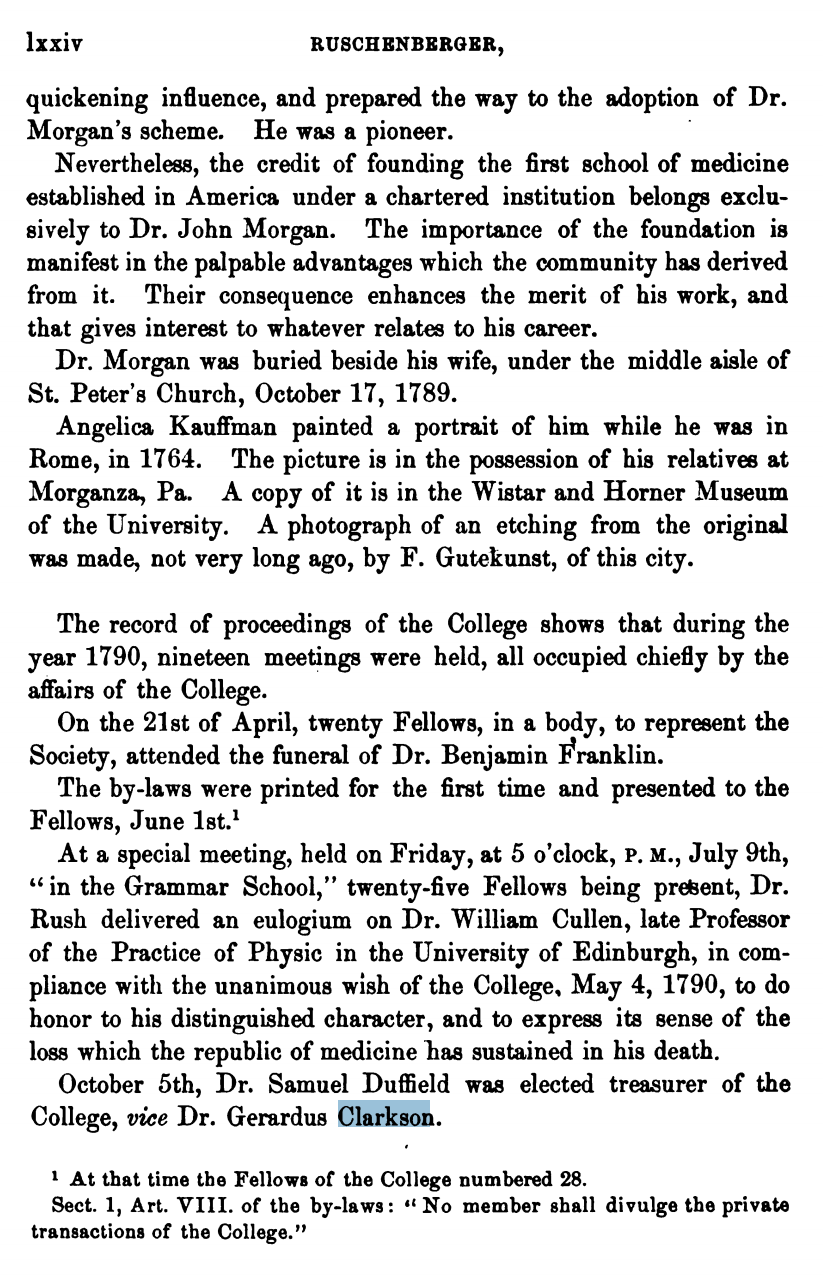
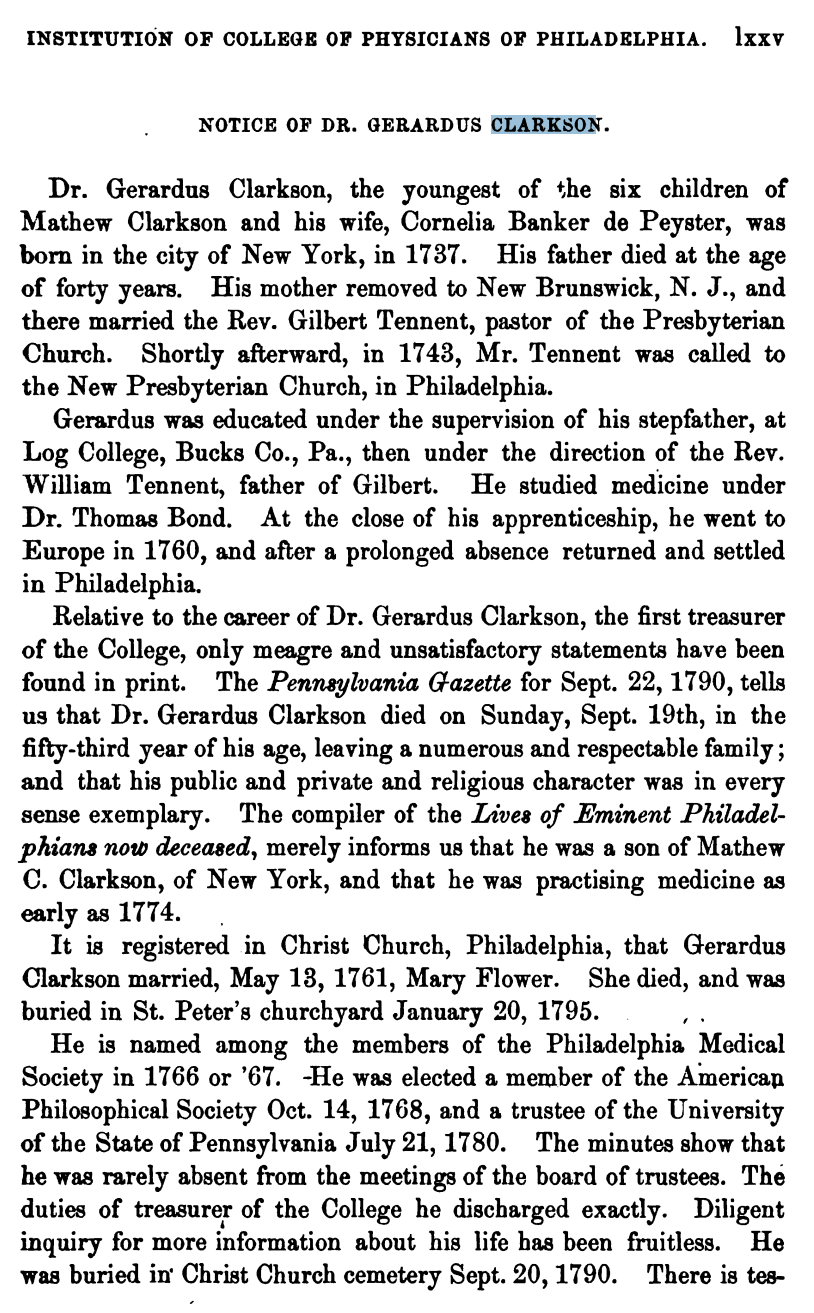

https://founders.archives.gov/documents/Jefferson/01-26-02-0168
To Thomas Jefferson from Matthew Clarkson, 3 June 1793
From Matthew Clarkson
Philadelphia June 3d. 1793.
Sir
Having understood that it was Doctor Foulke who gave to Mr. Moissonier the names of the two persons who are represented in the Vice Consuls Memorial, as having excited the English Sailors to continue the Quarrel with the People of the Ambuscade, The Doctor has been so obliging as to call upon me, at my request, to inform me what he knew of the matter.
The following is the substance of what he told me, Vizt.
That on the 29th. ulto. at the time the riot happened, he was standing at his Door, when Mr. Moissonier represented to him, that he had seen Several persons encouraging the English Seamen to beat the French men; and occasioned great tumult, that he asked Mr. Moissonier if he could discover any of the persons who had been active in so doing, that Mr. Moissonier pointed out a person who he said was one of them; that he (the Doctor) knows him to be a man whose name is Peter, and is a domestick of the Spanish Chargé des’affaires; that he went to the said Peter and spoke to him, and told him that he had better go home and let the Frenchmen alone, or that he would get into trouble, to which he answered that “he knew what he was about,” and went on with the crowd.
The Doctor says, that he also saw George Abbot a Hair-Dresser, running along side of the French-men; that he spoke to him, and desired him to go home; he answered “he would be damned if he did, for he intended to have a Crack at the French-men for beating one of his Comrades.” That the Doctor told Mr. Moissonier his name, upon being asked who he was.
The Doctor adds that he hath mentioned to Mr. Viar what passed between his domestick, Peter, and him, and that he appeared Very much displeased with his Conduct. I am with much esteem Sir Your most obedt. humbl. Servt
Matth Clarkson
Mayor
RC (DNA: RG 59, MLR); at foot of text: “Thomas Jefferson Secretary of State”; endorsed by TJ as received 4 June 1793 and so recorded in SJL.
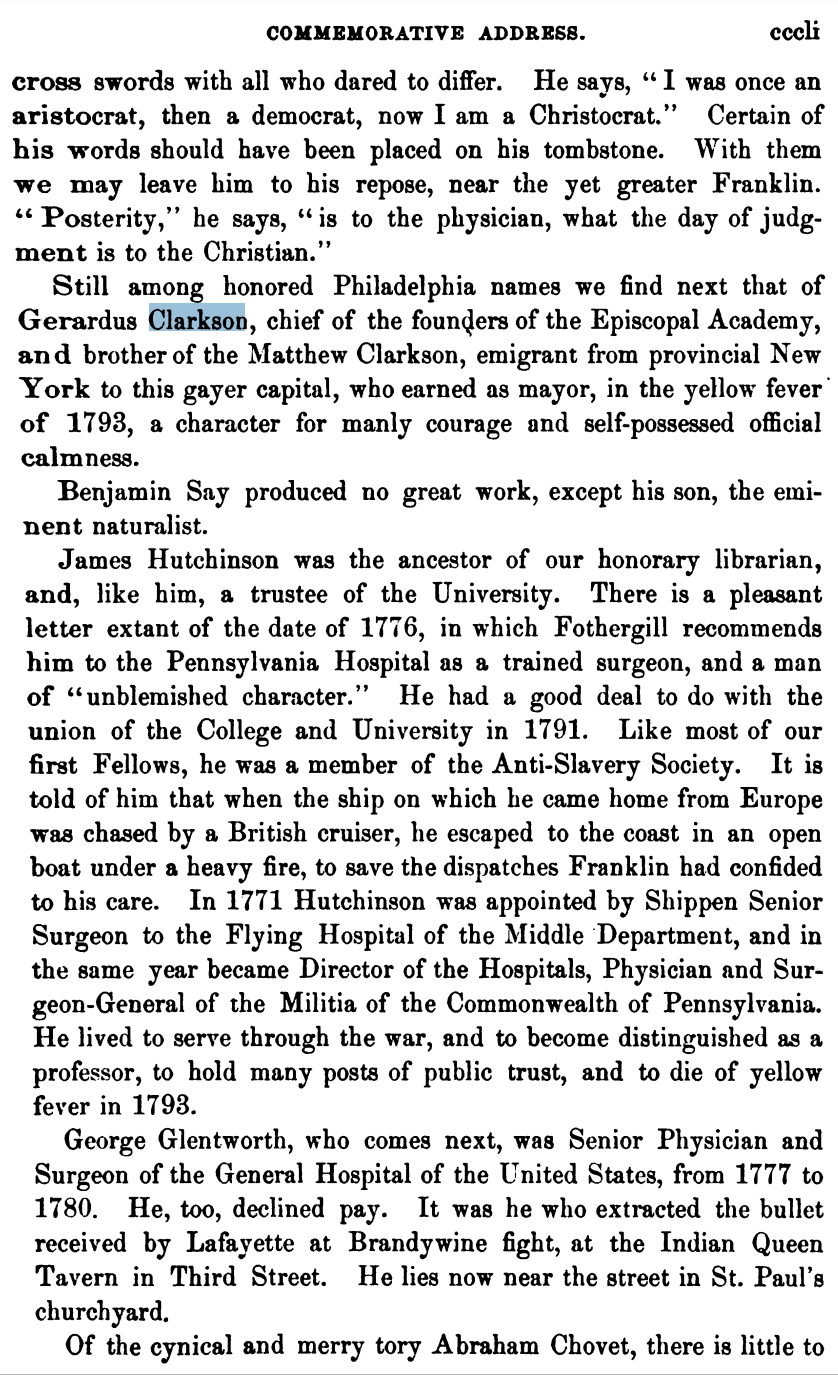
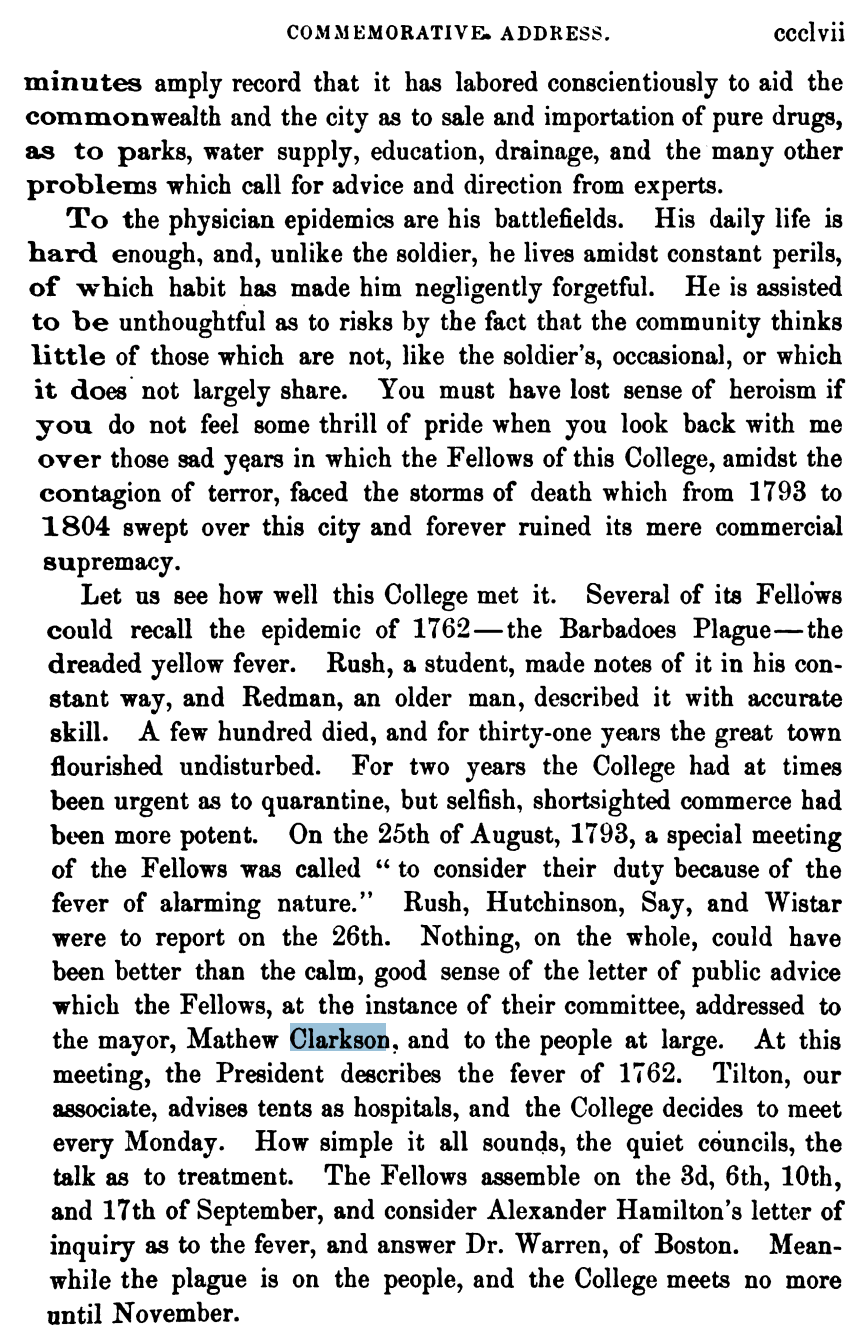
Matthew Clarkson (1733–1800), a native of New York City, moved to Philadelphia as a child and spent the rest of his life there as a merchant and public official. He served as mayor of Philadelphia from 1792 to 1796, earning praise for his energetic and courageous efforts to combat the yellow fever epidemic of 1793, and was a longstanding member of the American Philosophical Society (John Hall and Samuel Clarkson, Memoirs of Matthew Clarkson of Philadelphia … and of his Brother Gerardus Clarkson … [Philadelphia, 1890], 17–80; APS, Proceedings, xxii, pt. 3 [1885], 33, 101, 110).
peter: Petter Ardens, a Flemish native, was one of the persons noted in the list of servants enclosed in Josef de Jaudenes and Josef Ignacio de Viar to TJ, 27 June 1792, cited in the note to Edmund Randolph, 26 June 1792 (Vol. 24:129n).
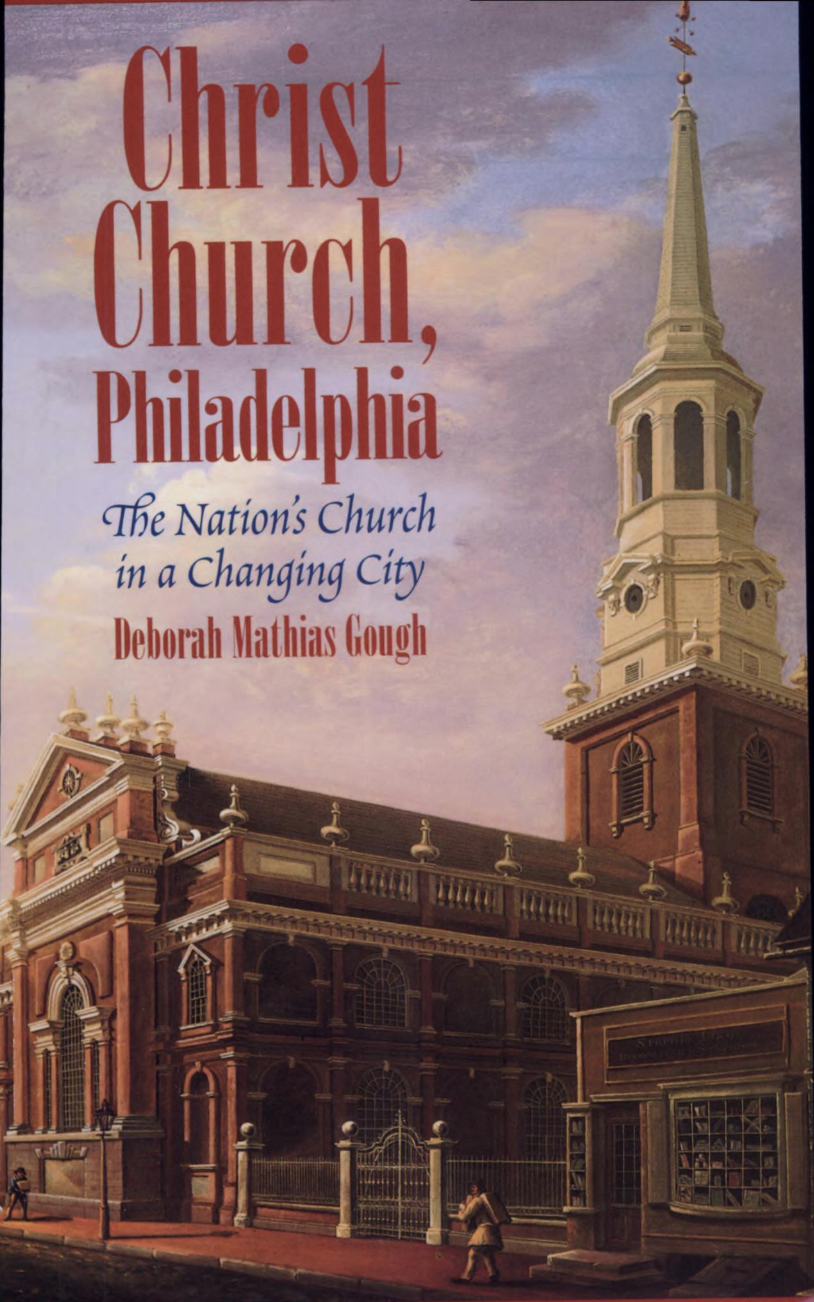
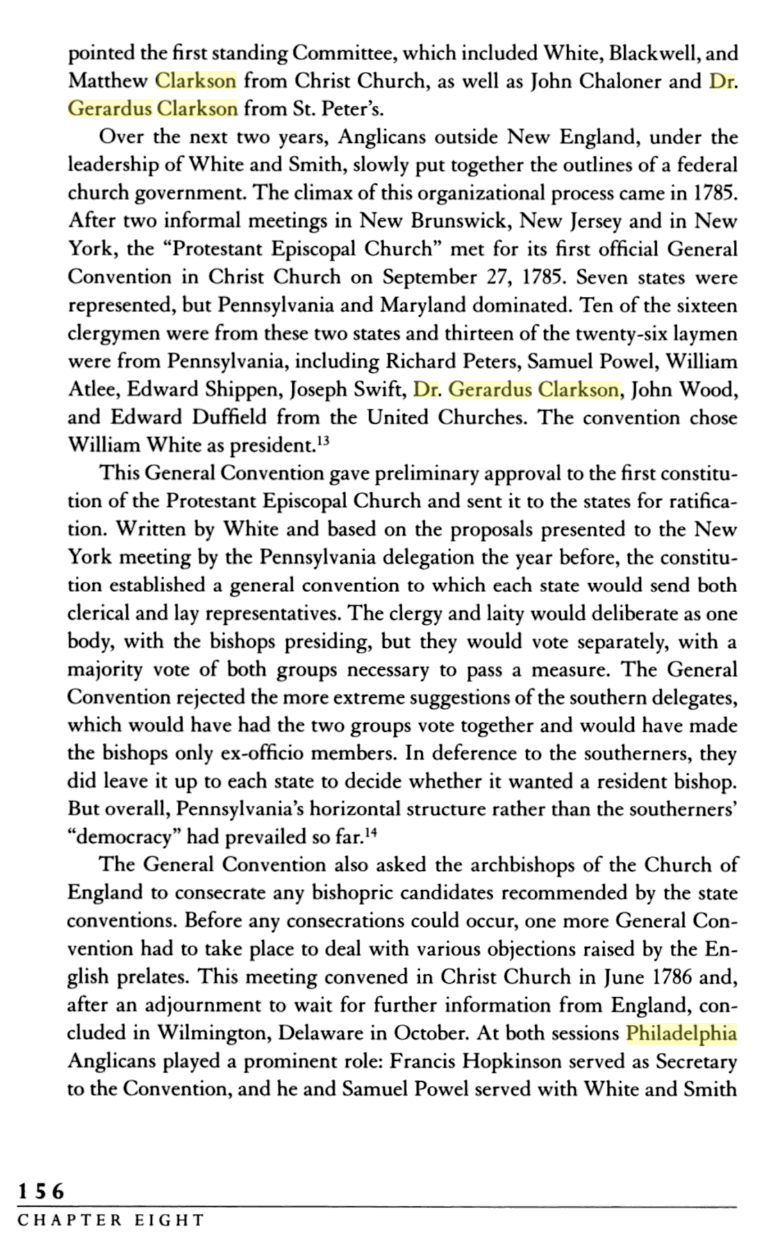
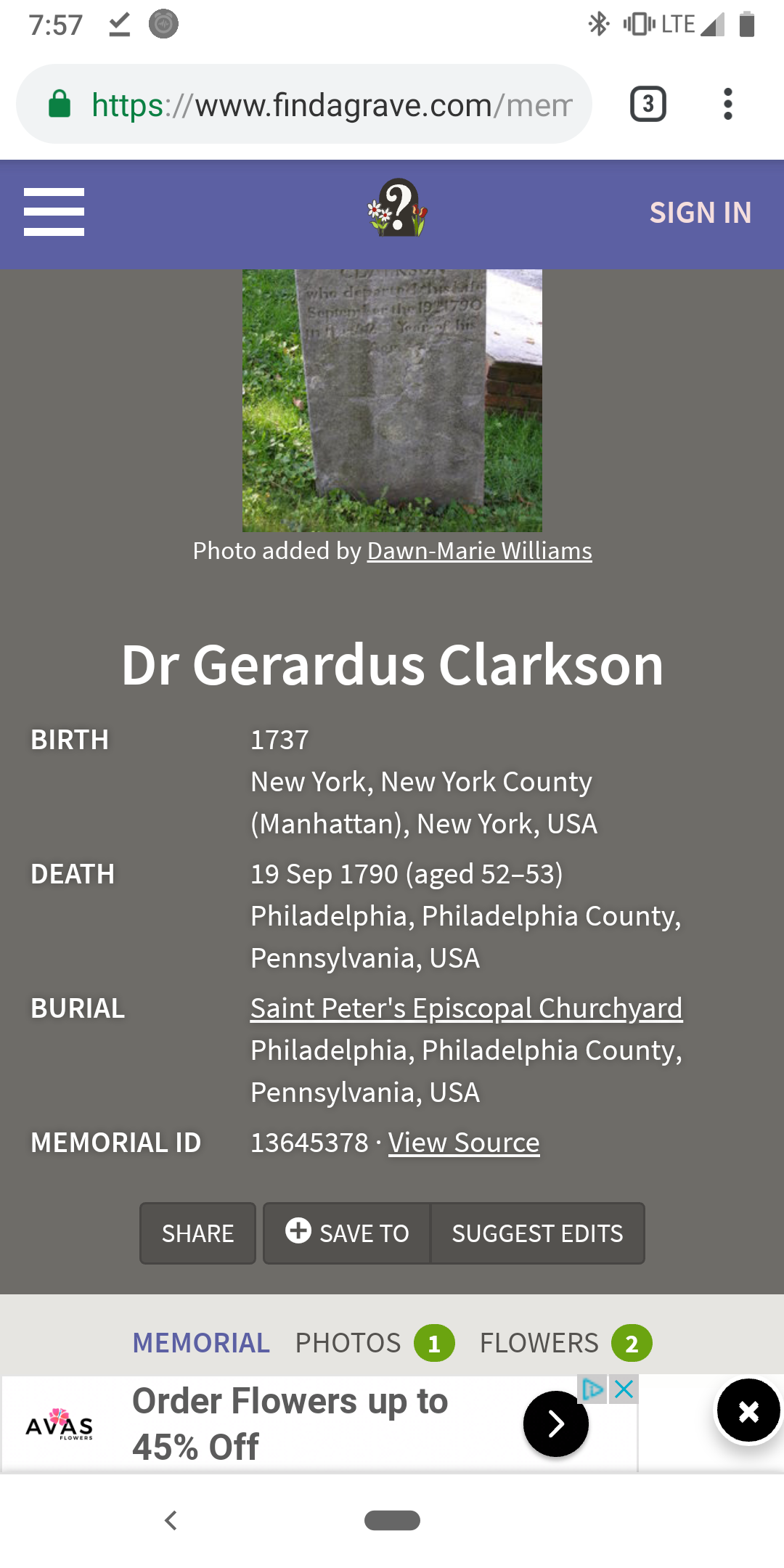
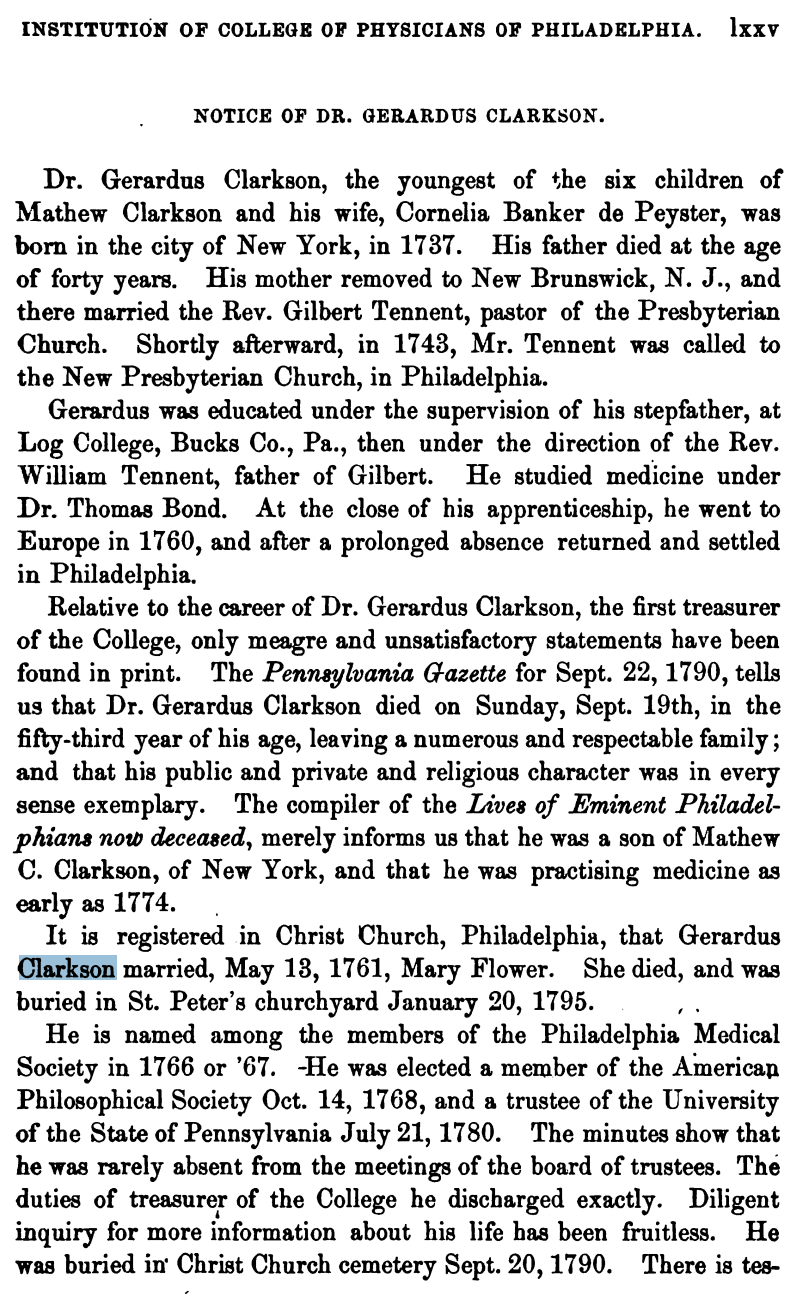
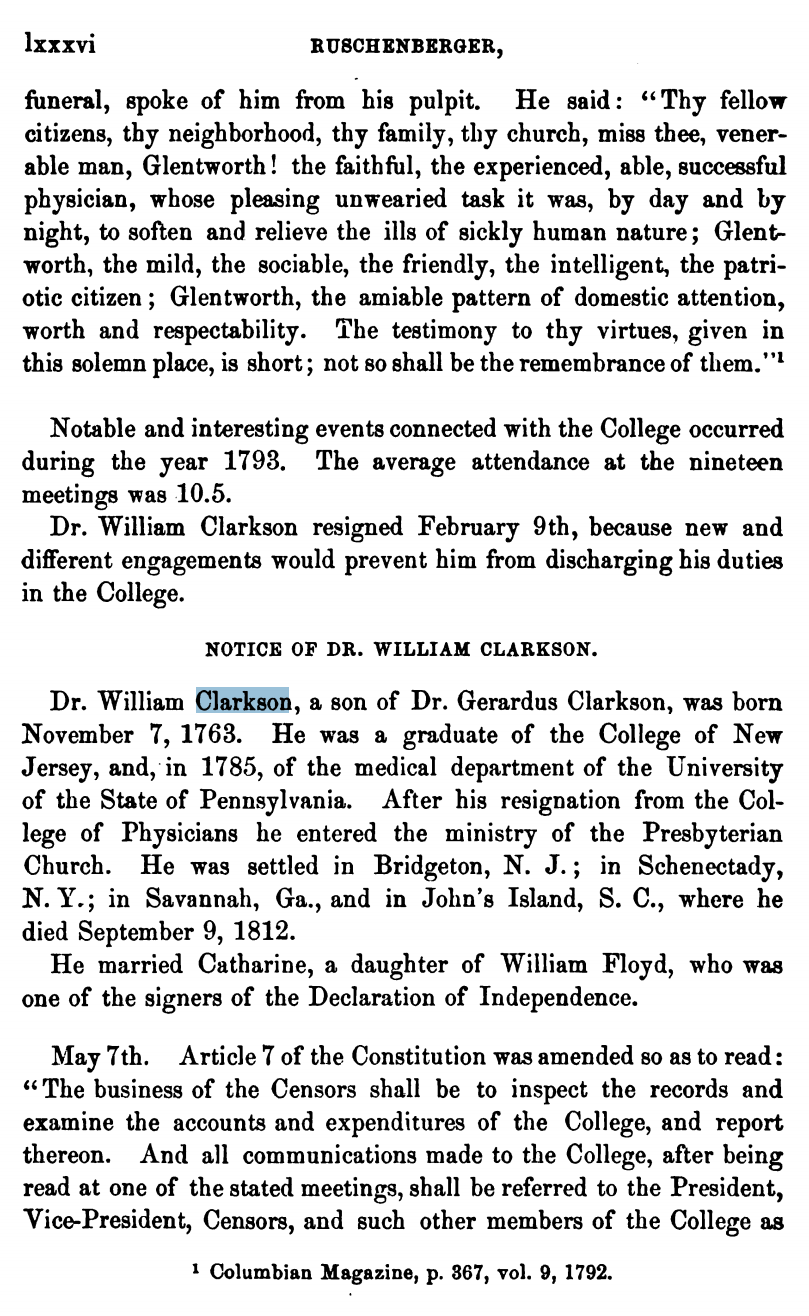
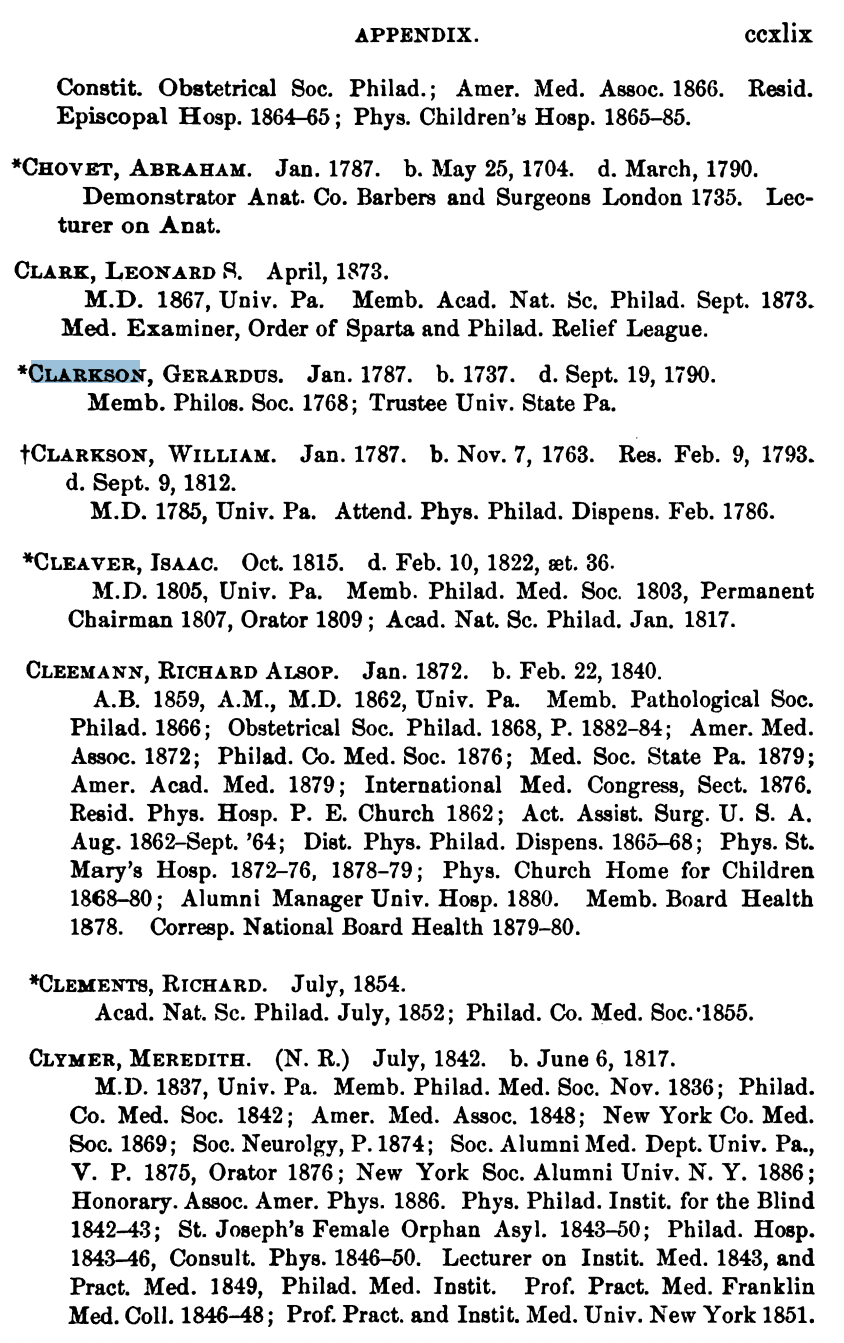
Clarkson, Gerardus (1738-1790)
Philadelphia physician.
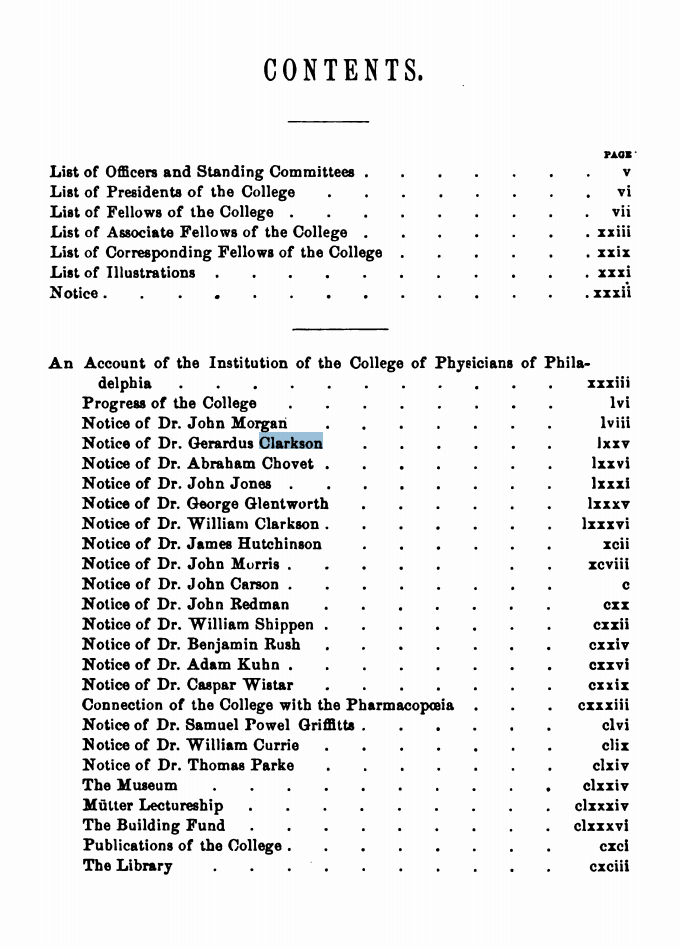
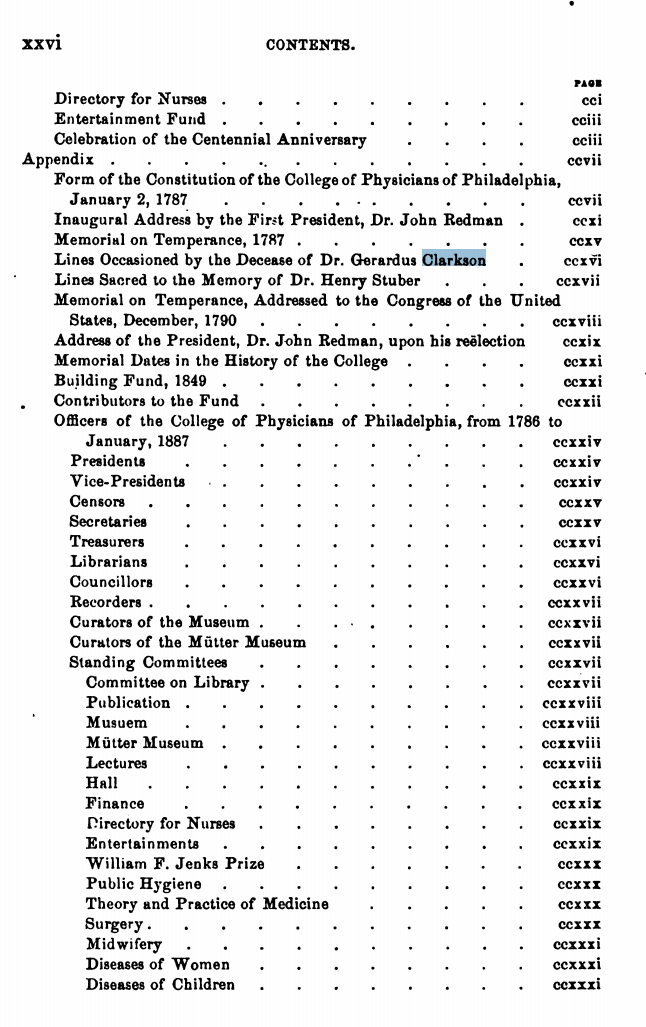
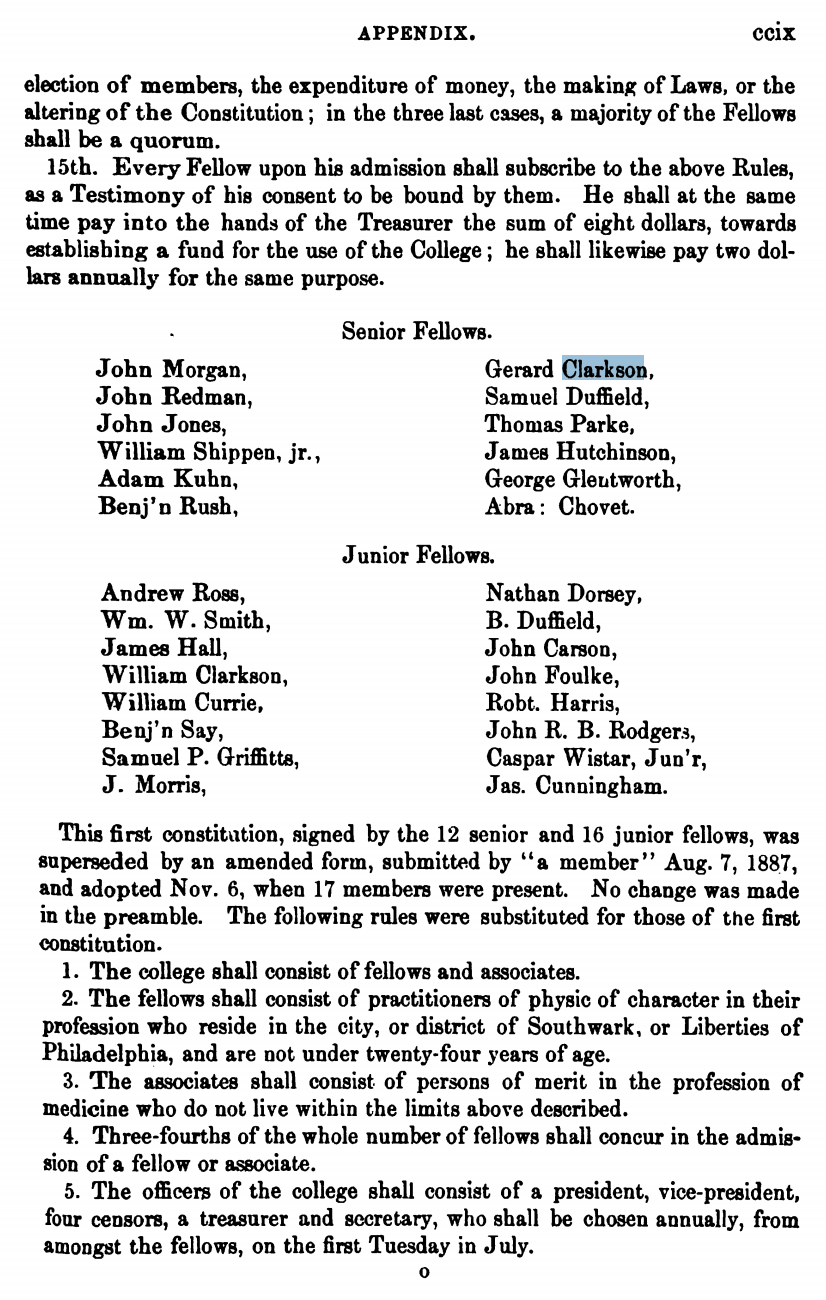
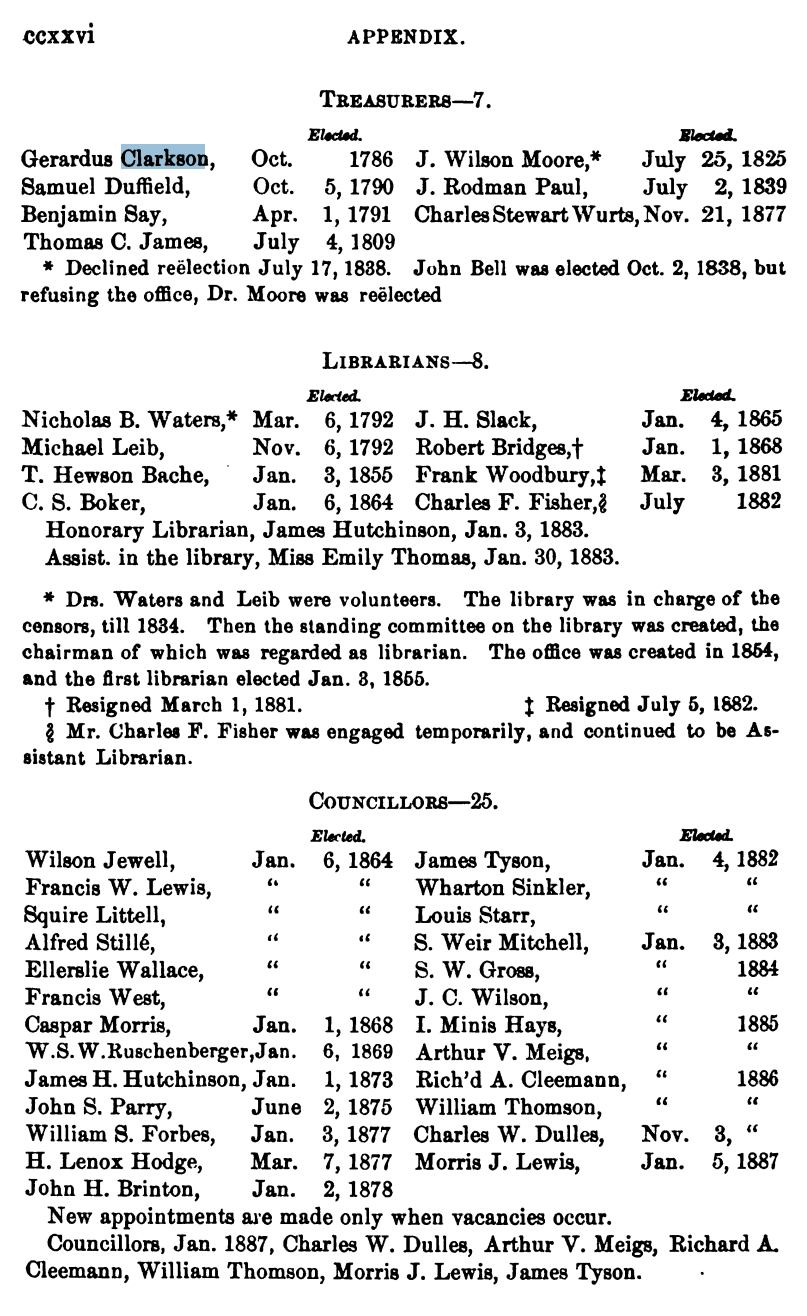
Studied medicine with Dr. Thomas Bond. Member of the Philadelphia Medical Society (1766) and the American Philosophical Society. Trustee of the University of Pennsylvania. Senior Fellow and Treasurer of the Philadelphia College of Physicians (1787-90). Advocated temperance, prison reform, and the abolition of slavery; active in medical charities.
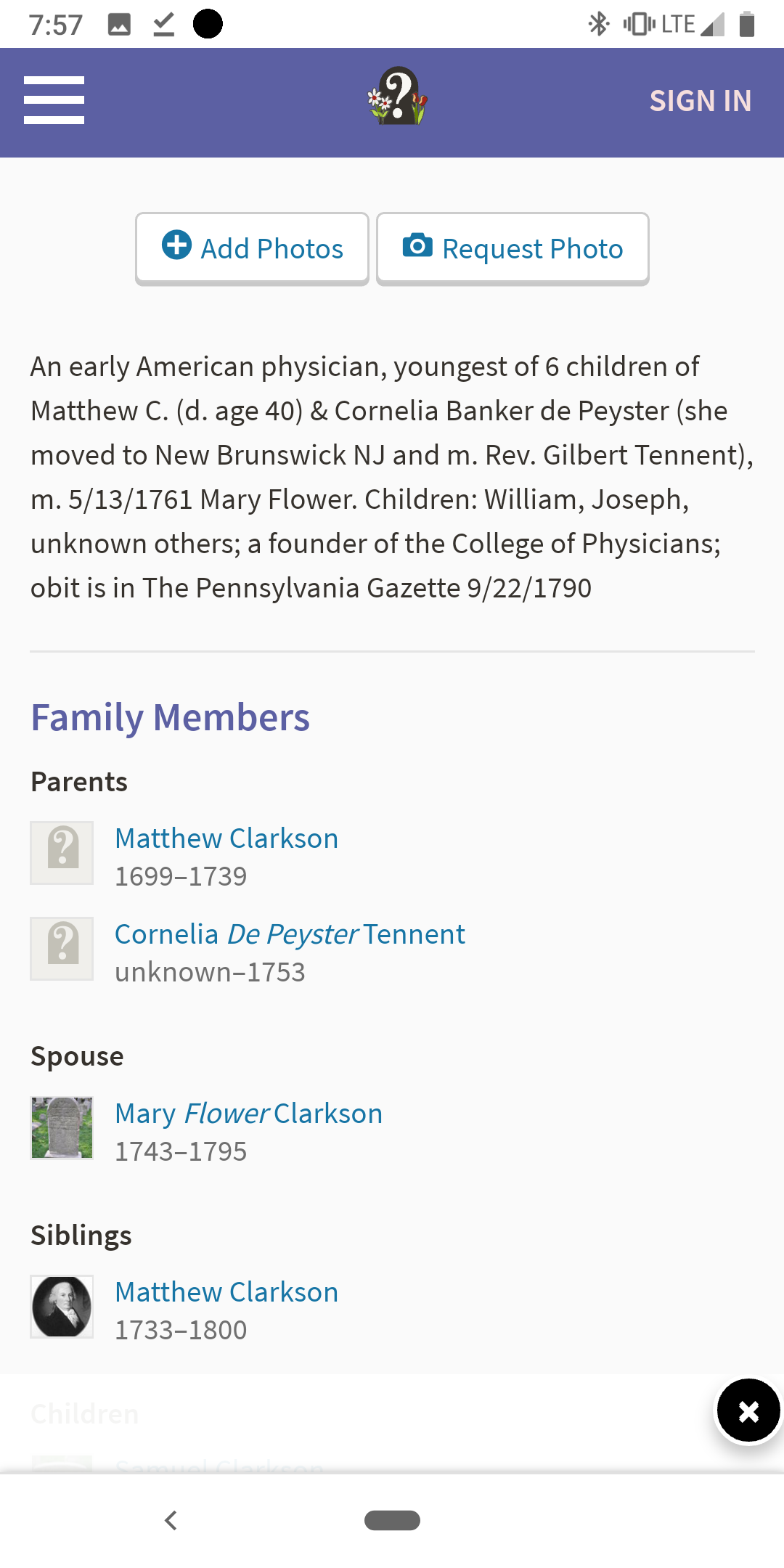
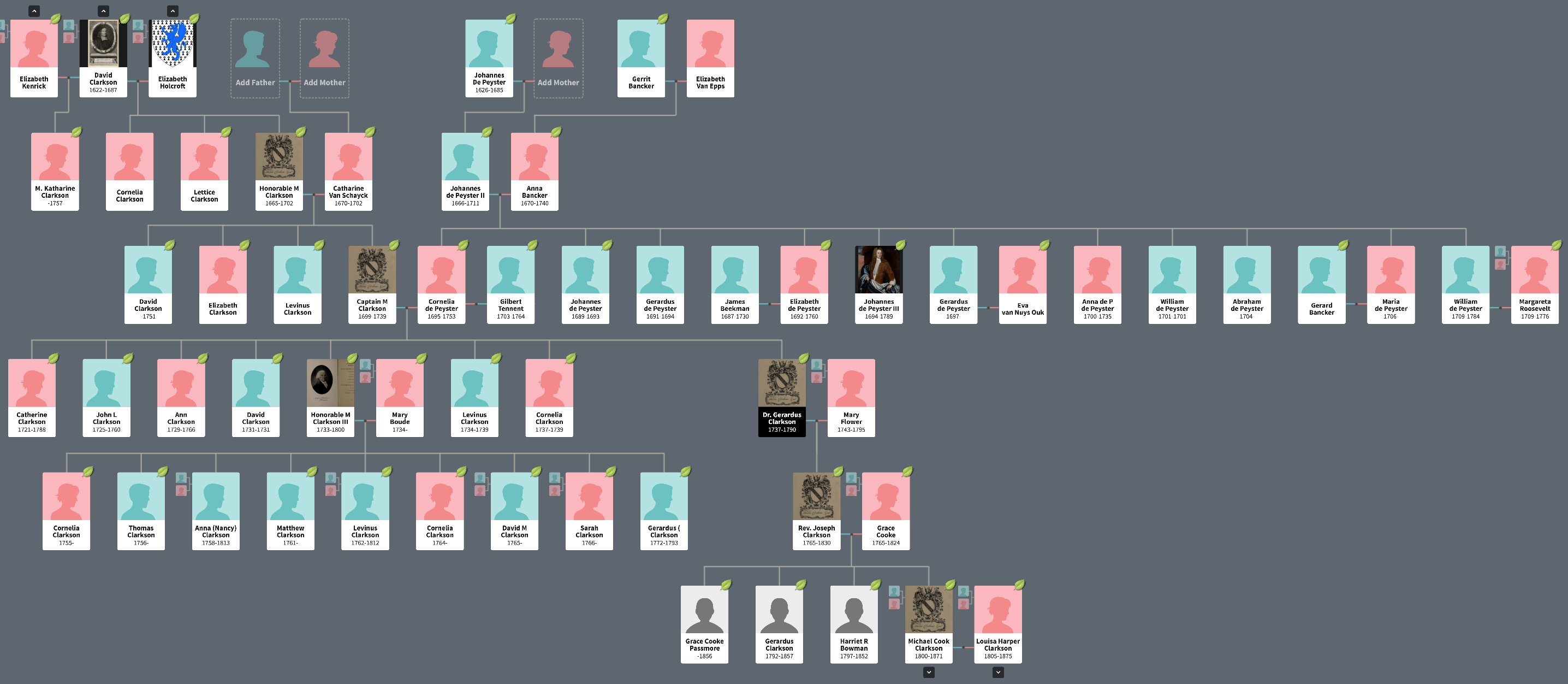
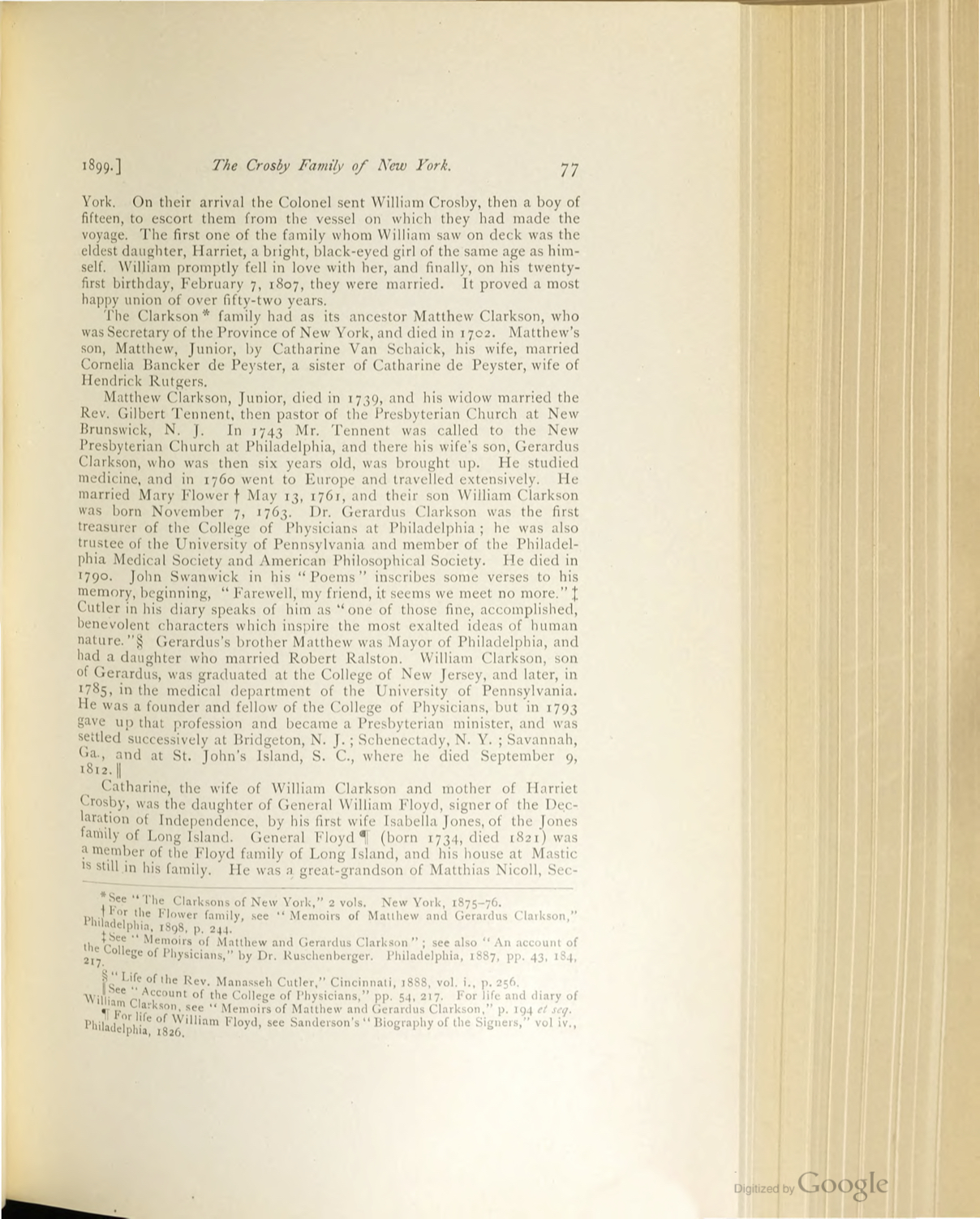
Son of Matthew and Cornelia (DePeyster) Clarkson; stepson of Gilbert Tennent. Brother of Matthew Clarkson. Married Mary Flower (1761); eight children. Prominent Anglican.
Gerardus Clarkson to Benjamin Franklin and the Pennsylvania Supreme Executive Council (unpublished)Philadelphia November 15th. 1787—
The Petition of Gerardus Clarkson of the City of Philadelphia Doctor of Physic Creditor of Samuel Clarkson of the said City Merchant Respectfully Sheweth
That whereas Samuel Clarkson using and exercising the Trade and business of a Merchant by way of Bargaining, Exchange Rechange and Bartry and seeking his Trade of Living by Buying and Selling, for just and good causes being indebted unto your Petitioner in the Sum of Two hundred Pounds and upwards, did on or about the Fourteenth day of November instant become Bankrupt within the meaning of the Act of Assembly of this Commonwealth lately made and provided entitled: “An Act for the Regulation of Bankruptcy.” and “An Act to amend An Act entitled An Act for the Regulation of Bankruptcy” to the intent to defraud and hinder your said Petitioner and others his Creditors of their just Debts and duties to them due and owing, In tender consideration whereof may it please your Excellency to grant unto your Petitioner a Commission under the Great Seal of the Common Wealth to be directed to such and so many well disposed and discreet Persons as to your Excellency may seem meet, Authorizing them thereby not only concerning the said Bankrupt, his Body, Lands, Tenements Freehold and Customary Goods, Debts, and other things whatsoever, but also concerning all other Persons who by concealment, claim as otherwise do or shall offend touching the Premises or any part thereof contrary to the true intent and meaning of the said Acts Assembly, and to do and execute all and every thing and things whatsoever as well for and toward satisfaction and payment of the said Creditors, as toward and for all other intents and purposes, according to the Ordinance and Provision of said Acts, And your Petitioner as in duty bound shall ever pray &c.
Gerards. ClarksonTo his Excellency Benjamin Franklin Esquire President of the Supreme Executive Council of the Common Wealth of Pennsylvania
[in BF’s hand] Let a Commission issue as within prayed, directed to Matthew Clarkson, George Hughes, Peter Baynton, Richard Bache, & David Lenox, Esquires, or to any four or three of them. Nov. 15. 1787.
B. FranklinTo the Secretary of Council.—Notation: 1787 November 15th Petition of Gerardus Clarkson in the Case of Samuel Clarkson a Bankrupt
643888 = 045-u274.html
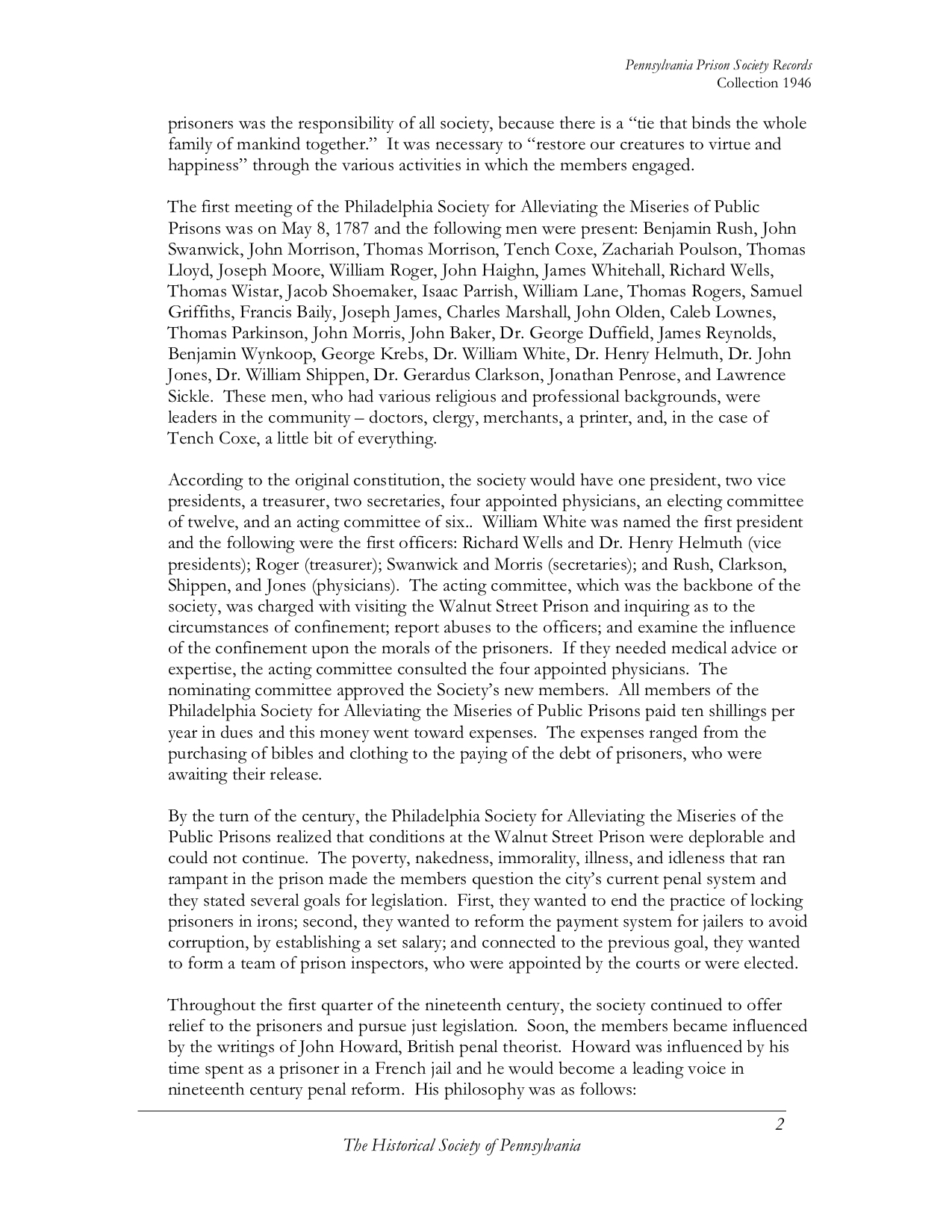
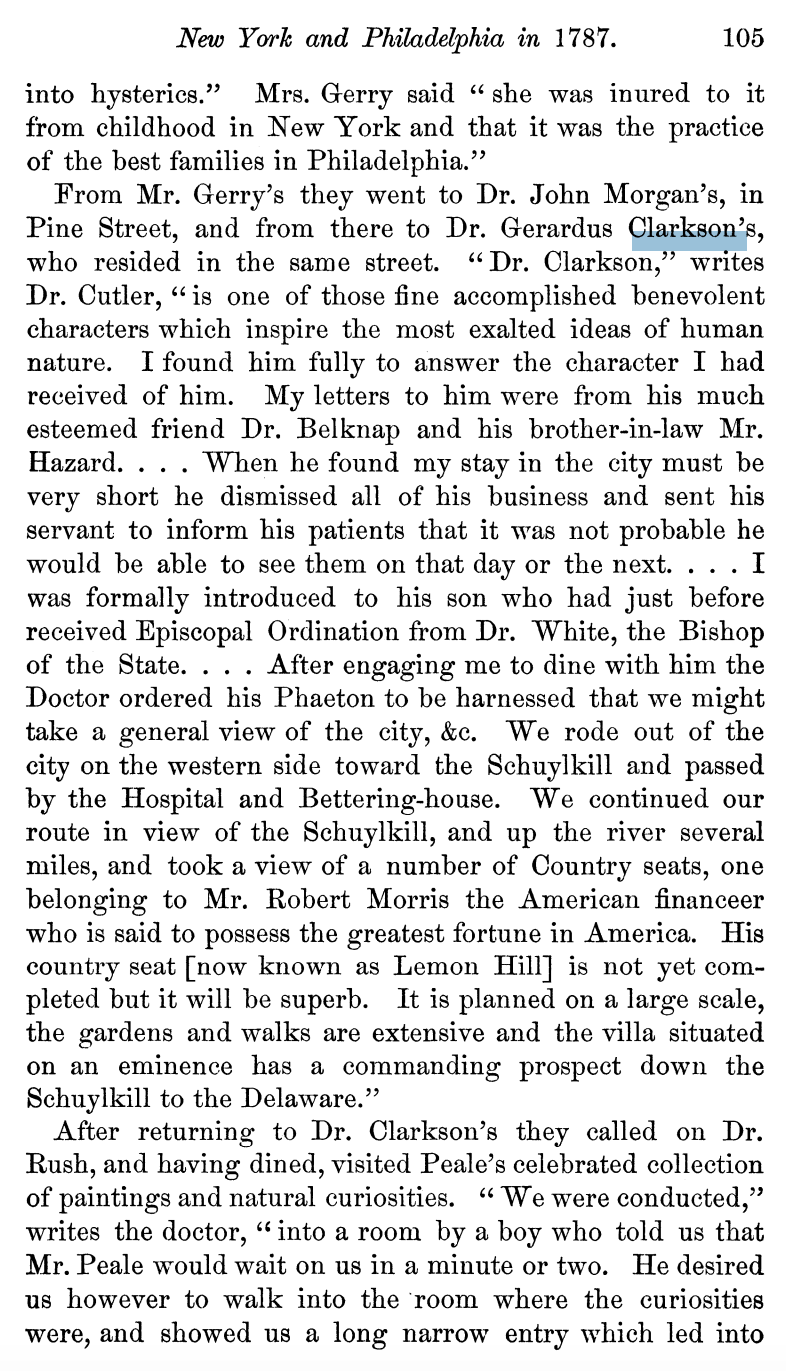
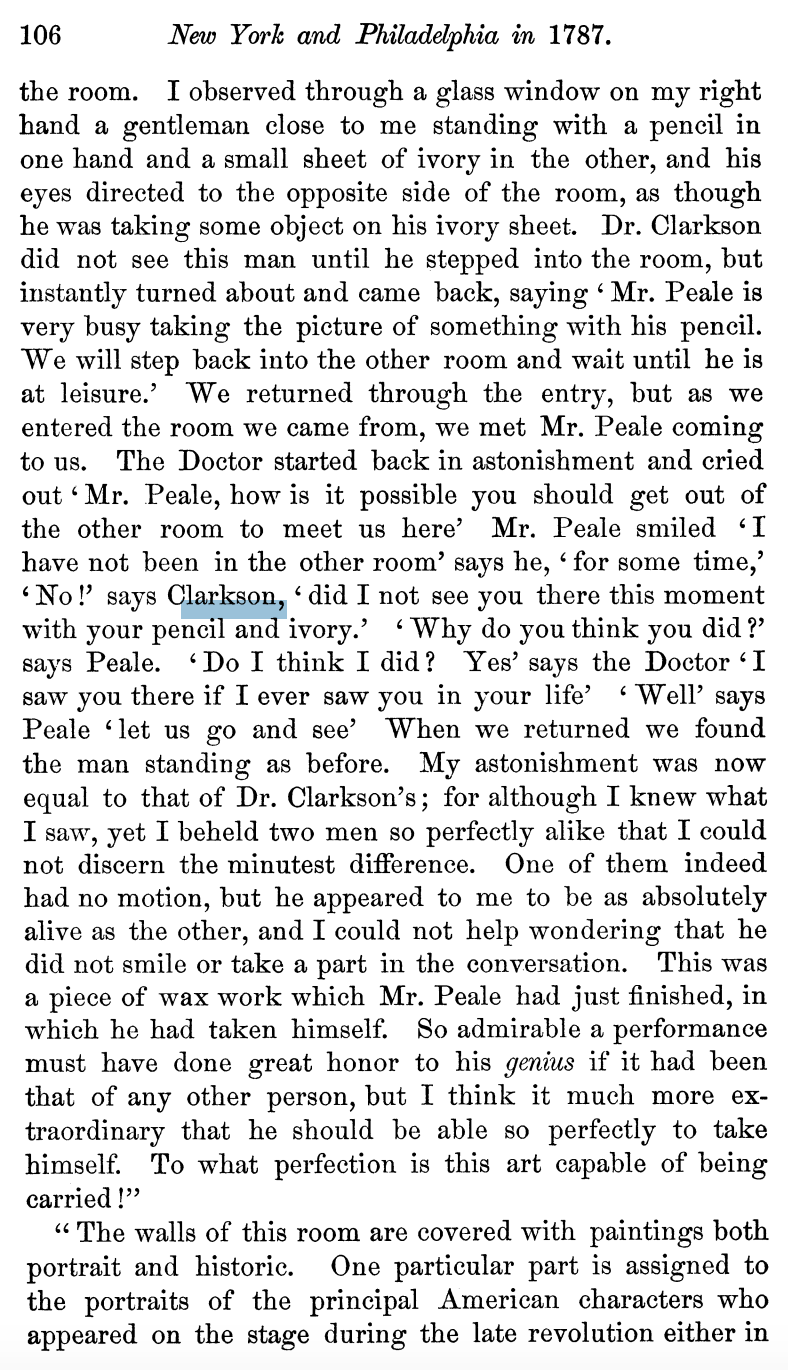
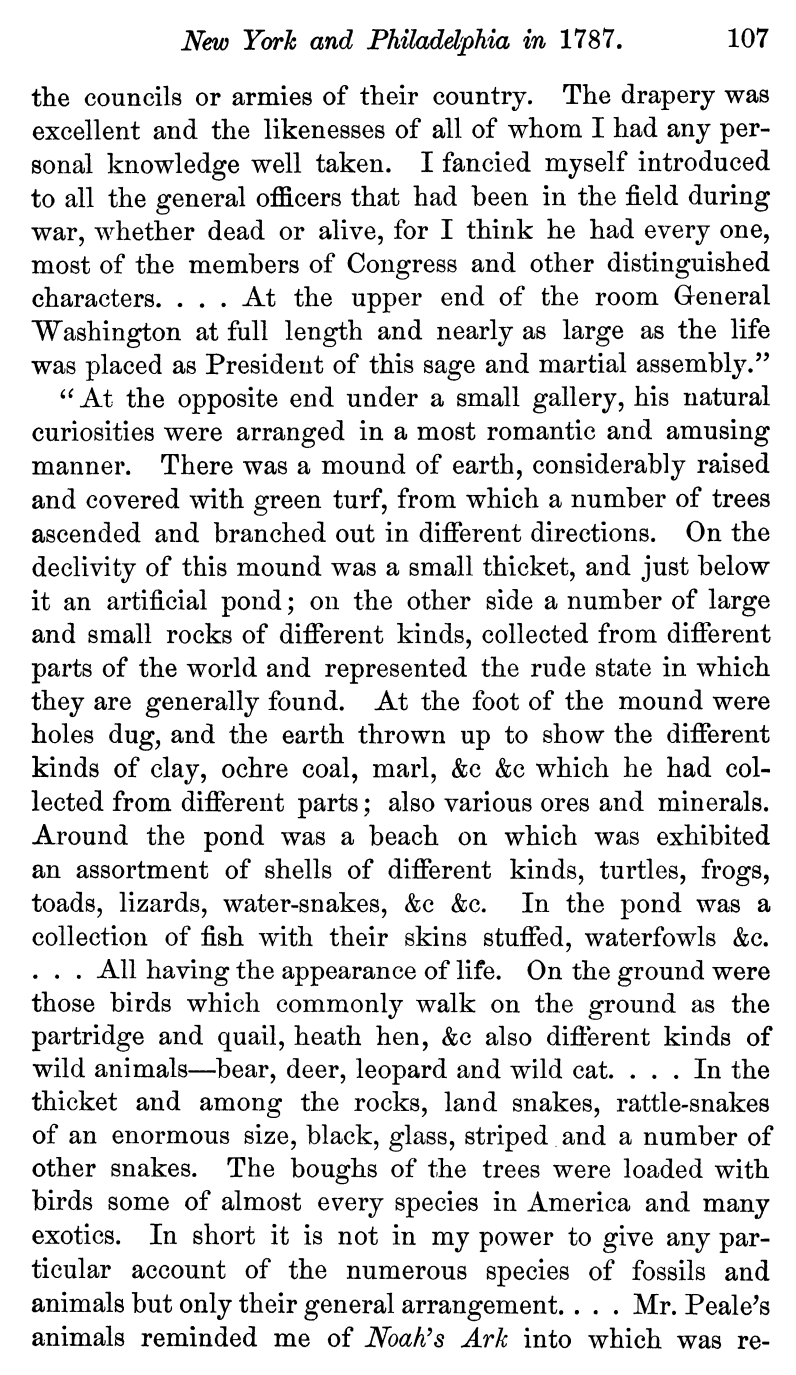
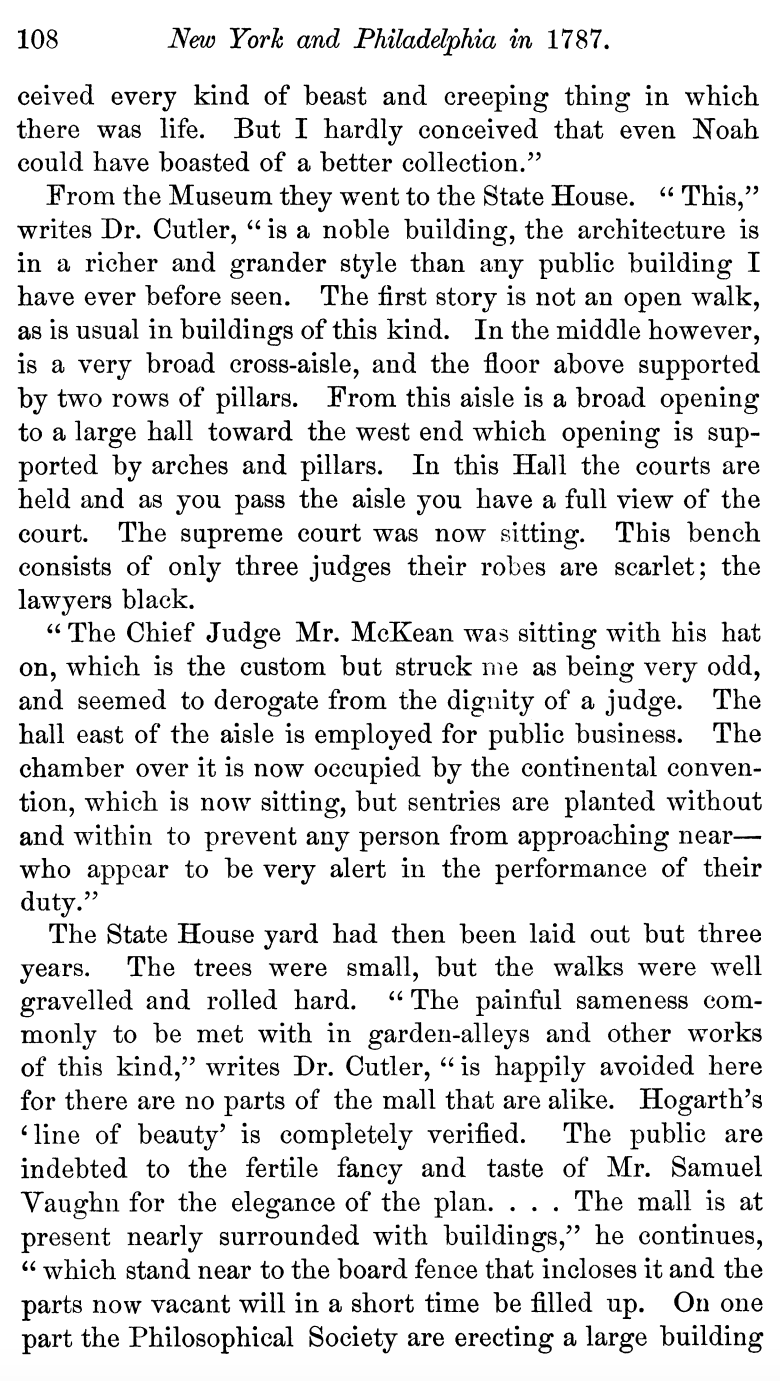
Evidence Showing Dr. Gerardus lived on Pine Street and a couple of his neighbors were listed on the following webpage.
http://freepages.rootsweb.com/~wynkoop/genealogy/webdocs/6301784.htm
More regarding Dr. Gerardus Clarkson:
THE CONSTITUTION is as follows.
Article I. The English language shall be taught gramma|tically, and strict attention paid to its pronunciation, and the reading of it with elegance and propriety; writing, arithmetic, and geography, are also a part of the education proposed for this school, in which such further improvements, in other branches of useful knowledge, will be hereafter adopted as circumstances may direct, and the visitors shall approve.
II. That an early sense of the reverence due to the Deity may be impressed on the minds of the young ladies of this se|minary, the business of the day shall be introduced, and ended, with public prayers in the school; and such catechisms shall be taught in it, as the parents of the children may appoint for their instruction in the first principles of religious knowledge.
III. Select portions of the Bible shall be read daily by the children, together with extracts from the most approved prose, and poetical English authors.
IV. The visitors will hold quarterly examinations of the young ladies, in the presence of their parents, or guardians, whose attendance, on such occasions, will be requested.
V. The laws and regulations, for the well governing of the school, shall be jointly made by the master and visitors. Three of the visitors shall form a quorum.
VI. The hours of attendance, for young ladies, shall be from nine till twelve o’clock in the forenoon; and from three till five in the afternoon.
Page 32VII. After the first year shall have elapsed, the visitors shall be annually elected, by the parents, and guardians, of the young ladies, at the quarterly examination to be held in May; and the following gentlemen have agreed to act as visitors, until the first election can be made in May 1787.
- The Reverend Dr. WILLIAM WHITE.
- The Honourable CHARLES PETTIT, Esq.
- Dr. GERARDUS CLARKSON.
- TIMOTHY PICKERING, Esq.
- JOHN GILL, Esq.
- SAMUEL MILES, Esq.
- Dr. BENJAMIN RUSH.
- JOHN SWANWICK, Esq.
The visitors elected on the second of May for the present year, are,
- The Right Reverend Dr. WILLIAM WHITE, Bishop of the Episcopal Church in Pennsylvania.
- The Reverend Dr. HENRY HELMUTH, Minister of the German Lutheran Church.
- The Reverend Dr. GEORGE DUFFIELD.
- The Reverend Dr. SAMUEL MAGAW.
- CHARLES PETTIT, Esq.
- JOHN GILL, Esq.
- SAMUEL MILES, Esq.
- RICHARD BACHE, Esq.
- Mr. THOMAS BARTOW.
- Dr. GERARDUS CLARKSON.
- JOHN SWANWICK, Esq.
- Dr. BENJAMIN RUSH.
[Entered agreeably to Act of Assembly.]
More:
http://files.usgwarchives.net/pa/philadelphia/history/family/oldphillyfam.txt“
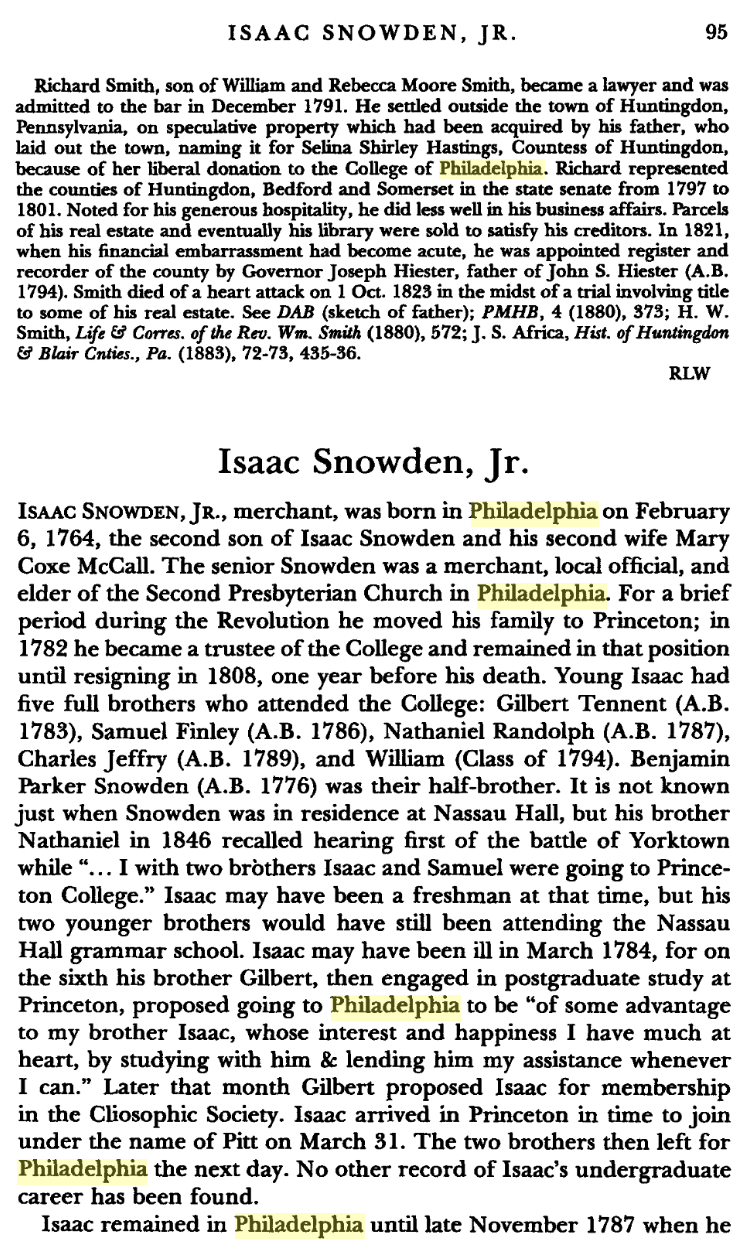
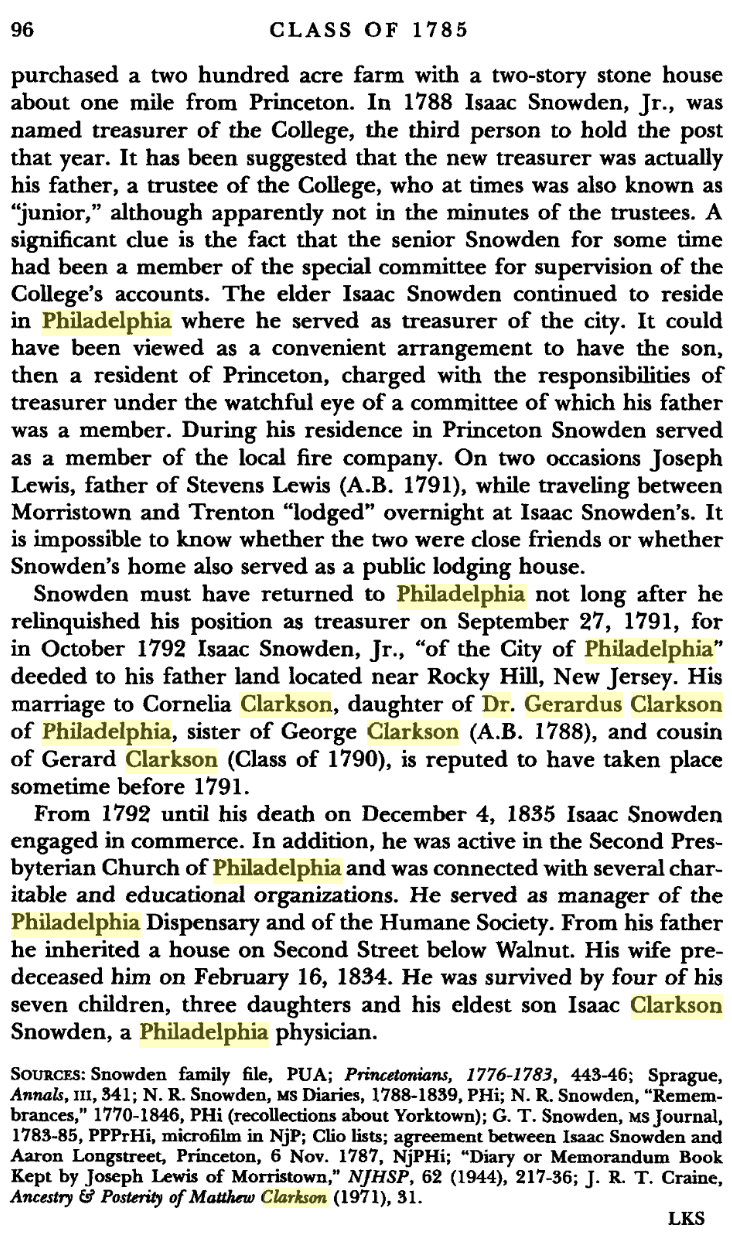
Isaac  Snowden Jr., married Cornelia Clarkson, daughter of Dr. Gerdus
Clarkson, a distinguished Quaker City physician of that period, by his wife
Mary Flower.  She was born June 23, 1769, and died February 16, 1834.  They
had issue as follows:  Isaac Clarkson, Mary, Cornelia, Ann Finley, Benjamin,
and Rebecca.  Of these the youngest child was the last survivor:  Rebecca
Snowden, who died unmarried, in 1876.  Three others died young, Gerardus
Clarkson, Ann Finley and Benjamin.  The remaining three reached maturity and
married.
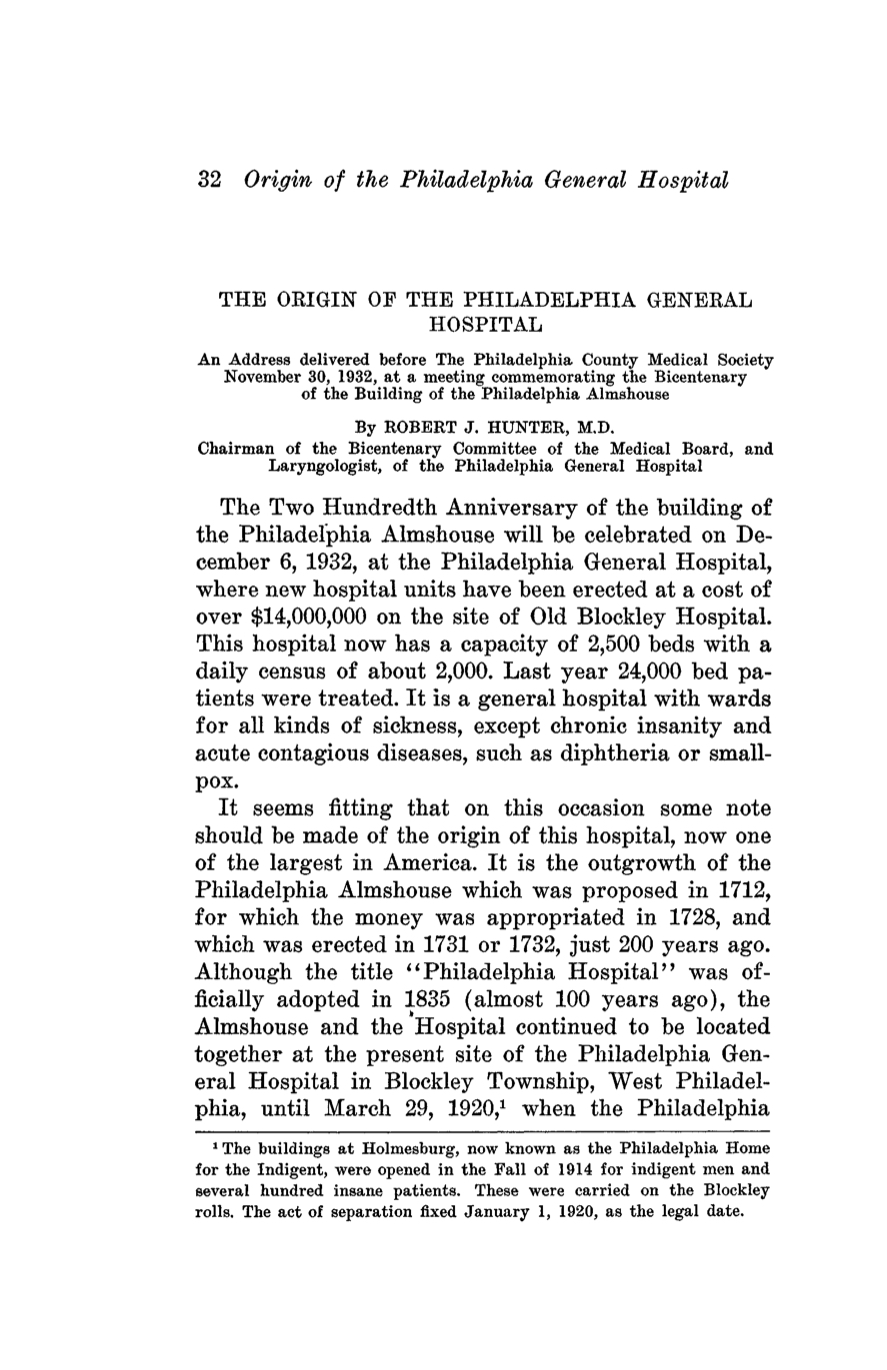
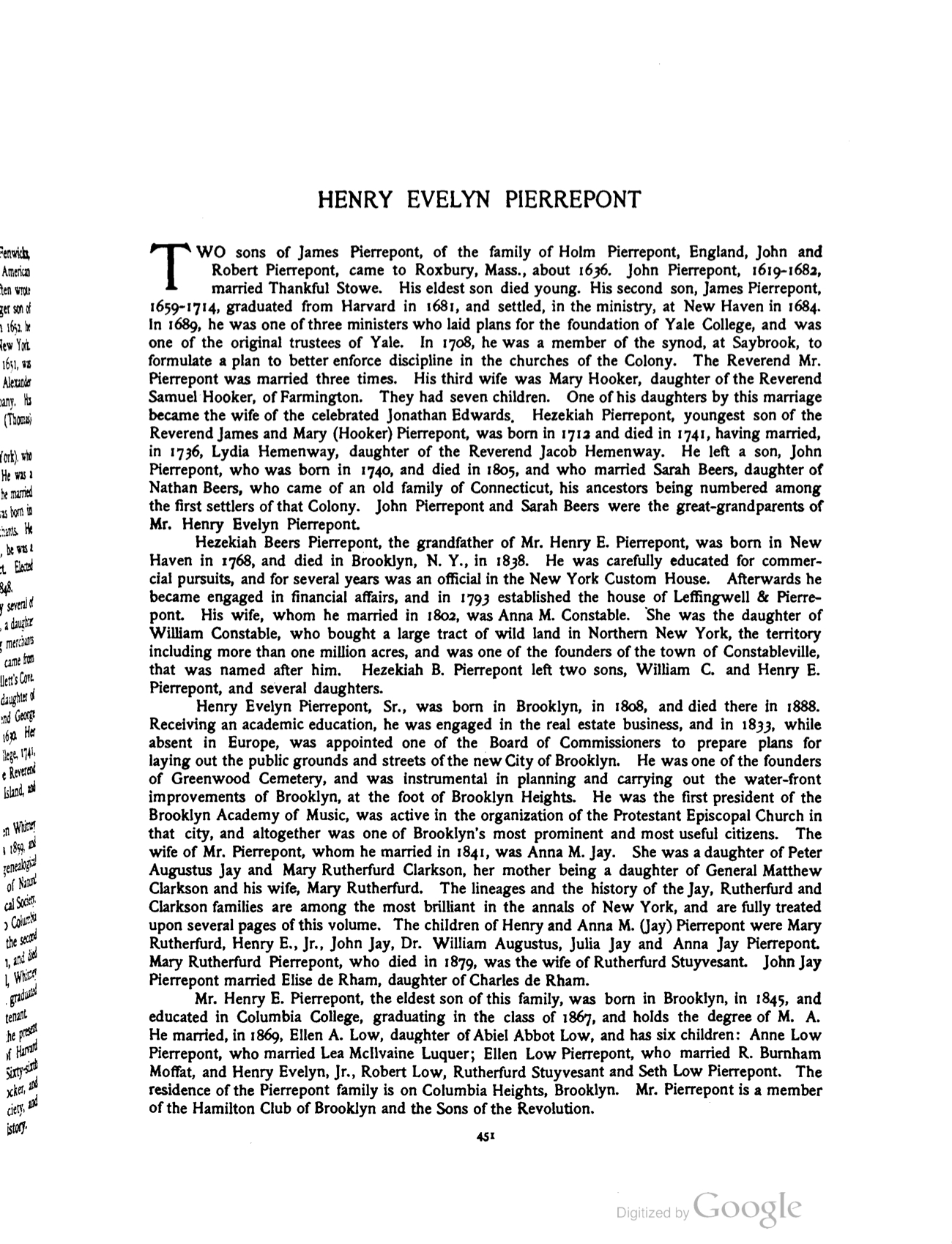
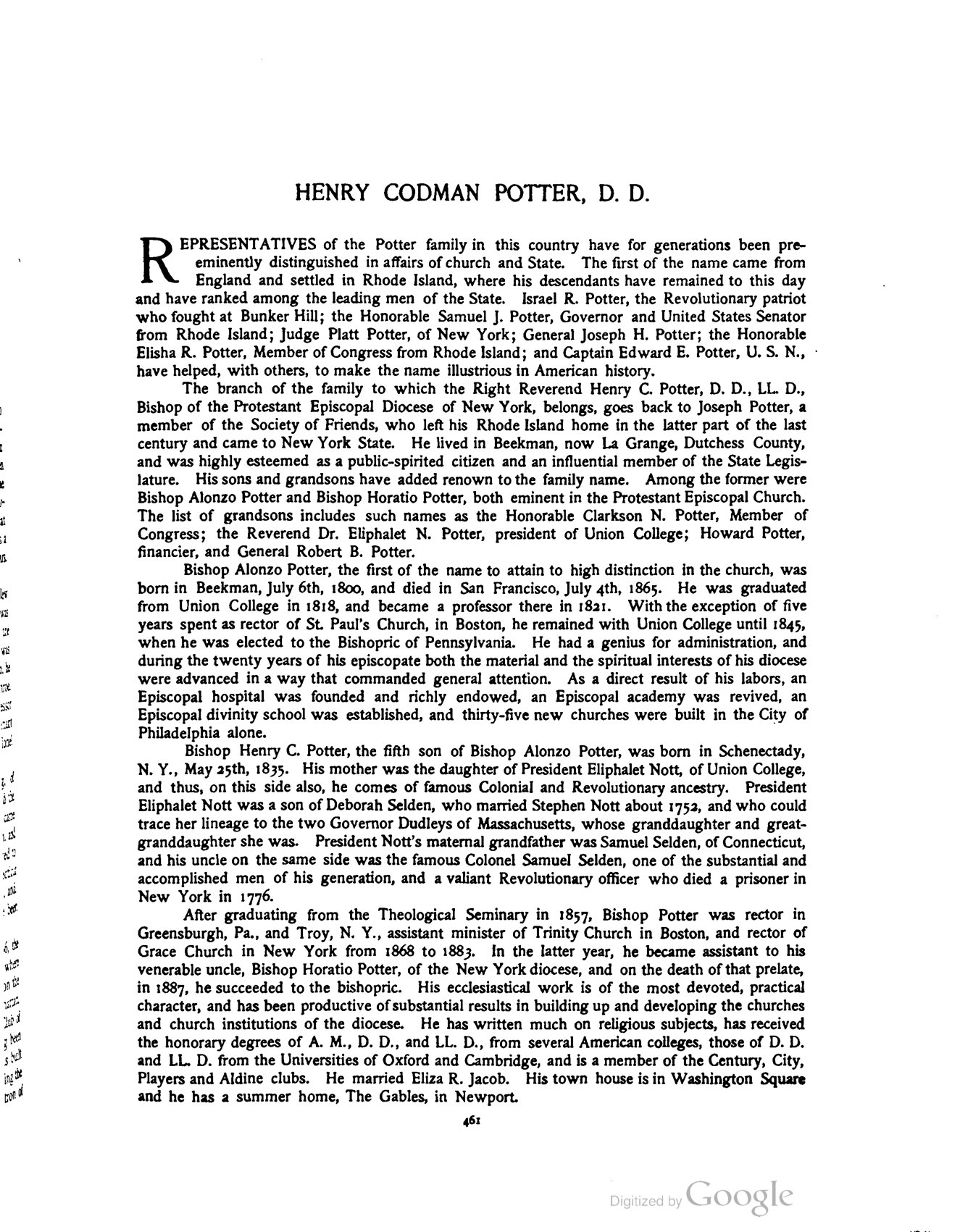
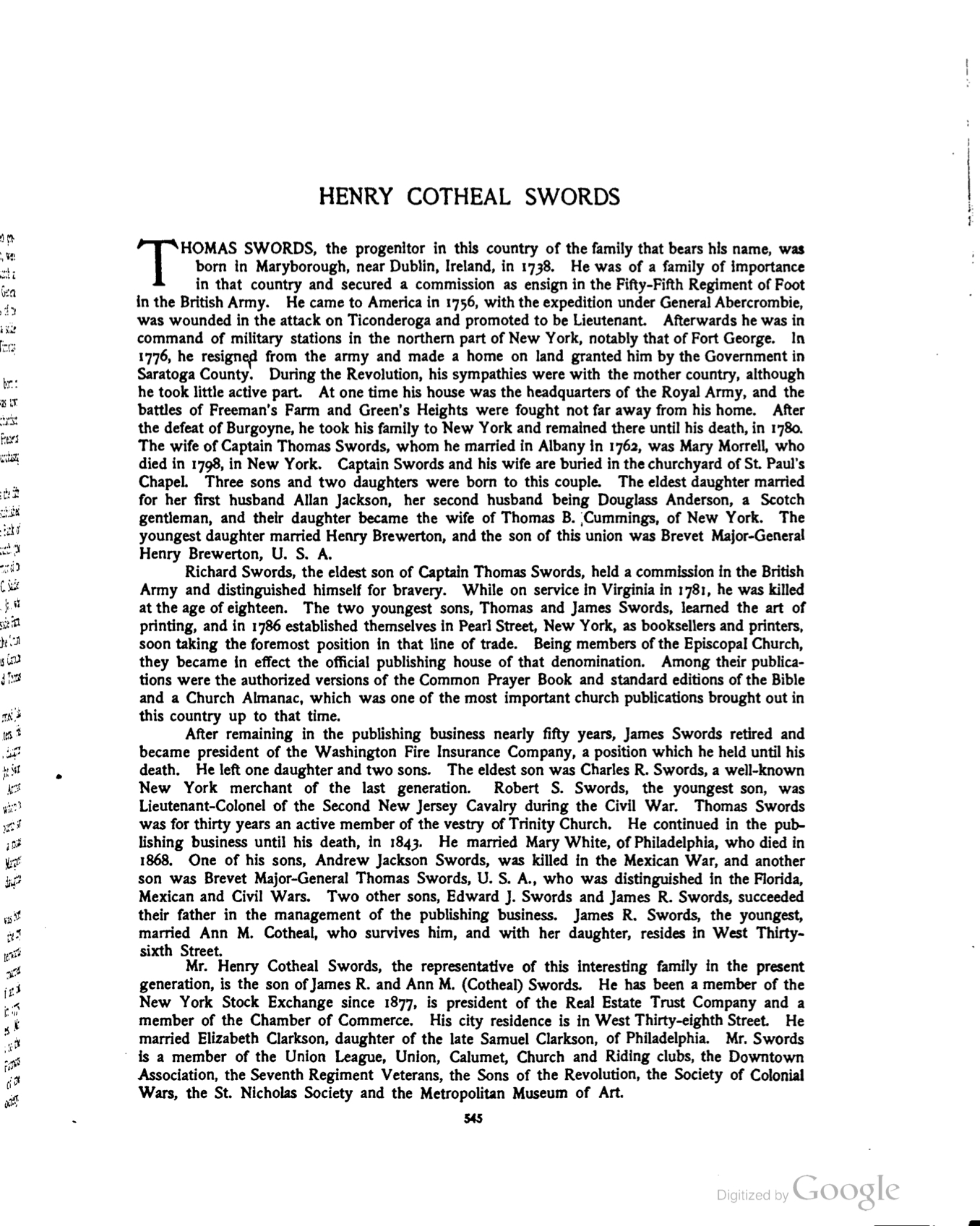
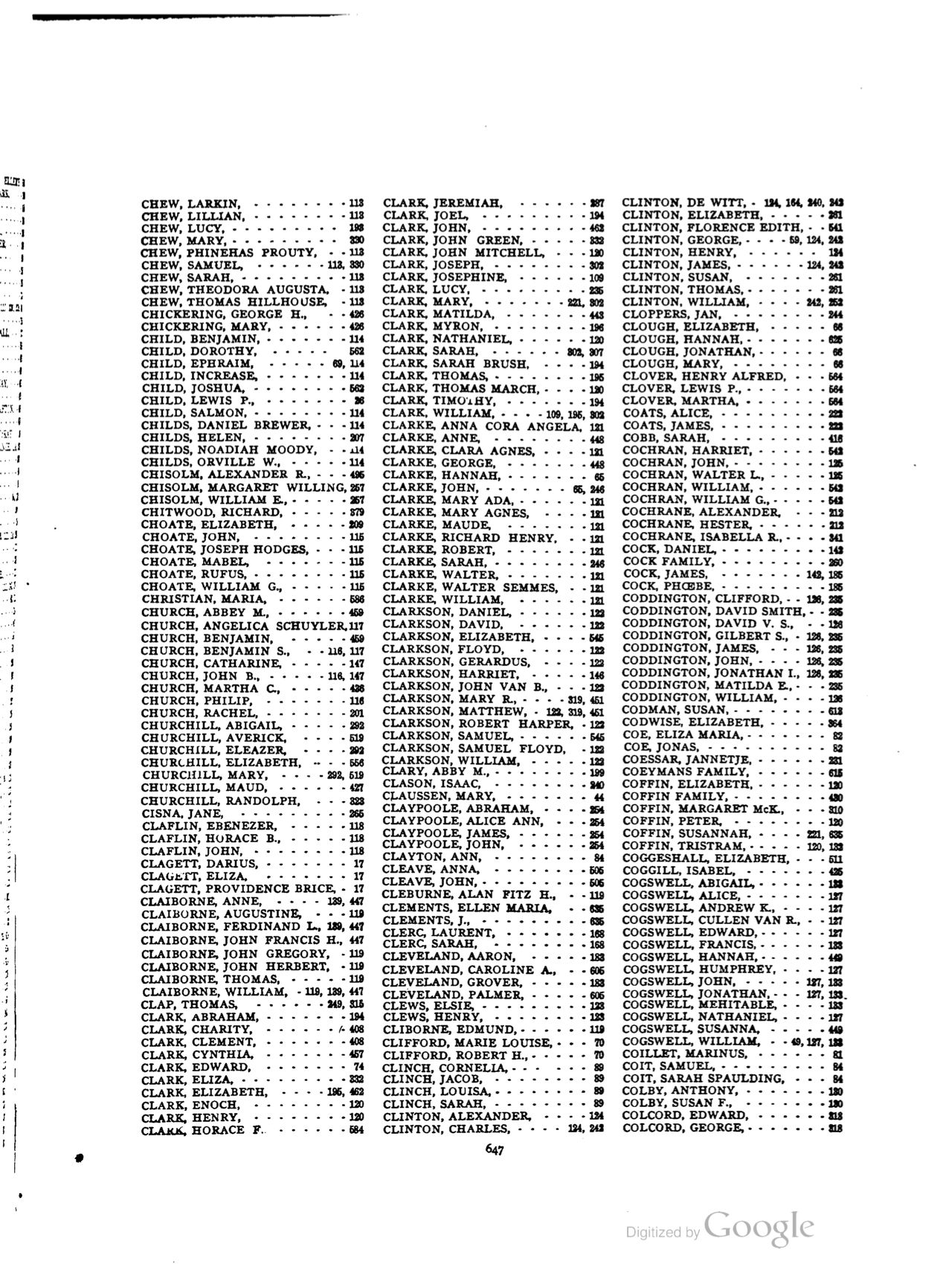
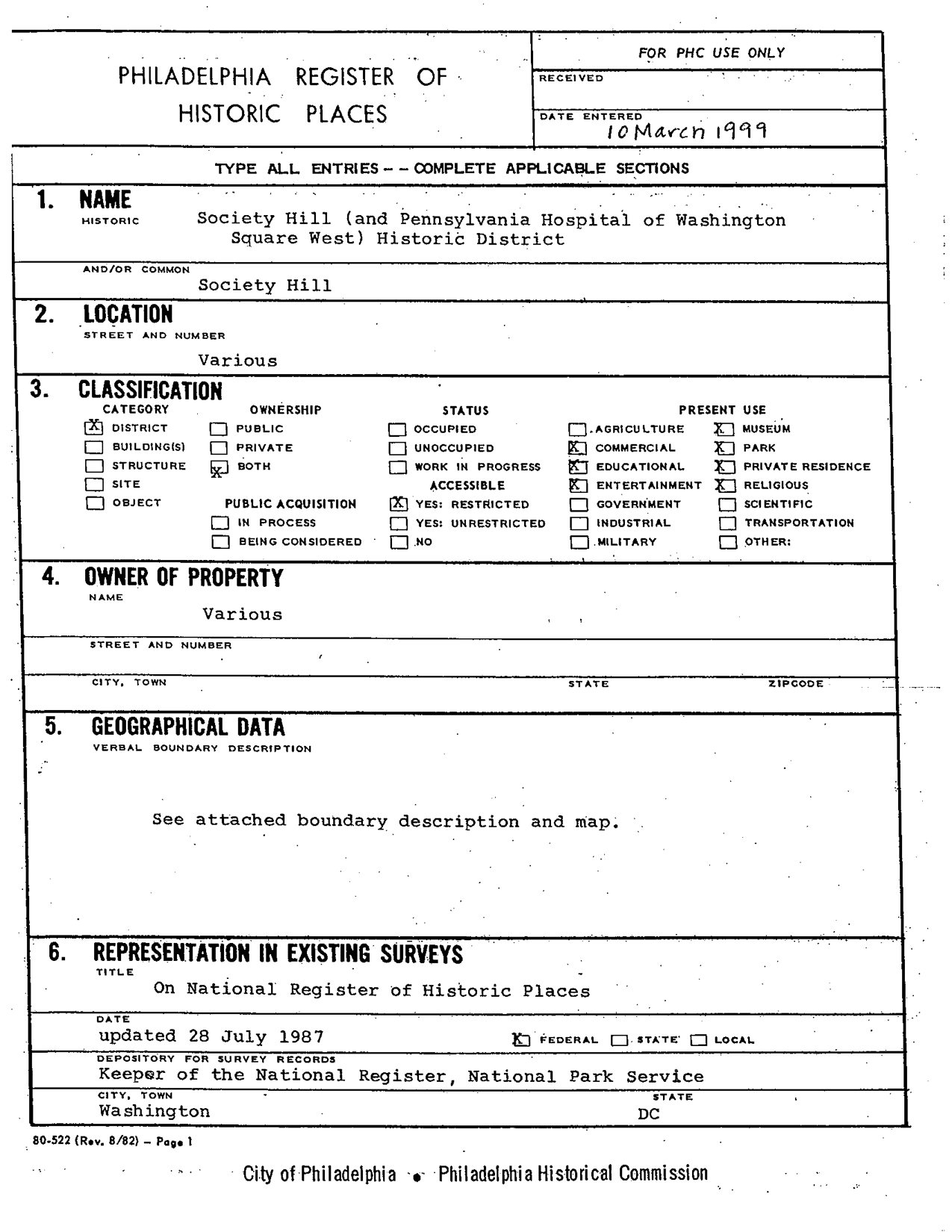
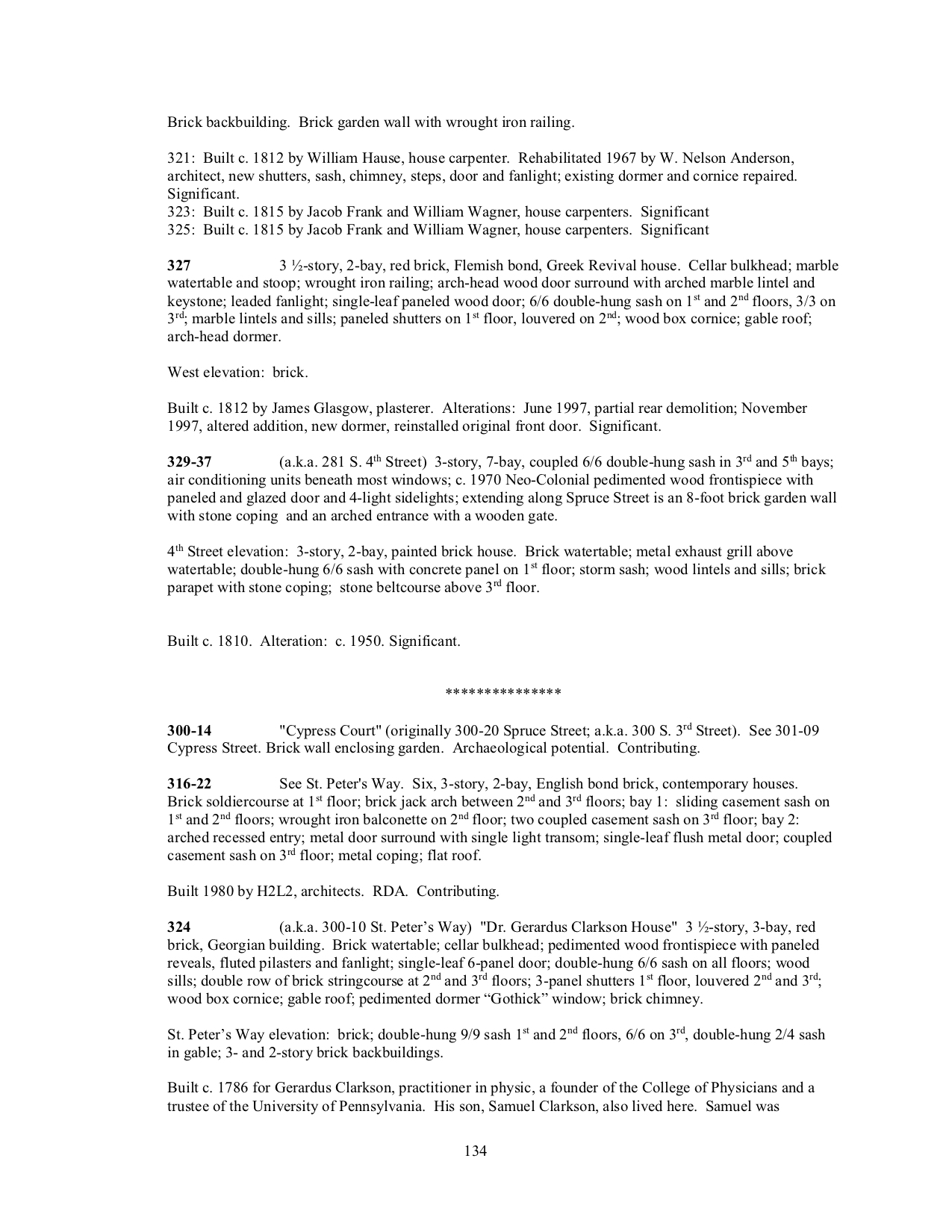
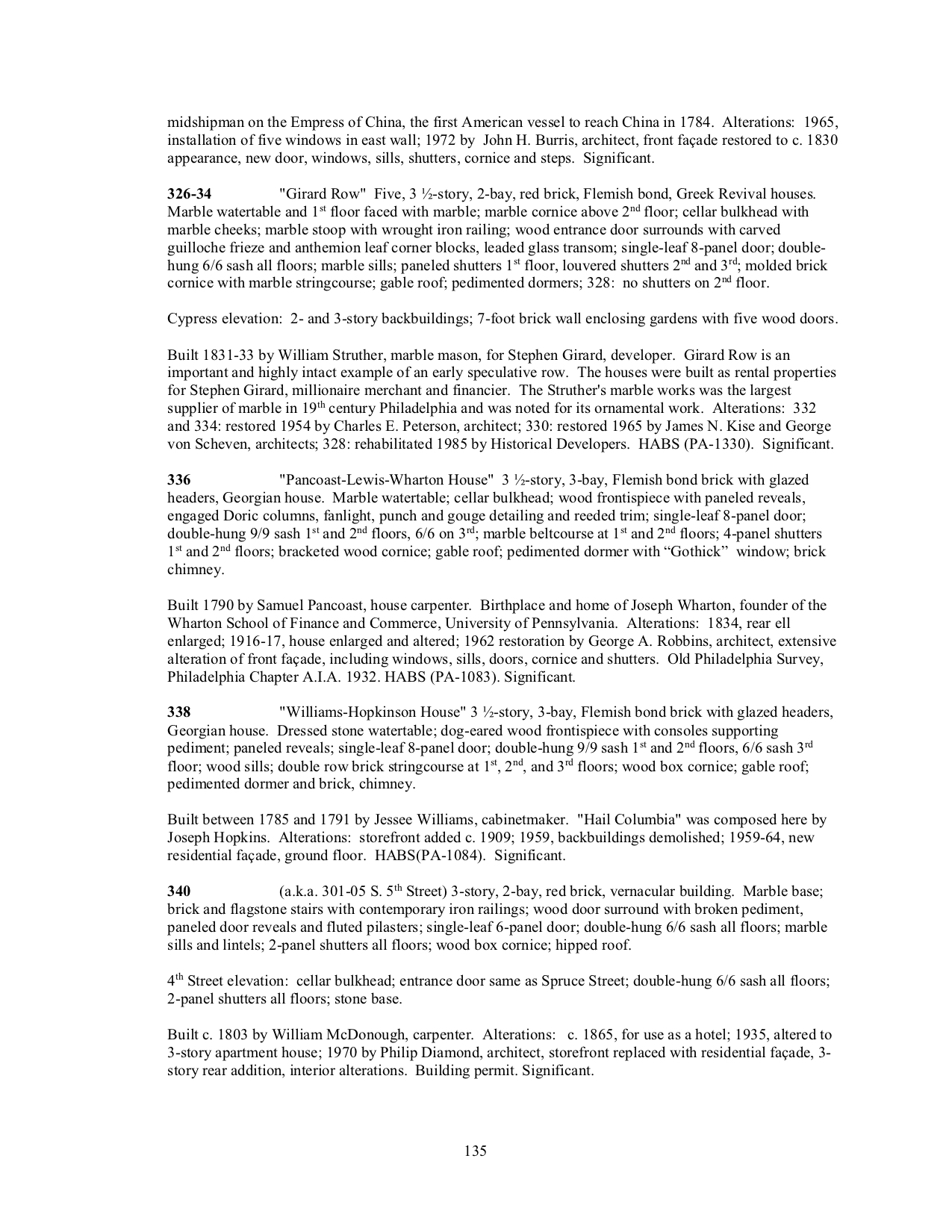
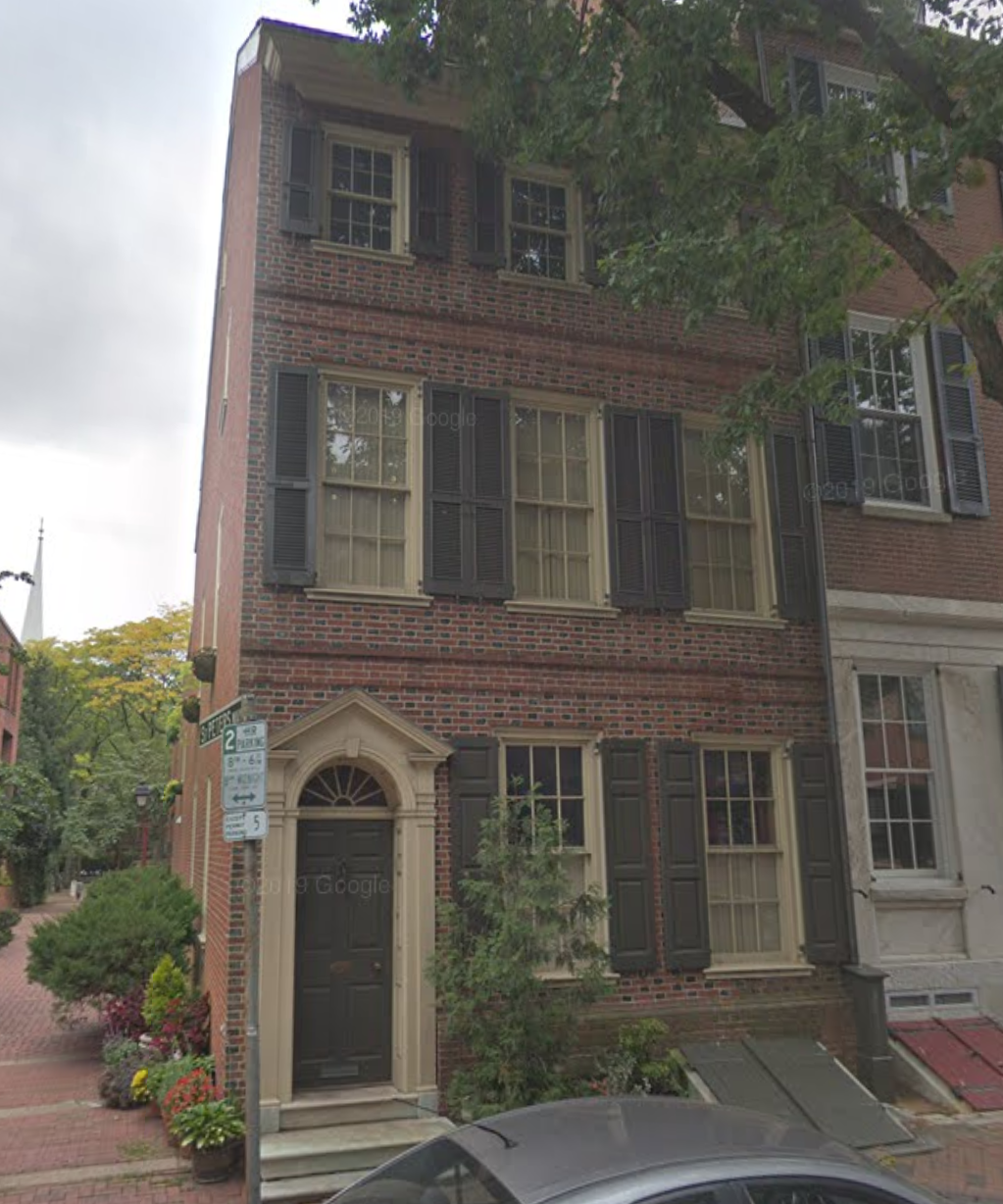
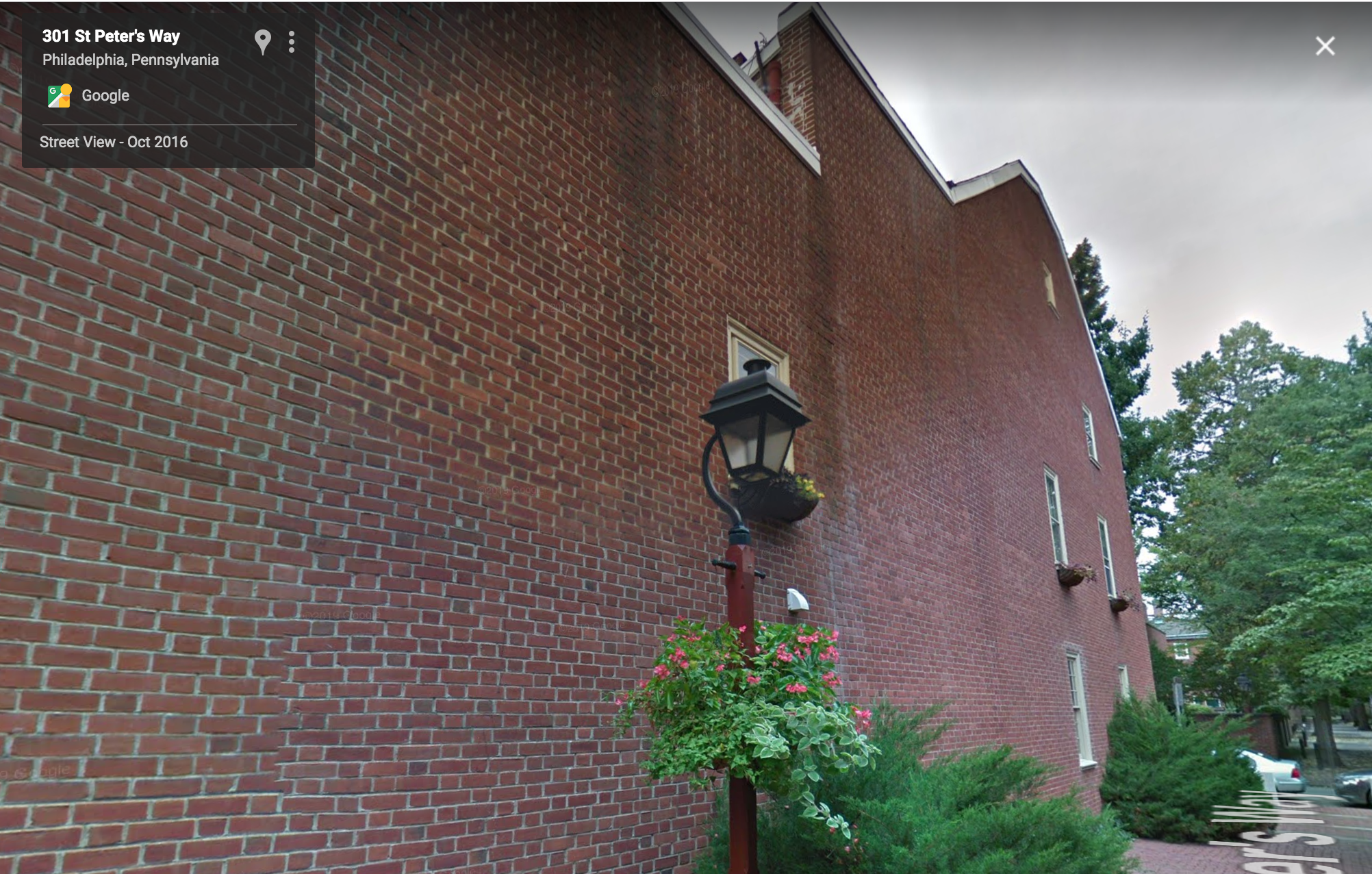
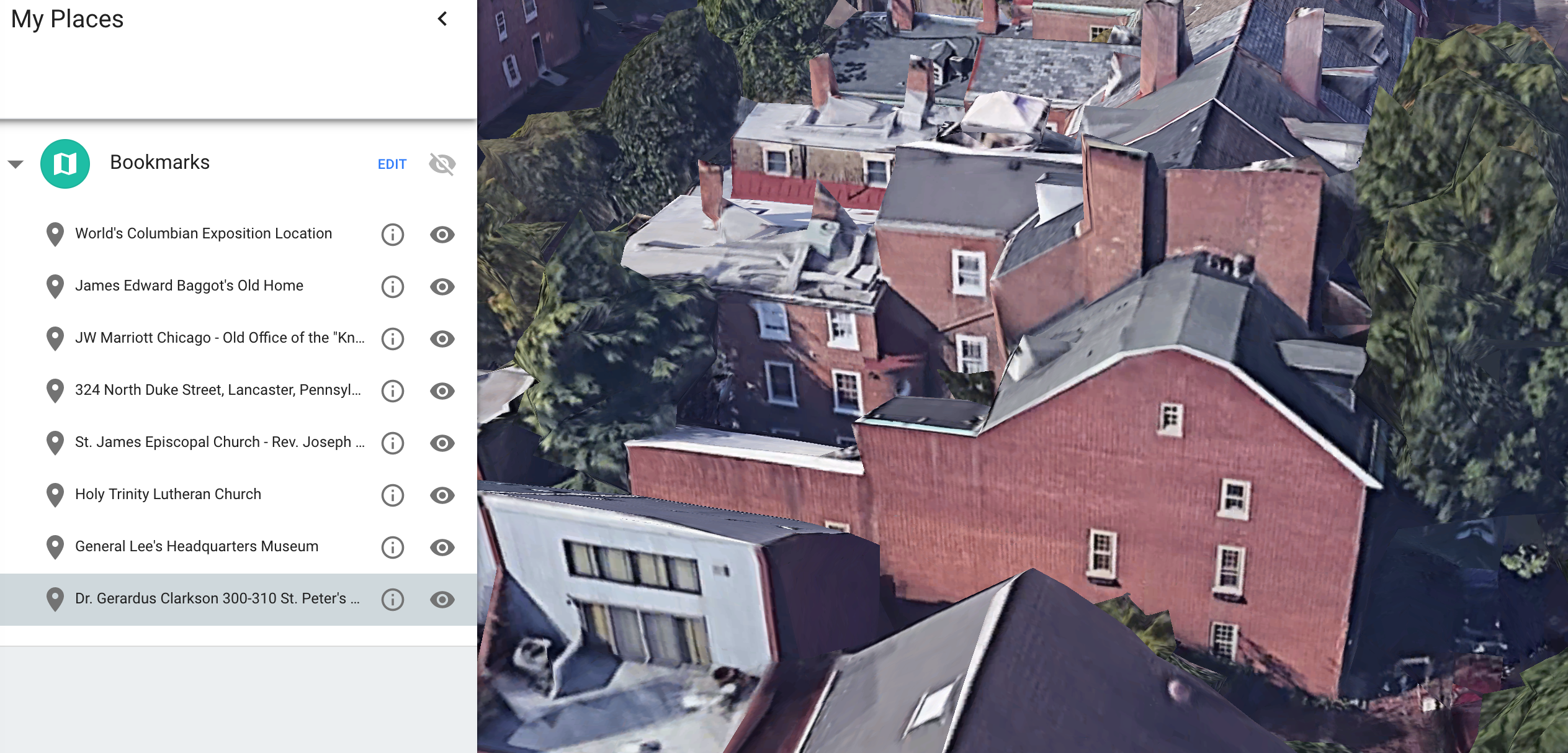
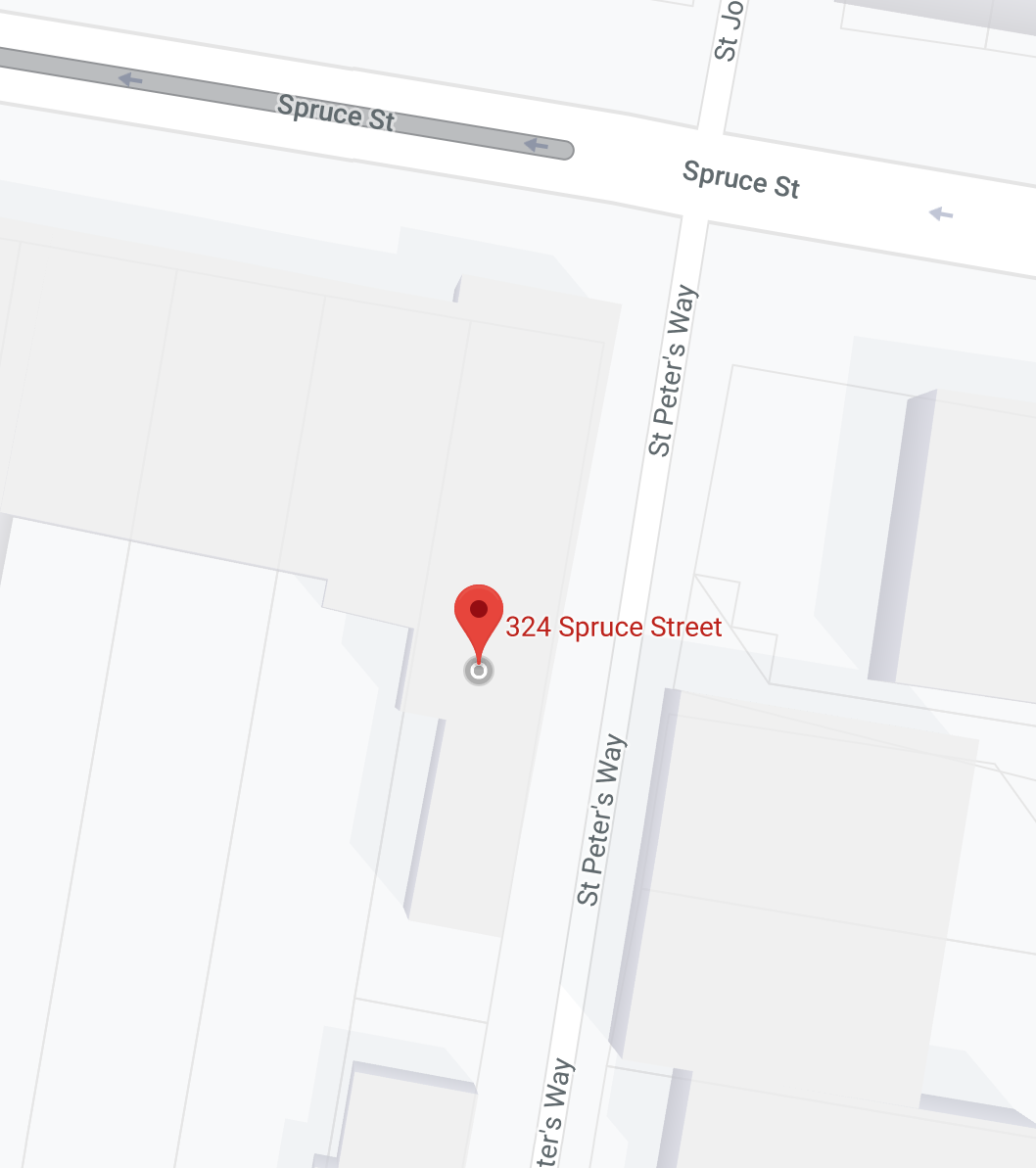
Dr. Gerardus Clarkson’s Home built for him in 1786:
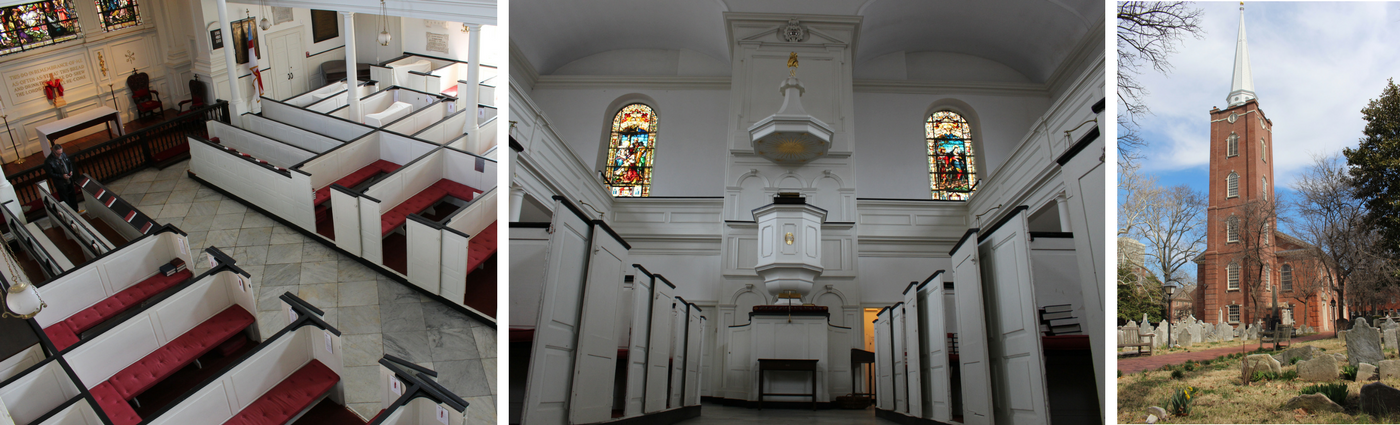
http://www.stpetersphila.org/about-st-peters/history/
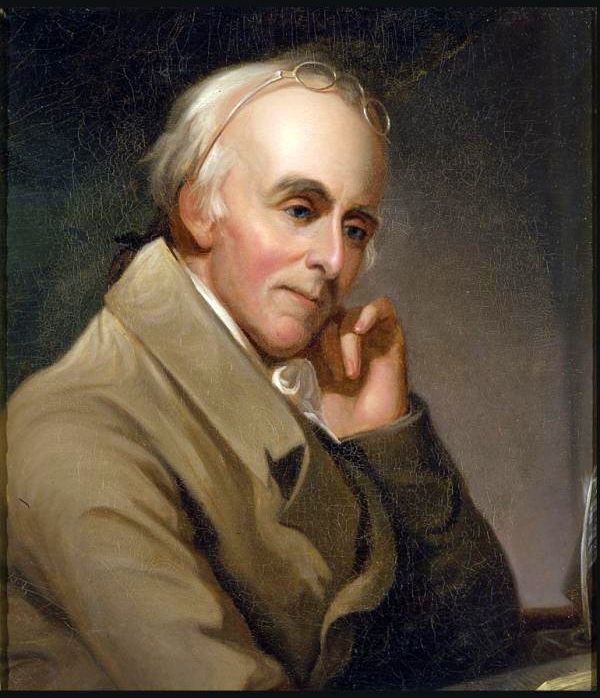
Benjamin Rush (January 4, 1746 [O.S. December 24, 1745] – April 19, 1813) was a signer of the Declaration of Independence (U.S.) and a civic leader in Philadelphia, where he was a physician, politician, social reformer, humanitarian, and educator as well as the founder of Dickinson College. Rush attended the Continental Congress.[1] His later self-description there was: “He aimed right.”[2][3] He served as Surgeon General of the Continental Army and became a professor of chemistry, medical theory, and clinical practice at the University of Pennsylvania.[4]
Rush was a leader of the American Enlightenment and an enthusiastic supporter of the American Revolution. He was a leader in Pennsylvania’s ratification of the Constitution in 1788. He was prominent in many reforms, especially in the areas of medicine and education. He opposed slavery, advocated free public schools, and sought improved education for women and a more enlightened penal system. As a leading physician, Rush had a major impact on the emerging medical profession. As an Enlightenment intellectual, he was committed to organizing all medical knowledge around explanatory theories, rather than rely on empirical methods. Rush argued that illness was the result of imbalances in the body’s physical system and was caused by malfunctions in the brain. His approach prepared the way for later medical research, but Rush himself undertook none of it. He promoted public health by advocating clean environment and stressing the importance of personal and military hygiene. His study of mental disorder made him one of the founders of American psychiatry.[5]
The Obituary of Dr. Gerardus is in The Pennsylvania Gazette 9/22/1790:https://www.accessible-archives.com/collections/the-pennsylvania-gazette/
I requested a free membership to the gazette. As an organization “Electric Watershed.” If they give me access I will be able to include the Obits here.
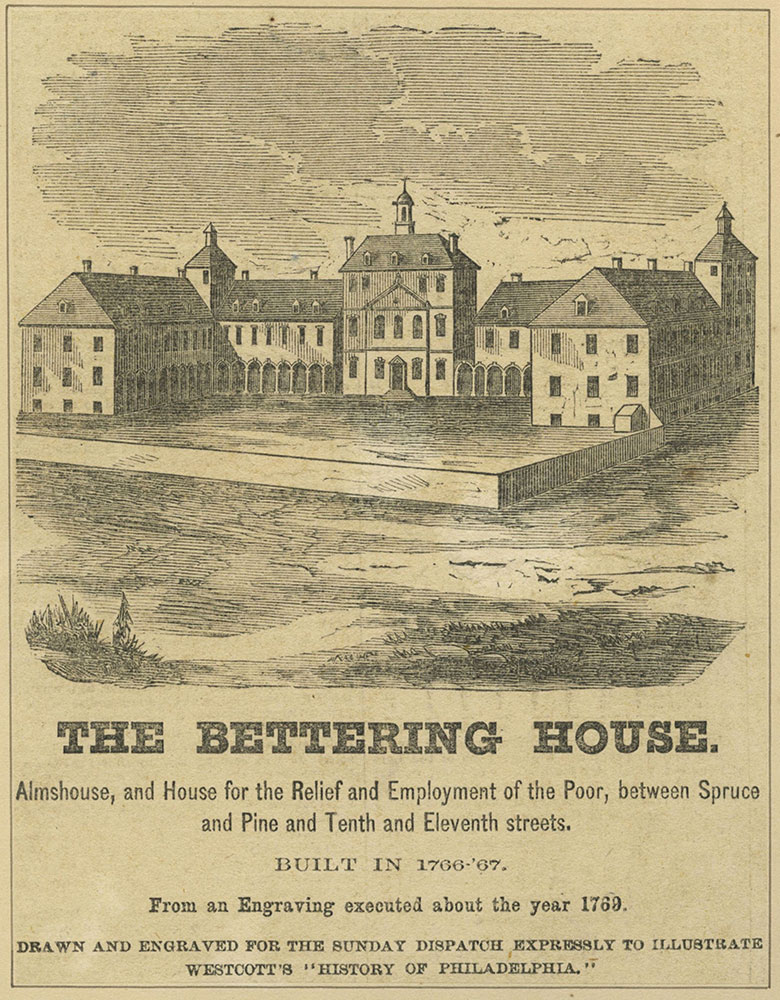
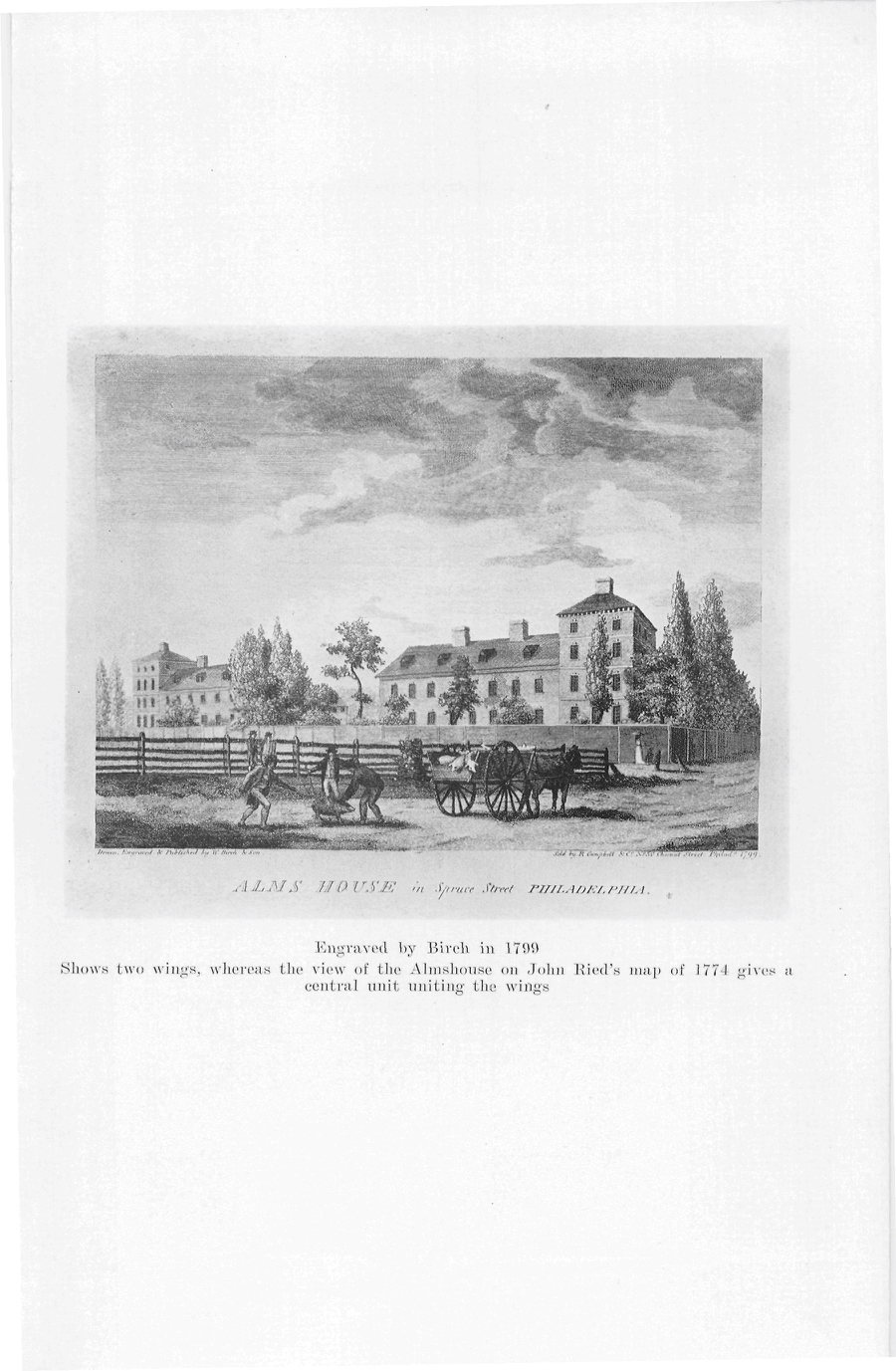
Item No: pdcp00640Title: Bettering House – Philadelphia AlmshouseMedia Type: Engravings
Source: Print and Picture Collection
Notes:
Located in Box: Allens Lane Art Center – Arcade Folder: Almshouses
Almshouse built 1766-67 between Spruce & Pine Streets and 10th & 11th Streets. Served as the new home of the Philadelphia Almshouse previously located at 3rd, 4th, Spruce & Pine Streets.
“The buildings were opened in October, 1767. The almshouse was laid out in the form of an L, one hundred and eighty feet by forty, two stories in height, joined by a turret thirty feet square, and four stories high. The house of employment was on the west side of the lot, running south from Spruce, fronting Eleventh Street, also in shape of an L, so that the entire range of buildings inclosed on three sides a quadrangular space. […] A habit soon grew up among the people of calling this establishment “the Bettering-House,” a title which in time became somewhat an epithet of contempt. Two hundred and eighty-four people were admitted into the almshouse in October, 1767, and in three months afterward the number had increased to three hundred and sixty-eight. The inmates of the house were soon put to work, and in it were made various kinds of goods, principally of wool, hemp, and flax.”[1]
Philadelphia Almshouse relocated in 1835 to Blockley Township in West Philadelphia.
Transcription:
[ THE BETTERING HOUSE. | Almshouse, and House for the Relief and Employment of the Poor, between Spruce | and Pine and Tenth and Eleventh streets. | BUILT in 1766-’67. | From an Engraving executed about the year 1769. | DRAWN AND ENGRAVED FOR THE SUNDAY DISPATCH EXPRESSLY TO ILLUSTRATE | WESTCOTT”S “HISTORY OF PHILADELPHIA.” ]
Source:
[1] Scharf, J. T. & Westcott, t. (1884). History of Philadelphia, 1609-1884, Volume 2. (Philadelphia: L.H. Everts & Co.) Pg. 1451.
Creation Year: ca. 1884
Geocode Latitude: Geocode Latitude:39.945953
Geocode Longitude:-75.159209
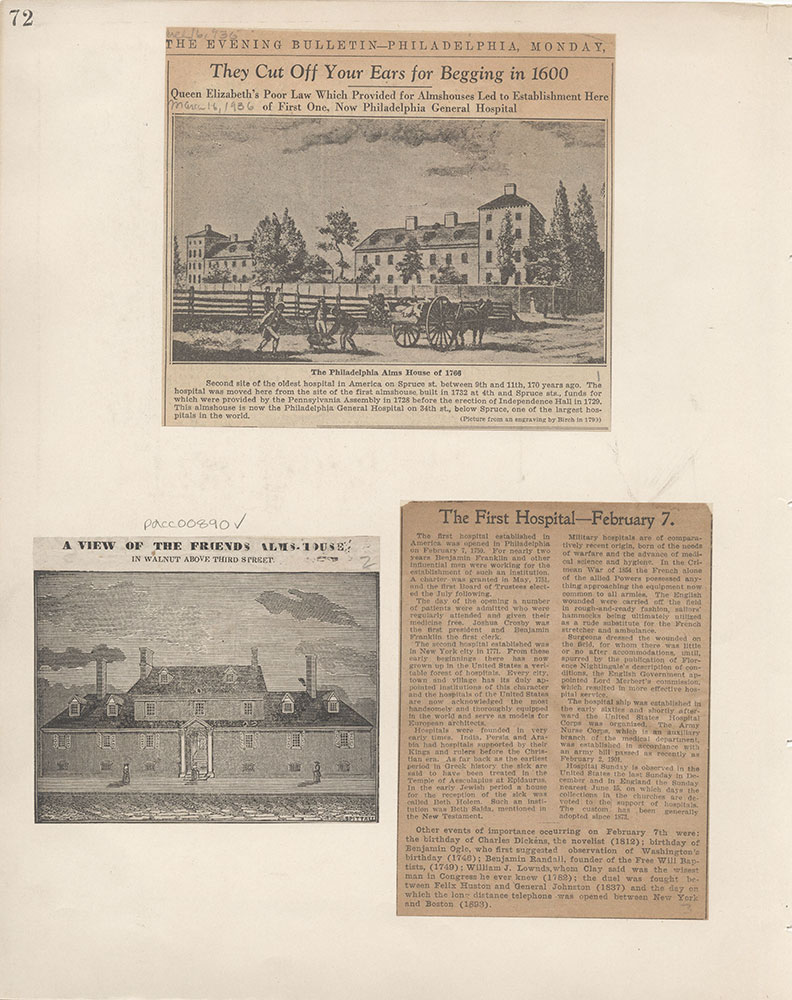
https://www.charlemagne.org/Gateway.html
 My Family tree to Saint Arnulf of Metz (582 - 640)