
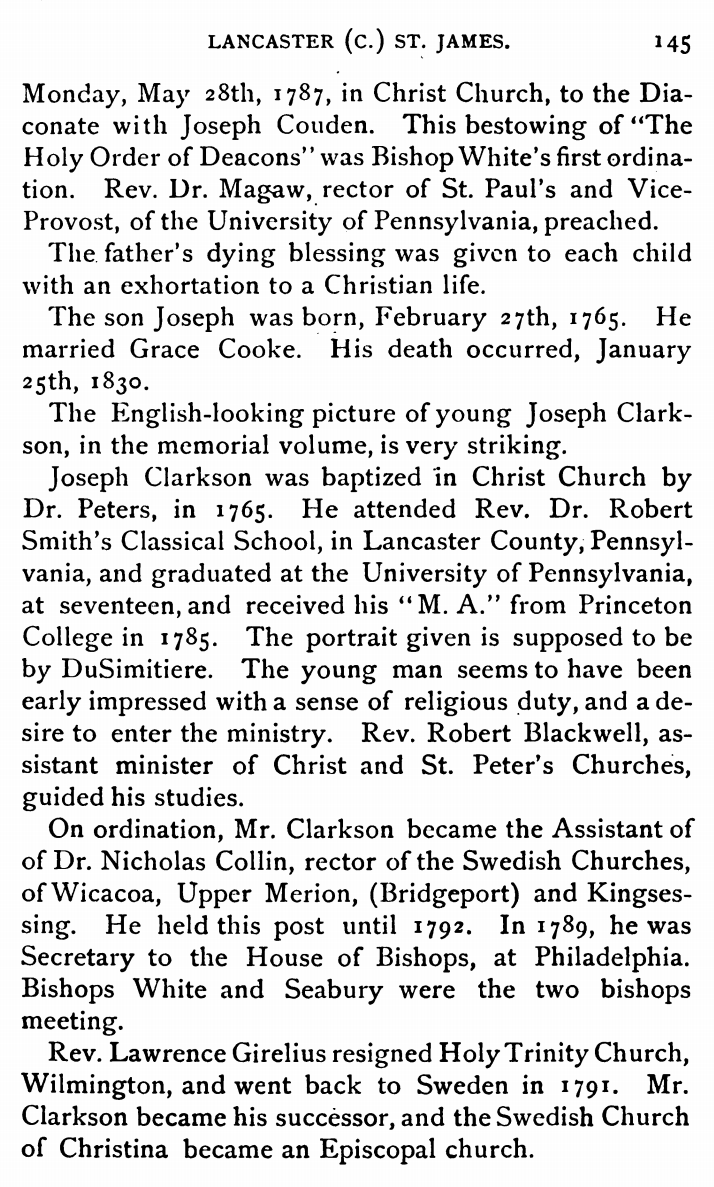
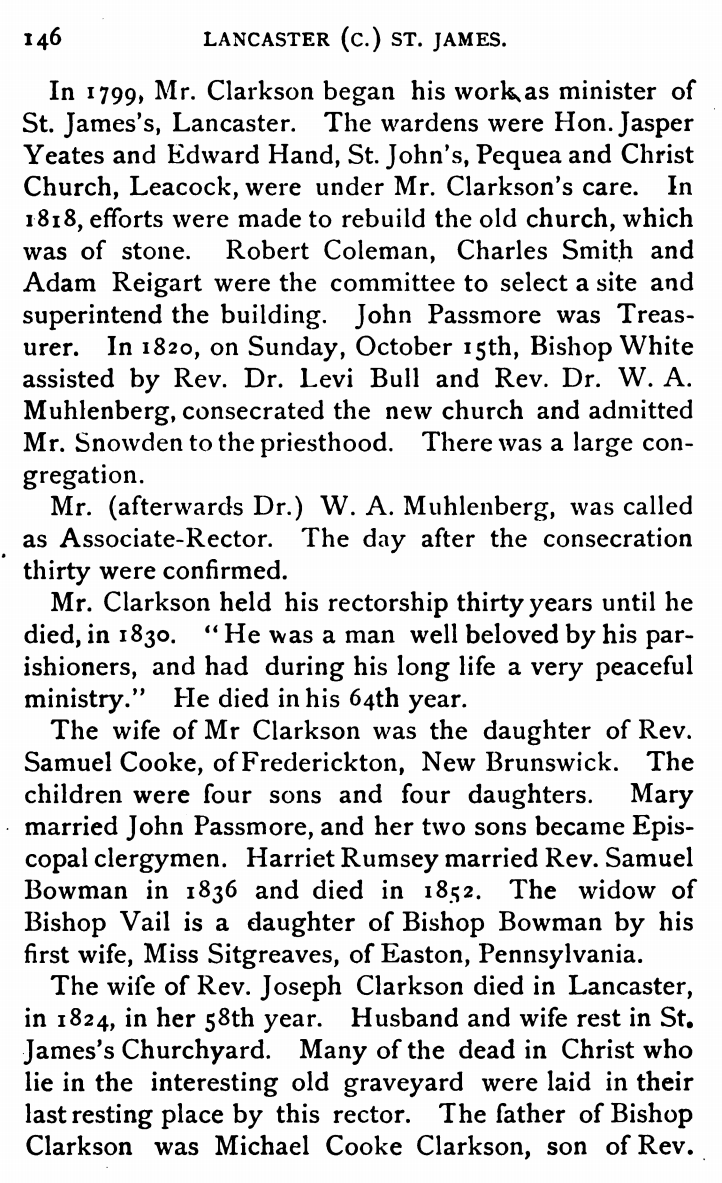
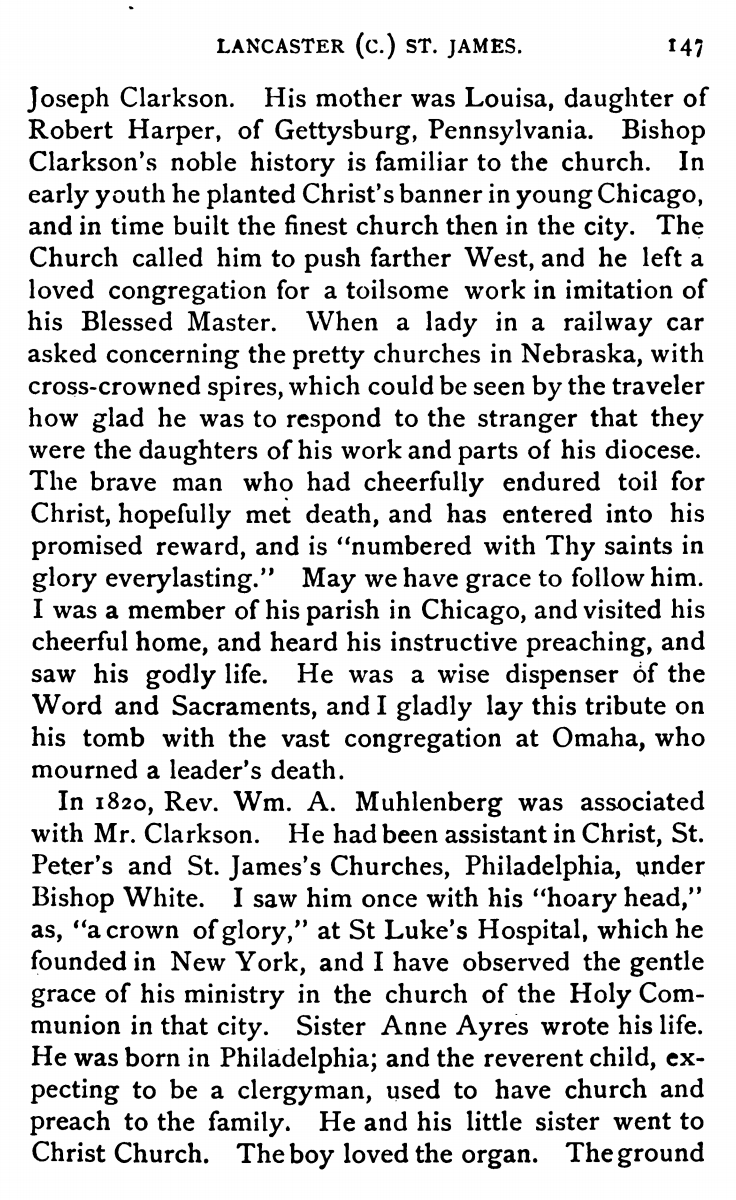
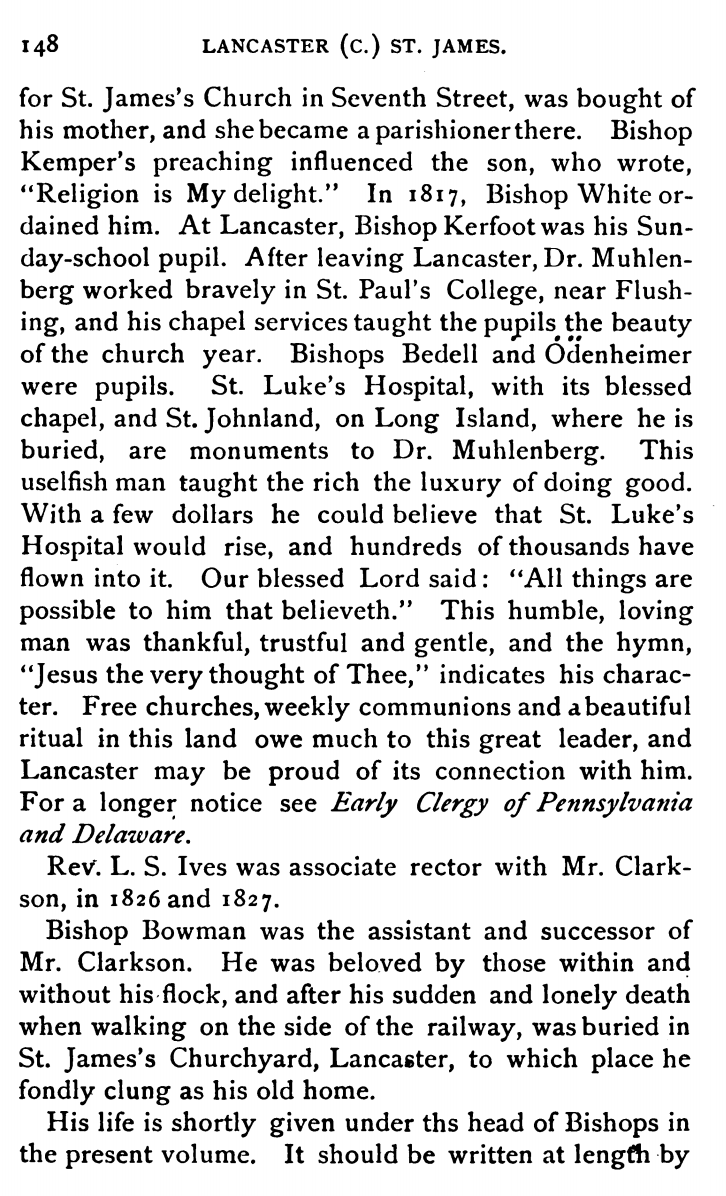
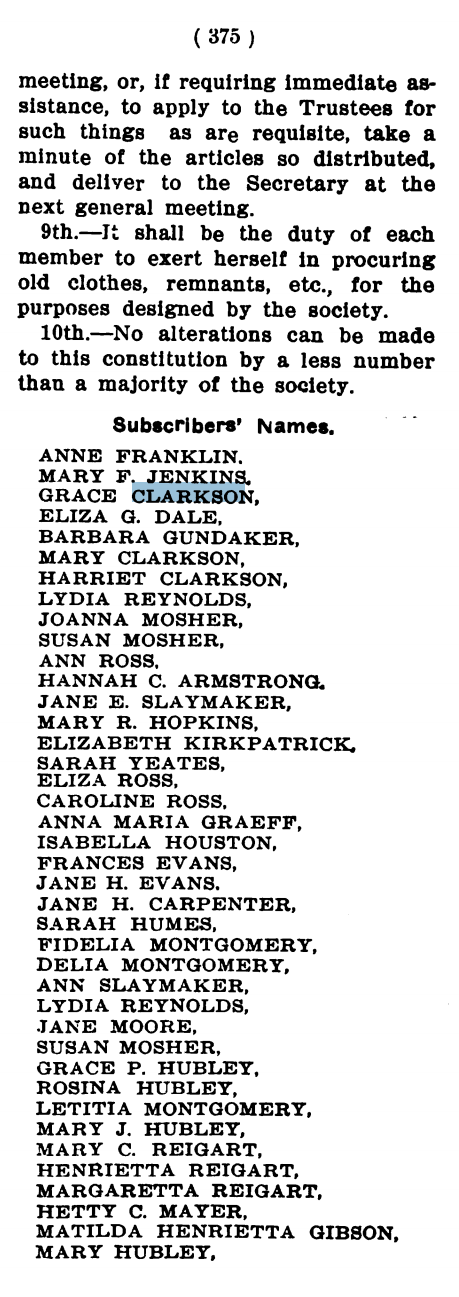
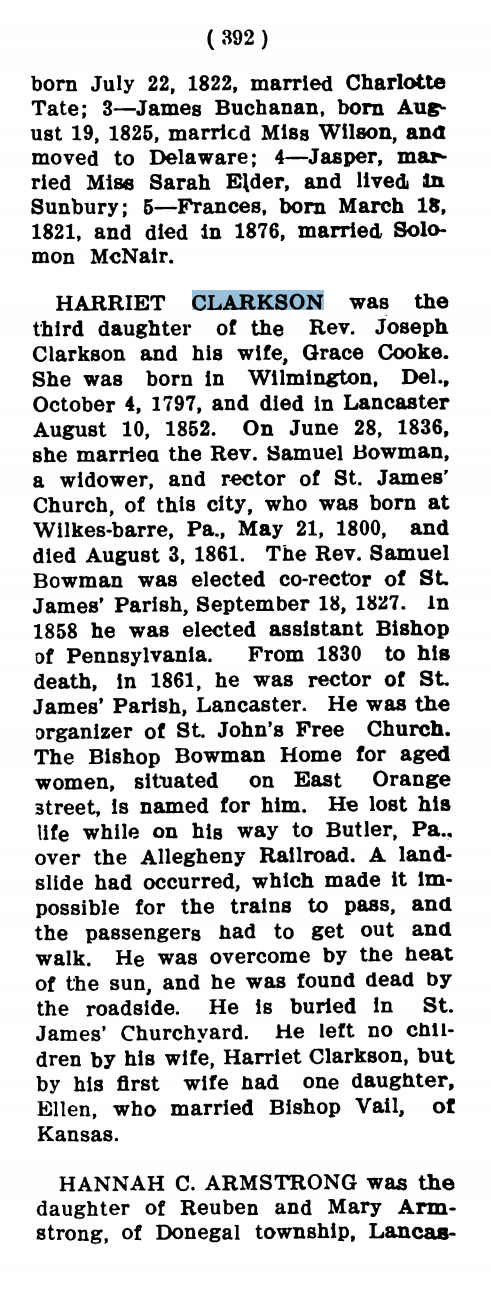
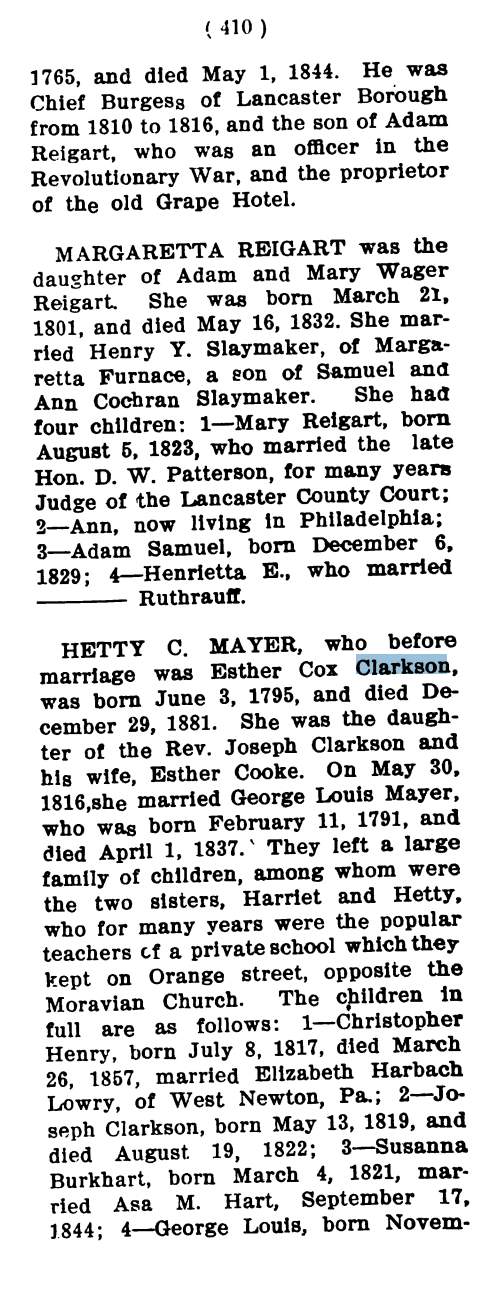
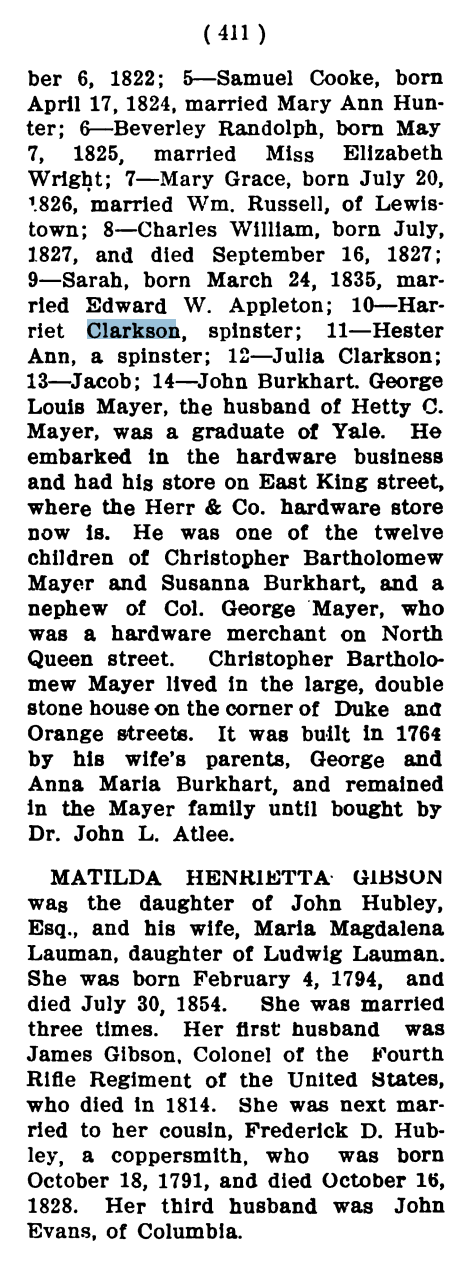
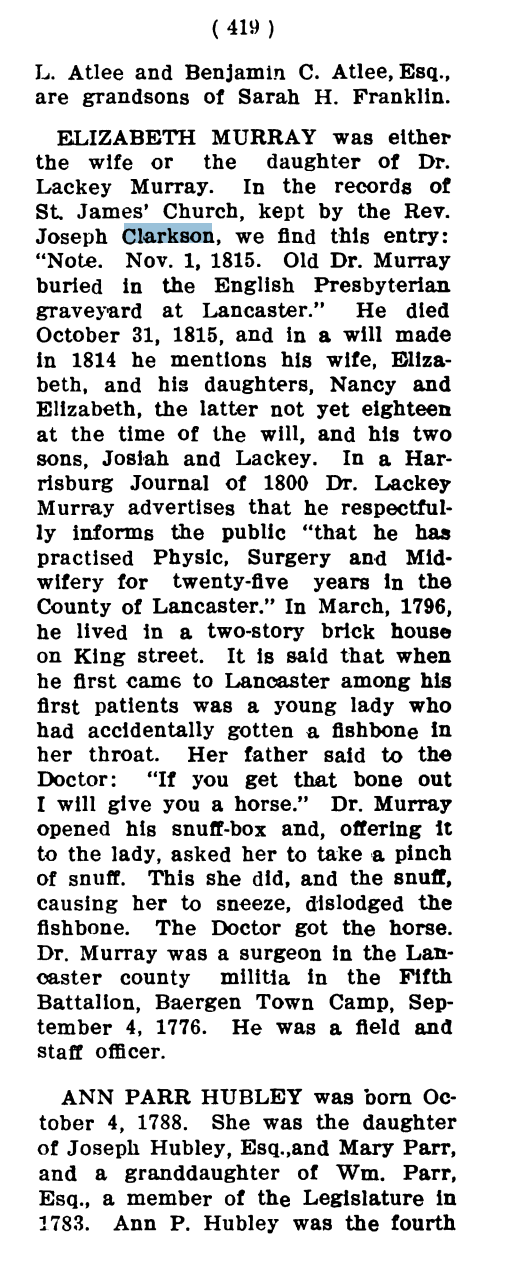
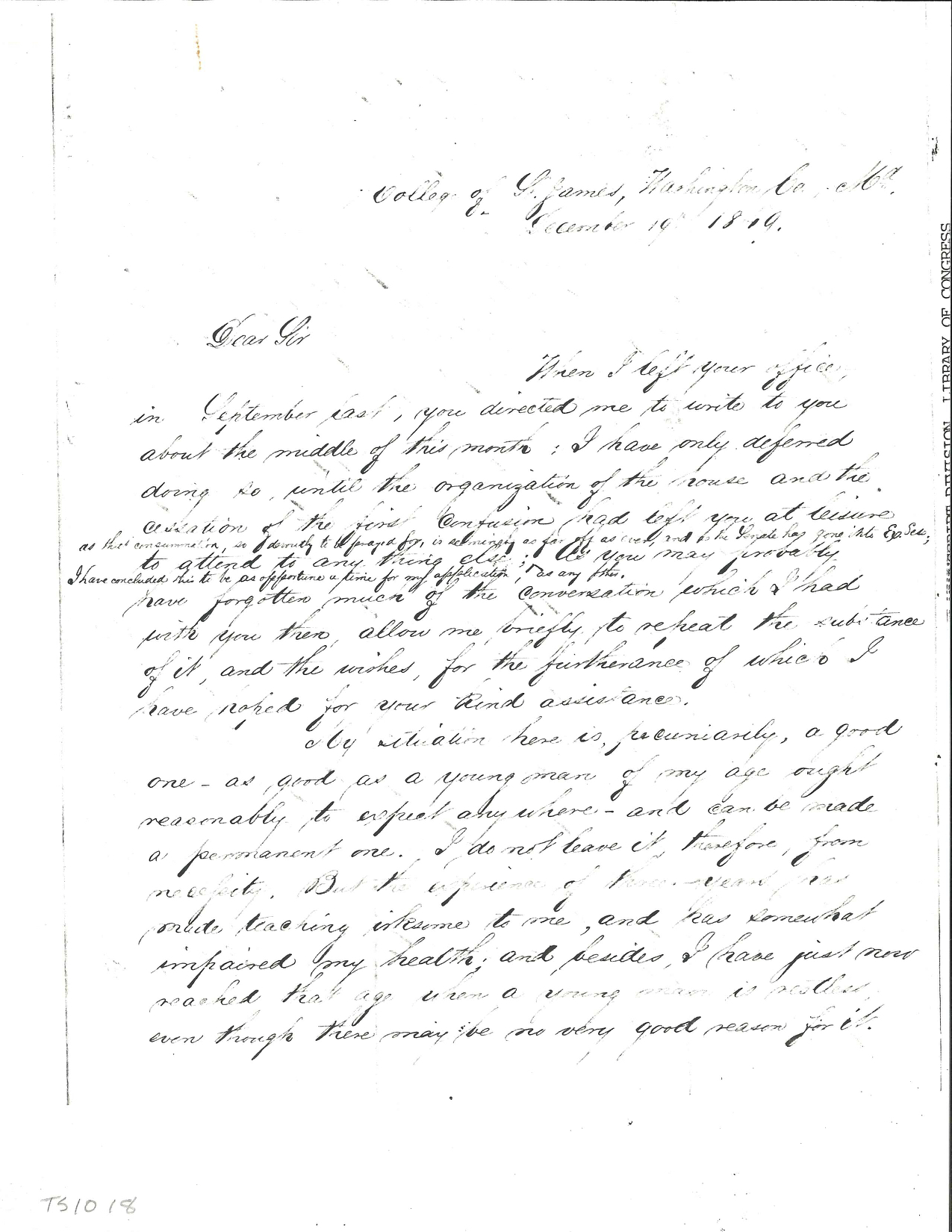
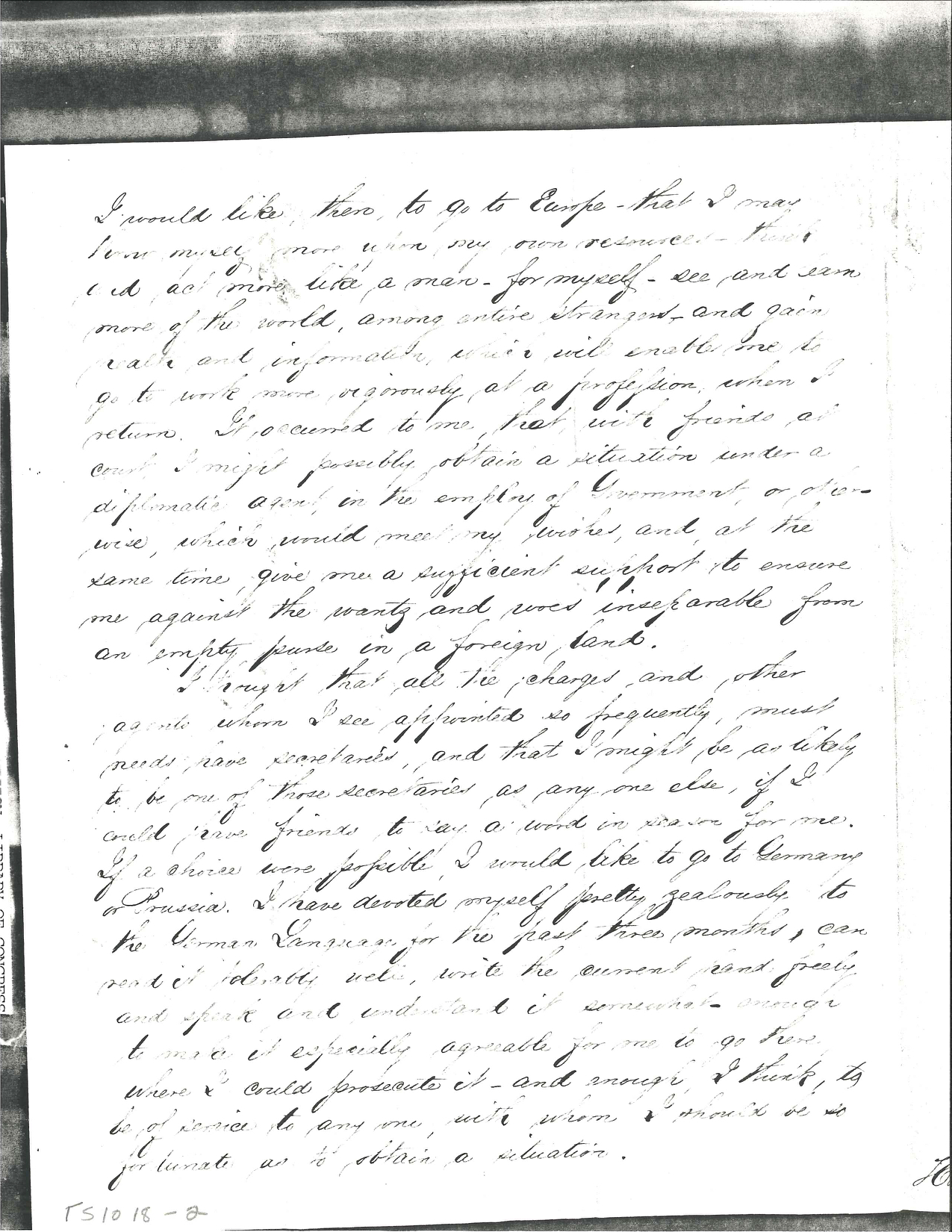
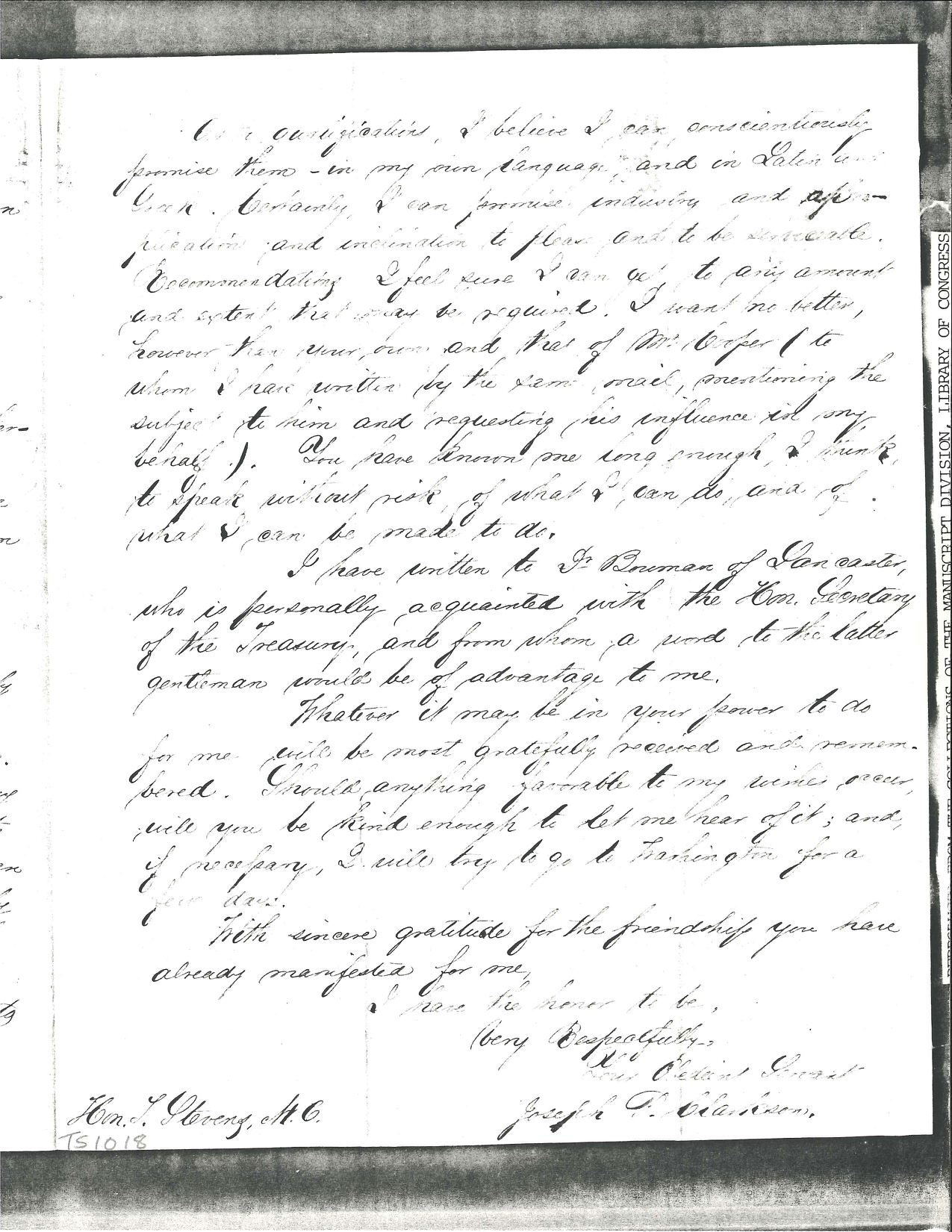
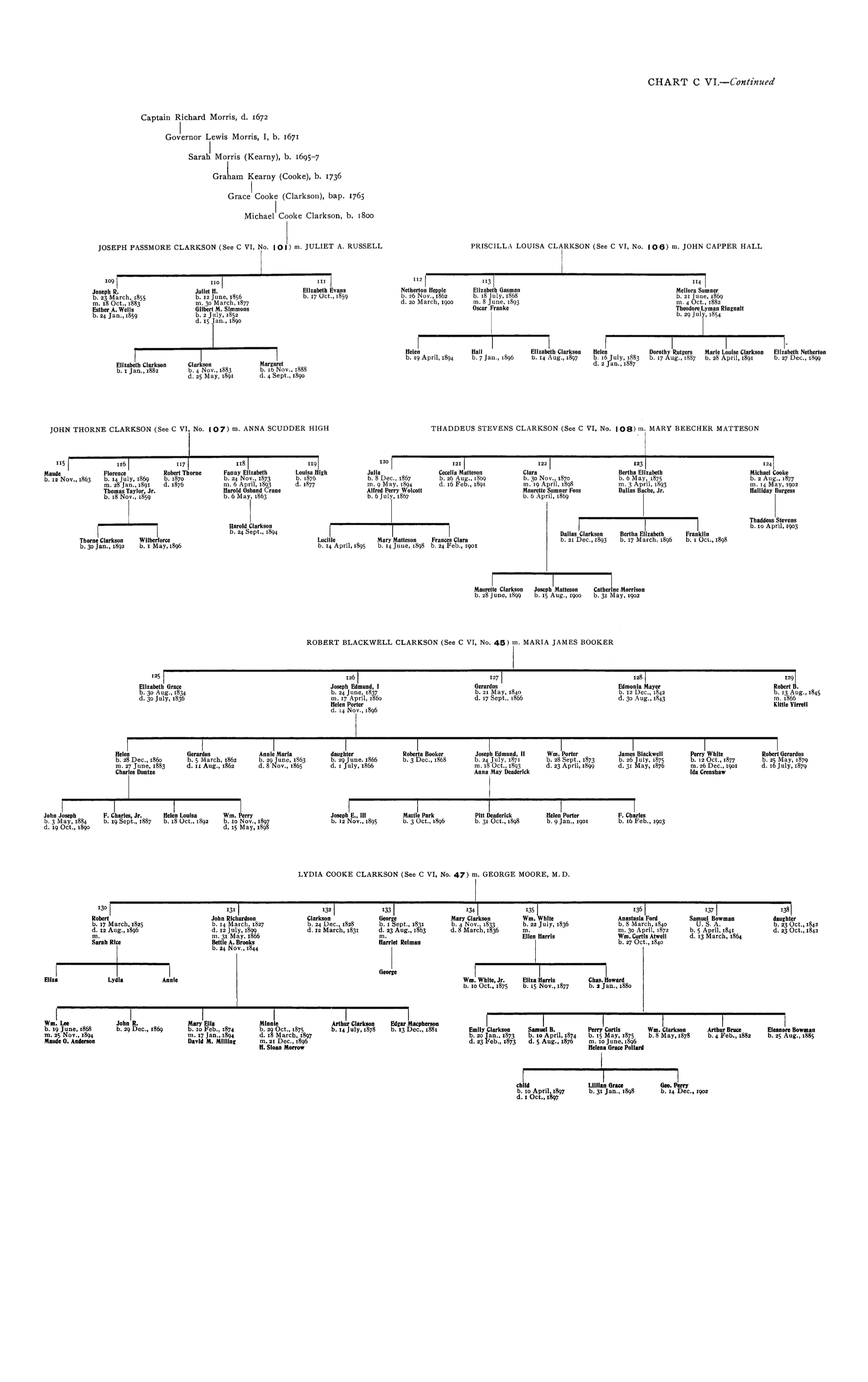
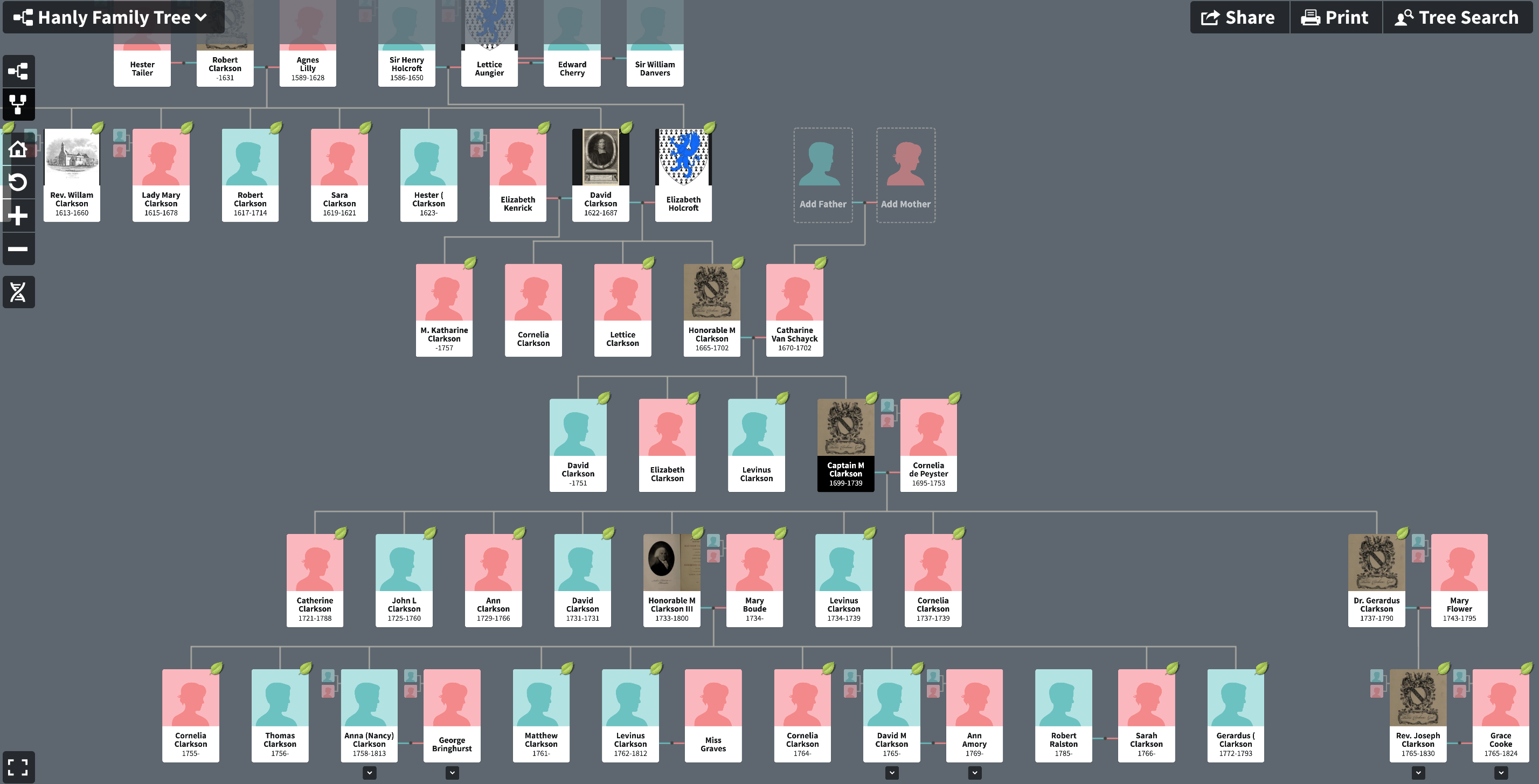
Rev. Joseph Clarkson was cousins to 16th U.S. President Abraham Lincoln through Mother Mary Flower Clarkson’s Great Grand Father, Enoch Flower.
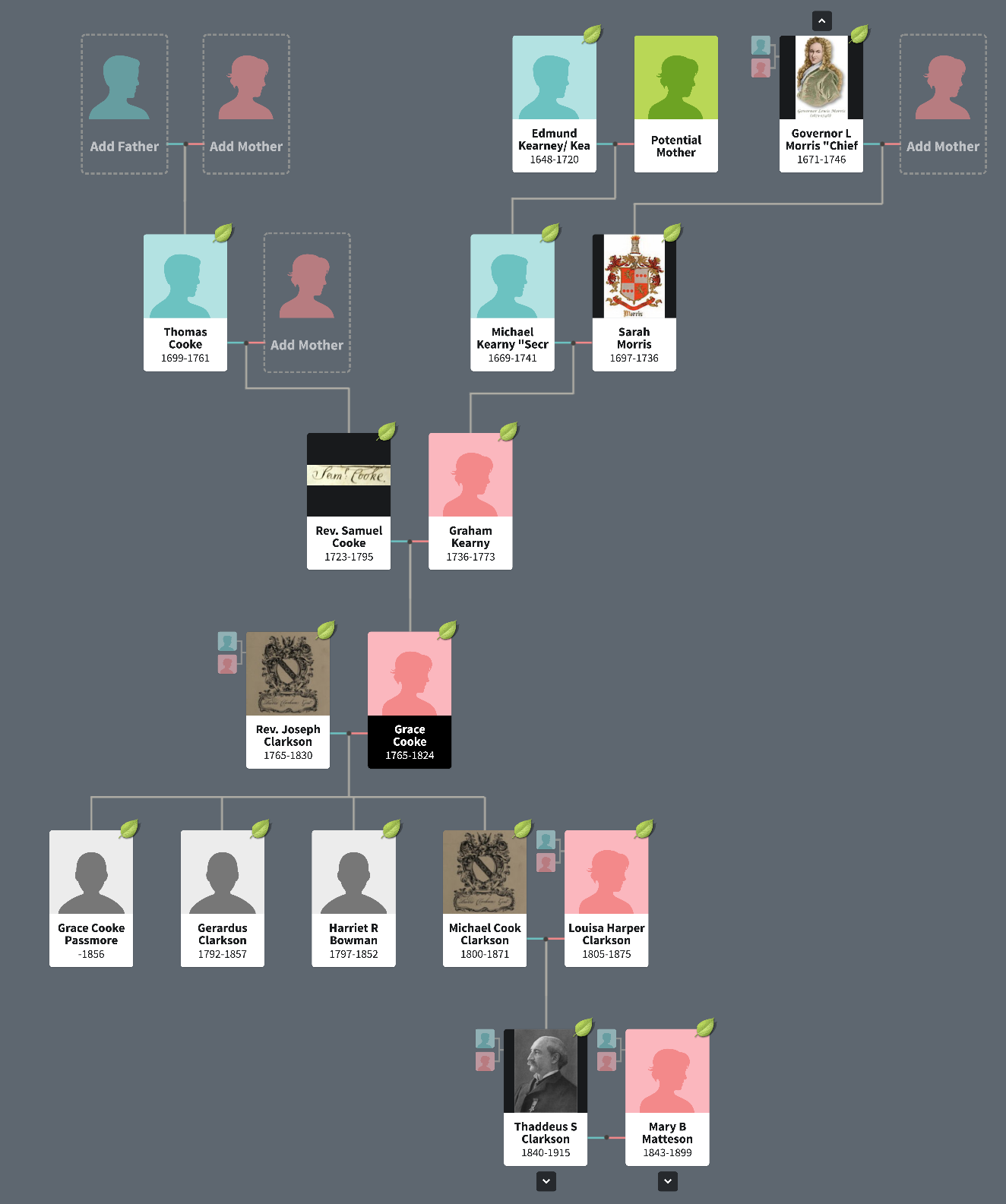
- Dr. Gerardus Clarkson (Father) & Mary Flower Clarkson (Mother)
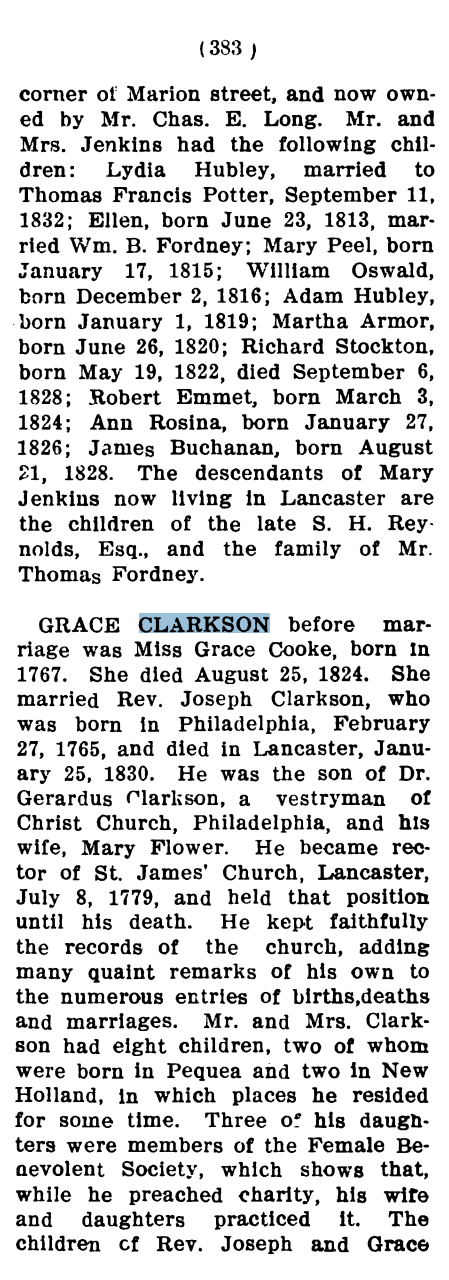
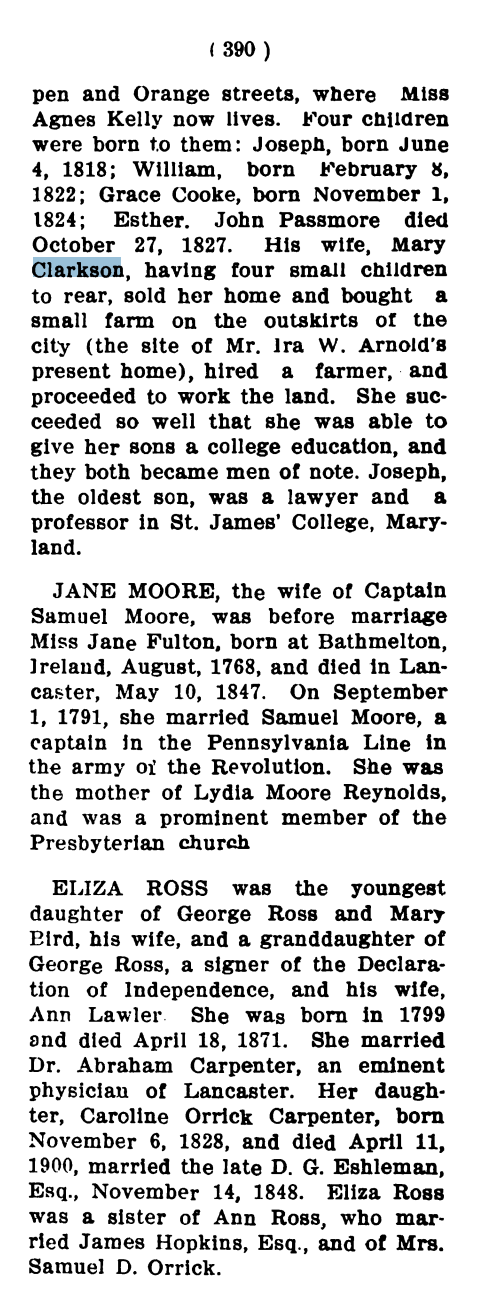
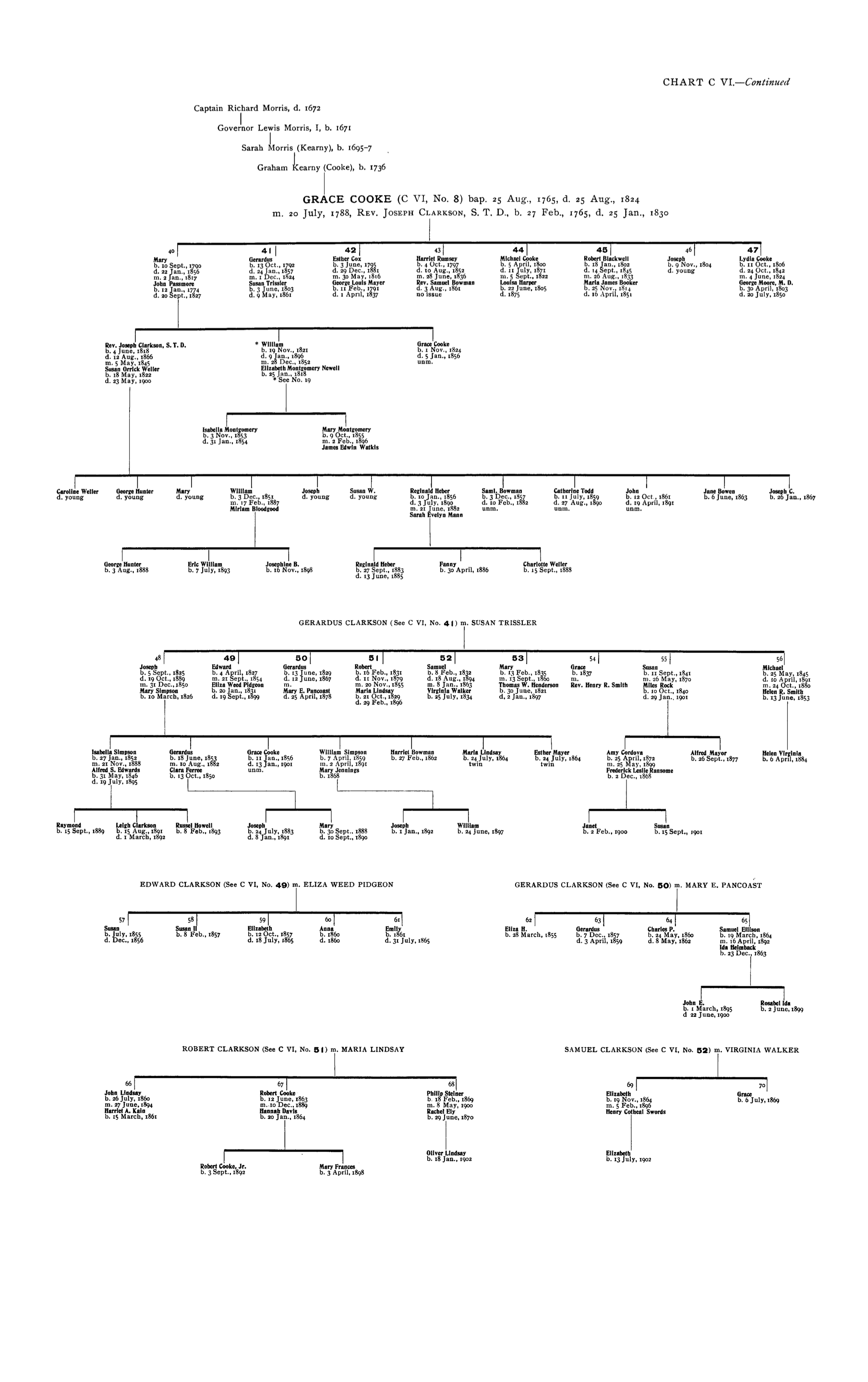
- Rev. Joseph Clarkson (Self) & Grace Cooke Clarkson (Wife)
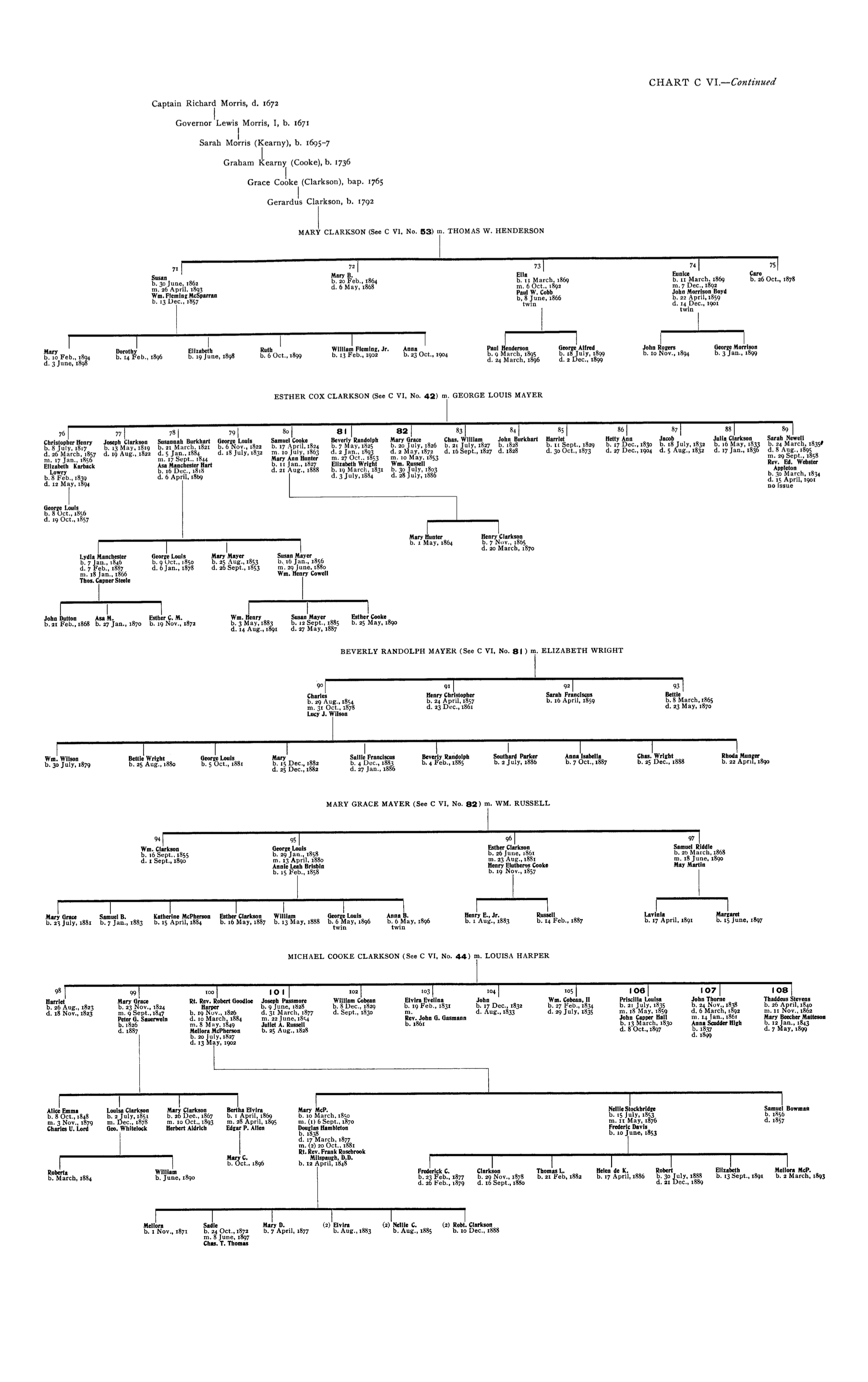
- Micheal Cooke Clarkson (Son) Louisa Harper Clarkson (Wife)
- Thaddeus Stevens Clarkson (Grandson) & Mary Beecher Matteson (Wife)
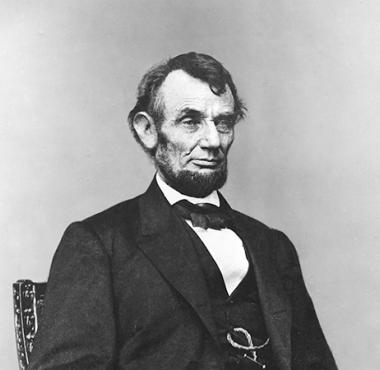
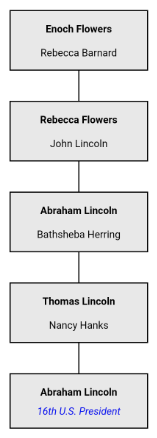
Mary Flower Clarkson’s Grandparents: Henry Flower (Grandpa) & Elizabeth Paschall (Grandma)
Mary Flower Clarkson’s Great Grandparents: Enoch Flower & Rebecca Barnard.
His wife’s Father was Rev. Samuel Cooke
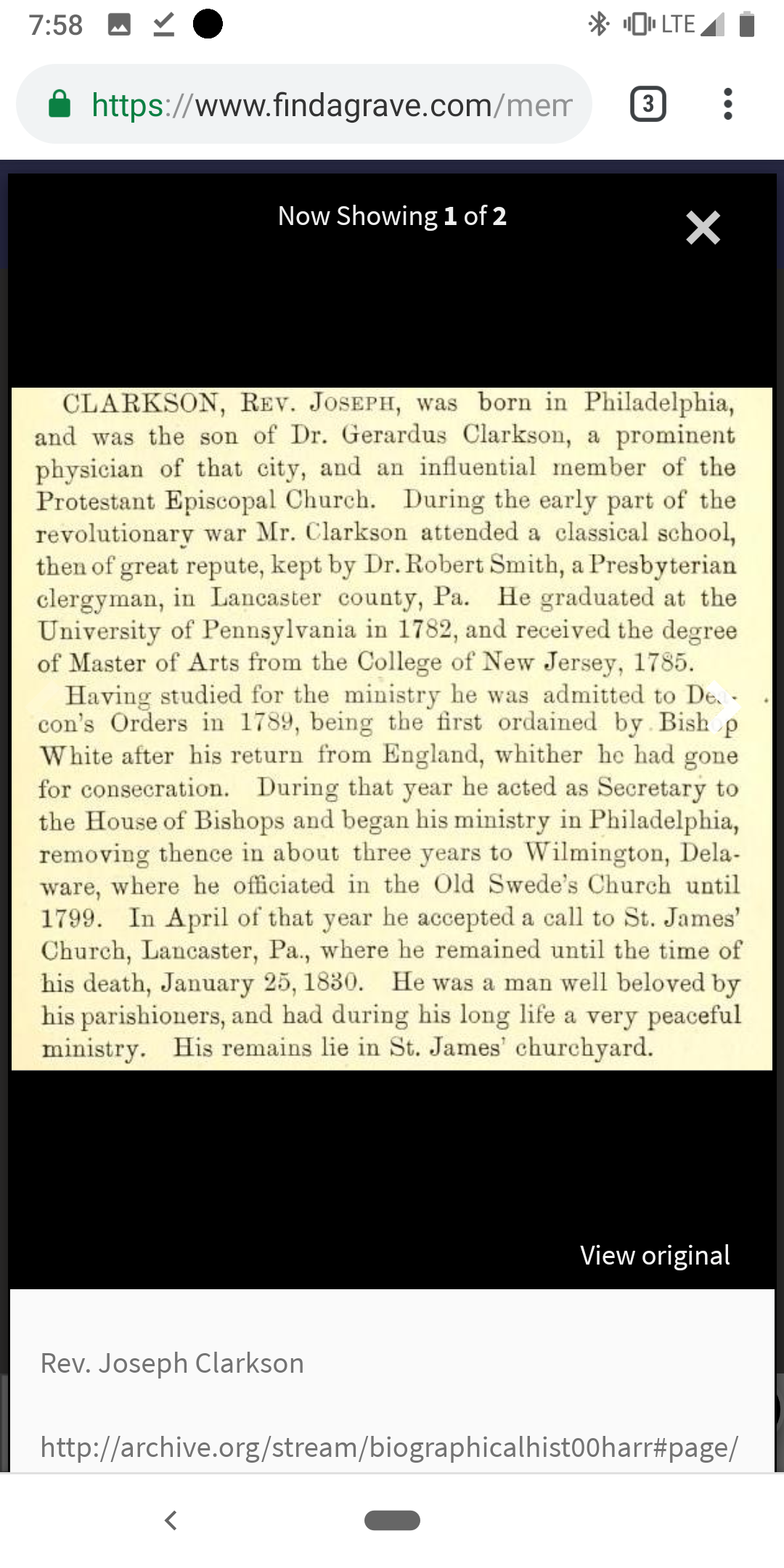
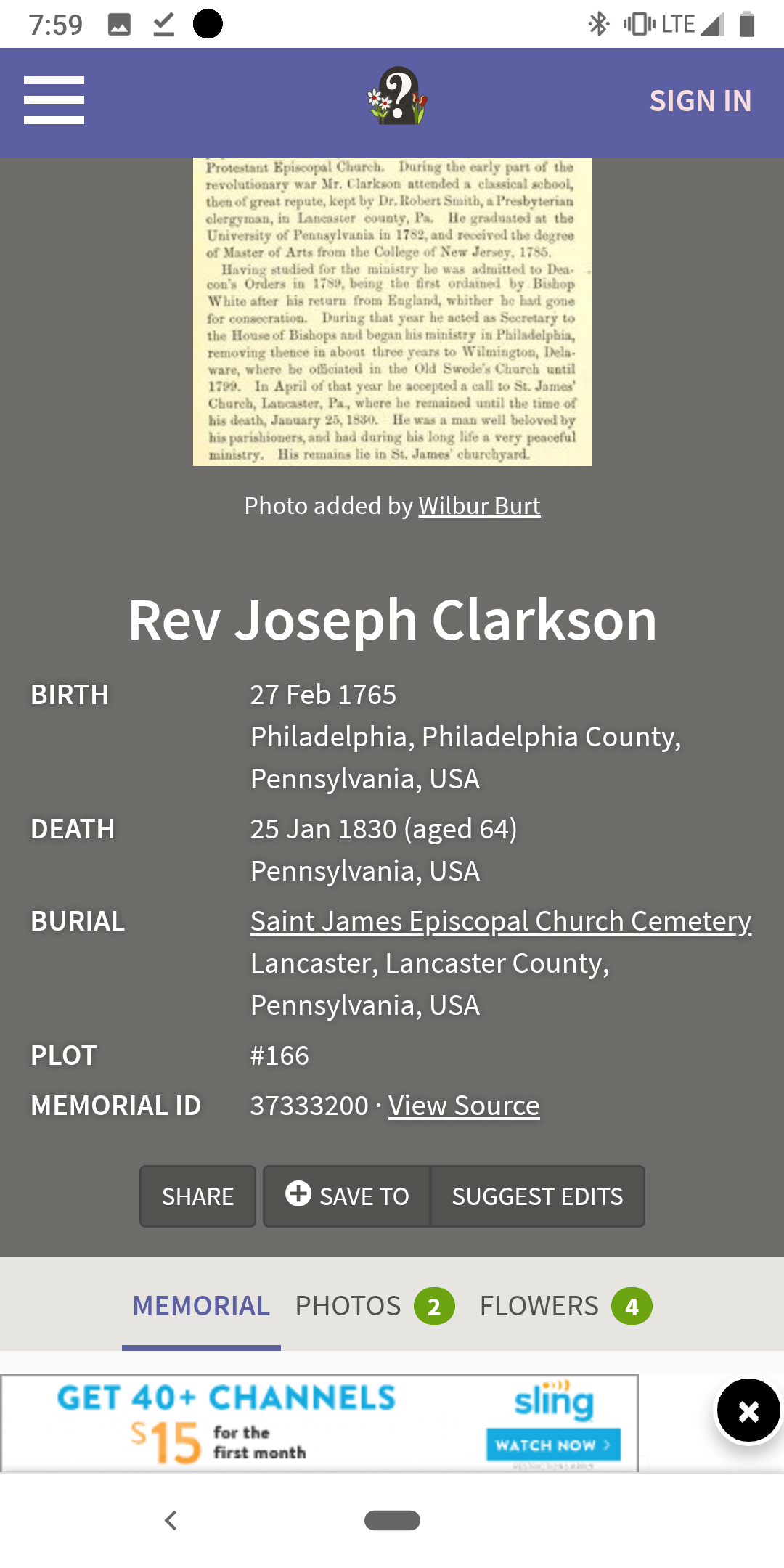
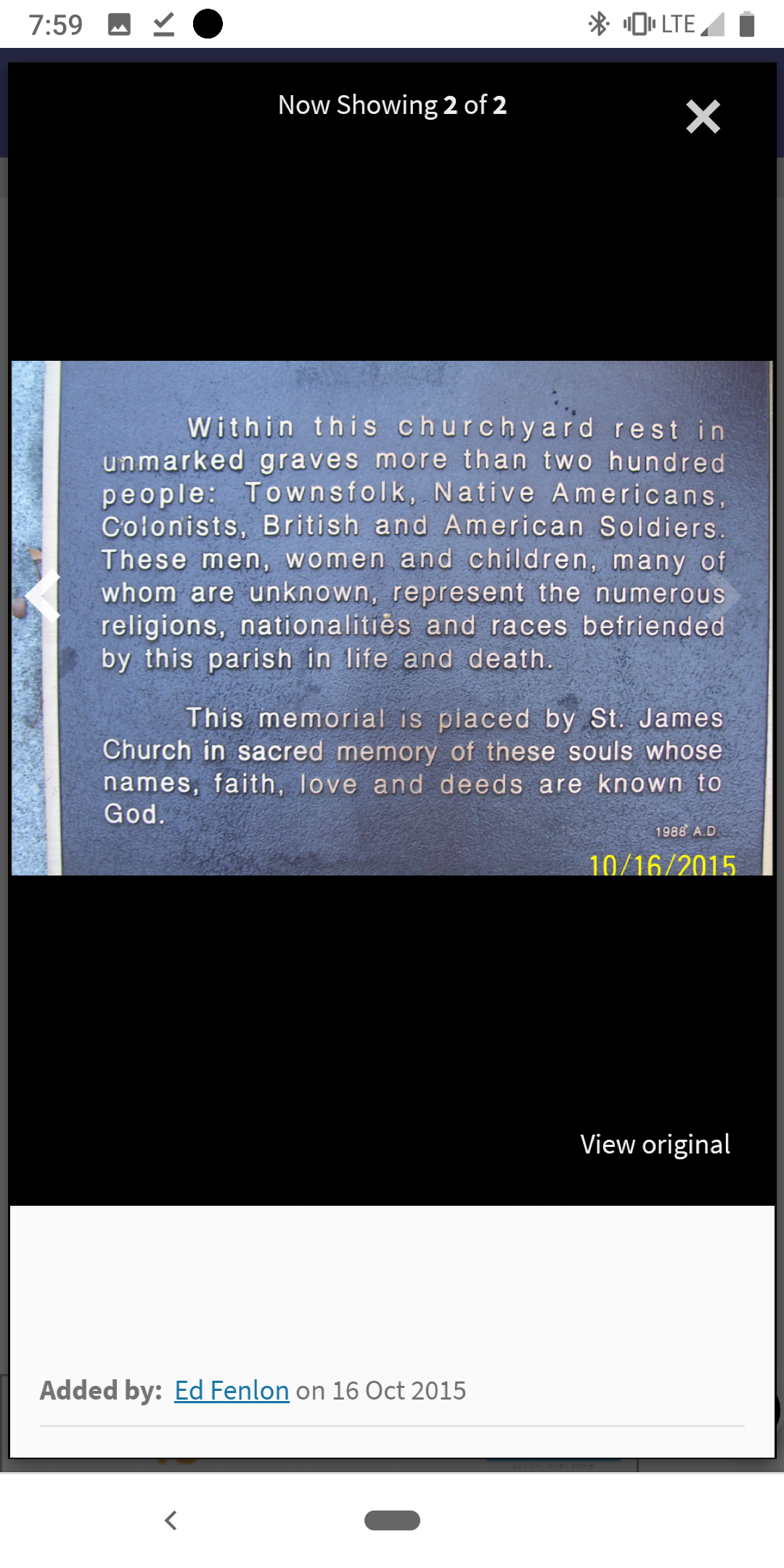
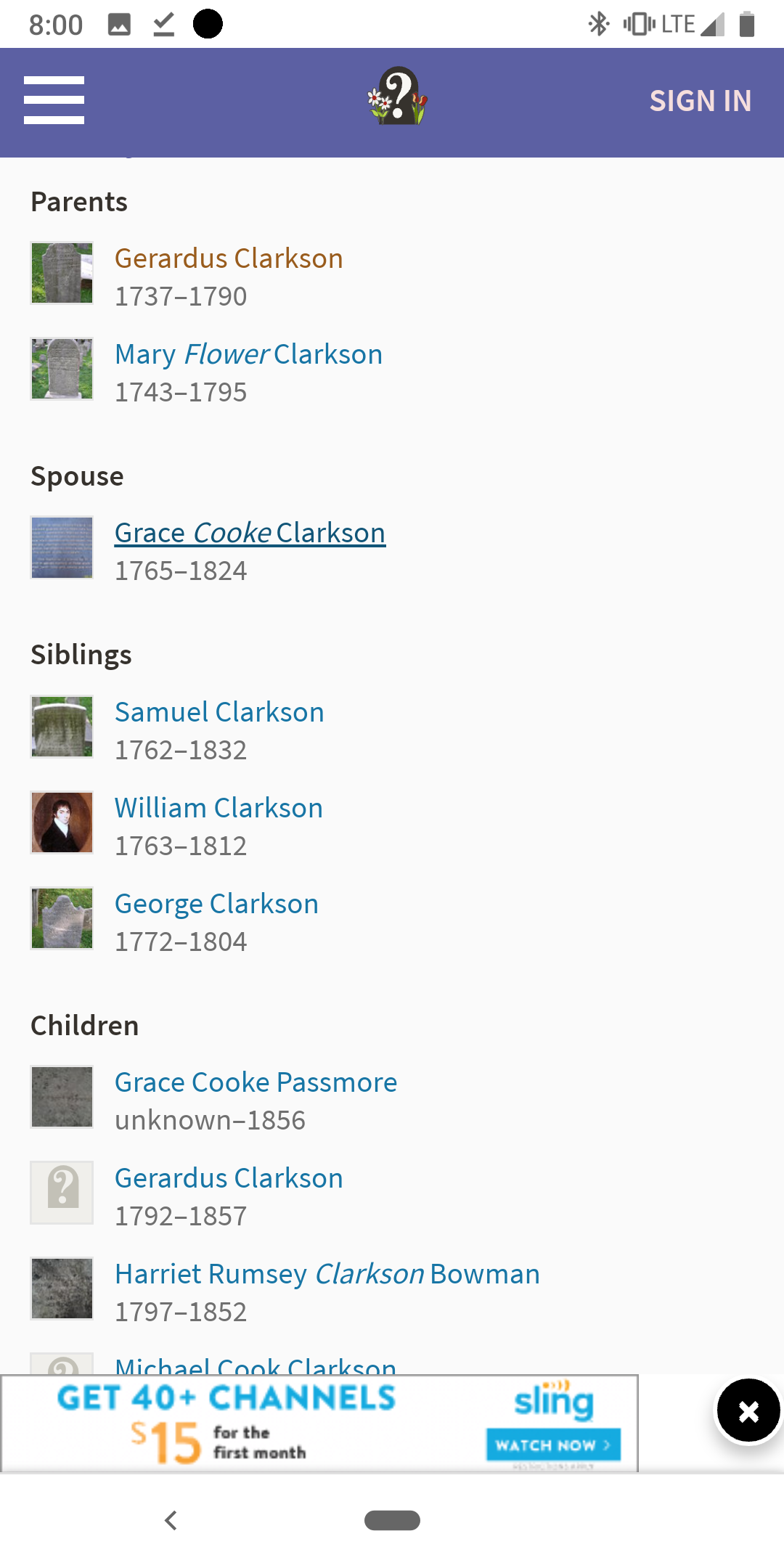
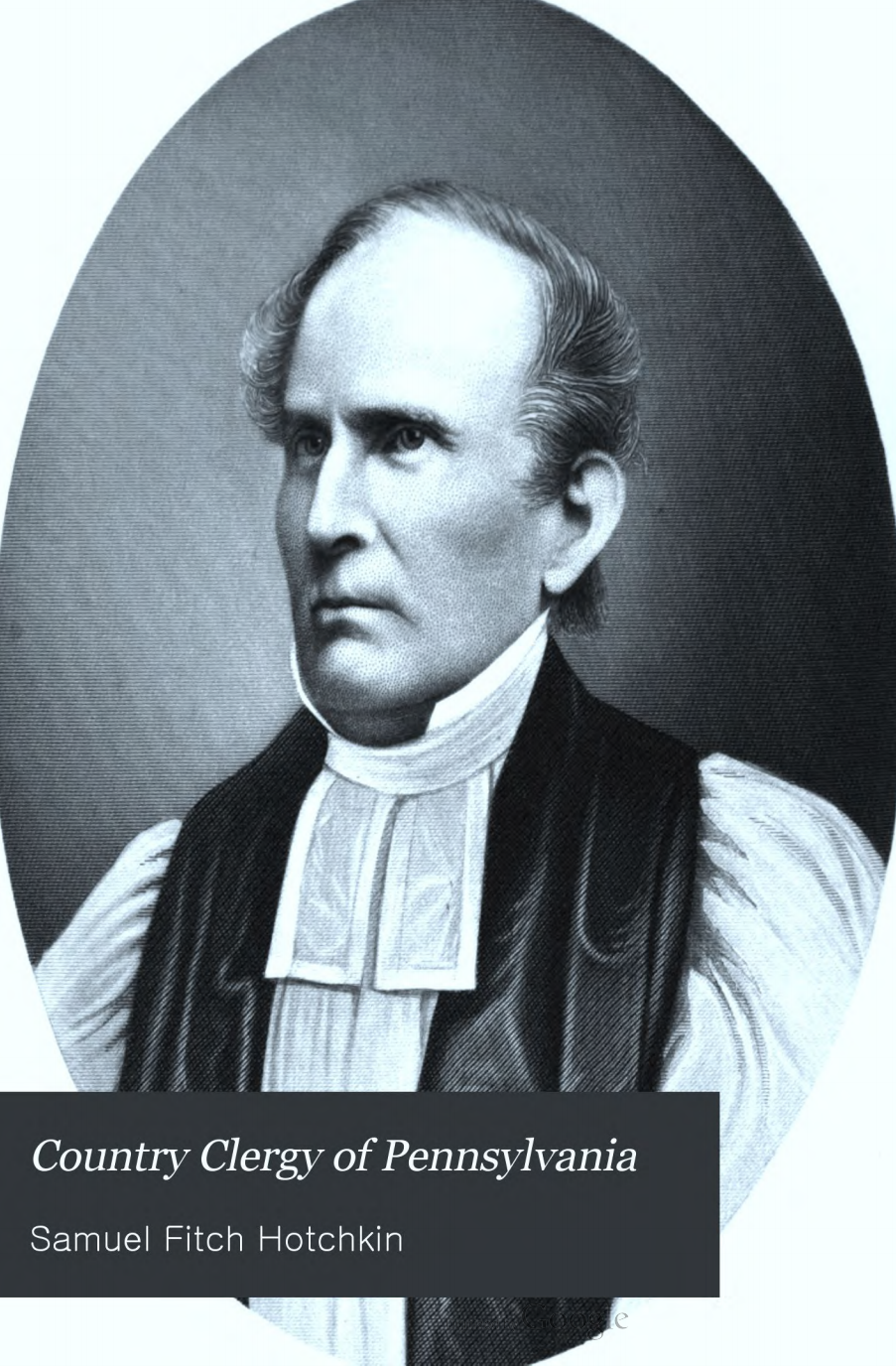
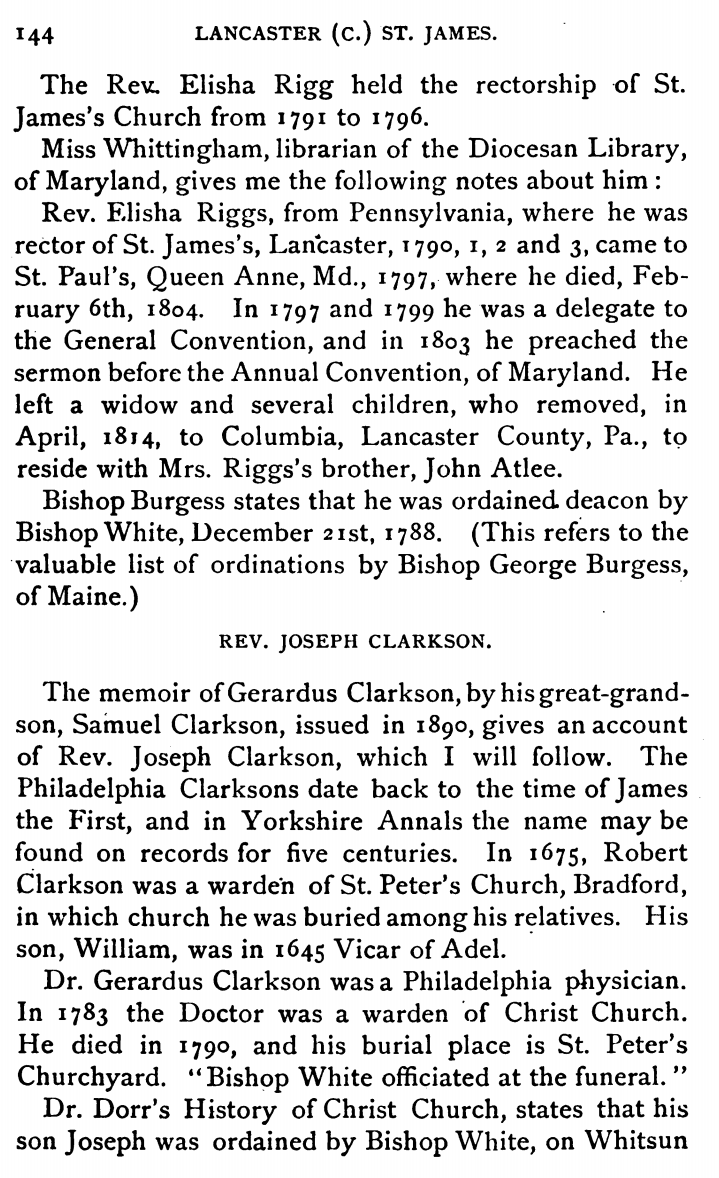
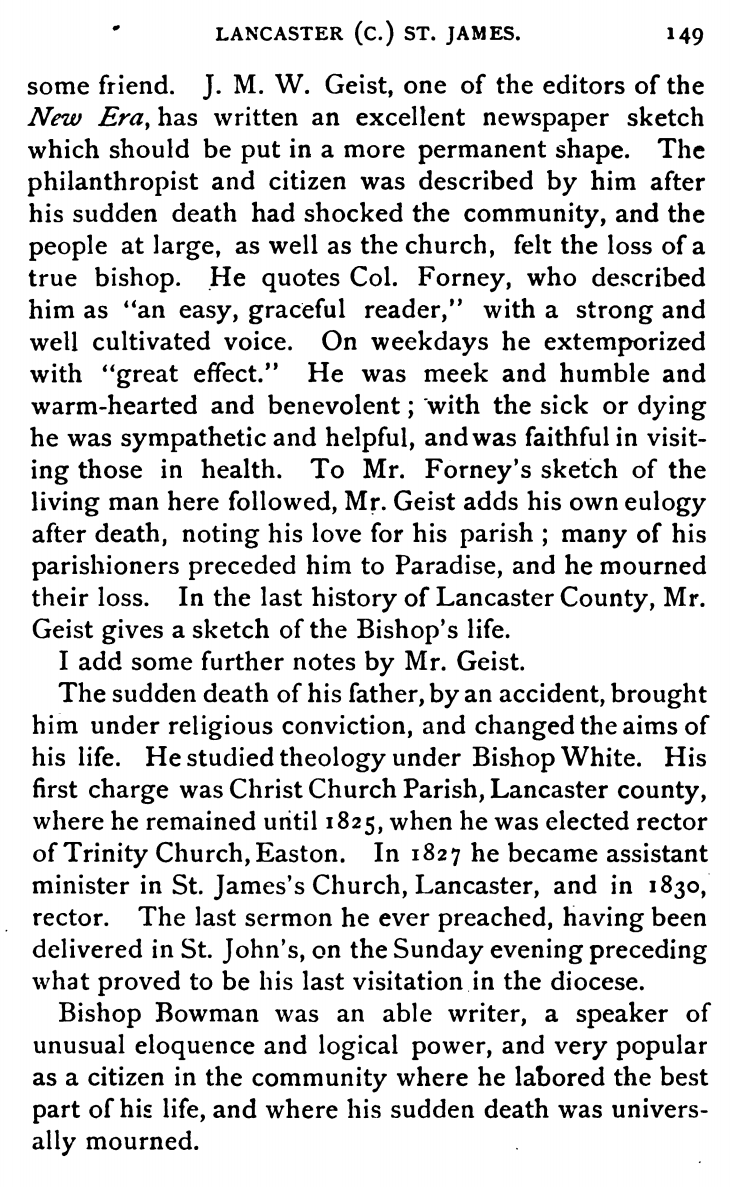
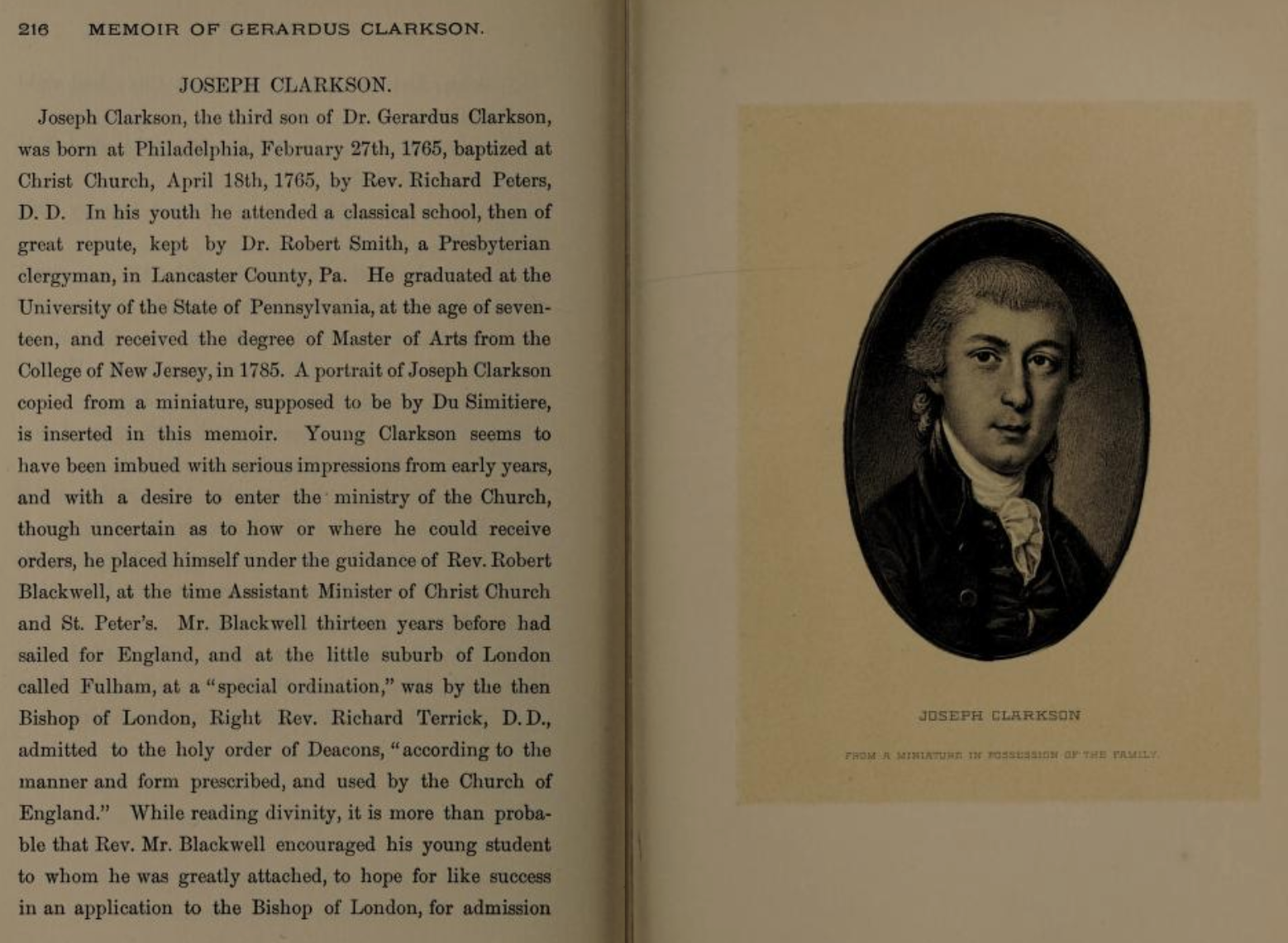
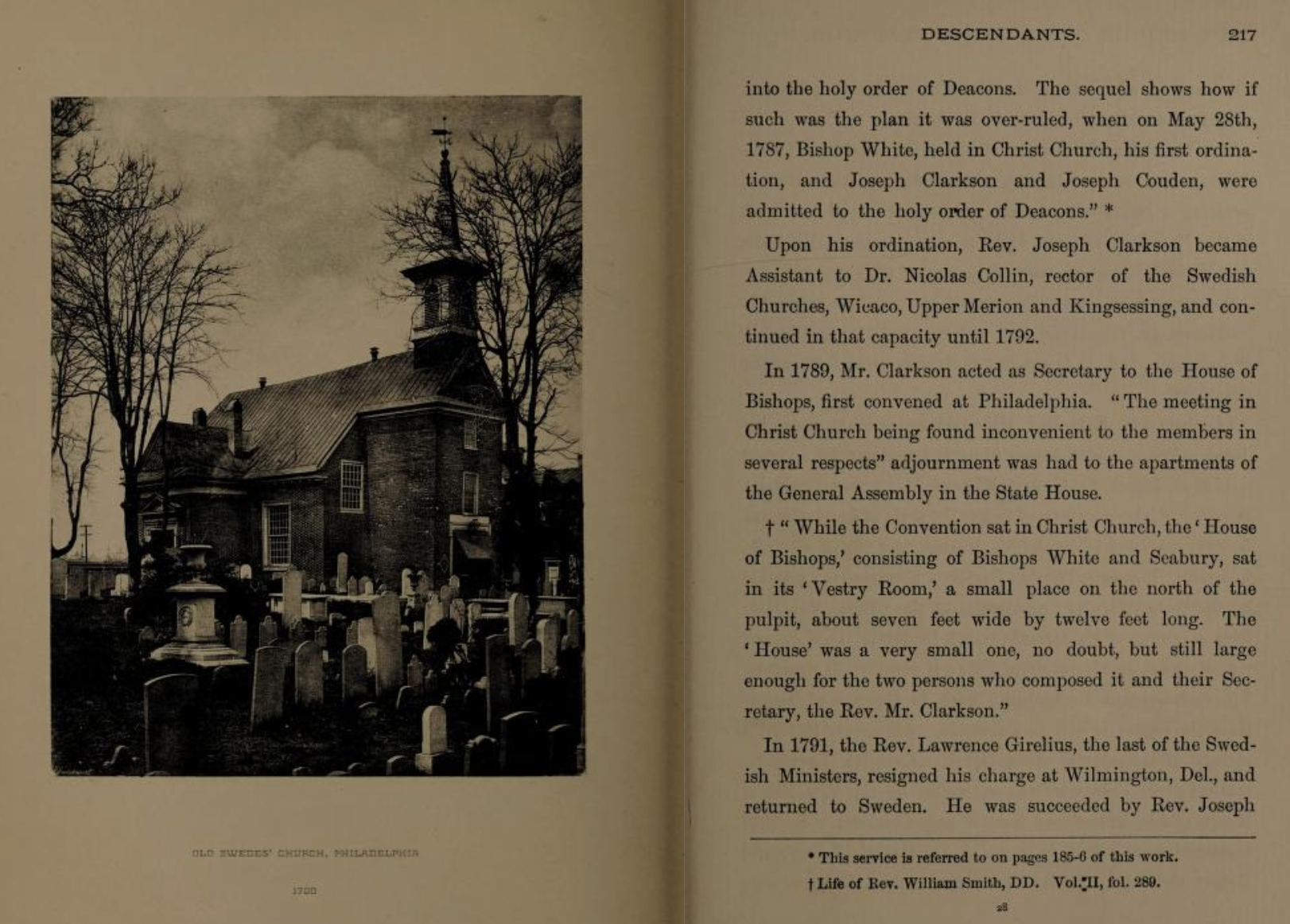
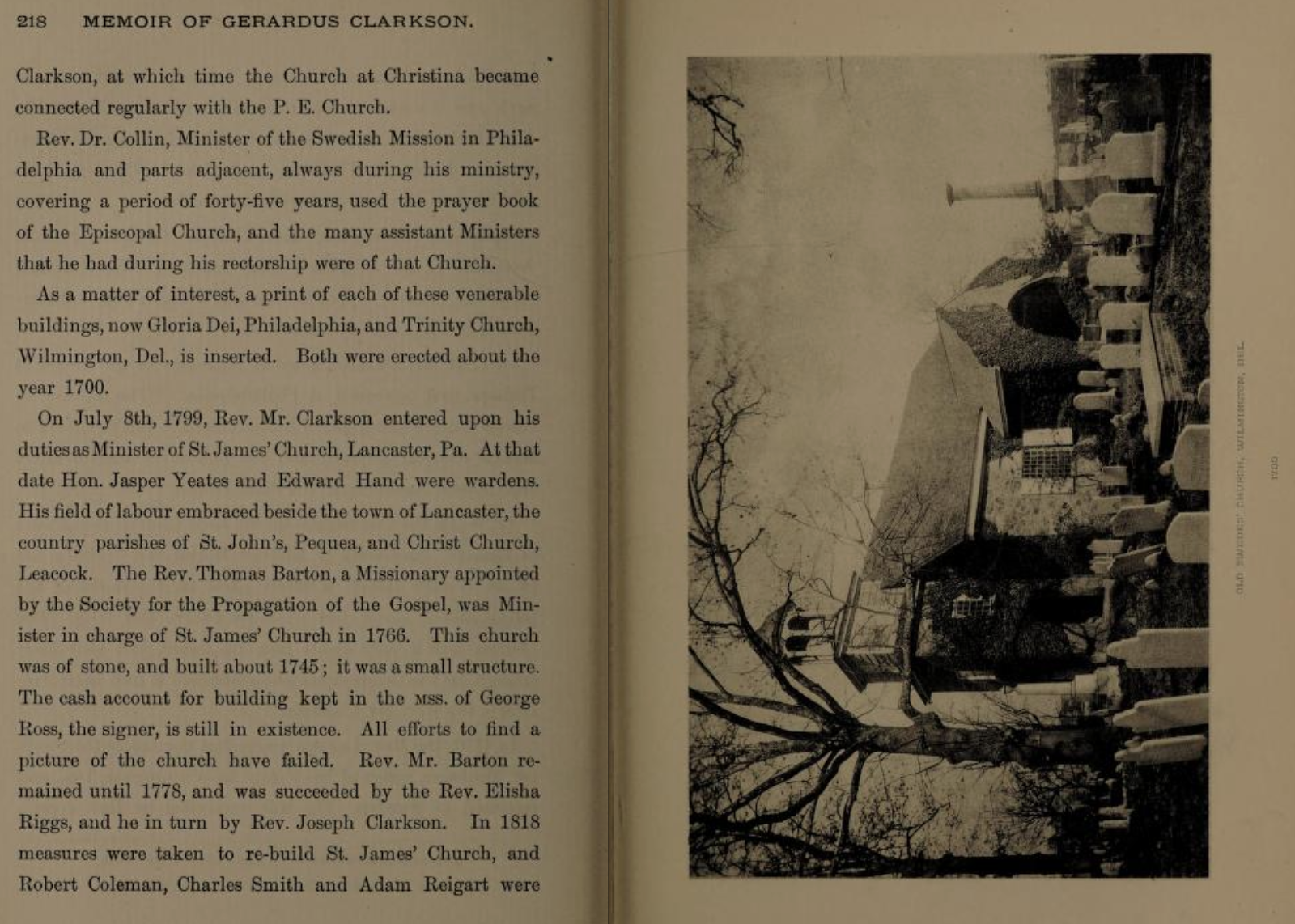
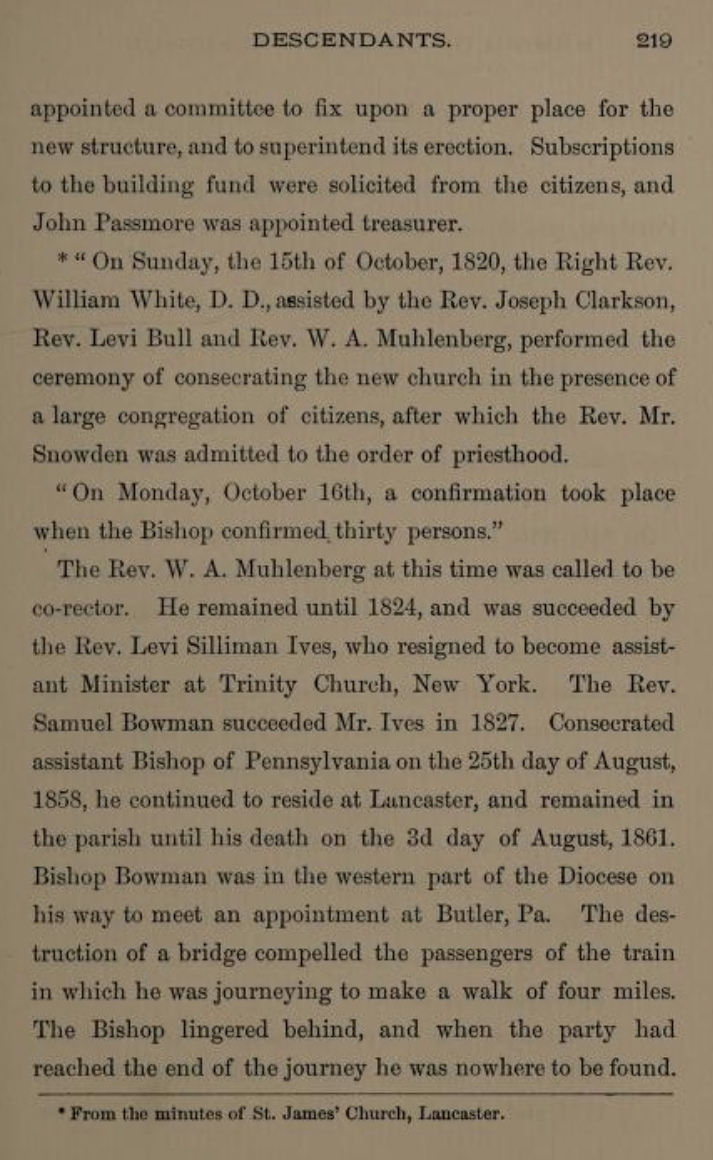
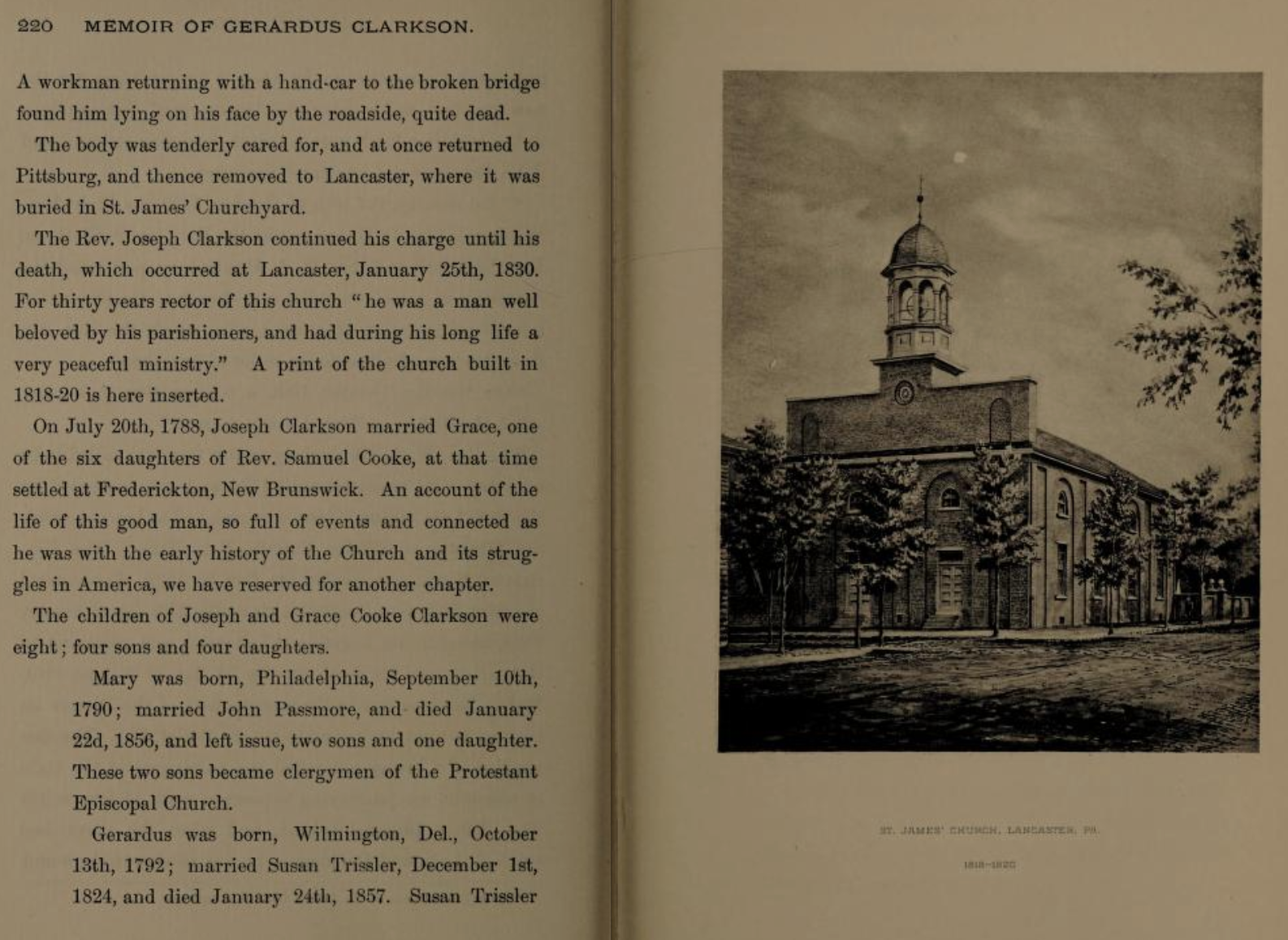
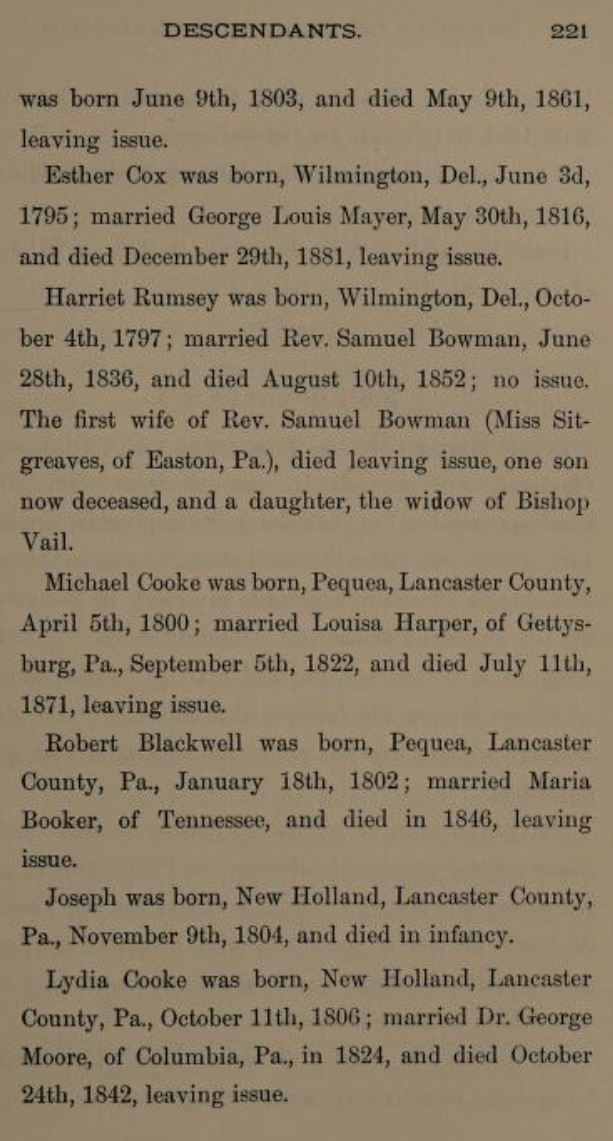
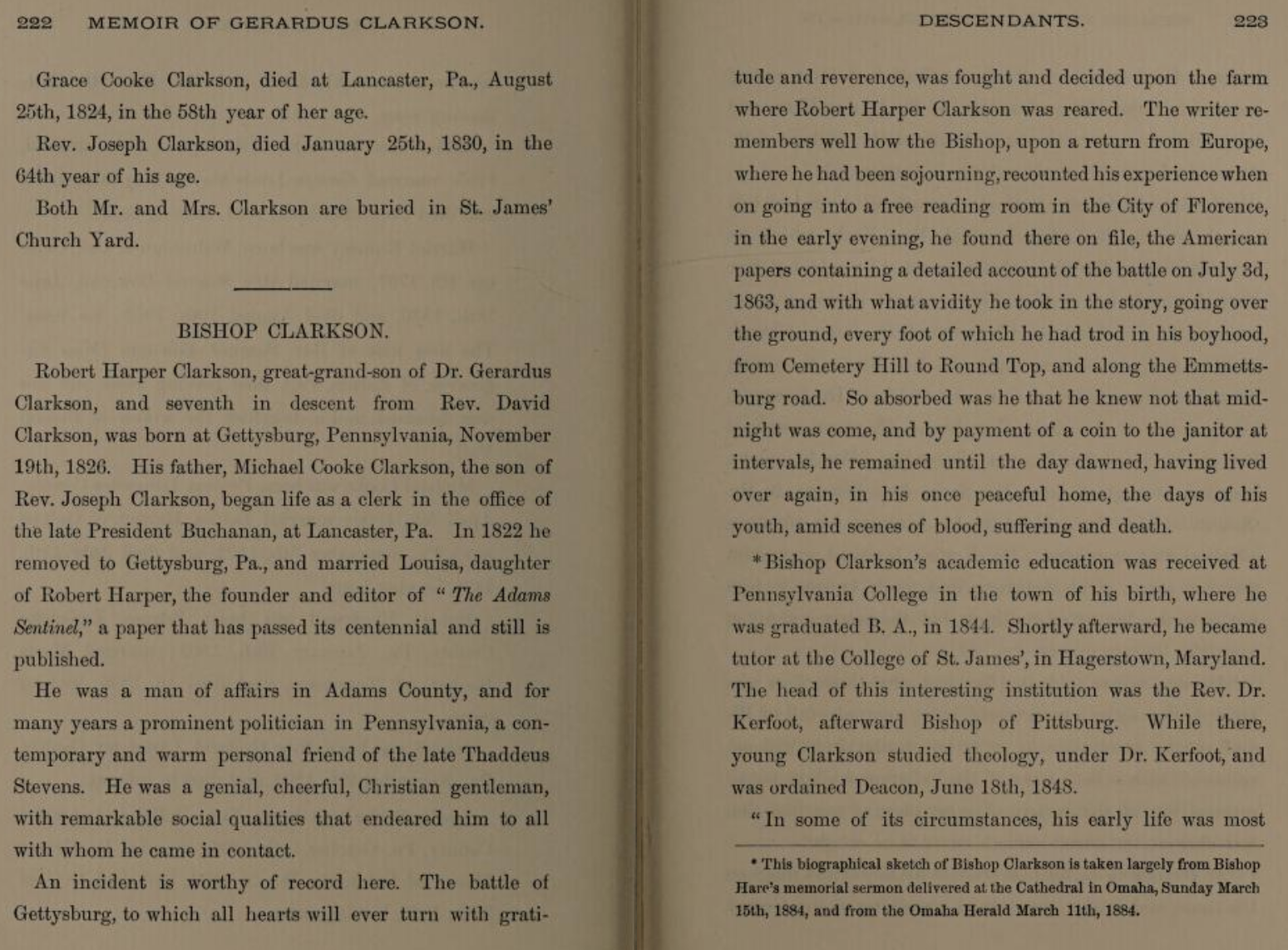
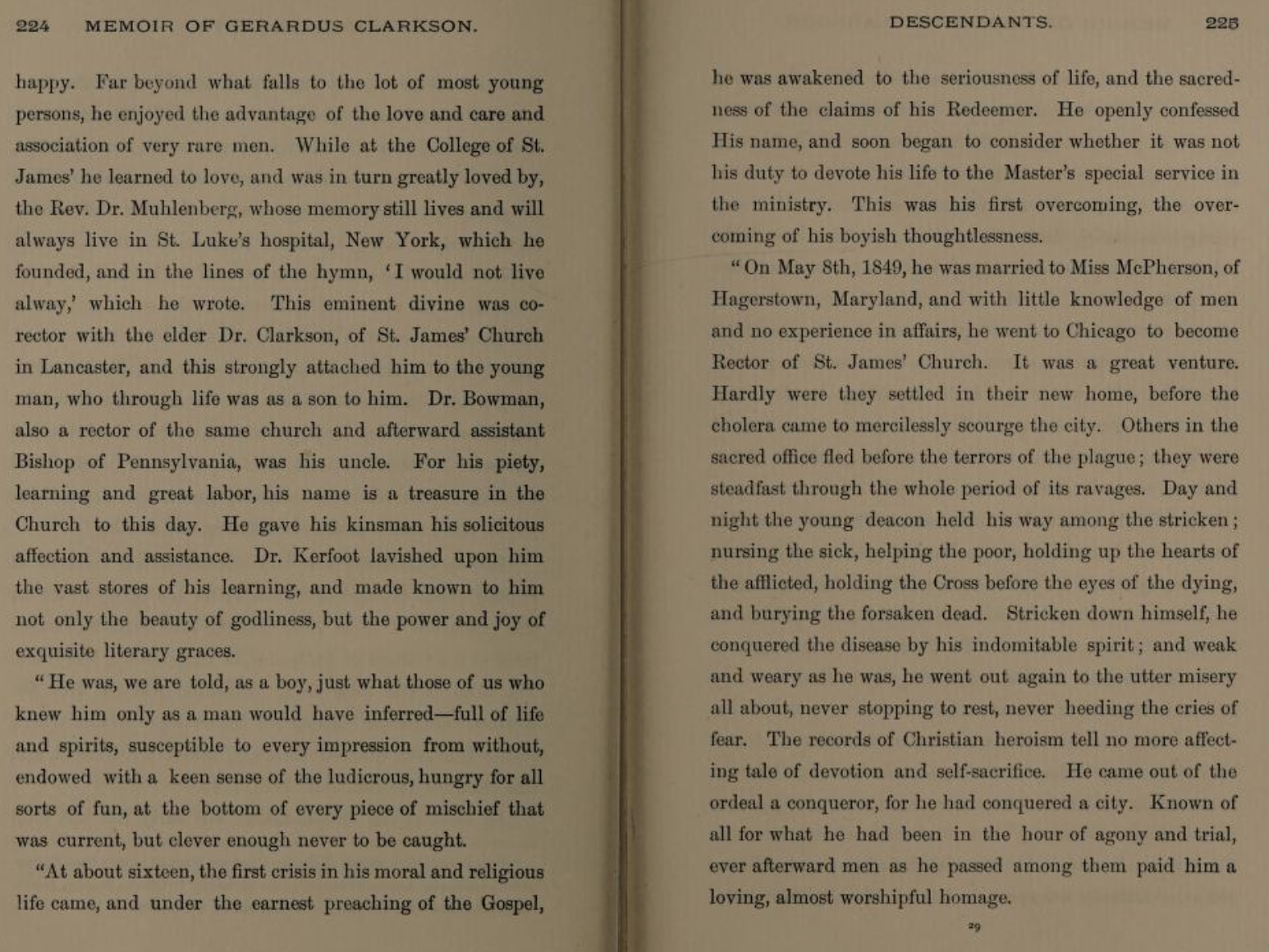
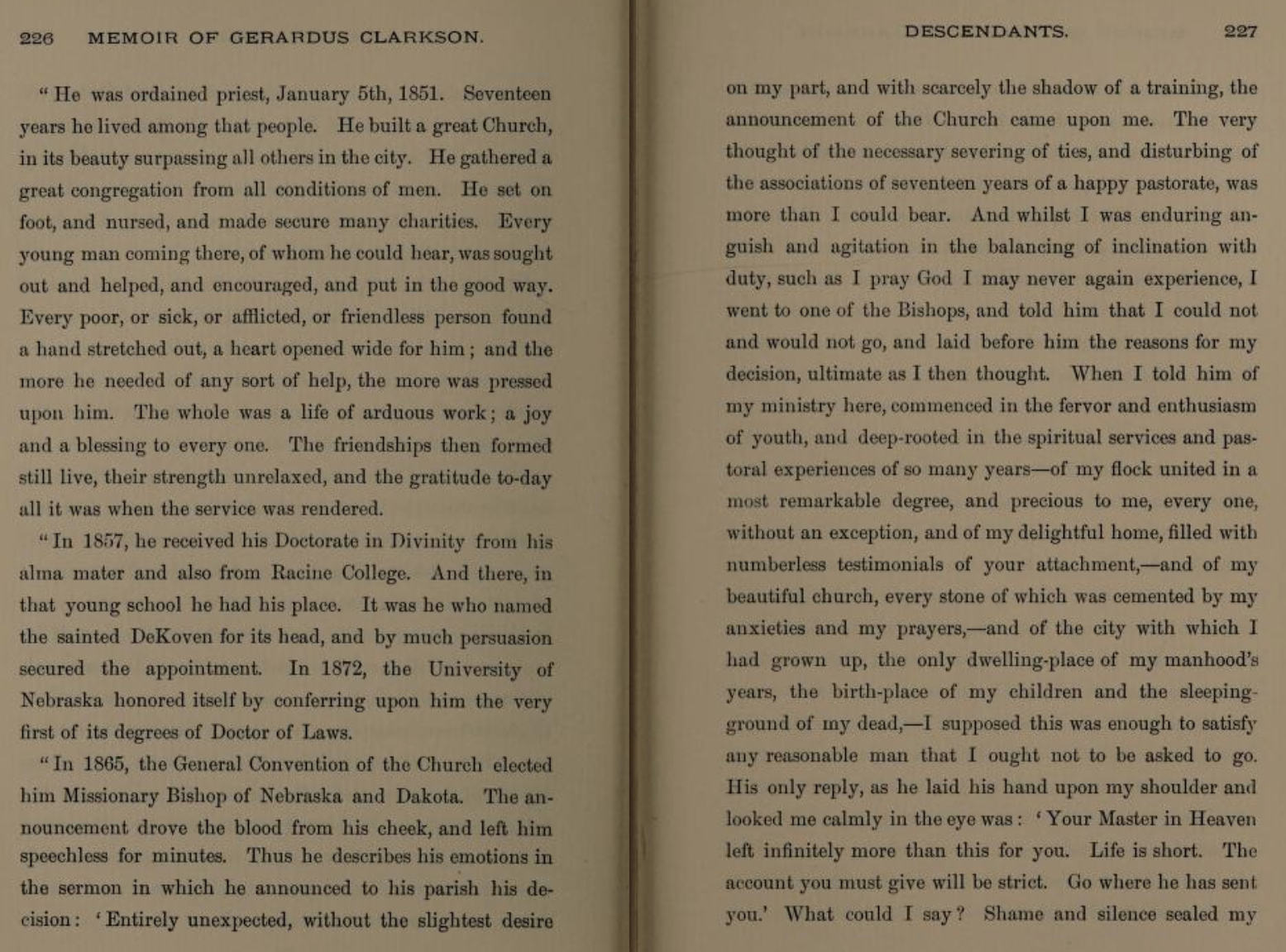
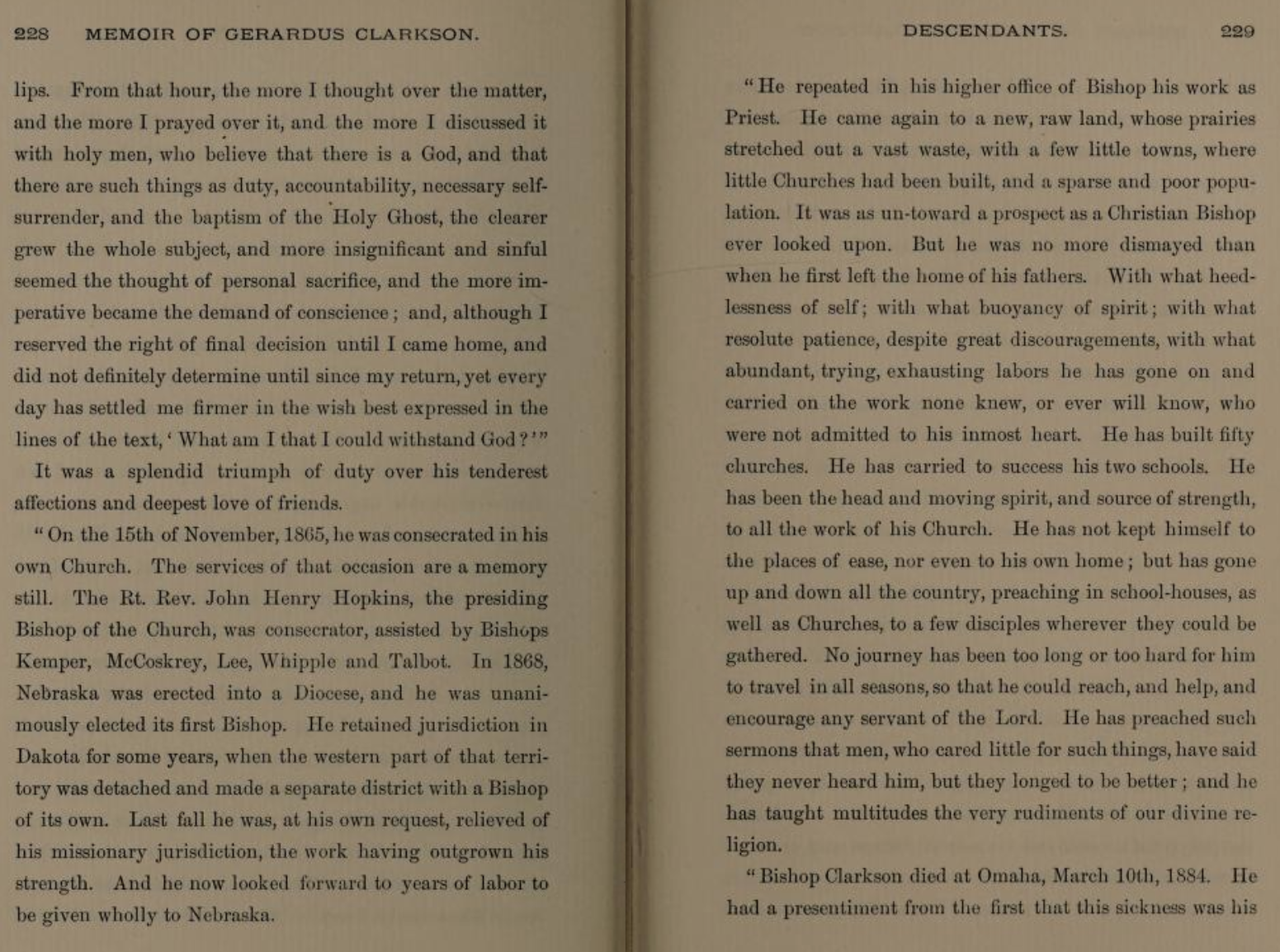
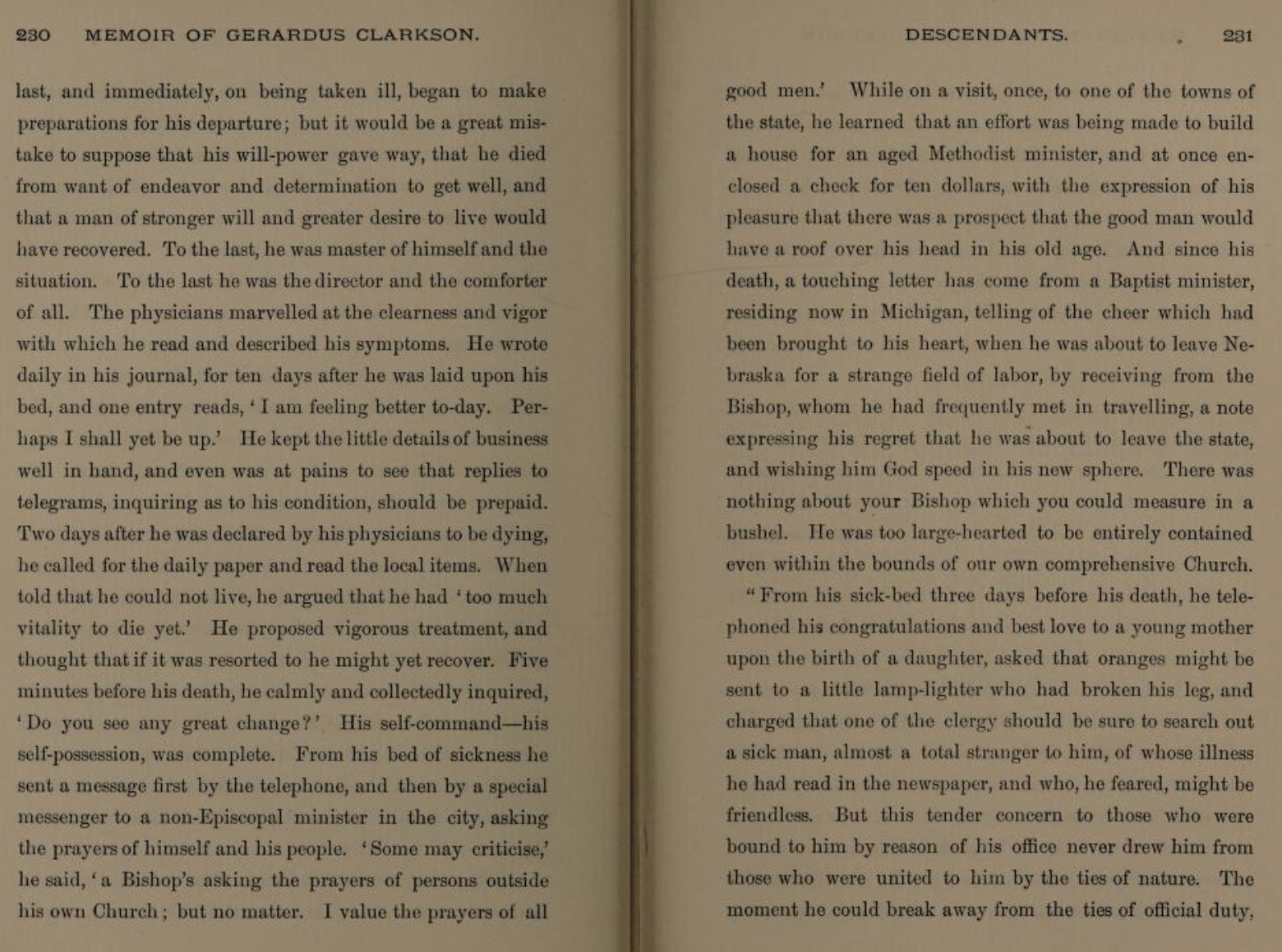
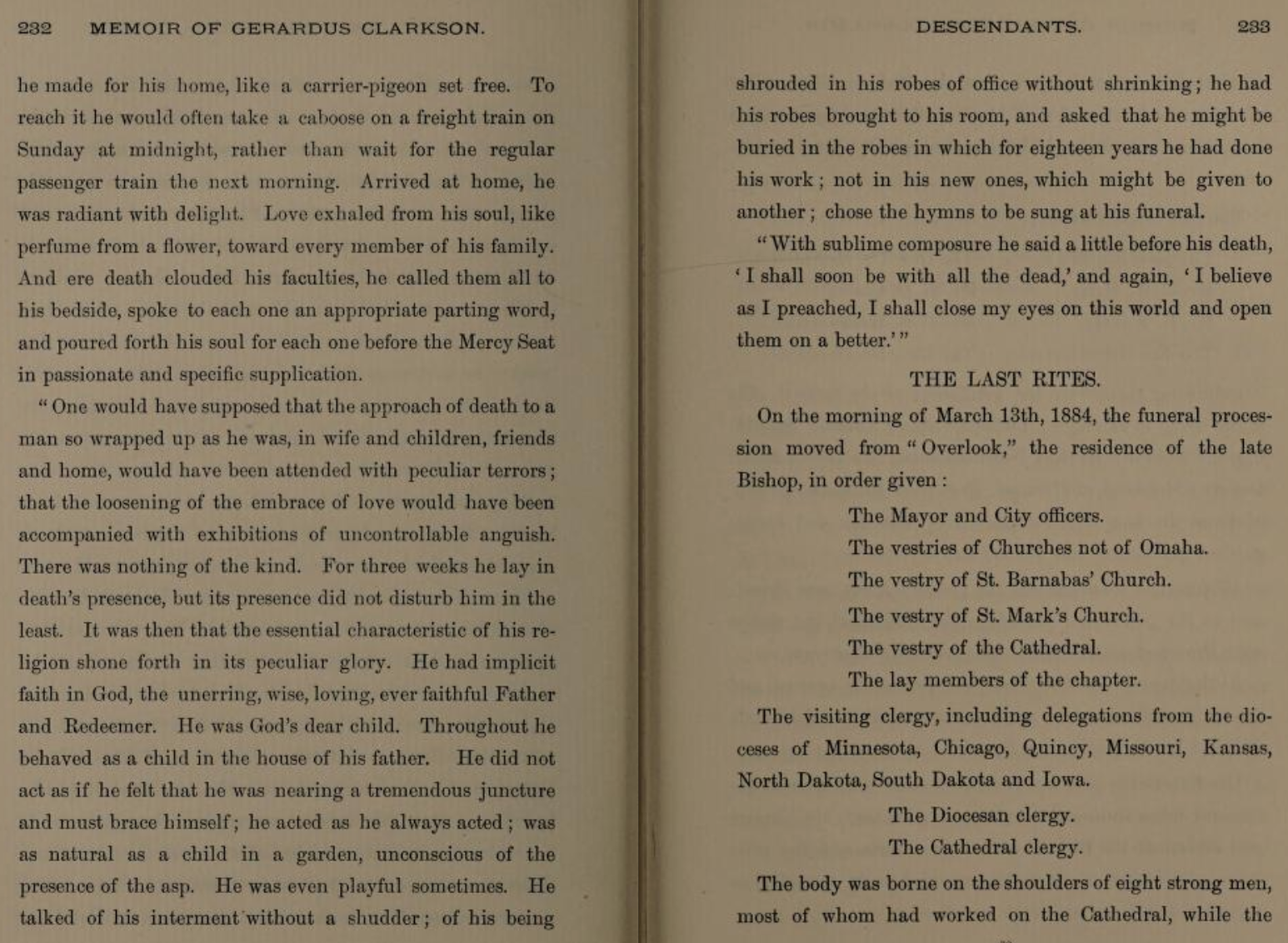
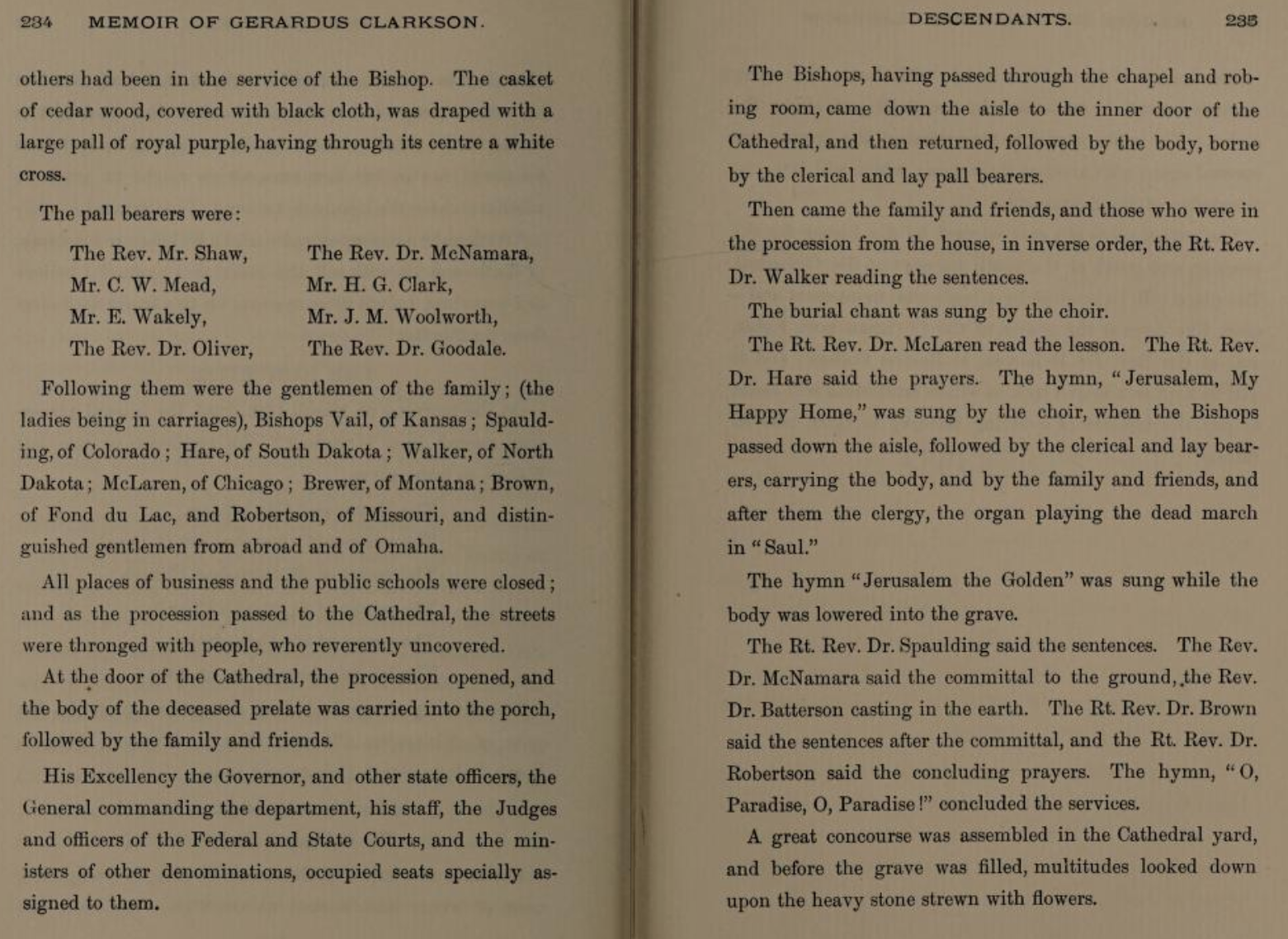
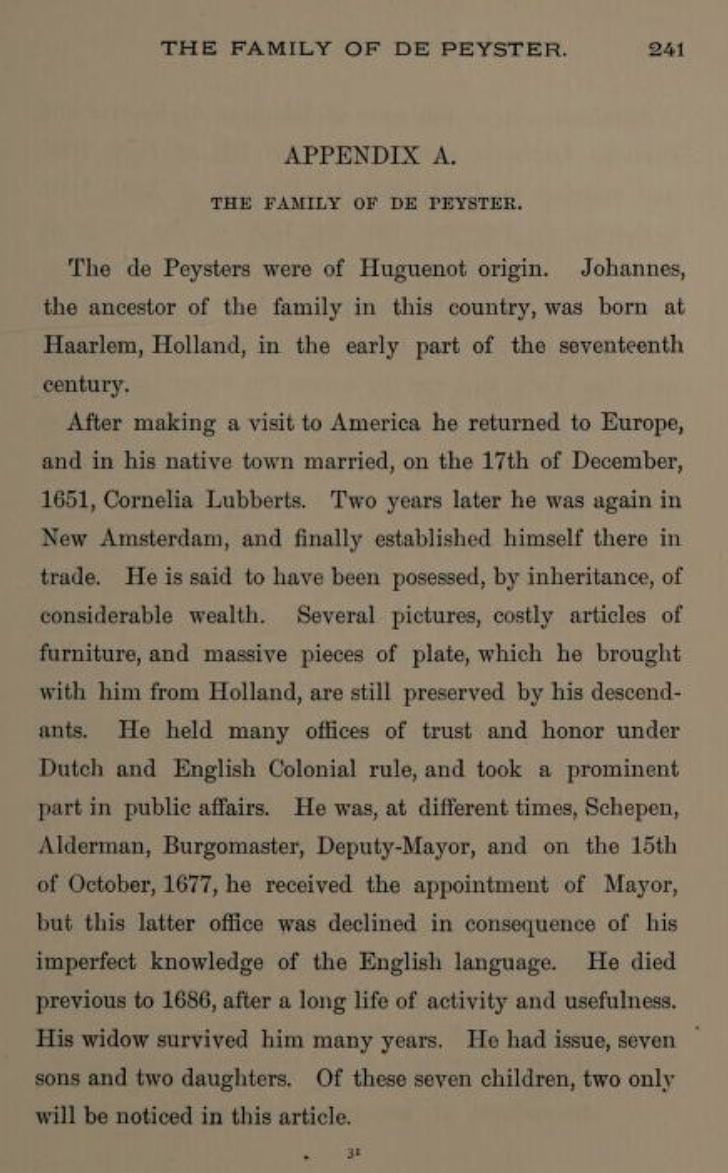
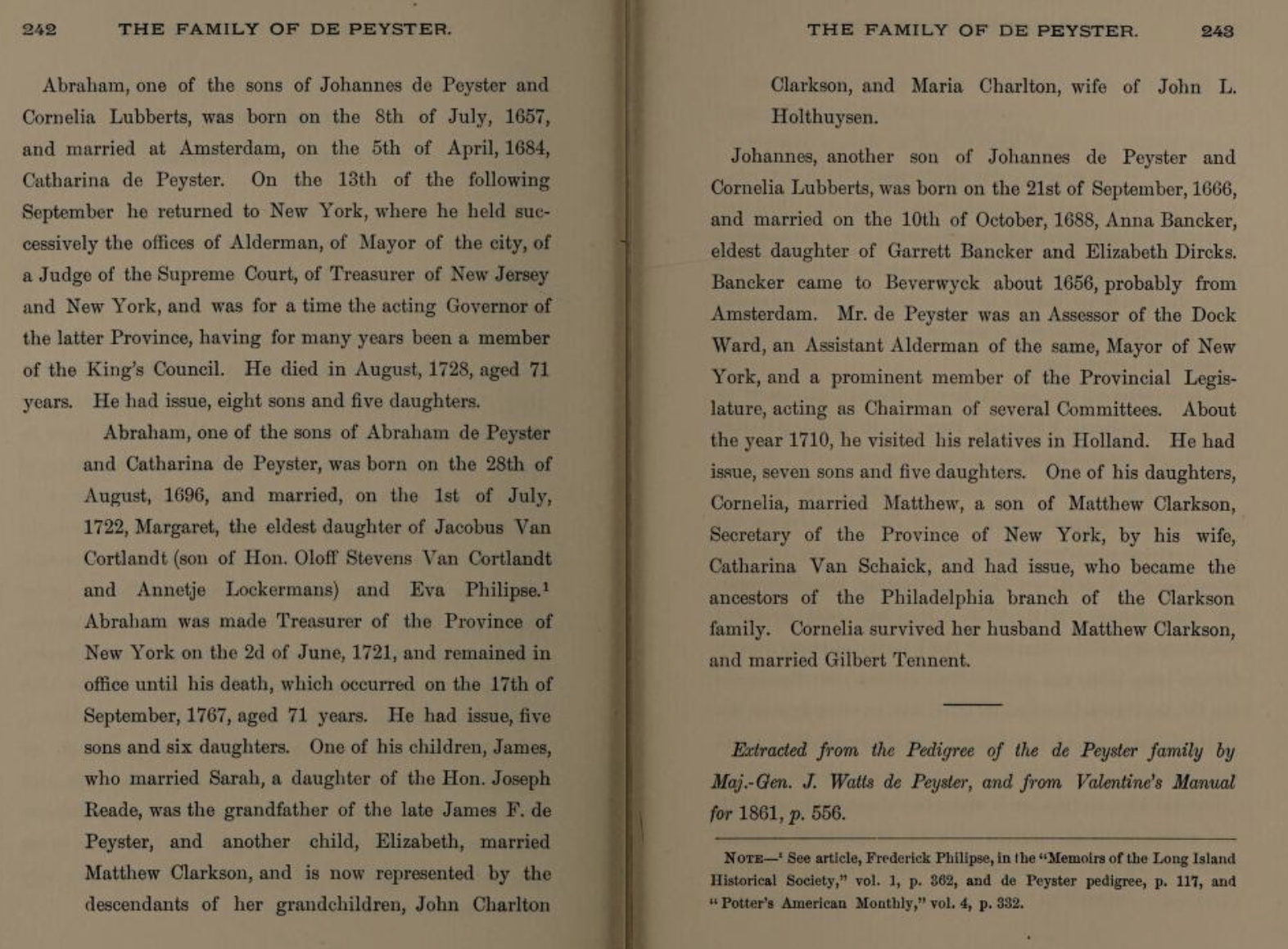
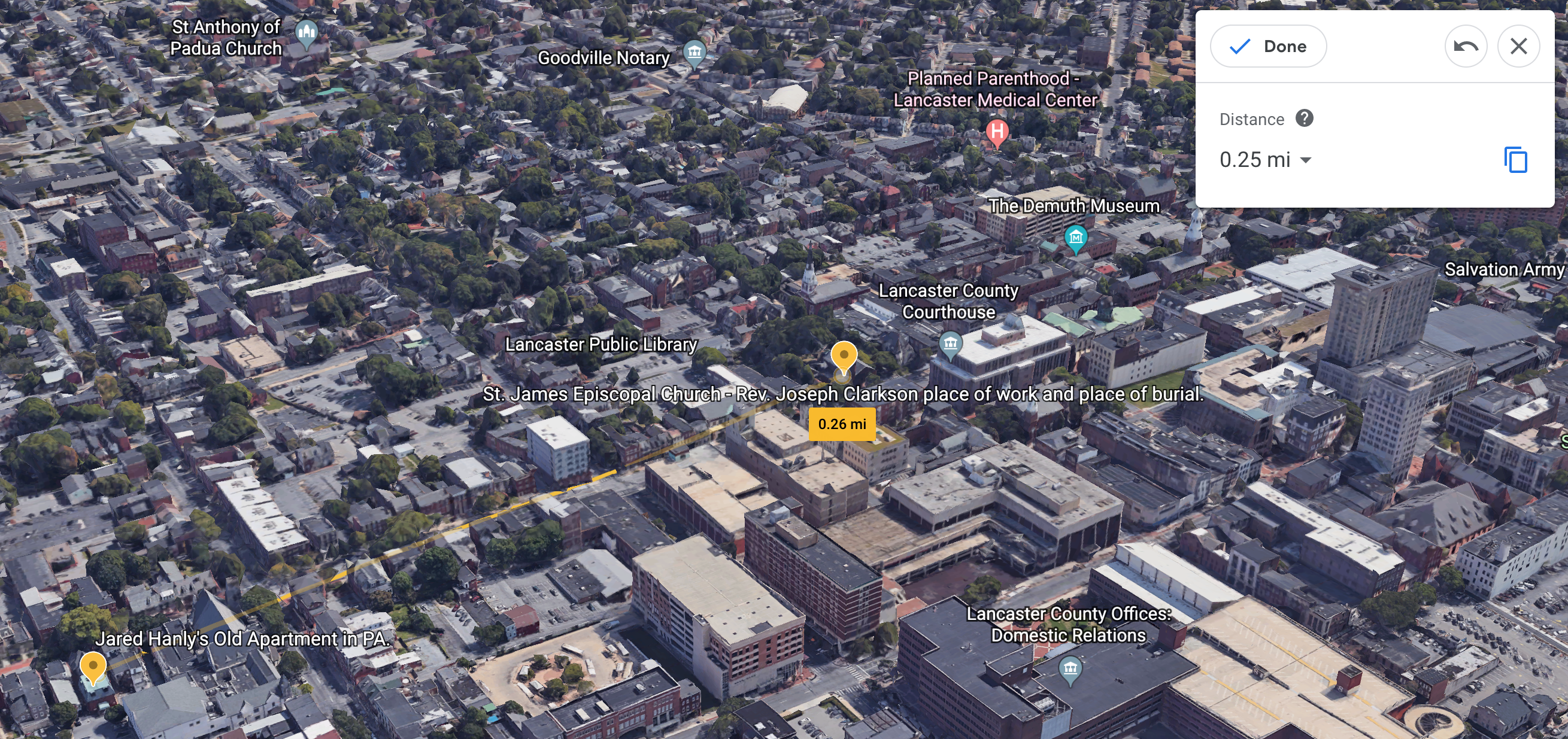
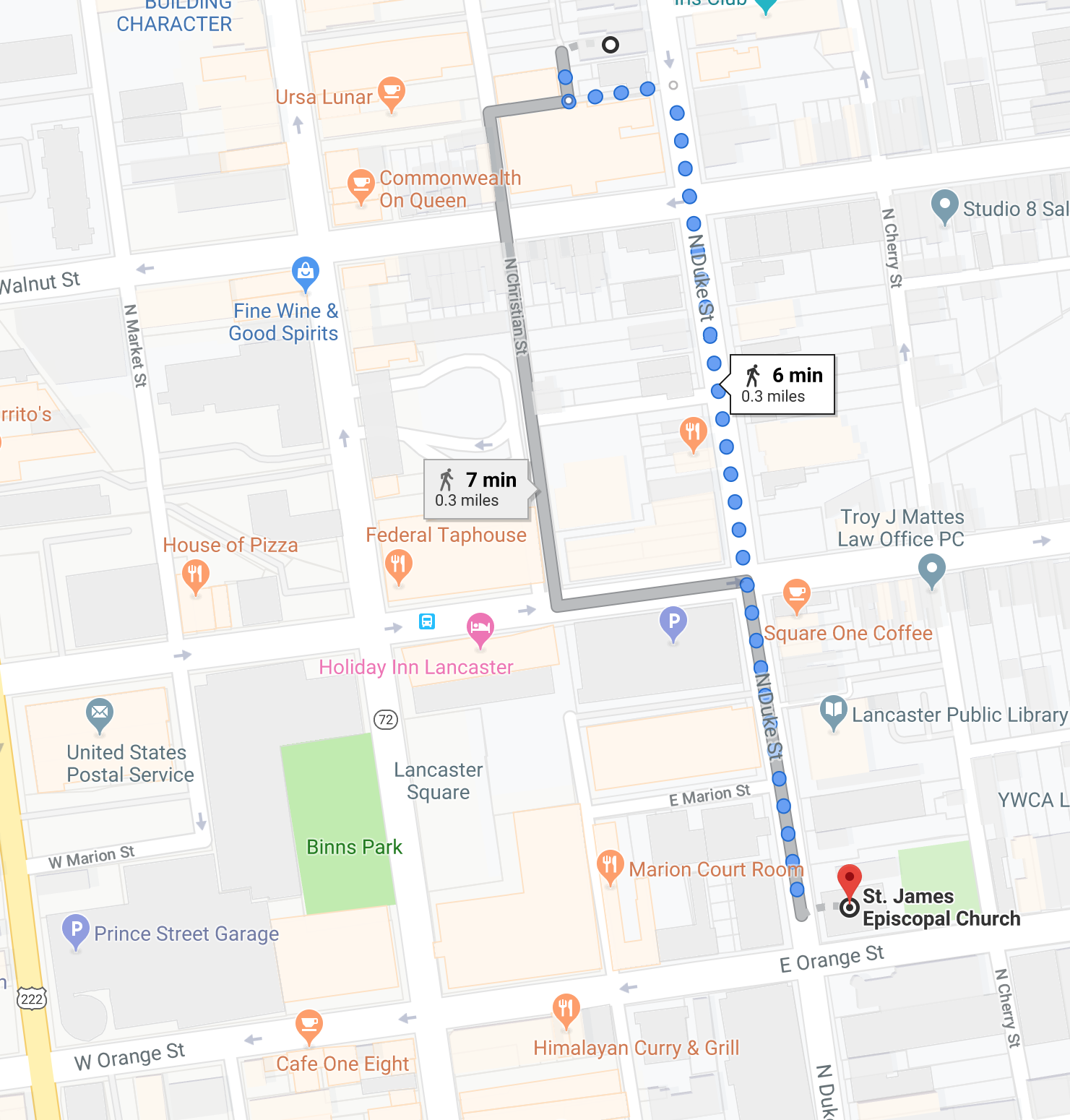


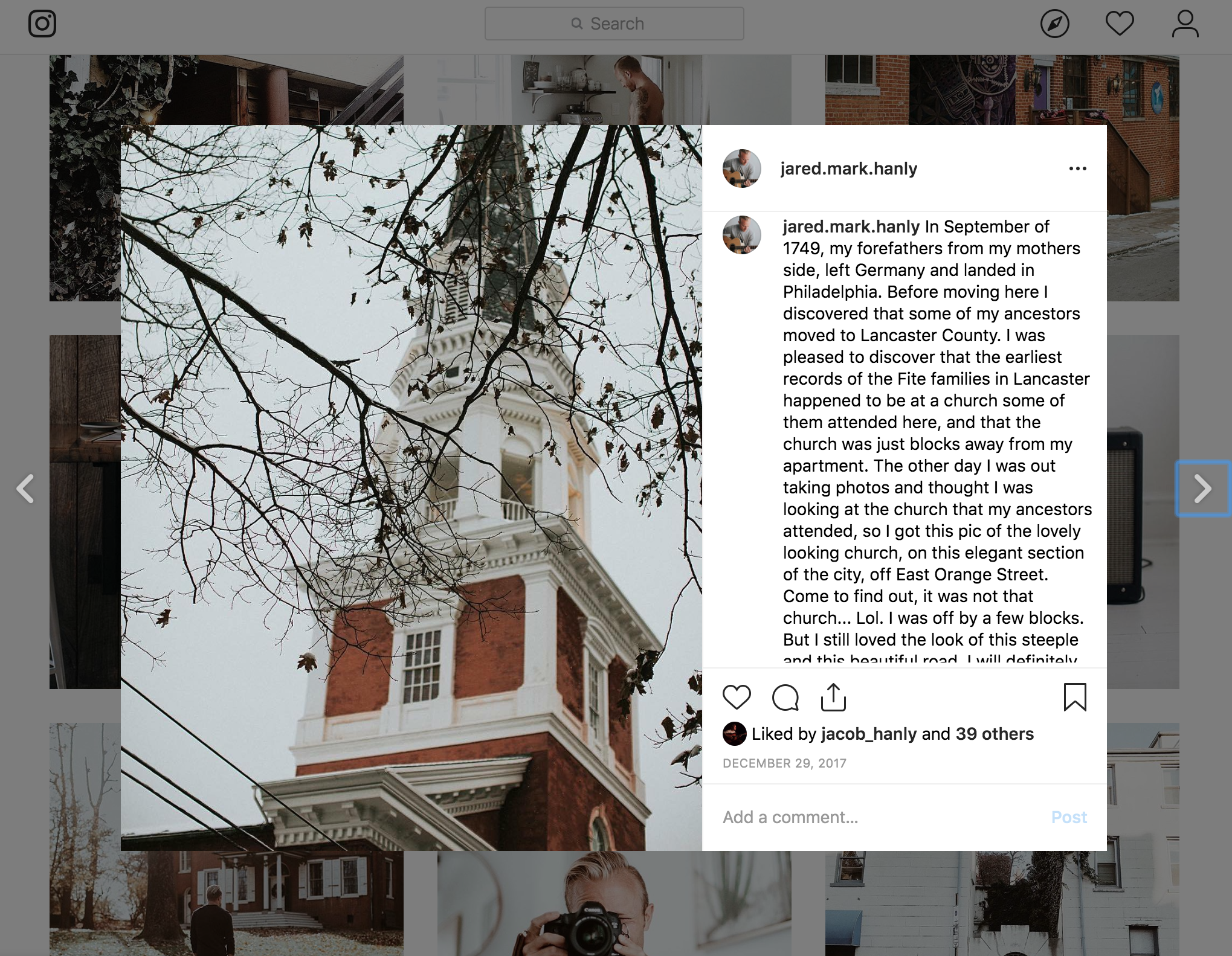
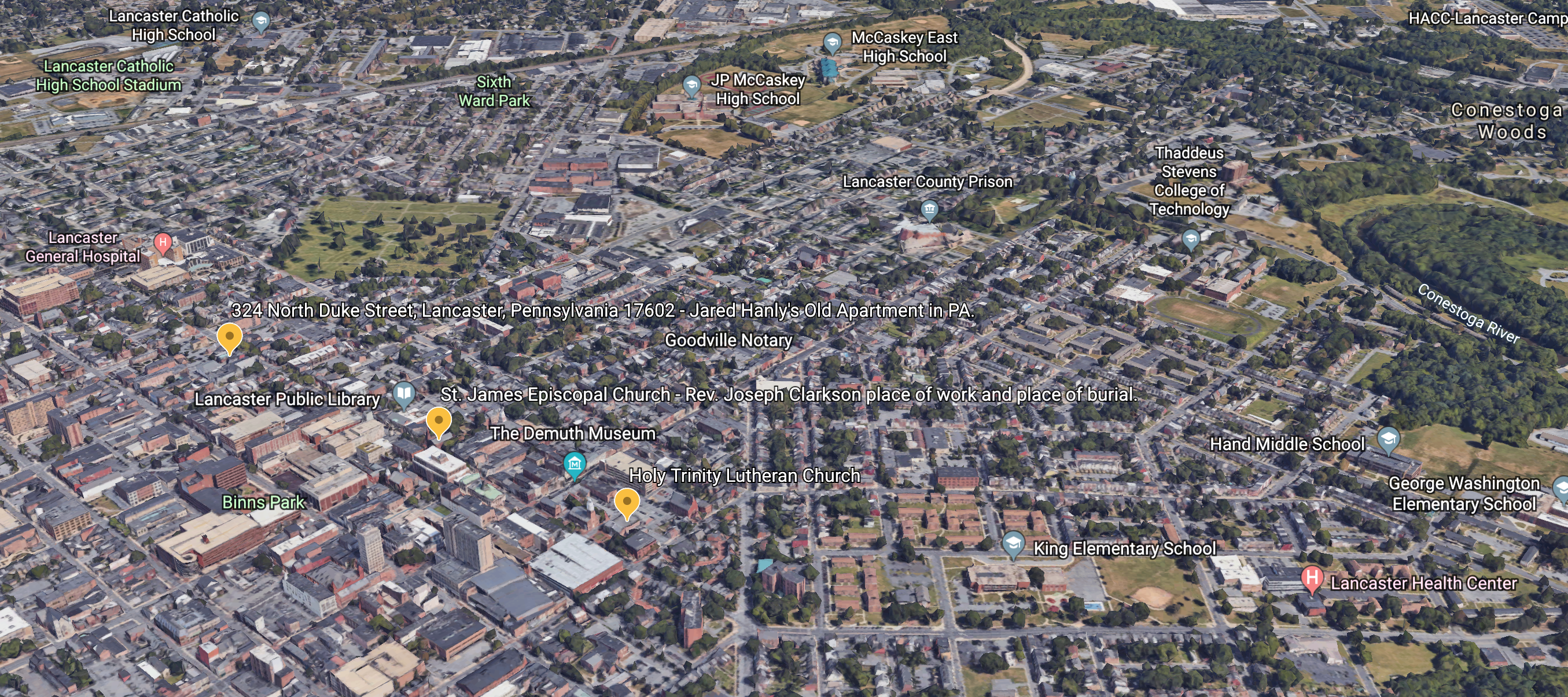
Thaddeus Stevens is referenced on PG.222 of the Memoirs of Dr. Gerardus Clarkson. It mentions Thaddeus Stevens being close friends with Bishop Clarkson (Grandson of Rev. Joseph Clarkson.) You can see on this Google Earth image that I lived right by the Thaddeus Stevens College and by St. James Episcopal Church and Holy Trinity Lutheran Church. It is mentioned early how Rev. Joseph Clarkson was related to these churches and how he and some of my other forefathers and foremothers were buried at St. James Episcopal Church. The strange thing about my IG posts is that I moved to many different stated and posted from random places I visited and they happen to be were my forefathers lived and died and worked. I did not even know of their connection to these places until much later. It has happened so often that it gives me a sense that my whole life is not coincidental.
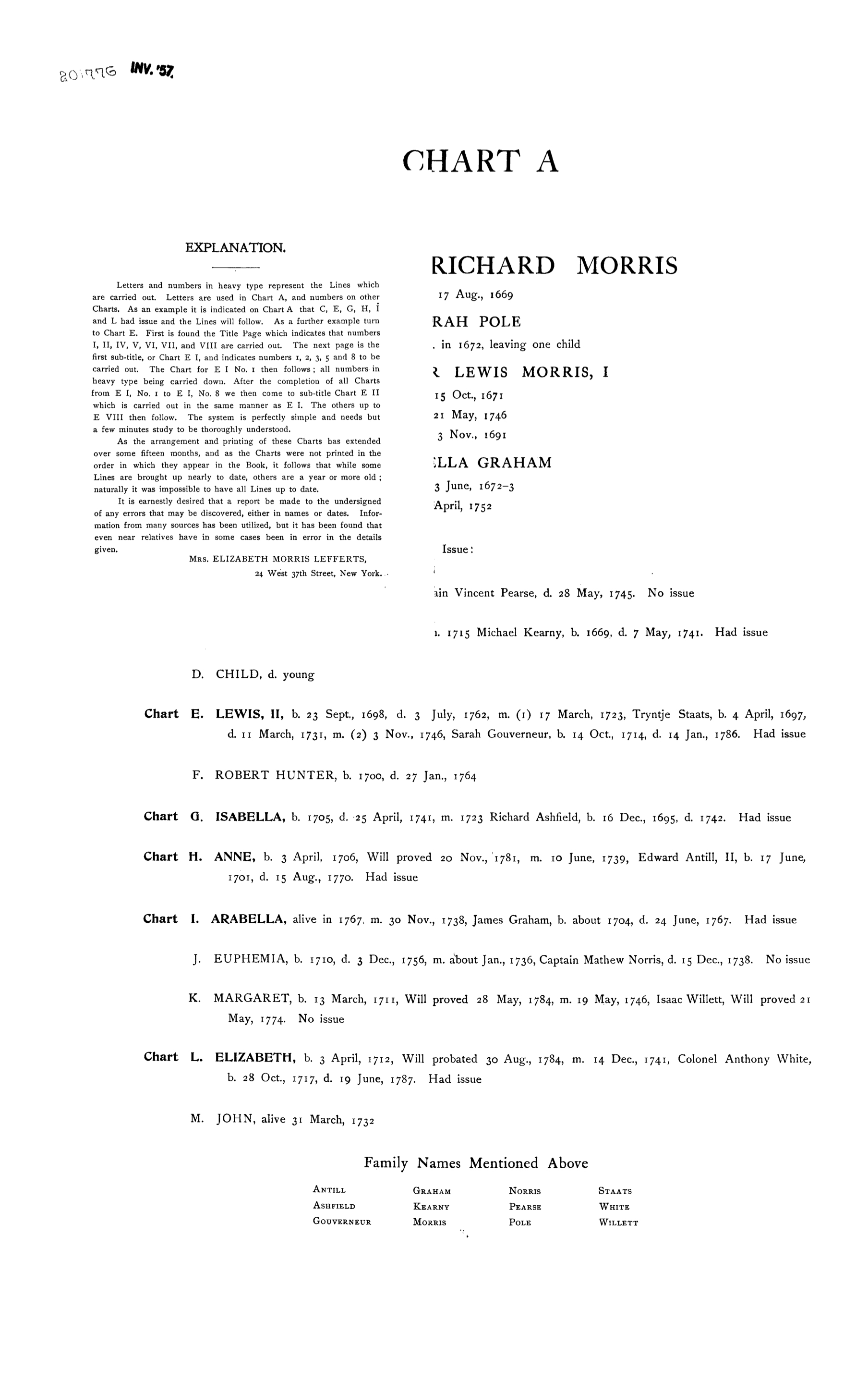
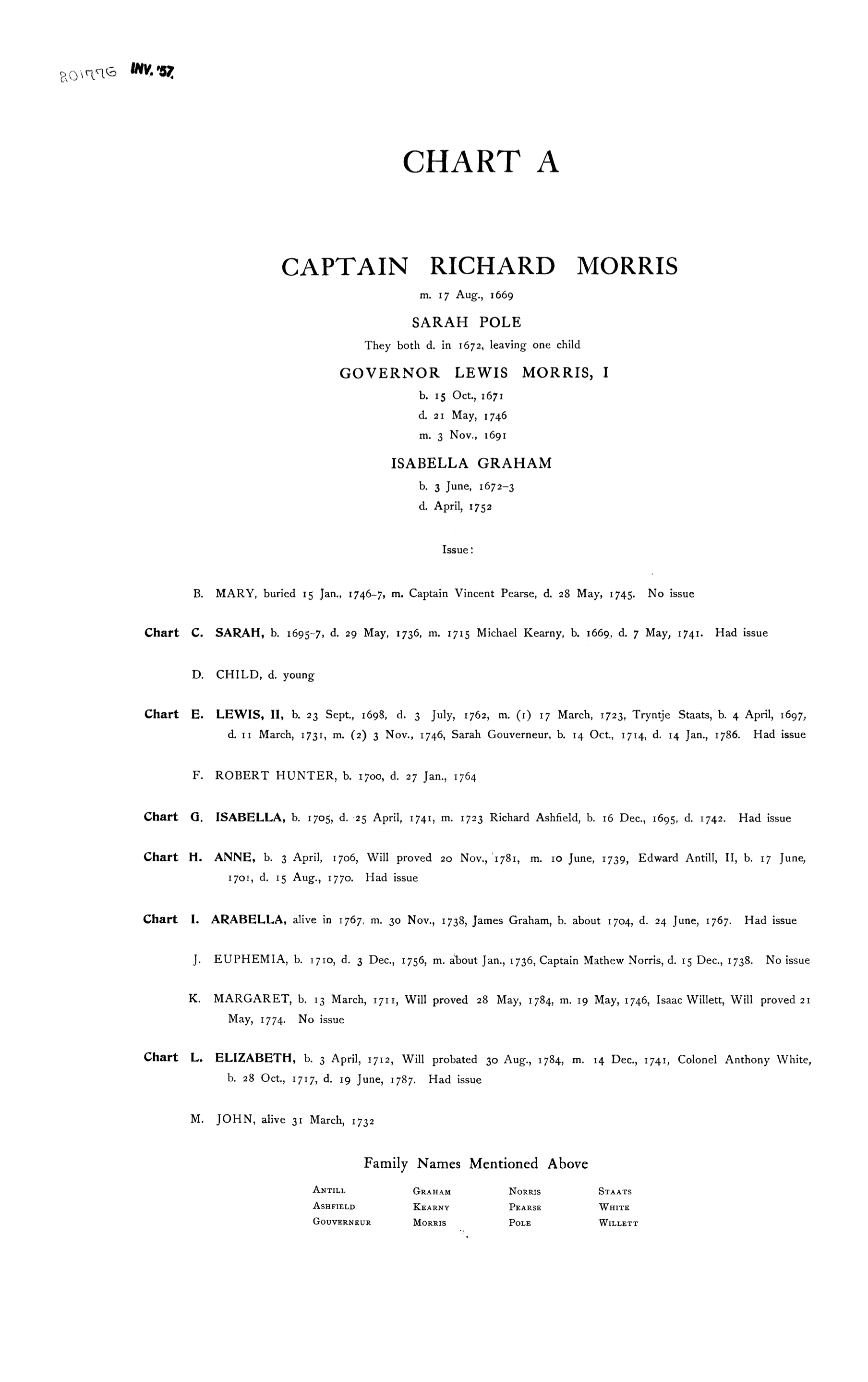
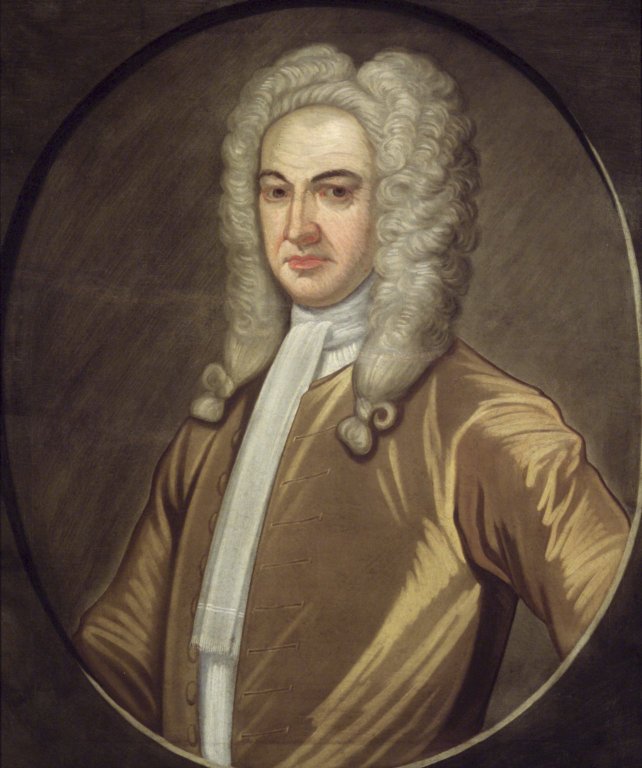
Lewis Morris (October 15, 1671 – May 21, 1746), chief justice of New York and British governor of New Jersey, was the first lord of the manor of Morrisania in New York (in what is now the Bronx).
Biography:
Born on the estate of his parents, Richard Morris (originally from Monmouthshire, Wales) and Sarah (Pole) Morris in 1671, this Lewis Morris was the first in a lengthy string of men with the same name to inherit the prominent estate of Morrisania in the southwest section of today’s Bronx. Richard and Sarah moved their estate from Barbados to the Bronx after buying the estate from Samuel Edsall in 1670 when it was still known as Broncksland. As the name suggests, Broncksland was the original settlement of Jonas Bronck and his wife, for whom the borough is named. In the fall of 1672, leaving only the infant Lewis, barely a year old, as the lord of the manor.
Although the manor was left in the trust of five prominent Westchester citizens until Lewis could rightfully inherit the estate, Matthias Nicoll, secretary of the colony, sent word to Colonel Lewis Morris, the infant’s uncle in Barbados. Col. Lewis immediately made plans to move to Morrisania to care for his young nephew and his nephew’s estate, which had been somewhat embezzled. Col. Lewis made great pains to secure his nephew’s lost property, including a few slaves that had been captured and resold. He was even successful in petitioning for an additional land grant with the help of family friend, Walter Webley. When the childless Col. Lewis and his wife, Mary, died, the now fully-grown Lewis inherited the estate in 1691.
Career:
New Jersey:
Lewis Morris showed a passion for politics from an early age, and first appears on the political scene in 1692, serving in the East New Jersey Provincial Council during the administration of Governor Andrew Hamilton.[1]After the late 1690s the government of East and West Jersey became increasingly dysfunctional. This ultimately resulted in the surrender by the Proprietors of East Jersey and those of West Jersey of the right of government to Queen Anne. Anne’s government united the two colonies as the Province of New Jersey, a royal colony, establishing a new system of government.
On July 29, 1703, in the instructions to Governor Viscount Cornbury Morris was appointed to the New Jersey Provincial Council, and would serve, with several suspensions, through the administrations of seven governors. During much of this time Morris was President of Council.
Morris and Cornbury soon found themselves at opposition, and Cornbury responded by suspending Morris from the upper house. The first time, in September 1704, Morris apologized to the governor and was reinstated, but in December 1704 Cornbury suspended him.[2]
Morris was elected to a seat in the New Jersey General Assembly in 1707, representing an at-large constituency within the Eastern Division of New Jersey.[3] After the recall of Cornbury by the Crown, Lewis Morris was reinstated to the Council in the June 27, 1708 instructions to Baron Lovelace; Lovelace died eleven months later, and Morris was again suspended, this time by Lt. Gov. Richard Ingoldesby.
Morris was again reinstated to the Council in the instructions to Governor Robert Hunter, with whom he had a good relationship.
Sir William Cosby, who served as governor of New York and New Jersey (as did all governors beginning with Viscount Cornbury), showed little interest in New Jersey politics, started a feud with Morris because of a decision of the New York Supreme Court. Morris was Chief Justice, and wrote a dissenting minority opinion which Cosby found deeply offensive. Cosby recommended Morris’ removal from the New Jersey Council on February 5, 1735.[4]
In 1738, New Jersey petitioned the crown for a distinct administration from New York, and Lewis Morris served as Governor of New Jersey until his death in 1746.
New York:
On March 16, 1715, Morris was appointed Chief Justice of New York. When William Cosby was appointed Governor of New York and New Jersey in 1732, his opponents were called “Morrisites” as Lewis Morris was a prominent critic. In 1733 Morris presided over the case of Cosby v. Van Dam. Although the case was decided in favor of Gov. Cosby, Morris wrote the minority opinion, which infuriated Cosby.[5] Cosby demanded the written opinion from Morris. Morris complied with the Governor, but also had the opinion printed for public distribution, along with an explanatory letter stating,
If judges are to be intimidated so as not to dare to give any opinion, but what is pleasing to the Governor, and agreeable to his private views, the people of this province who are very much concerned both with respect to their lives and fortunes in the freedom and independency of those who are to judge them, may possibly not think themselves so secure in either of them as the laws of his Majesty intended they should be.[6]
This even further angered Cosby, who removed Morris from the court. His dismissal led directly to the John Peter Zenger trial affirming freedom of speech in the United States.[7]
Personal life:
On November 3, 1691, Morris was married to Isabella Graham (1673–1752), the eldest daughter of James Graham, who served as Speaker of the New York General Assembly and Recorder of New York City.[8] Together, they were the parents of:[9]
- Mary Morris (1695–c. 1746), who married Capt. Vincent Pearse, commander of HMS Phoenix.[10]
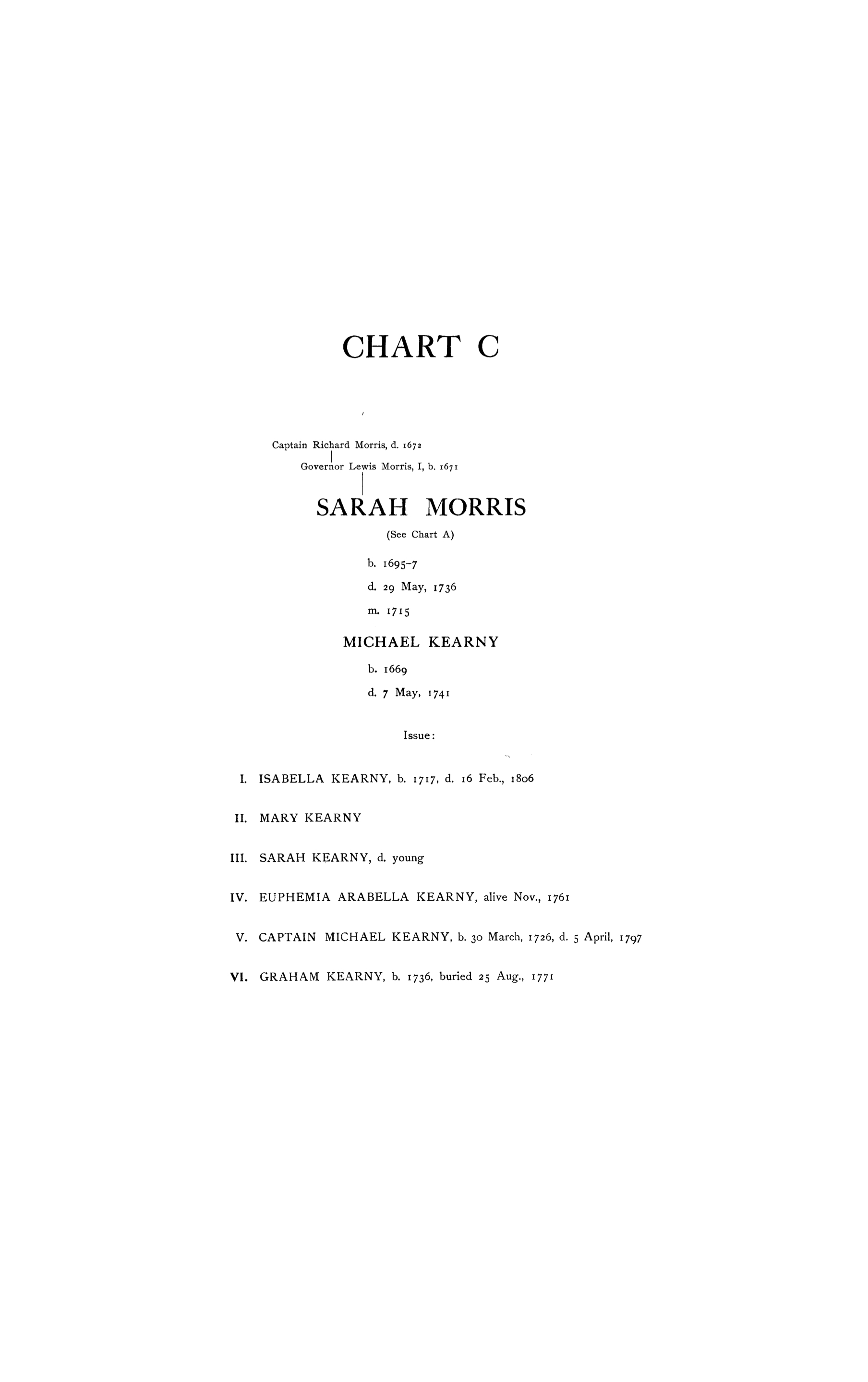
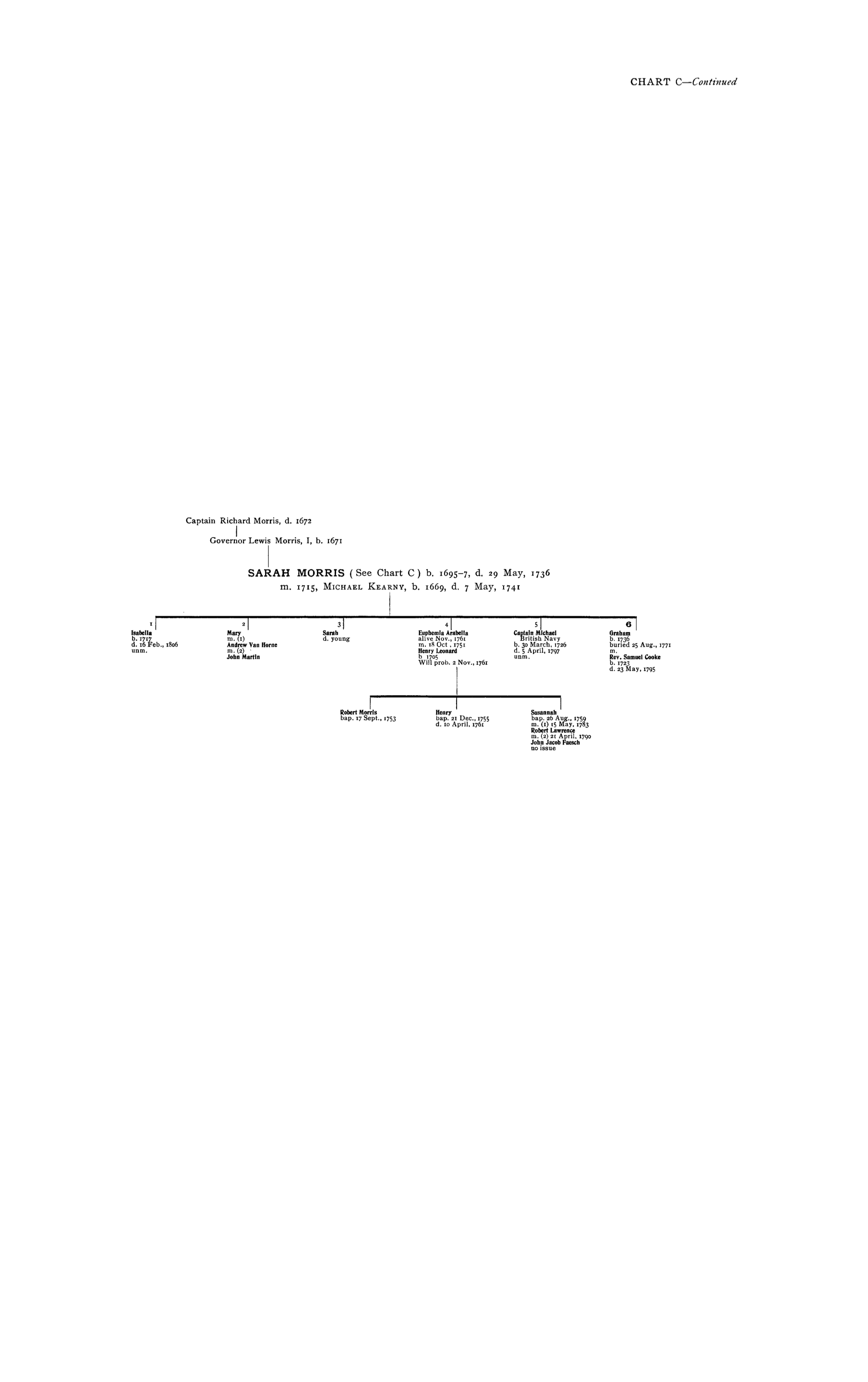
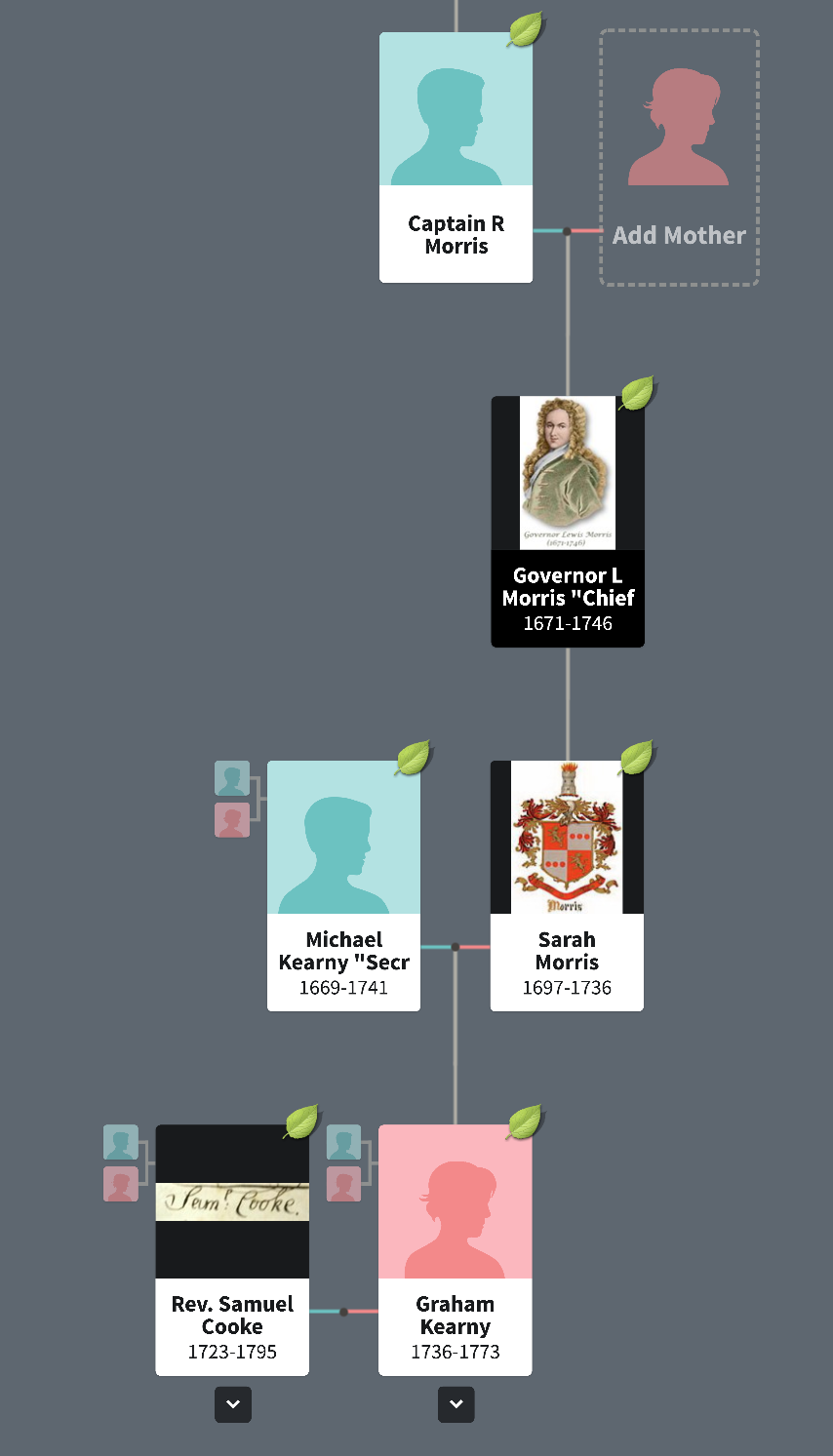
- Sarah Morris (1697–1736), who married Michael Kearney (1667–1741), the treasurer of the Province of East New Jersey.[11][12]
- Lewis Morris Jr. (1698–1762), who married Katrintje “Catherine” Staats (1697–1731). After her death, he married Sarah Gouverneur (1714–1786).
- Robert Hunter Morris (1700–1764), who served as New Jersey Chief Justice.[13]
- Anne Morris (1706–1781), who married Edward Antrill (1701–1770). They were the parents of Lt. Col. Edward Antill.[10]
- Arabella Morris (b. 1708), who married her first cousin, James Graham III (1704–1767).[10]
- Isabella Morris (b. c. 1705), who married Richard Ashfield (1695–1742).[10]
- Euphemia Morris (c. 1710–1756), who married Capt. Matthew Norris, son of Sir John Norris, and grandson of Matthew Aylmer, 1st Baron Aylmer.[10]
- Margaret Morris (b. c. 1711), who married Isaac Willett (1706–1774).[10]
- Elizabeth Morris (1712–1784), who married Col. Anthony White III (1717–1787). They were the parents of Brig. Gen. Anthony Walton White.[10]
- John Morris, who died young.[10]
- Nancy Morris, who died young. [10]
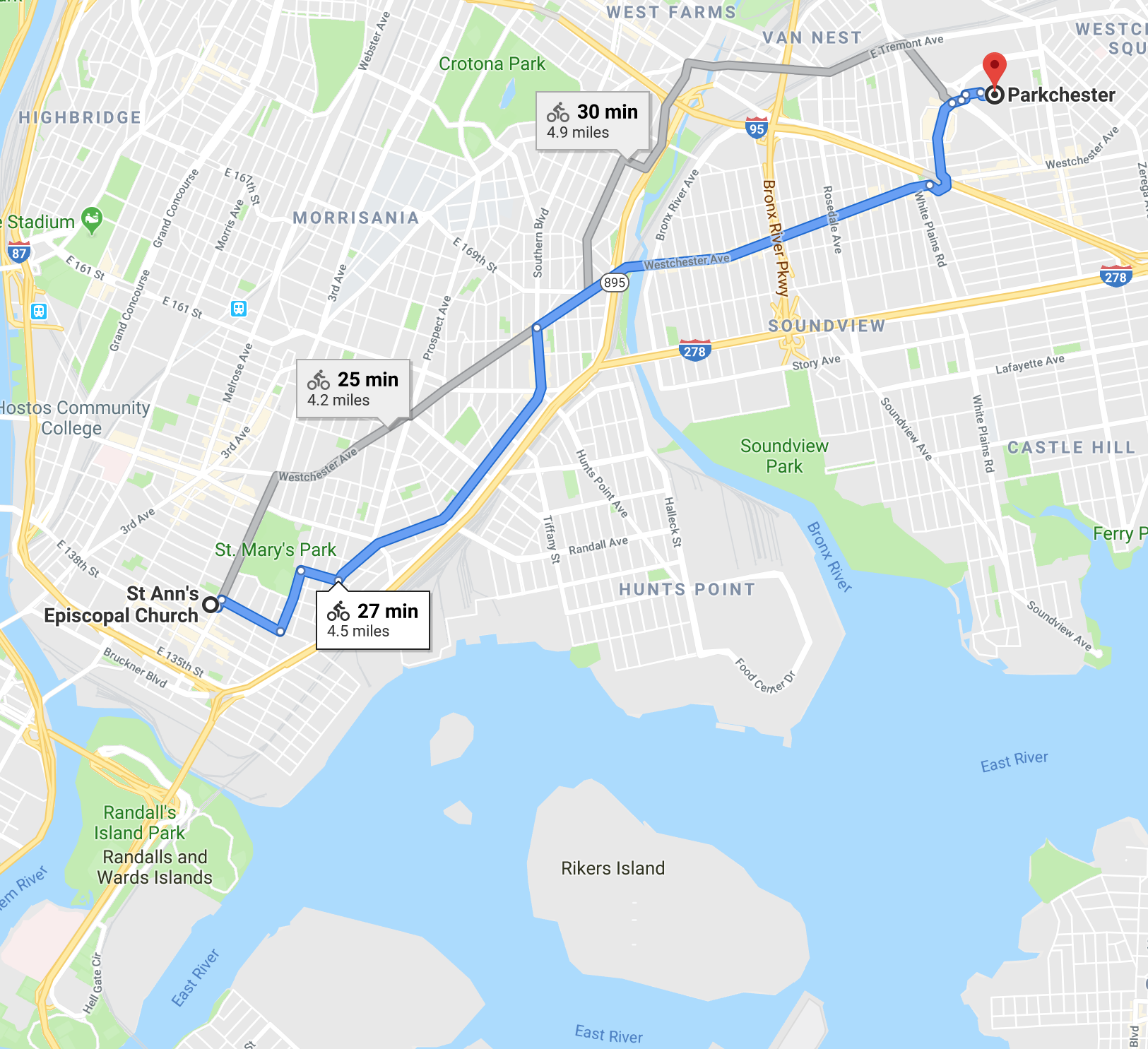
Gov. Lewis Morris died on May 21, 1746 in Kingsbury (near Trenton).[14] His remains are in the Morris family crypt at St. Ann’s Church in the Bronx.[15]
Legacy and descendants:
Through his children, he was the grandfather of many prominent Americans, including Lewis Morris (1726–1798), a signer of the Declaration of Independence; Gen. Staats Long Morris (1728–1800); New York Chief Justice Richard Morris; New Jersey Chief Justice Robert Morris (1745-1815); and U.S. Senator and Founding Father Gouverneur Morris (1752–1816).[16]
Morristown, New Jersey is named in Morris’s honor.
References:
Sources
- ^ Manual of the Legislature of New Jersey, date: various (pre 1950)
- ^ The Path to Freedom: The Struggle for Self-Government in Colonial New Jersey 1703-1776; Donald L. Kemmerer; Princeton University Press; Princeton, 1940; p. 358
- ^ Manual of the Legislature of New Jersey, date: various (pre 1950)
- ^ The Path to Freedom: The Struggle for Self-Government in Colonial New Jersey 1703-1776; Donald L. Kemmerer; Princeton University Press; Princeton, 1940; p. 358
- ^ “Cosby v. Van Dam”
- ^ “Lewis Morris Biography at Historical Society of the New York Courts”
- ^ Linder, Doug. “Key Figures in the Zenger Trial”. law2.umkc.edu. UMKC School of Law. Retrieved 27 September 2018.
- ^ Senate, New York (State) Legislature (1901). Documents of the Senate of the State of New York. E. Croswell. p. 22. Retrieved 25 September 2018.
- ^ National Society of the Colonial Dames in the State of New York (1913). Register of the Colonial Dames of the State of New York. Colonial Dames of the State of New York. p. 315. Retrieved 25 September 2018.
- ^ Jump up to:a b c d e f g h i Americana, American historical magazine. National American Society. 1906. p. 44. Retrieved 27 September 2018.
- ^ General Society of Colonial Wars (U S.) Missouri (1898). Register of the Society of Colonial Wars in the State of Missouri … 1898: Organized in St. Louis, MO, November 22, 1894. p. 16. Retrieved 27 September 2018.
- ^ Flynn, Joseph Michael (1892). The Story of a Parish: 1847-1892. The First Catholic Church in Morristown, N.J. Its Foundation and Development. Morristown, N.J. Columbus Press. p. 21. Retrieved 27 September 2018.
- ^ Huntting, Isaac (1897). History of Little Nine Partners: Of North East Precinct, and Pine Plains, New York, Duchess County. Charles Walsh & Company, printers. pp. 342–350. Retrieved 25 September 2018.
- ^ Collections of the New-York Historical Society for the Year 1895 | Publication Fund Series. New-York Historical Society. 1896. pp. 382–383. Retrieved 27 September 2018.
- ^ Elizabeth Spencer-Ralph and Gloria McDarrah (October 1979). “National Register of Historic Places Registration: St. Ann’s Church Complex”. New York State Office of Parks, Recreation and Historic Preservation. Archived from the original on 19 March 2012. Retrieved 12 January 2011.
- ^ “Lewis Morris, Judge and Chief Judge of NY Supreme Court of Judicature, 1715-1733”. http://www.nycourts.gov. Historical Society of the New York Courts. Retrieved 25 September 2018.
Further reading:
- Sheridan, Eugene R., Lewis Morris, 1671-1746: A Study in Early American Politics, Syracuse University Press, 1981.
External links:
- Lewis Morris at Find a Grave
- Manuscript Group 16, Lewis Morris (1671-1746), Royal Governor of New Jersey Papers, 1704-1750
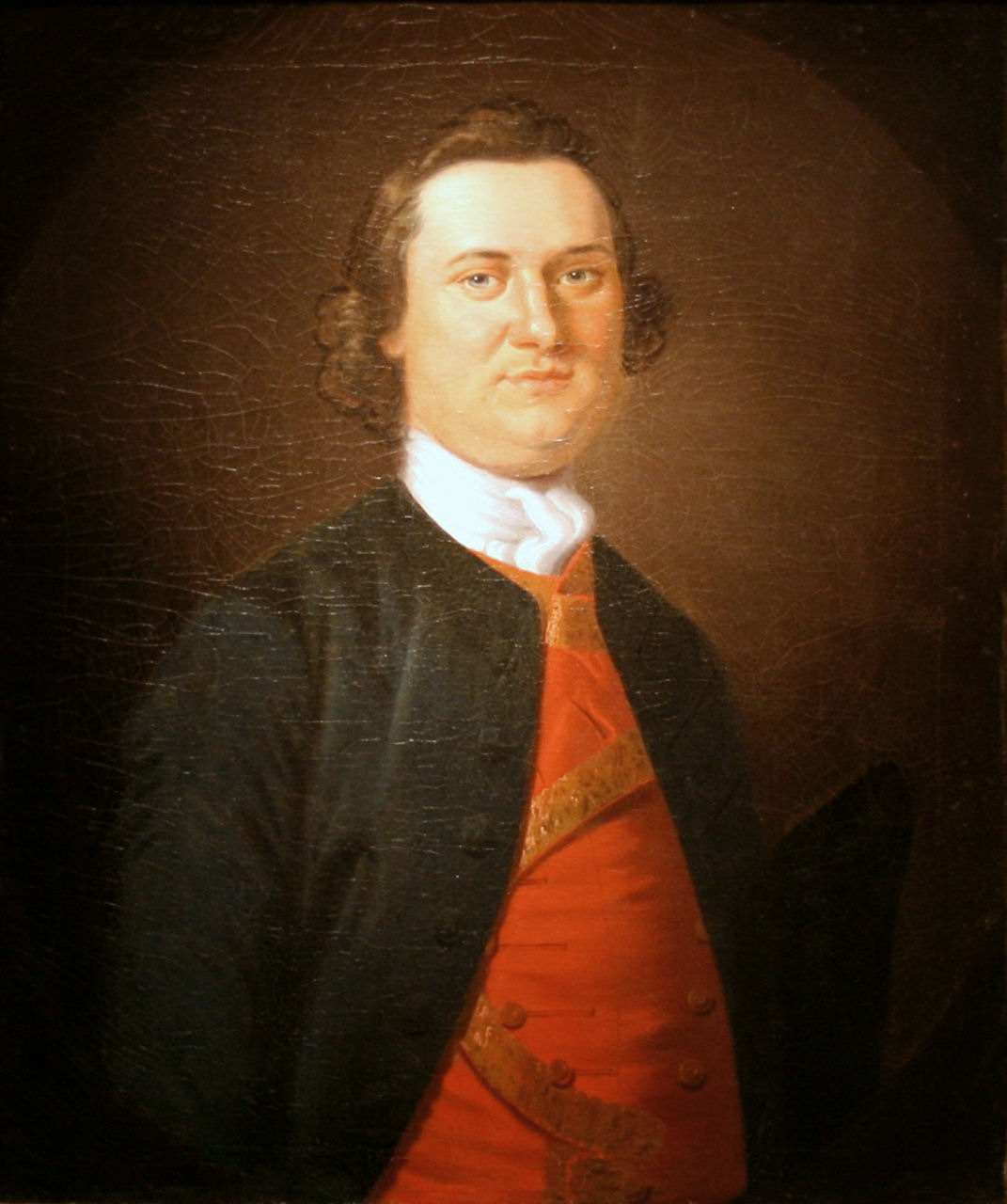
Lewis Morris (April 8, 1726 – January 22, 1798) was an American landowner and developer from Morrisania, New York, presently part of Bronx County. He signed the U.S. Declaration of Independence as a delegate to the Continental Congress from New York.[1]
Early life:
Lewis Morris was born on April 8, 1726, at his family’s estate, Morrisania, presently part of Bronx County, in what was then the Province of New York. He was the third Lewis Morris in the Morris family. He was the son of Lewis Morris (1698–1762) and Katrintje “Catherine” Staats (1697–1731). After his mother died, his father married Sarah Gouverneur (1714–1786).[2] He graduated from Yale College in 1746,[1] and upon his father’s death in 1762, he inherited the bulk of the estate.
Morris’ father had seven children, including his siblings, Staats Long Morris (1728–1800) and Richard Morris(1730–1810), and his half-siblings, Mary Lawrence, Gouverneur Morris (1752–1816), Isabella and Catherine. His uncle was Robert Hunter Morris (1700–1764), the Governor of Pennsylvania. His cousin by marriage was William Paterson (1745–1806), the Governor of New Jersey and father-in-law of Stephen Van Rensselaer, the Lt. Governor of New York, who was the brother of Philip Schuyler Van Rensselaer, Mayor of Albany, New York. Anthony Walton White (1750–1803), a Continental General, was his cousin through Morris’ aunt, Elizabeth Morris (1712–c.1784).
Family history:
His great-grandfather, Richard Morris (died 1672), immigrated to New York through Barbados after being part of Oliver Cromwell‘s army in the English Civil War of 1648. He purchased the first tract of land in the Bronxthat became the basis for the Morrisania manor. Richard and his young wife died, leaving behind an infant son, Lewis Morris (1671–1746). Richard’s brother, Colonel Lewis Morris, also of Barbados, came to Morrisania to help manage the estate owned by his infant nephew. Col. Morris and his wife were childless.
When he came of age, Lewis Morris expanded and patented the estate. He married Isabella and went on to serve as the 8th Colonial Governor of New Jersey.[3]
Career:
As a prominent land owner in colonial New York, Lewis was appointed as a judge of the Admiralty Court for the province in 1760. In 1769, he was elected to the New York General Assembly. In 1774, as the Revolution drew near, he resigned from the Admiralty Court.[1]
American Revolution:
When active revolution began, he was a member of the New York Provincial Congress, the revolutionary government, from 1775 until 1777. That body, in turn, sent Morris to the Continental Congress for those same years. While in Congress, he was an active supporter of independence, and signed the Declaration of Independence in 1776. When warned by his brother Staats Morris, who was a general in the British army, of the consequences that would follow his signing of the rebellious document, Morris stated, “Damn the consequences. Give me the pen.”[4]
In 1777, Lewis returned to New York, became a county judge of Westchester County, and was appointed a member of the New York State Senaterepresenting the Southern District, which consisted of Kings, New York, Queens, Richmond, Suffolk and Westchester counties. He served in the 1st New York State Legislature, which began on September 9, 1777, until the end of the 4th Legislature, on July 1, 1781.[1]
His eldest three sons served during the Revolutionary war, and had distinguished military careers.
Post-Revolution:
Beginning on July 1, 1783, he returned to the New York State Senate, and served in the 7th Legislature through to the end of the 13th Legislature, ending on June 30, 1790.[1] In 1788, when the New York convention met to ratify the U.S. Constitution, he was one of the delegates. Morris was a Federalistpresidential elector in 1796, and cast his votes for John Adams and Thomas Pinckney.
In 1784, Morris was elected an honorary member of the New York Society of the Cincinnati. On May 1 of the same year, he was appointed to the first Board of Regents of the University of the State of New York and served until his death,[1] when he was replaced by Simeon De Witt.[5]
Personal life:
On September 24, 1749, Lewis married Mary Walton (1727–1794), a member of a well-known merchant family. Maria was the daughter of Jacob Walton and Maria (née Beekman) Walton[6] Lewis and Mary were the parents of ten children:[7]
- Catherine Morris (1751–1835), who married Thomas Lawrence (1744–1823)[7]
- Mary Morris (1752–1776).[7]
- Col. Lewis V. Morris (1754–1824), who married Ann B. Elliott (1762–1848), sister-in-law of Congressman Daniel Huger.[8]
- Gen. Jacob Morris (1755–1844), who married Mary Cox (1758–1827) (Morris, New York is named after him).[9]
- Sarah Morris (born 1757), who died young.[7]
- Lt. William Walton Morris (1760–1832), aide-de-camp to General Anthony Wayne.[7]
- Helena Magdalena Morris (1762–1840), who married John Rutherfurd (1760–1840), a Senator from New Jersey[7]
- James Morris (1764–1827), who married Helen Van Cortlandt (1768–1812), granddaughter of Frederick Van Cortlandt.[7]
- Capt. Staats Morris (1765–1826), who married Everarda van Braam Houckgeest (1765–1816), the daughter of Andreas van Braam Houckgeest and Baroness Catharina C.G. van Reeds van Oudtshoorn.[10]
- Capt. Richard Valentine Morris (1768–1815), who married Anne Walton (1773–1858)[7]
After the Revolution, Morris had to rebuild the family estate, which had been looted and burned by the British when they occupied New York. In 1790, he offered the land, now part of the South Bronx neighborhood of Morrisania, as the site of the U.S. capital. He died on the estate, and is buried in the family vault beneath St. Ann’s Church in the Bronx.[11]
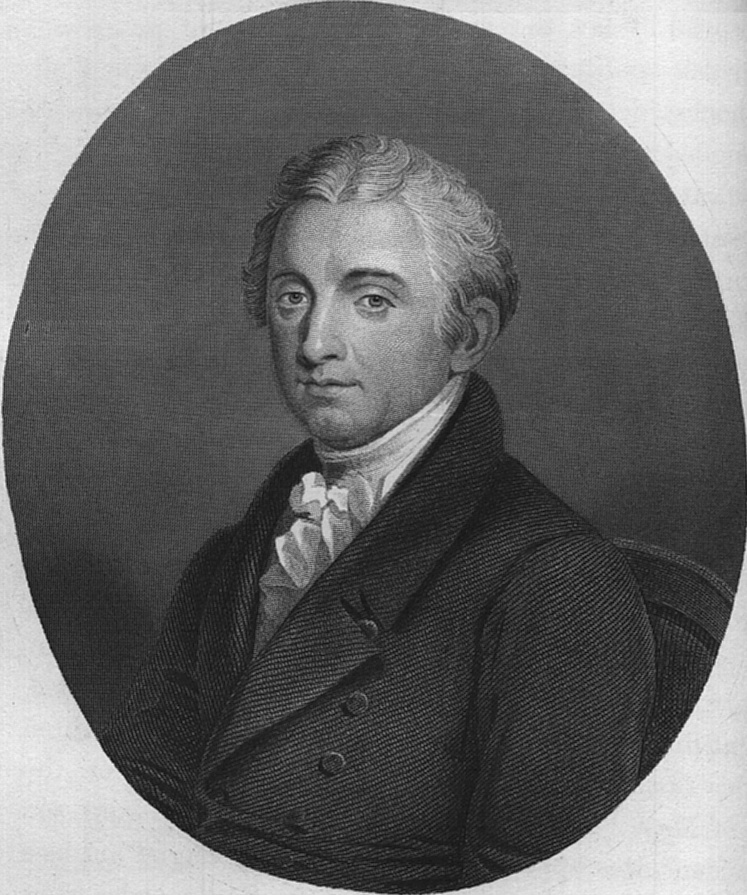
Gouverneur Morris (30 January 1752 – 6 November 1816) was an American statesman, a Founding Father of the United States, and a signatory to the Articles of Confederation and the United States Constitution. He wrote the Preamble to the United States Constitution and has been called the “Penman of the Constitution.”[1]In an era when most Americans thought of themselves as citizens of their respective states, Morris advanced the idea of being a citizen of a single union of states.[2] He represented New York in the United States Senatefrom 1800 to 1803.
Morris was born into a wealthy landowning family in New York City. After attending Columbia College, he studied law under Judge William Smith and earned admission to the bar. He was elected to the New York Provincial Congress before serving in the Continental Congress. After losing re-election to Congress, he moved to Philadelphia and became the assistant U.S. superintendent of finance. He represented Pennsylvania at the 1787 Constitutional Convention, where he advocated a strong central government. He served on the committee that wrote the final draft of the United States Constitution.
After the ratification of the Constitution, Morris served as Minister Plenipotentiary to France. He criticized the French Revolution and the execution of Marie Antoinette. Morris returned to the United States in 1798 and won election to the Senate in 1800, affiliating with the Federalist Party. He lost re-election in 1803. After leaving the Senate, he served as chairman of the Erie Canal Commission.
Early life:

Coat of Arms of Gouverneur Morris
Morris was born in New York City on January 30, 1752, the son of Lewis Morris, Jr. (1698–1762) and his second wife, Sarah Gouverneur (1714–1786). Morris’ first name derived from his mother’s surname; she was from a Huguenot family that had first moved to Holland, and then to New Amsterdam.[3] According to Abigail Adams, Morris’ first name was pronounced “governeer”.[4]
Morris’ half-brother Lewis Morris was a signer of the Declaration of Independence. Another half-brother, Staats Long Morris, was a loyalist and major-general in the British army during the American Revolution, and his grandfather, Lewis Morris, was the chief justice of New York and British governor of New Jersey.
His nephew, Lewis Richard Morris, served in the Vermont legislature and in the United States Congress. His grandnephew was William M. Meredith, United States Secretary of the Treasury under Zachary Taylor.
Morris’ father, Lewis Morris, was a wealthy landowner and judge, thus allowing Morris, a gifted scholar, to enroll at King’s College, now Columbia University in New York City, at age 12. He graduated in 1768 and received a Master’s degree in 1771. He studied law with Judge William Smith and attained admission to the bar in 1775.
Career:
On May 8, 1775,[5] Morris was elected to represent his family household in southern Westchester County (now Bronx County), in the New York Provincial Congress. As a member of the congress, he, along with most of his fellow delegates, concentrated on turning the colony into an independent state. However, his advocacy of independence brought him into conflict with his family, as well as with his mentor, William Smith, who had abandoned the patriot cause when it pressed toward independence. Morris was a member of the New York State Assembly in 1777–78.
After the Battle of Long Island in August 1776, the British seized New York City. His mother, a loyalist, gave his family’s estate, located across the Harlem River from Manhattan, to the British for military use.
Continental Congress:
Morris was appointed as a delegate to the Continental Congress and took his seat in Congress on 28 January 1778. He was selected to a committee in charge of coordinating reforms of the military with George Washington. After witnessing the army encamped at Valley Forge, he was so appalled by the conditions of the troops that he became the spokesman for the Continental Army in congress and subsequently helped enact substantial reforms in its training, methods, and financing. He also signed the Articles of Confederation in 1778.
In 1778, when the Conway Cabal was at its peak, some members of the Continental Congress attempted a no-confidence vote against George Washington. If it had succeeded, then George Washington would have been court-martialed and dismissed as Commander-in-Chief of the Continental Army. At that time, Gouverneur Morris cast the decisive tie-breaking vote in favor of keeping George Washington as Commander-in-Chief.[6]
Lawyer and merchant:

Wooden leg of Gouverneur Morris. New-York Historical Society.
In 1779, he was defeated for re-election to Congress, largely because his advocacy of a strong central government was at odds with the decentralist views prevalent in New York. Defeated in his home state, he moved to Philadelphia, Pennsylvania, to work as a lawyer and merchant.
In 1780, Morris had a carriage accident in Philadelphia, and his left leg was amputated below the knee. Despite an automatic exemption from military duty because of his handicap and his service in the legislature, he joined a special “briefs” club for the protection of New York City, a forerunner of the modern New York Guard.
Public office:

Gouverneur Morris and Robert Morris. Charles Willson Peale, 1783.
In Philadelphia, he was appointed assistant superintendent of finance of the United States, serving under Robert Morris.[7] He was selected as a Pennsylvania delegate to the Constitutional Convention in 1787. During the Convention, he was a friend and ally of George Washington and others who favored a strong central government. Morris was elected to serve on a committee of five (chaired by William Samuel Johnson) who drafted the final language of the proposed constitution. Catherine Drinker Bowen, in Miracle at Philadelphia, called Morris the committee’s “amanuensis,” meaning that it was his pen that was responsible for most of the draft, as well as its final polished form.[8]
It is said by some that Morris was “an aristocrat to the core,” who believed that “there never was, nor ever will be a civilized Society without an Aristocracy”.[9] It is also alleged that he thought that common people were incapable of self-government because he feared that the poor would sell their votes to the rich and that voting should be restricted to property owners.
Morris opposed admitting new western states on an equal basis with the existing eastern states, fearing that the interior wilderness could not furnish “enlightened” national statesmen.[10] Madison’s summary of Morris’ speech at the Convention, on 11 July 1787, said that his view “relative to the Western Country had not changed his opinion on that head. Among other objections it must be apparent they would not be able to furnish men equally enlightened, to share in the administration of our common interests.” His reason given for that was regional: “The Busy haunts of men not the remote wilderness, was the proper school of political Talents. If the Western people get the power into their hands they will ruin the Atlantic interests.” In this fear, he turned out to be in the minority. Jon Elster has suggested that Morris’ attempt to limit the future power of the West was a strategic move designed to limit the power of slaveholding states, because Morris believed that slavery would predominate in new Western states.[11]
At the convention he gave more speeches than any other delegate, a total of 173. As a matter of principle, he often vigorously defended the right of anyone to practice his chosen religion without interference, and he argued to include such language in the Constitution.[12]
Views on slavery:
Gouverneur Morris was one of the few delegates at the Philadelphia Convention who spoke openly against domestic slavery. According to James Madison, who took notes at the Convention, Morris spoke openly against slavery on 8 August 1787, saying that it was incongruous to say that a slave was both a man and property at the same time:He [Morris] never would concur in upholding domestic slavery. It was a nefarious institution. It was the curse of heaven on the states where it prevailed. Compare the free regions of the Middle States, where a rich & noble cultivation marks the prosperity & happiness of the people, with the misery & poverty which overspread the barren wastes of Va. Maryd. & the other States having slaves. … Proceed southwardly, and every step you take, through the great regions of slaves, presents a desert increasing with the increasing proportion of these wretched beings.Upon what principle is it that the slaves shall be computed in the representation? Are they men? Then make them citizens, and let them vote. Are they property? Why, then, is no other property included? The Houses in this city [Philadelphia] are worth more than all the wretched slaves which cover the rice swamps of South Carolina.
According to Madison, Morris felt that the U.S. Constitution’s purpose was to protect the rights of humanity and that to promote slavery was incongruous with it:The admission of slaves into the Representation when fairly explained comes to this: that the inhabitant of Georgia and S. C. who goes to the Coast of Africa, and in defiance of the most sacred laws of humanity tears away his fellow creatures from their dearest connections & damns them to the most cruel bondages, shall have more votes in a Govt. instituted for protection of the rights of mankind, than the Citizen of Pa. or N. Jersey who views with a laudable horror, so nefarious a practice.[13]
Minister Plenipotentiary to France:

Gouverneur Morris portrait bust by Jean-Antoine Houdon, 1789, Paris.
He went to France on business in 1789 and served as Minister Plenipotentiary to France from 1792 to 1794. His diaries during that time have become a valuable chronicle of the French Revolution, capturing much of the turbulence and violence of that era, as well as documenting his affairs with women there. Unlike Thomas Jefferson, Morris was far more critical of the French Revolution and considerably more sympathetic to the deposed queen consort, Marie Antoinette.[14] Commenting on her grandfather’s sometimes Tory-minded outlook of the world, Anne Cary Morris said, “His creed was rather to form the government to suit the condition, character, manners, and habits of the people. In France this opinion led him to take the monarchical view, firmly believing that a republican form of government would not suit the French character.”[15] The “French character” in the Age of Revolution was one of two socio-political extremes: absolutism and autocracy.
While Morris was minister, Marquis de Lafayette, who had been an important participant in the American Revolution, was exiled from France and his family imprisoned, and Thomas Paine, another important figure, was arrested and imprisoned in France. Morris’ efforts on their behalf have been criticized as desultory and insufficient.[16][17] After a change of the French government, and after Morris was replaced as minister, his successor, James Monroe, was able to secure Paine’s release.
United States Senate:
He returned to the United States in 1798 and was elected in April 1800, as a Federalist, to the United States Senate, filling the vacancy caused by the resignation of James Watson. He served from May 3, 1800 to March 3, 1803 and was defeated for re-election in February 1803.
Later career:
On 4 July 1806, he was elected an honorary member of the New York Society of the Cincinnati.
After leaving the U.S. Senate, he served as Chairman of the Erie Canal Commission from 1810 to 1813. The Erie Canal helped to transform New York City into a financial capital, the possibilities of which were apparent to Morris when he said “the proudest empire in Europe is but a bubble compared to what America will be, must be, in the course of two centuries, perhaps of one.”[18]
Morris was elected a member of the American Antiquarian Society in 1814.[19]
Personal life:
_(14578228560).jpg)
Morris’s home in 1897
Until he married late in life, Morris’ diary tells of a series of affairs. His lovers included the French novelist Adelaide Filleul and the American poet and novelist Sarah Wentworth Apthorp Morton.[20]
In 1809, at age 57, he married 35-year-old Anne (or Ann) Cary (“Nancy”) Randolph (1774–1837), who was the daughter of Ann Cary and Thomas Mann Randolph Sr., and the sister of Thomas Mann Randolph Jr.[21] Thomas Mann Randolph Jr. was the husband of Thomas Jefferson‘s daughter, Martha Jefferson Randolph. Nancy lived near Farmville, Virginia, with her sister Judith and Judith’s husband Richard Randolph on a plantation called Bizarre.[22]In April 1793, Richard Randolph and Nancy were accused of murdering a newborn baby which was said to be Nancy’s; presumably she had been having an affair with Richard.[23] Richard stood trial; he was defended by Patrick Henry and John Marshall, who obtained an acquittal.[24] Richard Randolph died suddenly in 1796; both sisters were suspected, but nothing was proven.[25] Nancy remained at Bizarre after her brother-in-law’s death but was asked to leave by Judith in 1805.[26]
Nancy traveled north and lived in Connecticut before agreeing in 1809 to work as a housekeeper for Morris, whom she had known previously.[27] They soon decided to marry; Morris was apparently undisturbed by the rumors that had caused Nancy to leave Virginia.[28] By all accounts, their marriage was a happy one;[29] they had a son, Gouverneur Morris Jr., who went on to a long career as a railroad executive.[30]
Morris died on November 6, 1816, after causing himself internal injuries and an infection while using a piece of whalebone as a catheter to attempt clearing a blockage in his urinary tract.[31][32] He died at the family estate, Morrisania, and was buried at St. Ann’s Church in The Bronx.[33]
Descendants;
Morris’ great-grandson, also named Gouverneur Morris (1876–1953), was an author of pulp novels and short stories during the early twentieth century. Several of his works were adapted into films, including the famous Lon Chaney film, The Penalty in 1920.[34][35]
Legacy:
Morris established himself as an important landowner in northern New York, where the Town of Gouverneur[36] and Village of Gouverneur in St. Lawrence County are named after him.
In 1943, a United States liberty ship SS Gouverneur Morris was launched.[37] She was scrapped in 1974.
References:
- ^ Documents from the Constitutional Convention and the Continental Congress. Library of Congress.
- ^ Wright, Jr., Robert K. (1987). “Gouverneur Morris”. Soldier-Statesmen of the Constitution. United States Army Center of Military History. CMH Pub 71-25. Retrieved 2009-06-02.
- ^ “Gouverneur Morris [1752–1816]”. New Netherlands Institute. Retrieved 17 June 2014.
- ^ Brookhiser, Richard (Spring 2002). “The Forgotten Founding Father”. City Journal. New York, NY: Manhattan Institute for Policy Research.
- ^ ANB “Gouverneur Morris”
- ^ “The True George Washington”, written by Paul Leicester Ford, published by J. Lippincott, the printing of the year 1900
- ^ Raphael, Ray (2009). Founders: The People Who Brought You a Nation. New York, NY: The New Press. p. 404. ISBN 978-1-59558-327-7.
- ^ Bowen, Catherine Drinker. Miracle at Philadelphia. 1986 edition. p. 236.
- ^ “Toward An American Revolution”. Cyberjournal.org. Archived from the original on 2010-06-07. Retrieved 2010-03-19.
- ^ Bowen. p. 178.
- ^ Jon Elster, Securities Against Misrule, (2013), pp. 79–80
- ^ Gregg Frazer. “Gouverneur Morris, Theistic Rationalist”. Allacademic.com. p. 26. Retrieved 2010-03-19.
- ^ James Madison (1787). “James Madison, The Debates in the Several State Conventions of the Adoption of the Federal Constitution vol. 5 [1827]”. Retrieved 2009-07-29.
- ^ Antonia Fraser, Marie Antoinette: The Journey, (2002), p. 476; Vincent Cronin, Louis and Antoinette, (1974), p. 295.
- ^ Anne Cary Morris, ed.,”The Diary and Letters of Gouverneur Morris; Minister of the United States to France; Member of the Constitutional Convention, etc.,” (1888), Vol. I, p. 15.
- ^ Whitridge, Arnold (July 1976). “A Representative of America”. American Heritage. 27 (4). Retrieved 12 June 2019.
- ^ Conway, Moncure D. (1893). The Life of Thomas Paine. G.P. Putnam’s Sons.
- ^ Will Wilkinson from the July 2004 issue (July 2004). “The Fun-Loving Founding Father: Gouverneur Morris, the First Modern American”. Reason. Retrieved 2010-03-19.
- ^ American Antiquarian Society Members Directory
- ^ Brookhiser, Richard (Spring 2002). “The Forgotten Founding Father”. City Journal. Retrieved December 4, 2018.
- ^ Roosevelt, Theodore (1888). Gouverneur Morris. Boston, MA: Houghton, Mifflin and Company. p. 340.
- ^ Kierner, Cynthia A. (2004). Scandal at Bizarre: Rumor and Reputation in Jefferson’s America. Charlottesville, VA: University of Virginia Press. p. vii. ISBN 978-0-8139-2616-2.
- ^ Clinton, Catherine (1982). The Plantation Mistress: Woman’s World in the Old South. New York, NY: Pantheon Books: Random House. p. 114. ISBN 9780394722535.
- ^ Kirschke, James J. (2005). Gouverneur Morris: Author, Statesman, and Man of the World. New York, NY: Thomas Dunne Books: St. Martin’s Press. p. 263. ISBN 978-0-312-24195-7.
- ^ Kirschke, Gouverneur Morris, p. 263
- ^ Kierner, Scandal at Bizarre, pp. 91–92
- ^ Hines, Emilee (2009). It Happened in Virginia: Remarkable Events That Shaped History. Guilford, CT: Morris Book Publishing, LLC. p. 47. ISBN 978-0-7627-5424-3.
- ^ Kirschke, Gouverneur Morris, pp. 263–264
- ^ Morris, Jr., Seymour (2010). American History Revised: 200 Startling Facts That Never Made it Into the Textbooks. New York, NY: Broadway Books: Random House. p. 121. ISBN 978-0-307-58760-2.
- ^ Elizabeth Spencer-Ralph and Gloria McDarrah (October 1979). “National Register of Historic Places Registration: St. Ann’s Church Complex”. New York State Office of Parks, Recreation and Historic Preservation. Archived from the original on 2012-03-19. Retrieved 2011-01-12.
- ^ Adams, William Howard (2003). Gouverneur Morris: an independent life. Yale University Press. ISBN 0-300-09980-0.
- ^ Kirschke, James J. (2005). Gouverneur Morris: author, statesman, and man of the world. Macmillan. ISBN 0-312-24195-X.
- ^ Gouverneur Morris at Find a Grave
- ^ “Browse By Author: M – Project Gutenberg”. Gutenberg.org. 1916-07-01. Retrieved 2010-03-19.
- ^ “Gouverneur Morris”. Imdb.com. 2009-05-01. Retrieved 2010-03-19.
- ^ Gannett, Henry (1905). The Origin of Certain Place Names in the United States. Govt. Print. Off. p. 140.
- ^ “Kaiser Oregon Shipbuilding”. shipbuildinghistory.com. Archived from the original on 2009-12-12. Retrieved 2009-11-28.
References:
- Brookhiser, Richard (2003). Gentleman Revolutionary: Gouverneur Morris, the Rake Who Wrote the Constitution. New York: Free Press. ISBN 0-7432-2379-9.
- Crawford, Alan Pell (2000). Unwise Passions: A True Story of a Remarkable Woman—and the First Great Scandal of Eighteenth-century America. New York: Simon & Schuster. ISBN 0-684-83474-X. (A biography of Morris’s wife.)
- Fresia, Jerry (1988). Toward an American Revolution: Exposing the Constitution & Other Illusions. Cambridge: South End Press.
- Heyburn, Jack (2017). “Gouverneur Morris and James Wilson at the Constitutional Convention,” University of Pennsylvania Journal of Constitutional Law. 20: 169–198.
- Miller, Melanie Randolph, Envoy to the Terror: Gouverneur Morris and the French Revolution (Potomac Books, 2005)
- The Diary and Letters of Gouverneur Morris, Minister of the United States to France; Member of the Constitutional Convention, ed. Anne Cary Morris (1888). 2 vols. online version
- The Life of Gouverneur Morris, with Selections from his Correspondence and Miscellaneous Papers; Detailing Events in the American Revolution, the French Revolution, and in the Political History of the United States, ed. Jared Sparks (1832). 3 vols. Boston: Gray & Bowen.
- Swiggert, Howard (1952). The Extraordinary Mr. Morris. New York: Doubleday & Co. loc 52-5540.
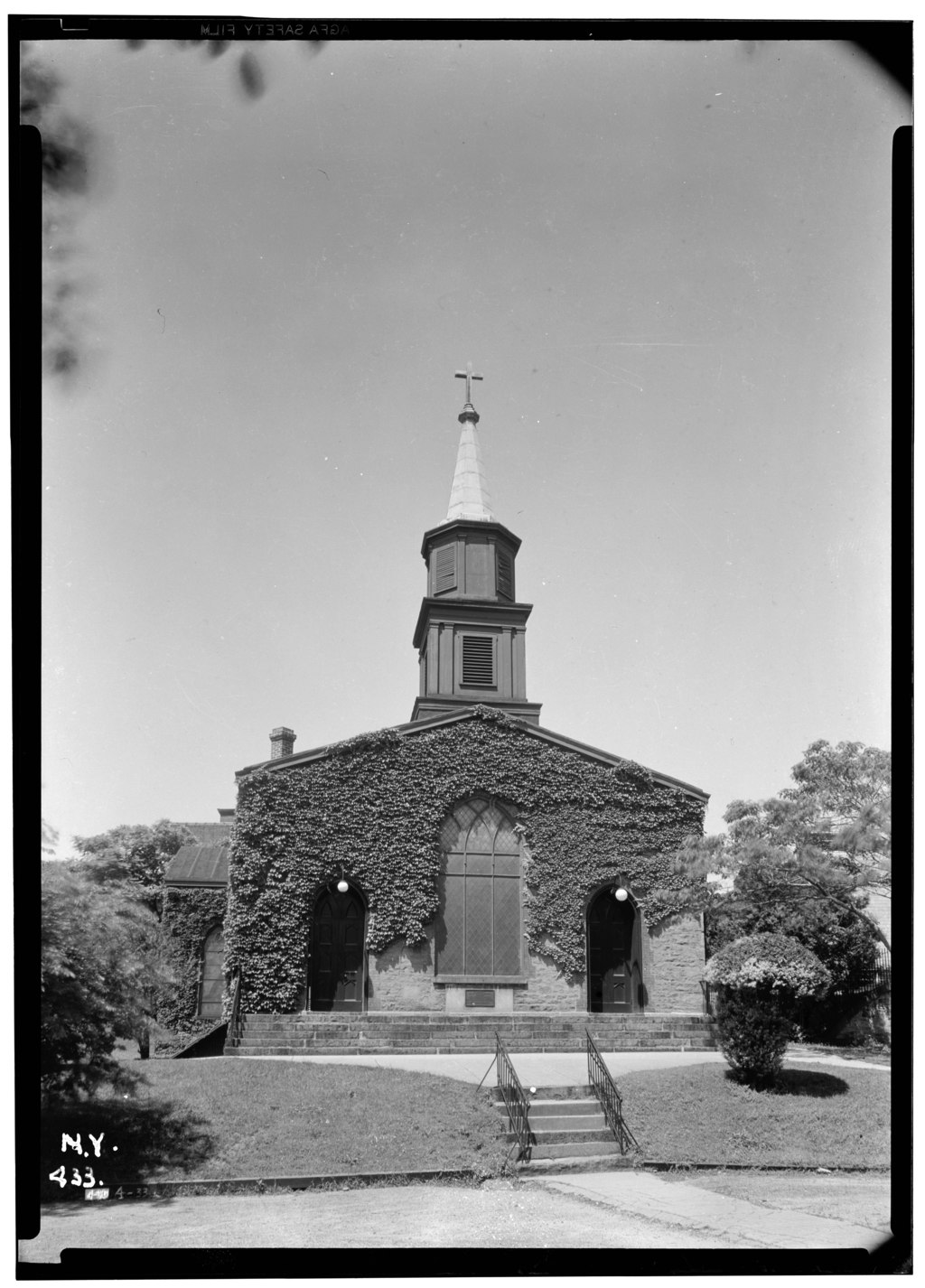
St. Ann’s Church, also known as St. Ann’s Church of Morrisania, is a historic Episcopal church in the Mott Haven, the South Bronx, New York City.
History:
It was built in 1840 and donated by Gouverneur Morris Jr. (1813-1888) as a family monument, the Morrisania Memorial. It is a fieldstone building in the Gothic Revival style with a vernacular Greek Revival style tower. The complex includes the stone parish house added in 1916, late-19th century Sunday School and gymnasium building, and a graveyard that includes the Morris family crypt. Among those whose remains are in the graveyard or crypt are Gouverneur Morris (1752–1816), Lewis Morris (1671–1746), and Lewis Morris(1726–1798).[3]
The complex was listed on the National Register of Historic Places in 1980.[2] It was designated a New York City landmark in 1967.
Biographical sketch for Rev. Samuel Cooke
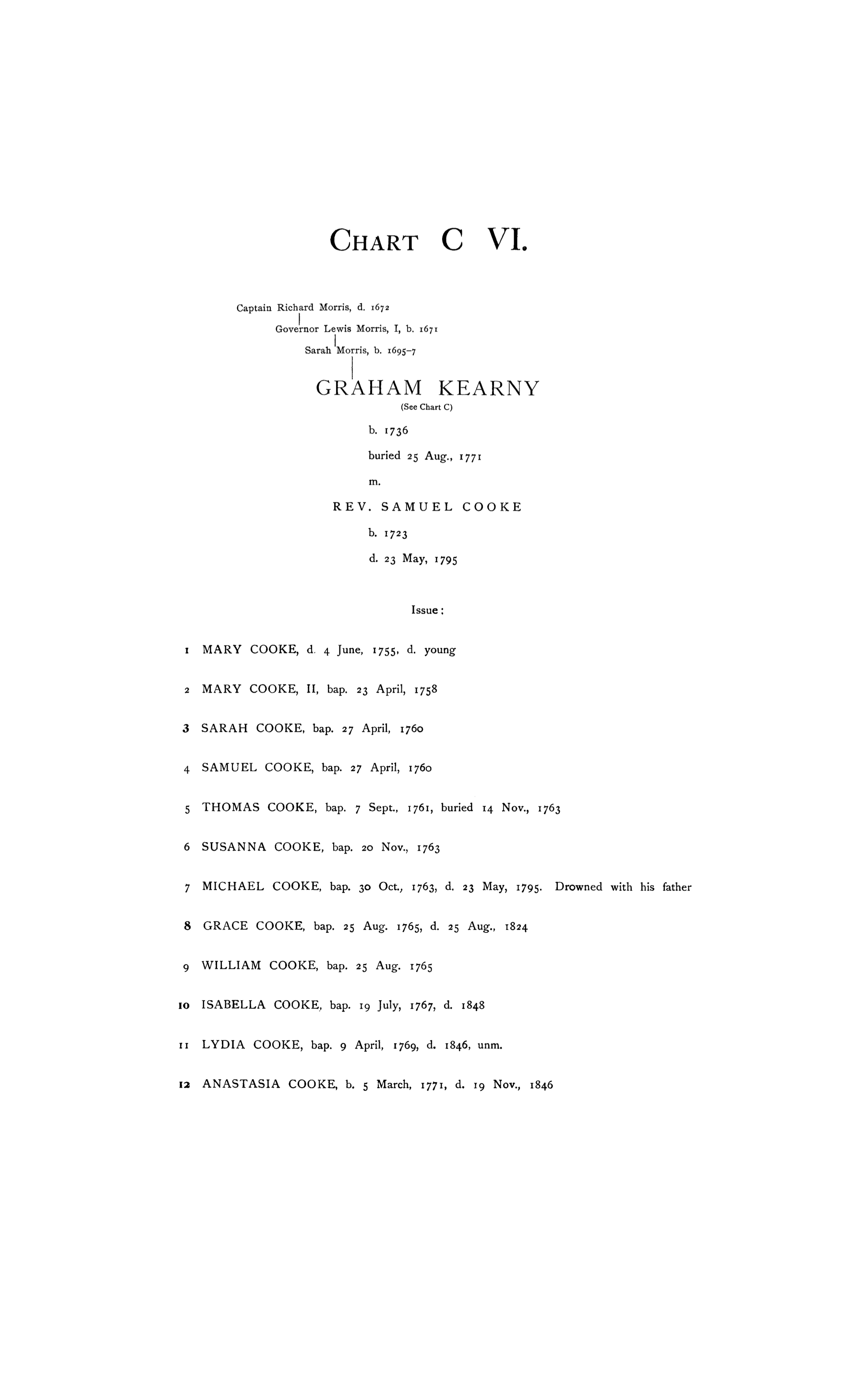
The Reverend Samuel Cooke was the son of Thomas Cooke, collector of Revenue at Yarmouth, England. He studied at Gonville and Caius College, Cambridge University and came to America as a missionary for the Society for the Propagation of the Gospel in Foreign Parts in 1751. He received the honorary degree of M.A. from the College of Philadelphia in 1760. Reverend Cooke was in charge of Monmouth County, New Jersey, Episcopal parishes including Shrewsbury, Middletown, Freehold and other places from 1765 to the Revolution.
He travelled to England on private business in 1775 and returned to America in 1776 as deputy chaplain to the Brigade of Guards. His property in Shrewsbury was confiscated in 1779.
At the end of the war he went into exile in New Brunswick and was appointed Chaplain to the garrison at Saint John. In 1786 he became the first rector of the Episcopal Church at Fredericton and in 1791 he was Commissary to the Bishop of Nova Scotia.
Reverend Cooke was drowned crossing the River St. John in a birch bark canoe, May 23, 1795. His son Michael, who attempted to save his life, perished with him. His wife Graham Kearny, the daughter of Michael Kearny, of Perth Amboy, New Jersey was born in 1736 and died in 1771. They had 7 children including Mary b. 1757 d. 1819; Michael b. 1764 d. 1795; Lydia b. ? d. 1846; Isabella b. 1768 d. 1848 married Lieutenant -Colonel Harris William Hailes, Canadian Regiment of Fencible Infantry, and Anastasia b.1771 d.1846 married Colonel David Ford, pioneer of Morristown, NY.
Rev Samuel Cooke
| BIRTH | 1687 |
|---|---|
| DEATH | 2 Dec 1747 (aged 59–60) |
| BURIAL | Tower Crypt United Congregational Church CemeteryBridgeport, Fairfield County, Connecticut, USA |
| MEMORIAL ID | 21692508 · View Source |
“Late faithfull minister of Stratfield, aged 63 yrs”, Rev. Cooke graduated from Yale College in 1705 and served as Pastor of the Stratfield congregation for 32 years, from 1715 until his death in 1747. Originally interred in old Stratfield Cemetery, his remains were transferred to the Tower Crypt here in 1926 along with those of four other local religious leaders of the early American period.
 My Family tree to Saint Arnulf of Metz (582 - 640)