
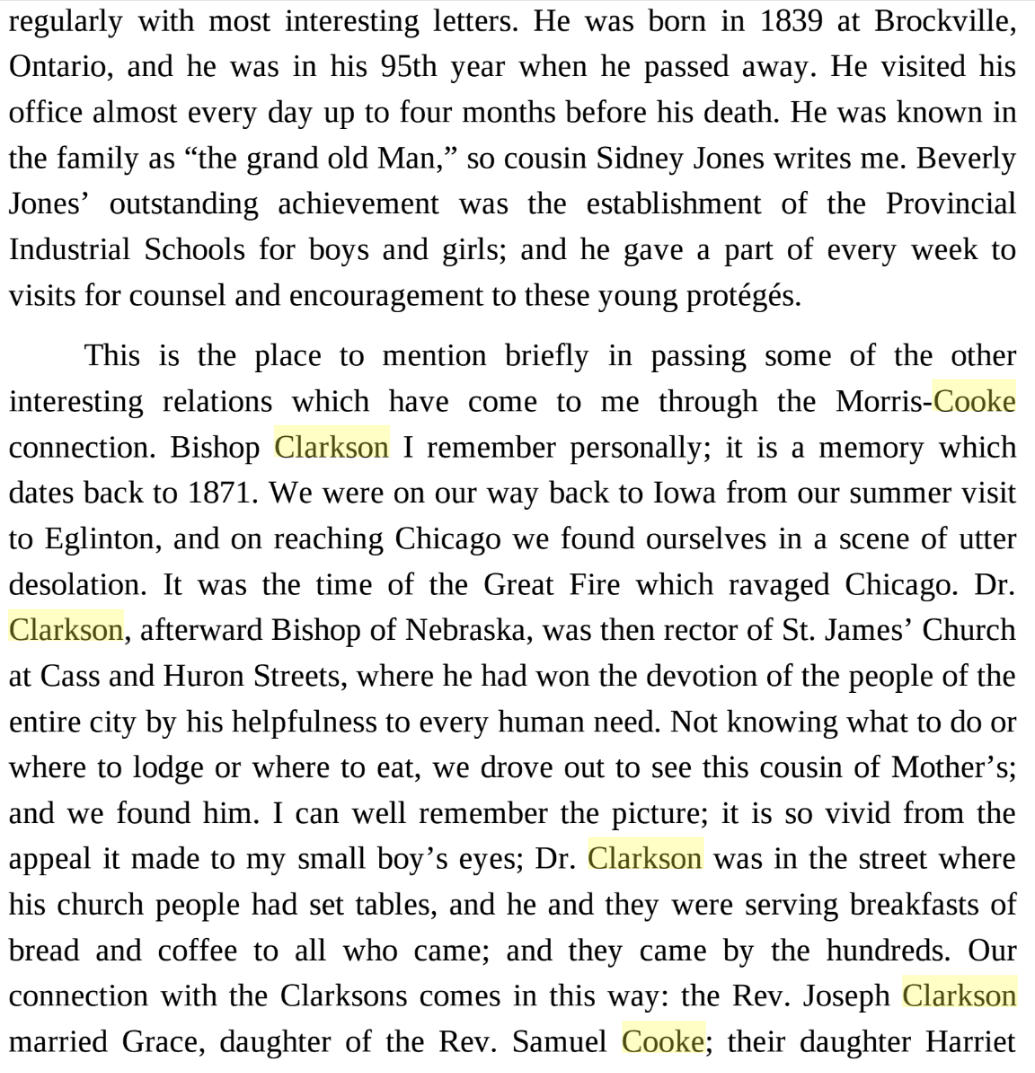
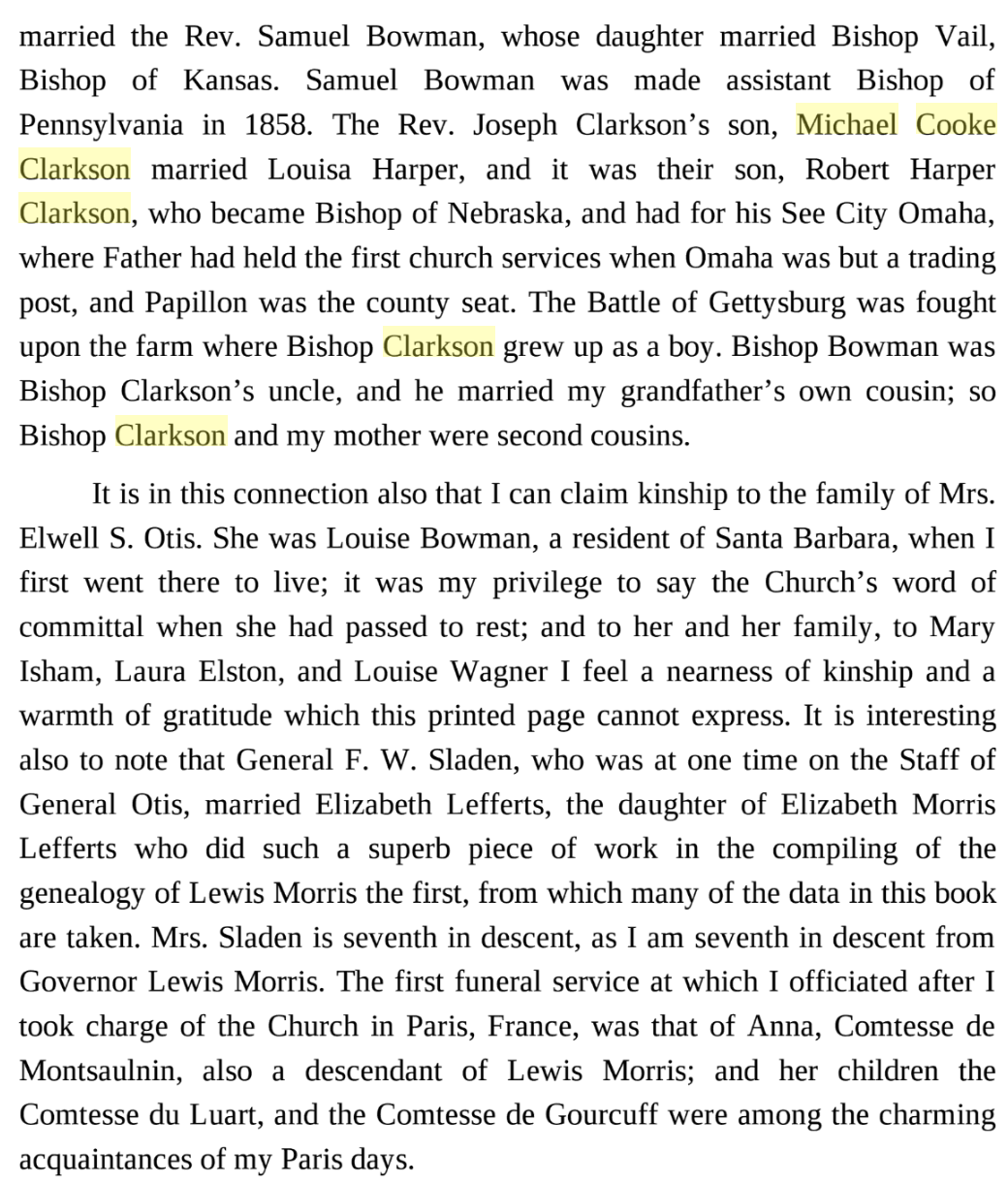
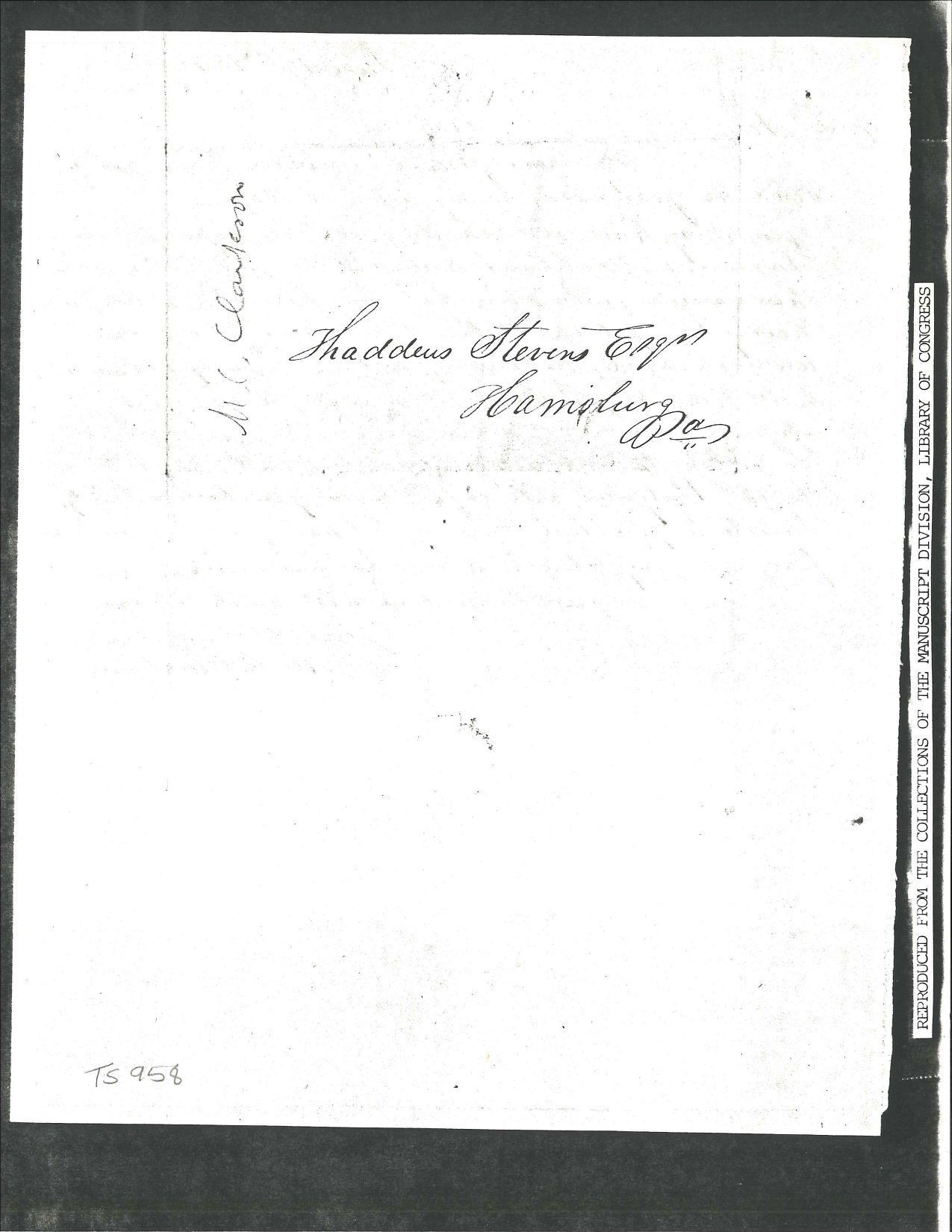
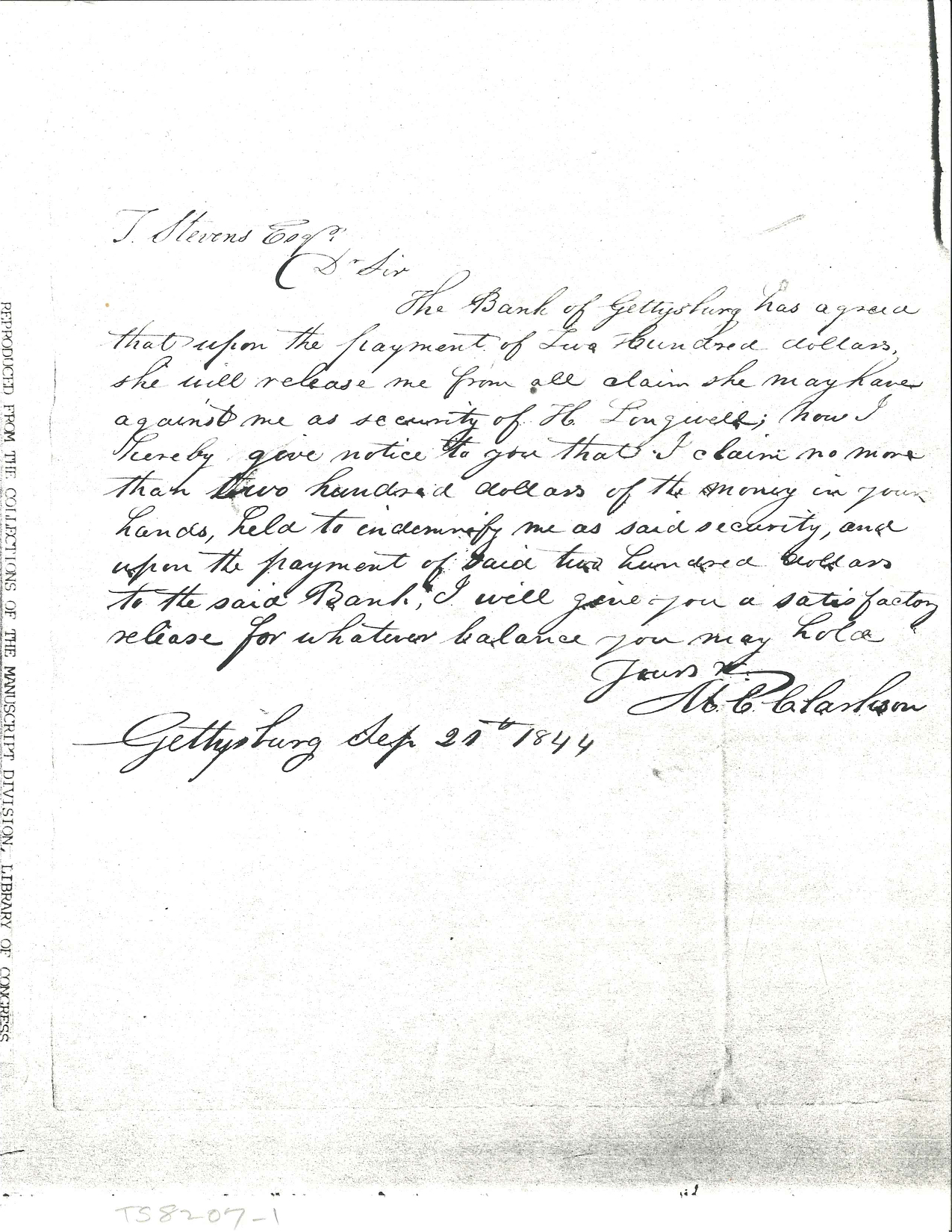
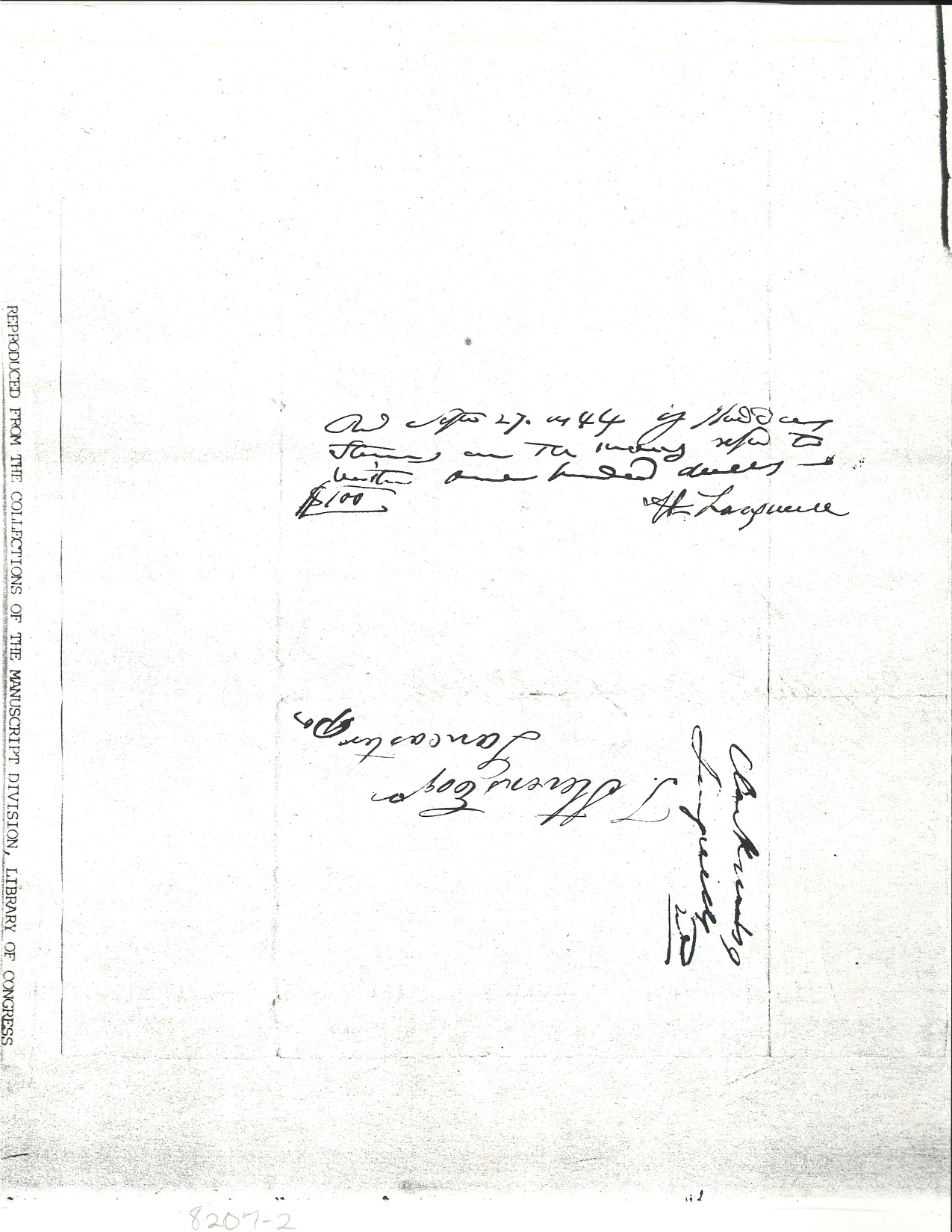
Michael Cooke Clarkson & Thaddeus Stevens, friend of Michael’s Father, Rev. Joseph Clarkson owned the house that became the headquarters of Gen. Robert E. Lee during the Civil War!!!
10 Facts: Lee’s Headquarters at Gettysburg
During the Battle of Gettysburg, the Thompson House served as both the headquarters of Gen. Robert E. Lee and the site of some of the bloodiest scenes of the battle. To expand your knowledge of and appreciation for the Thompson House, please consider these ten facts.
Fact #1: During the Battle of Gettysburg, both commanders made their headquarters at the homes of widows.
Two widows’ houses, located on Cemetery Ridge and Seminary Ridge, served as headquarters for both Gen. George Meade and Gen. Robert E. Lee. Meade made his headquarters at the home of Lydia Leister, a widow with six children. As the soldiers approached, Lydia left her home, returning after the battle to find her house severely damaged from iron and lead, and her yard dotted with dead horses. Gen. Lee made his headquarters at a stone house on Seminary Ridge along the Chambersburg Pike occupied by a 70 year-old widow, Mary Thompson. Mrs. Thompson remained in her home throughout the battle, despite its proximity to intense fighting. As of June 2014, the Leister House is safely within the holdings of the National Park Service. In 2016, preservation efforts by the Civil War Trust brought the Mary Thompson House, and surrounding area back, to its 1863 appearance.

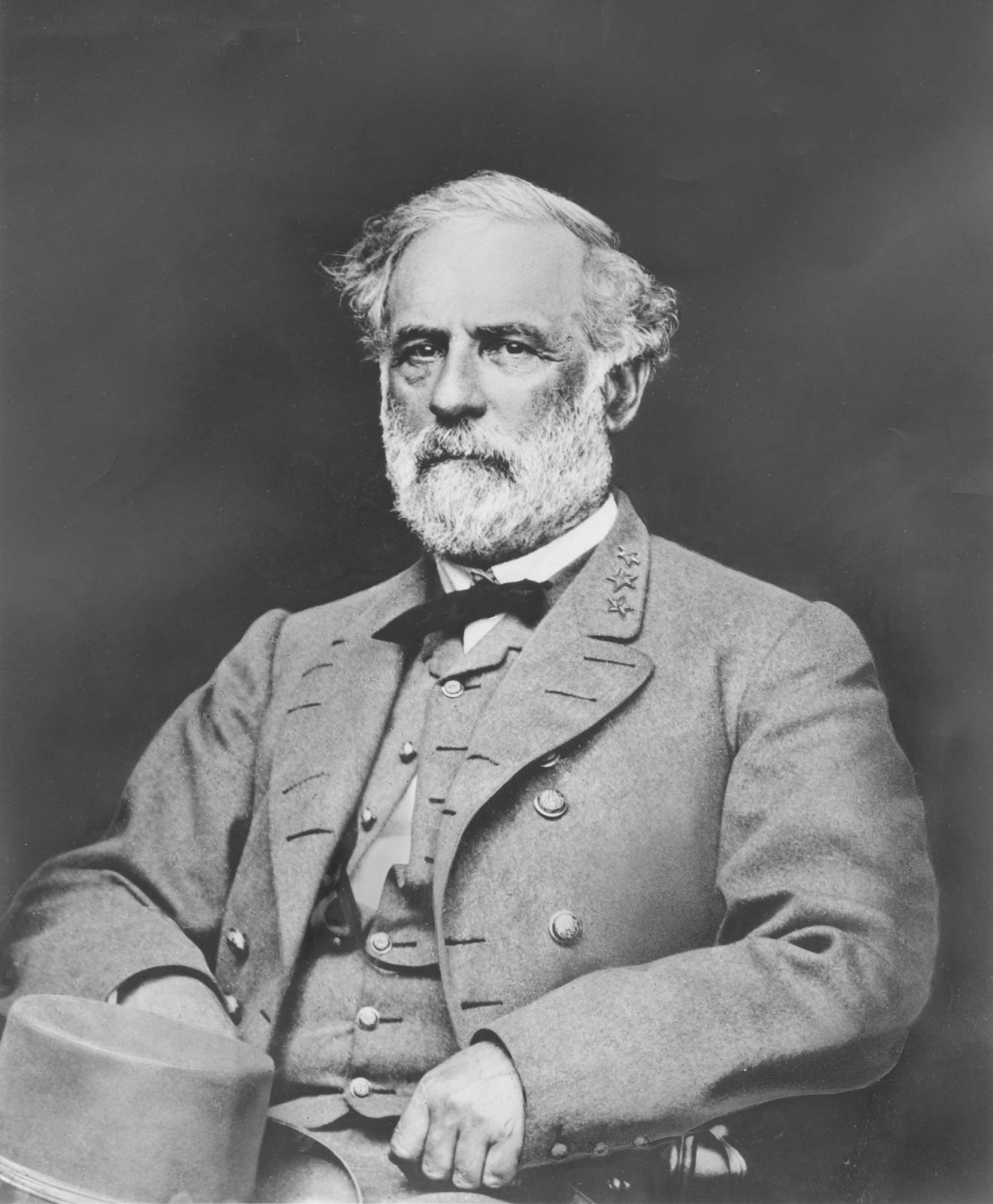
Robert E. Lee stayed at the Mary Thompson House while he worried about J.E.B. Stuart’s absence and cemented his battle plans.Library of Congress
Fact #2: Some of the heaviest fighting on the first day of the Battle of Gettysburg took place around the Thompson house.
Federal soldiers who retreated from McPherson’s Ridge on July 1 fell back to a new position on Seminary Ridge. The Union line crossed the Thompson property and extended to the north and south. Union artillery under Lieut. James Stewart was placed in front of the Thompson House, supported by three regiments of Pennsylvanians. A private from the 143rd Pennsylvania recalled that their regiment formed by the fence “at the old stone house.” Stewart’s artillery hit five regiments of Alfred Scales’ North Carolina Brigade, and with close range canister fire, repulsing the Tarheels for the first time in the brigade’s history, reducing one regiment from 180 men to only 30.
Fact #3: The Union retreat from the Thompson House on Seminary Ridge resulted in the largest capture of Federal soldiers at Gettysburg.
Although the Union center held against Scales’ brigade, the elements of Rodes’ and Pender’s divisions had crumbled the flanks of the Union First Corps. Col. Abner Perrin’s brigade then crashed through the heavy Union artillery fire into the center of the line and forced the Union First Corps to retreat. The position around the Thompson House was the last that Union troops held north of town on July 1. In the midst of the retreat, many ran down the railroad cut that ran near the Thompson House, an act which proved disastrous when their escape route was cut off by the victorious divisions of Pender and Rodes. Of the 28 infantry regiments of the First Corps that were engaged on July 1, 24 of them had 50 or more men captured, for a total of about 2,000 men.
Fact #4: The Thompson House’s location near the center of Robert E. Lee’s battle line made it the ideal location for his headquarters.
When Gen. Lee arrived at Seminary Ridge on July 1st, his army had routed the Union forces, and he immediately established his headquarters at the Thompson House. Four guards were placed around the house, and Lee’s staff members and officers made their camps nearby. Lee took his meals in the Thompson House and even slept there on July 1. Due to the intensity of the battles on July 2 and 3, Lee spent little time at his official headquarters, yet the tents of his headquarters staff remained there and all incoming messages for Gen. Lee were sent to the Thompson House.
Fact #5: The Thompson House served as a hospital for soldiers on both sides.
In the aftermath of the first day’s fighting at Gettysburg, dead and wounded men littered the fields around Seminary Ridge. The proximity of Mary Thompson’s house to the heaviest fighting of the day meant that wounded men, from both sides, were taken to her house. Mary remained at home throughout the battle and cared for the wounded men, using all her clothes and bedding as dressing for the wounded, and wrapping the dead in carpets. According to a contemporary account, when the soldiers left Gettysburg, “an empty stone house and fenceless yard were all that was left the widow of seventy years.”
Fact #6: The area around Gen. Lee’s Headquarters was an important Confederate artillery position on July 2 and 3.
Owing to its central location, Confederate artillerymen found the ridges near Lee’s headquarters to be an admirable artillery position. Early on July 2, two Confederate batteries under Capt. Willis J. Dance were placed near the Thompson House along Seminary Ridge, where they were joined by Capt. Benjamin H. Smith’s Battery of three-inch rifles. Gen. Junius Daniel’s North Carolina brigade supported these guns, which opened fire on Union batteries at 4 o’clock and continued the bombardment until dark. On July 3, the area around the Thompson House was once again a center of activity as Watson and Smith’s batteries were taken from their positions and moved south down Hagerstown Road to support the grand Confederate charge that afternoon.
Fact #7: Lee’s Headquarters has a long and controversial history, continuing long after the Battle of Gettysburg.
After the Battle of Gettysburg, thousands of visitors poured into the town, many eager to see the small house where Gen. Lee had made his headquarters. Mary may have been uncomfortable with her newfound prominence; she left Gettysburg for a short period after the battle, but lived in the house until her death in 1873. In 1896, a fire consumed the inside of the home but left the outside intact. In 1907, the longtime tenant of the home, Emma Feister, was arrested for “keeping a bawdy house.” During this time, articles began appearing in newspapers that challenged the well accepted fact that Lee had made his headquarters at the Thompson House. The most serious allegation came in 1907 when Henry S. Moyer published an article stating that in the spring of 1874, a year after Mary Thompson’s death, he interviewed a woman residing in the Thompson House who stated that Gen. Lee had never been present there. Moyer’s most substantial evidence comes from a source he calls “a good friend,” who claimed that while speaking with Gettysburg historian, John Bachelder, Bachelder revealed that he had interviewed Lee, who stated that his headquarters were located in an apple orchard. The only evidence that this interview between Lee and Bachelder ever took place, however, comes from Henry Moyer’s 1907 article.
Fact #8: The widow Mary Thompson’s house was owned by the Radical Republican Pennsylvania Representative Thaddeus Stevens.
In 1833, Michael Clarkson, an enterprising Gettysburg businessman, purchased a tract of land along the Chambersburg Pike and built the stone house that 30 years later would become the headquarters of Gen. Robert E. Lee. Clarkson was a prominent figure in Gettysburg, and a close friend of Thaddeus Stevens, a significant player in early Gettysburg industry and politics. Joshua Thompson, his wife Mary, and their eight children became tenants of the stone house. Joshua was a habitual drunk who left Gettysburg and died sometime before 1850, leaving Mary to raise their children. When Clarkson ran into financial trouble and his properties were put up for auction in 1846, Stevens acquired the house in which Mary Thompson lived. It remained in his possession until his death in 1868. Stevens had made a contract with Joshua Thompson before he died, and he purchased the house to ensure the welfare of Mary and her children.
Fact #9: Lee’s Headquarters marker on the Gettysburg Battlefield is almost certainly in the wrong place.
After Henry Moyer published his article in 1907, some historians chose to believe Moyer’s description of Lee’s headquarters, ignoring the numerous accounts, such as written accounts from Lee’s staff members and Gettysburg residents, that name the Thompson House as Lee’s official headquarters. In 1919, the Gettysburg National Park Commission erected a marker that placed Lee’s headquarters across the street from the Thompson House. Inscribed on the marker is a quote from the Moyer article: “‘My headquarters were in tents in an apple orchard back of the Seminary along the Chambersburg Pike.’-Robert E. Lee.” This quote was fabricated by the War Department and was never actually spoken or written by Lee. Despite this marker’s falsification, the National Park Service position is that Lee’s headquarters was established in a small tent on the south of the Chambersburg Pike, along with his staff and aides.
Fact #10: Lee’s Headquarters and the previously unpreserved acreage around it was saved in early 2015 by the Civil War Trust
Even though the house has been consistently referred to in first-hand accounts as Lee’s headquarters, and it was in the center of fierce fighting on July 1, the house was not purchased by the Gettysburg Battlefield Memorial Association, the War Department, or the National Park Service. It was converted into General Lee’s Headquarters Museum in 1921, and remained privately owned until 2015.
After completing the acquisition of the property in early 2015, the Civil War Trust undertook an effort to restore the landscape to reflect its appearance on July 1, 1863.

The house of Mary Thompson, also known as Lee’s Headquarters, is on the north side of Chambersburg Road (US 30) on Seminary Ridge on the west side of Gettysburg, Pennsylvania. The stone house was built in 1833 by Michael Clarkson. In 1846 Clarkson ran into financial difficulties and his good friend, future Republican Congressman Thaddeus Stevens, purchased the house at a Sheriff’s auction in trust for Mary Thompson. They would be co-owners until Stevens’ death in 1868. Today the house has been restored by the Civil War Trust to its appearance at the time of the Battle of Gettysburg. At the time of the Battle Mary was 70 years old. The area around the Thompson house was one of the bloodiest places on the battlefield on July 1. In spite of the danger, Mary Thompson stayed on at the house. When the Union survivors retreated and the fighting moved on into the city her house became a hospital for the men of both sides. Mary and her neighbors cared for the wounded. The house was an obvious candidate for Robert E. Lee’s headquarters, being at the center of the Confederate lines. Although Lee spent much of his time in the saddle at Gettysburg, he is known to have taken a meal and slept in the house on July 1. After the battle Mary was left with little more than the empty stone house, her linens used for bandages, her carpets buried with the dead, and her fences gone for firewood. Mary left Gettysburg for a time after the battle, but returned and lived in the house until her death in 1873.
The Selected Papers of Thaddeus Stevens, Vol 1:
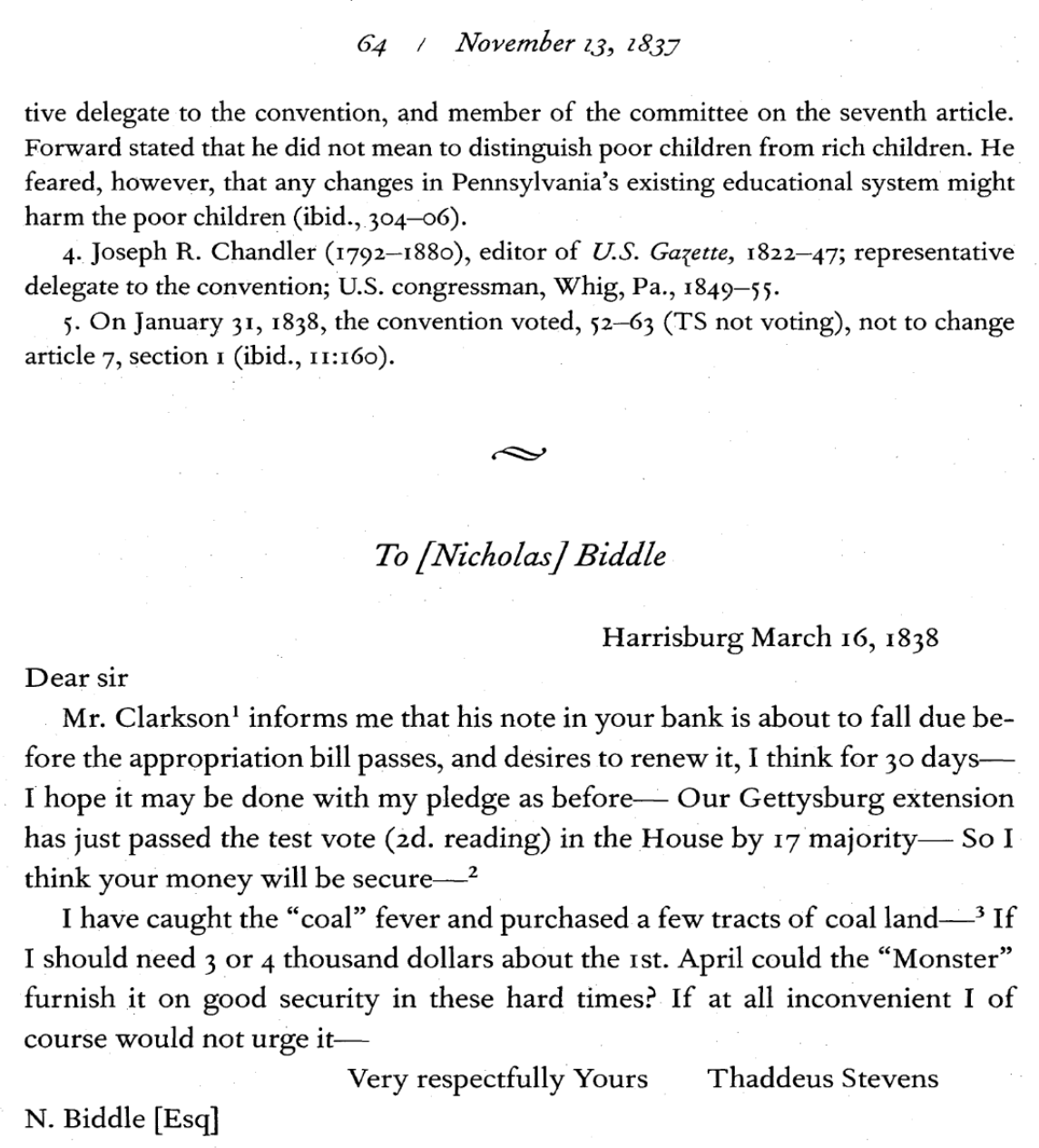
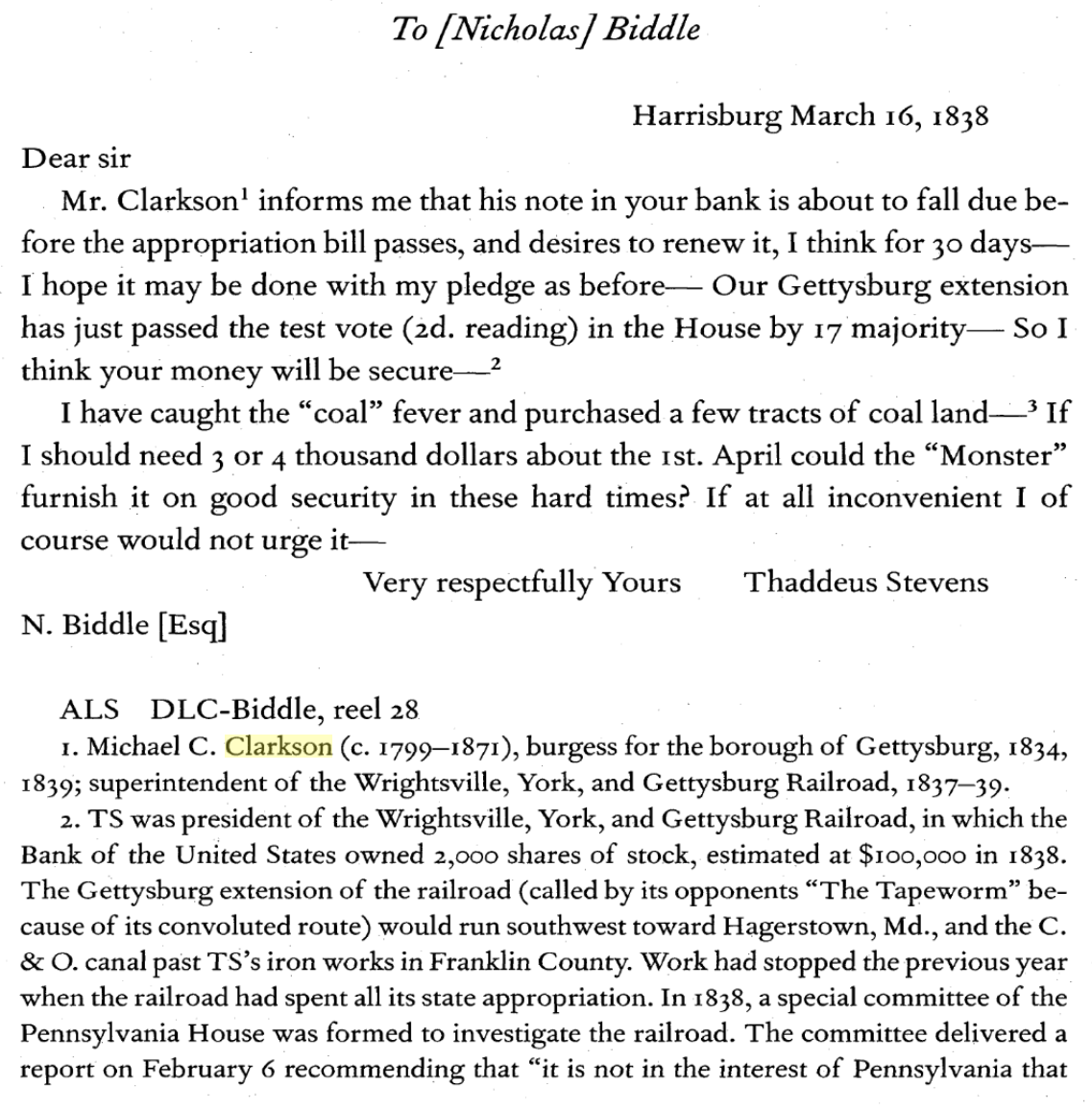
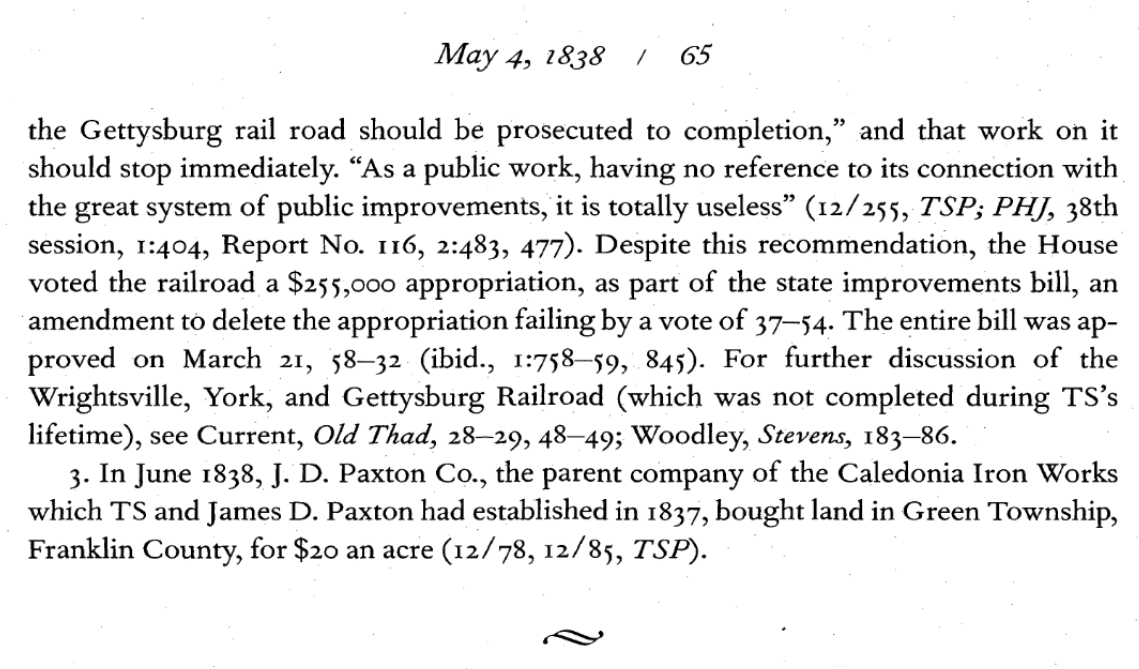
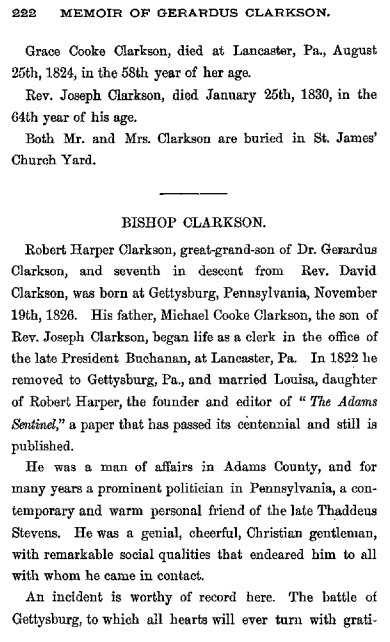
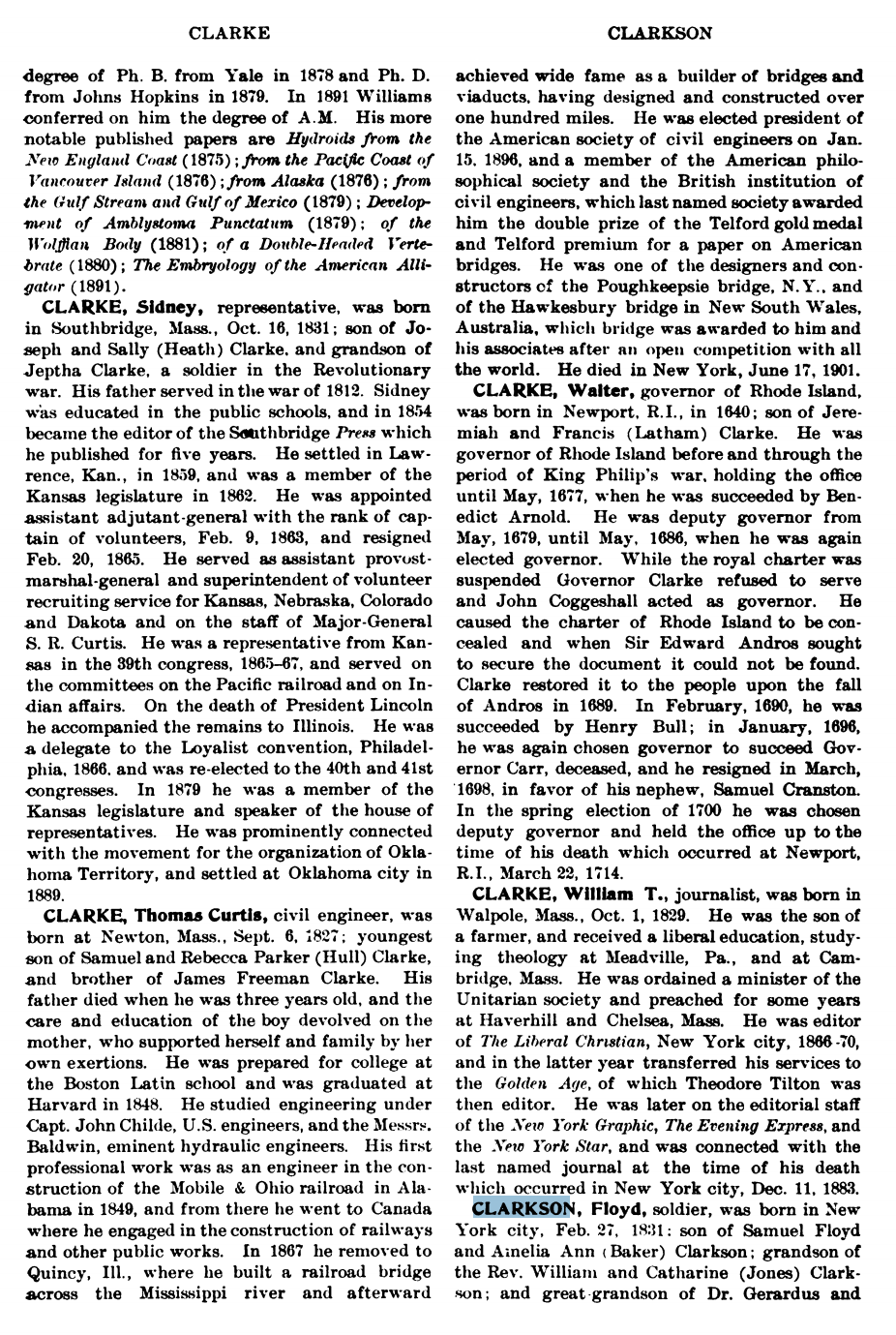
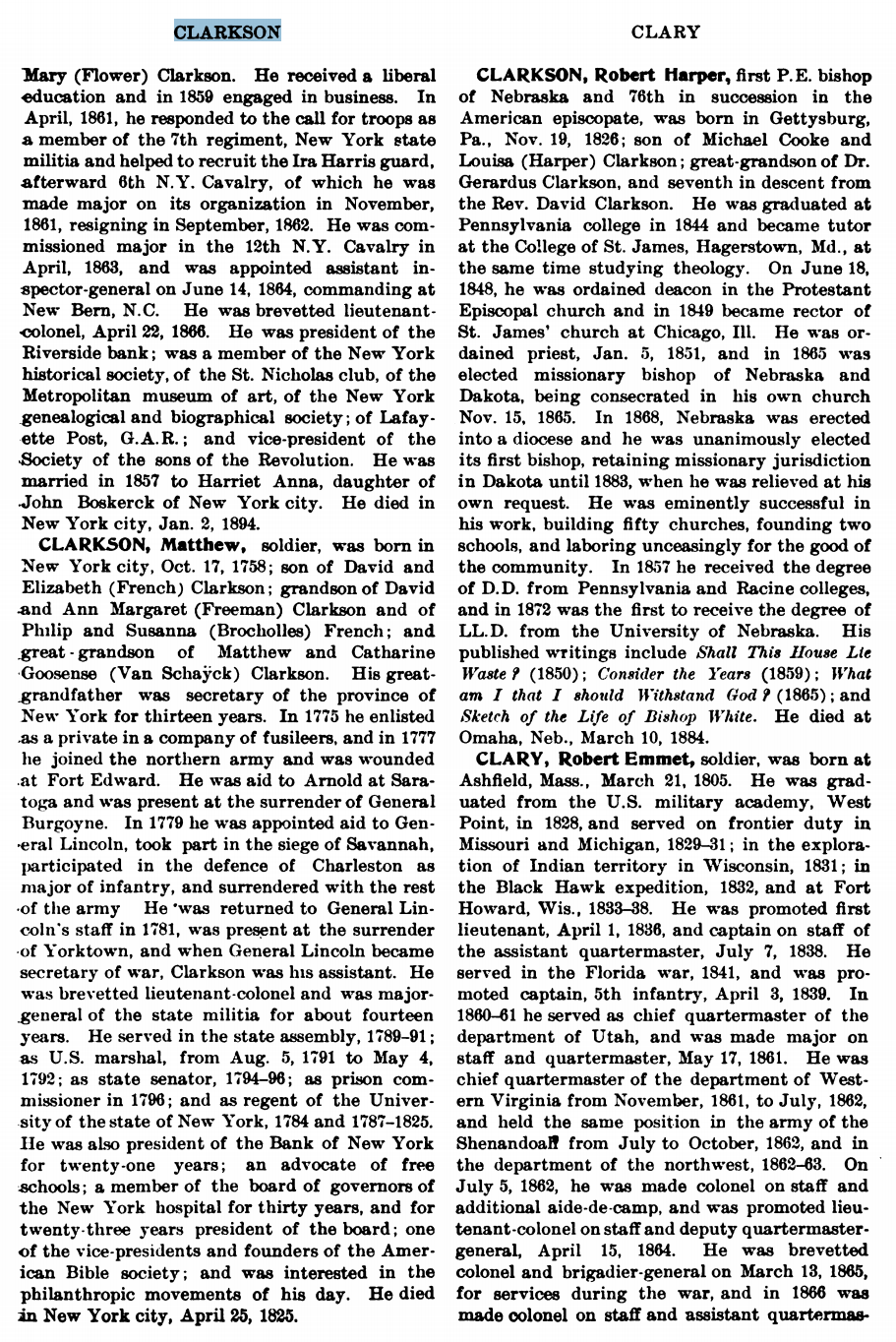
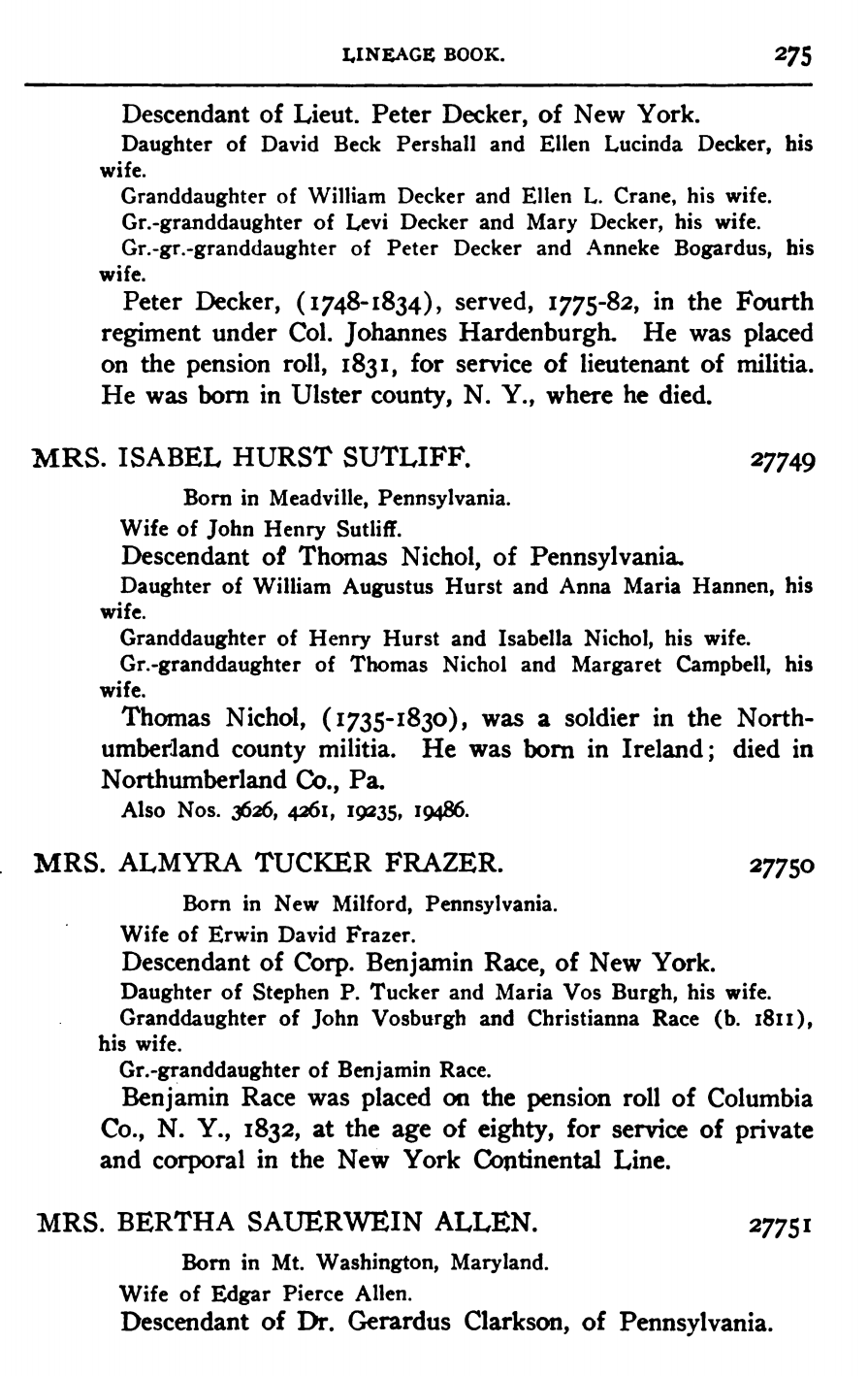
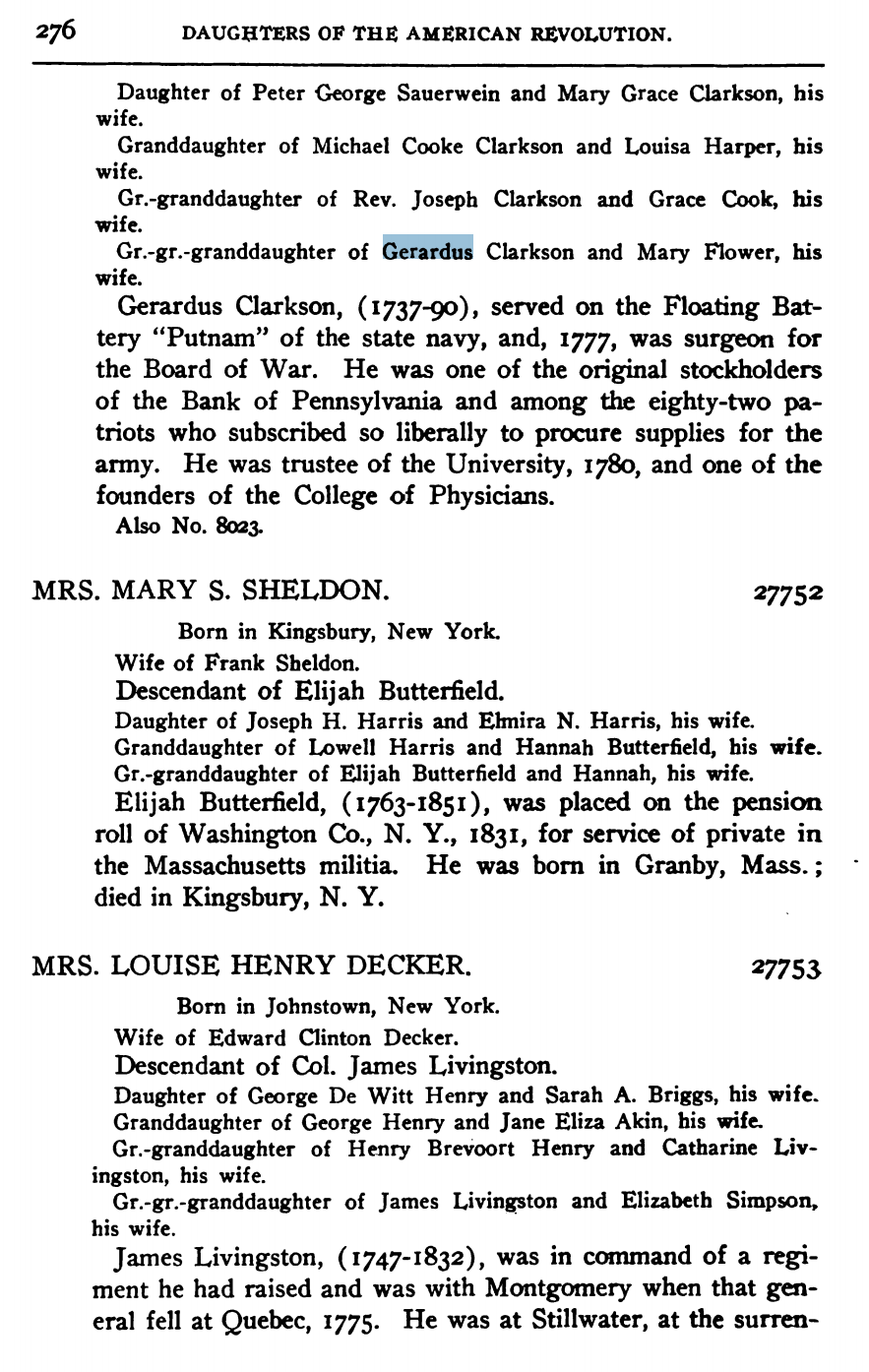
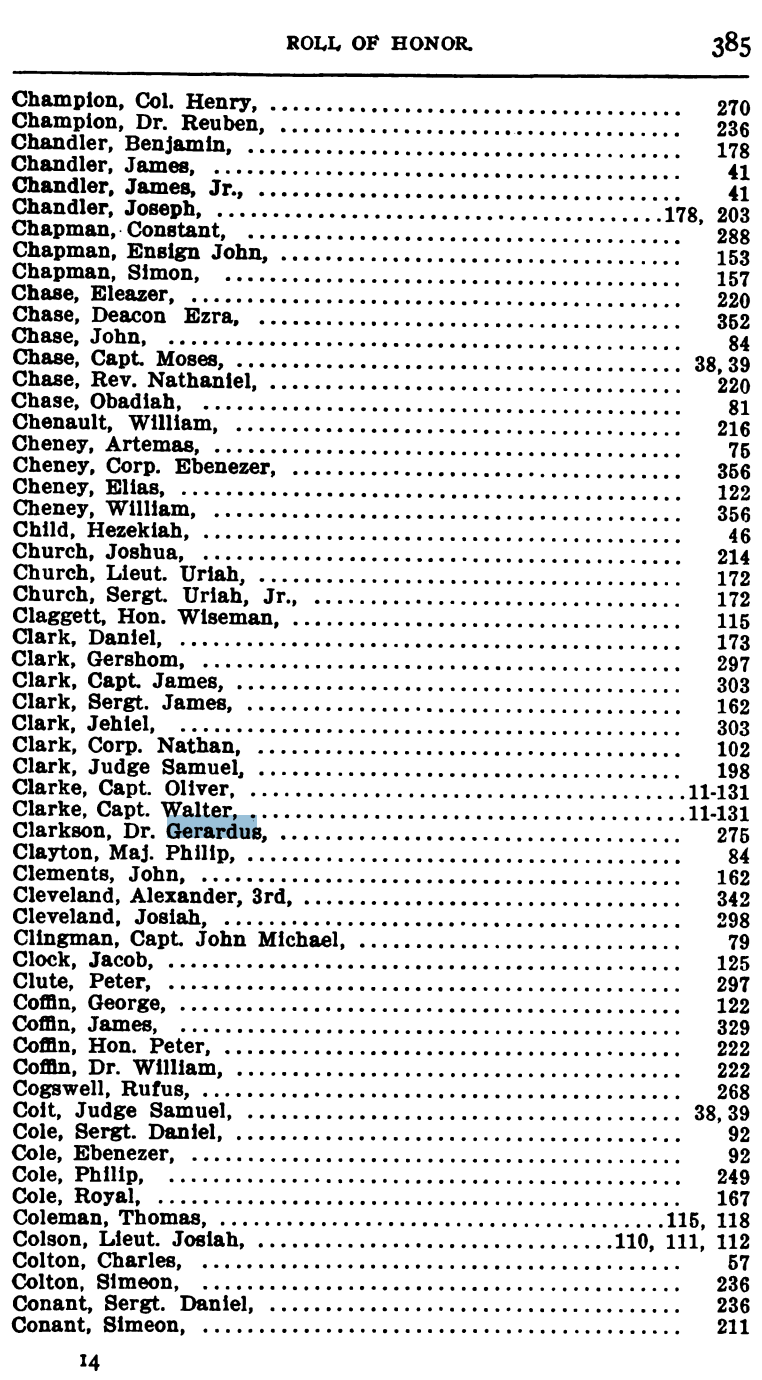
More published writings I want to find:
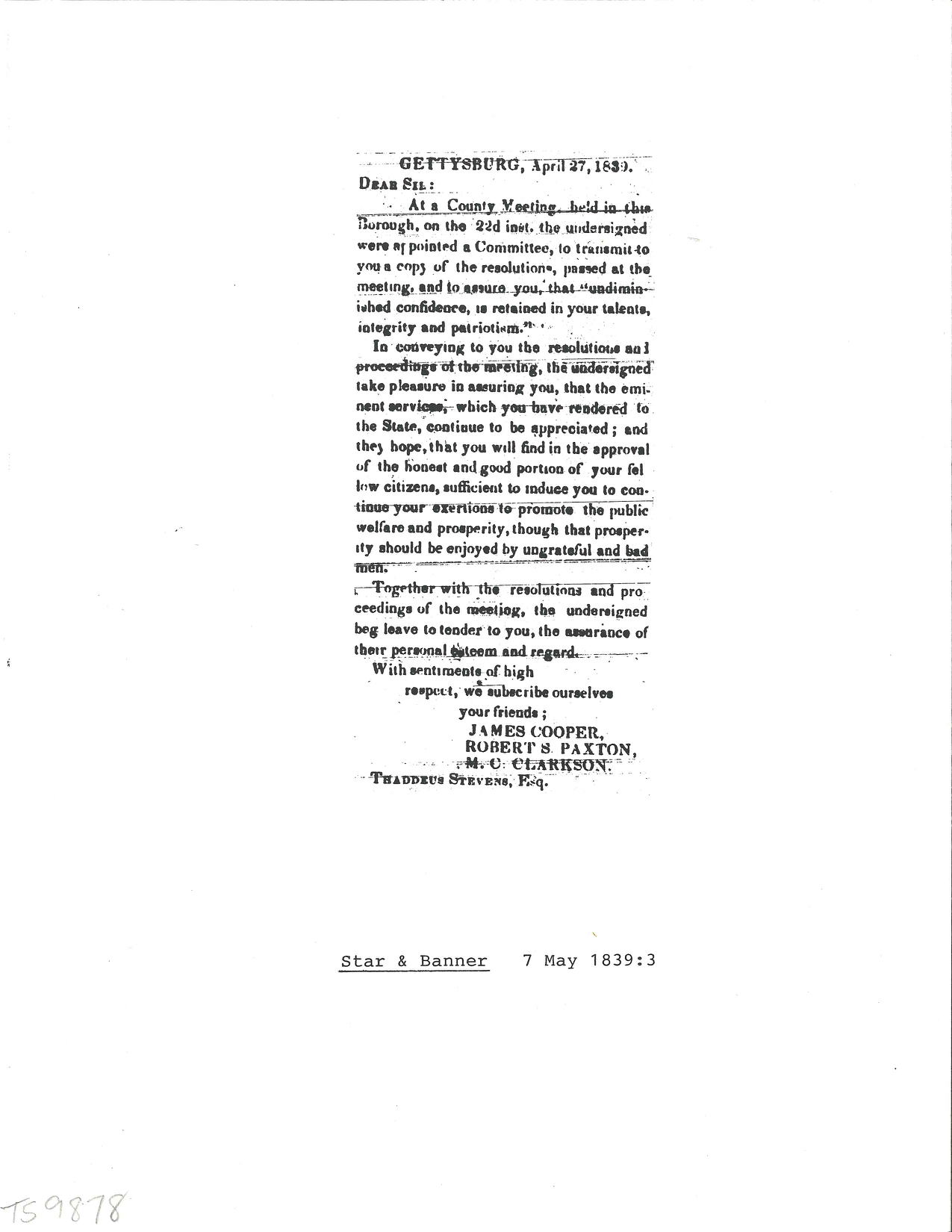
Folder 129 Letter printed in the newspaper from the committee, 27 April 1839. Thaddeus Stevens, M. C. Clarkson, James Cooper and Robert Paxton were members of the committee. Star & Banner, 7 May 1839.
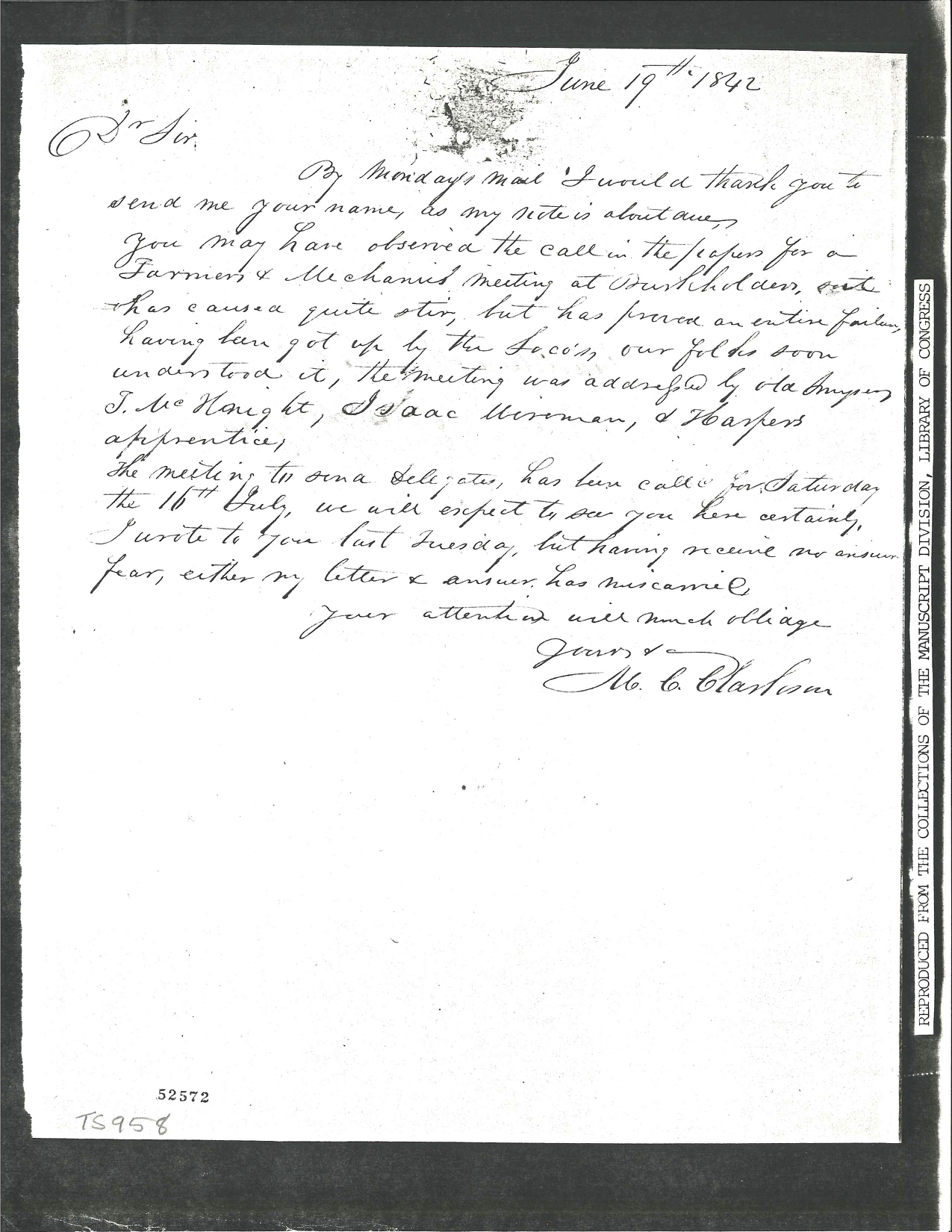
Folder 195 Letter from M. C. Clarkson. 19 June 1842.
Folder 217 Letter from M. C. Clarkson. 27 September 1844.
Folder 305 Letter from Joseph P. Clarkson. 19 December 1849.
Folder 934 Letter from Thaddeus Stevens to Abraham Lincoln recommending Thaddeus Stevens Clarkson to a commission in the regular service. 9 February 1863.
LancasterHistory
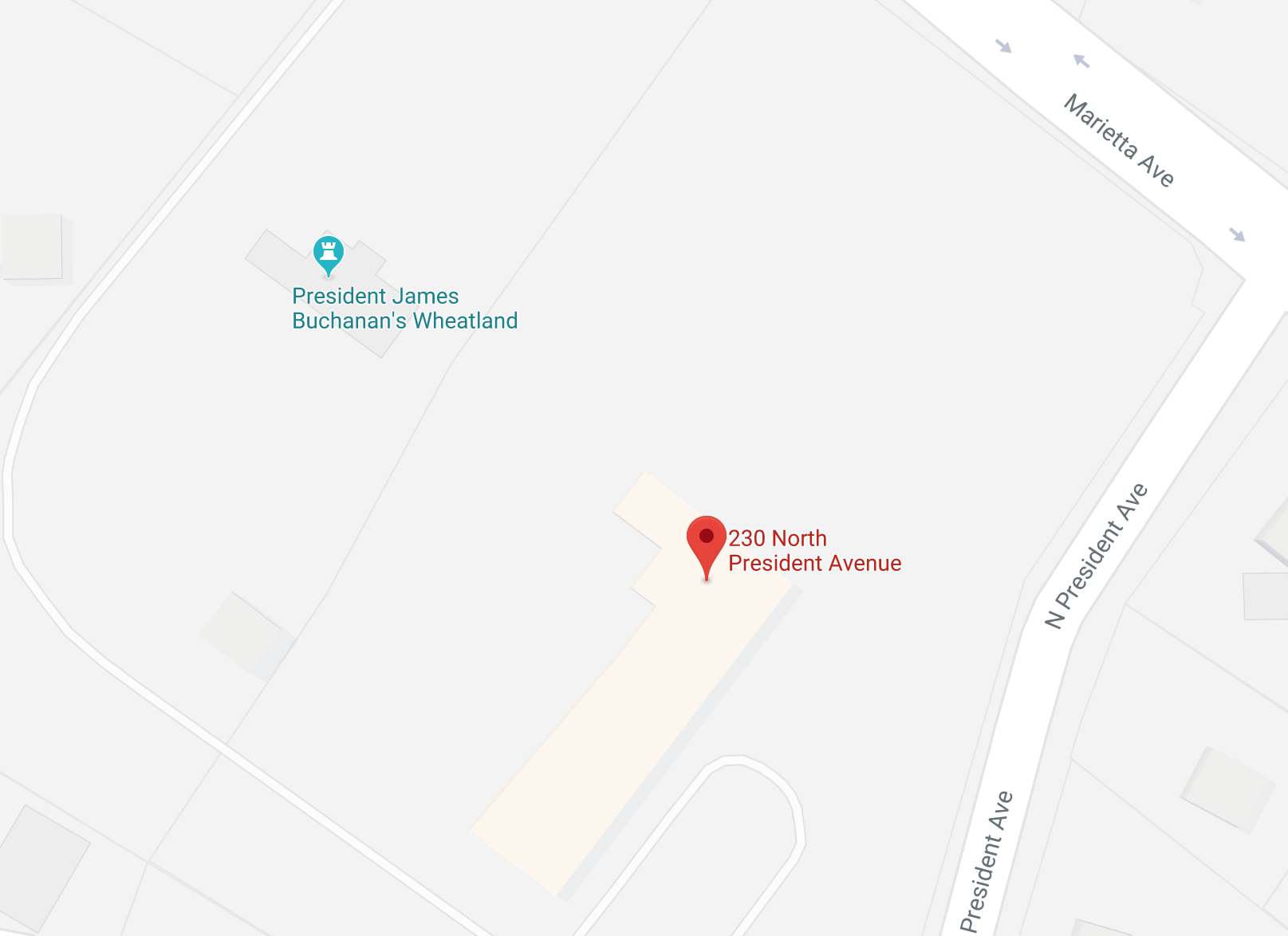
230 North President Avenue
Lancaster, PA 17603
Phone: (717) 392-4633
Email: info@lancasterhistory.org
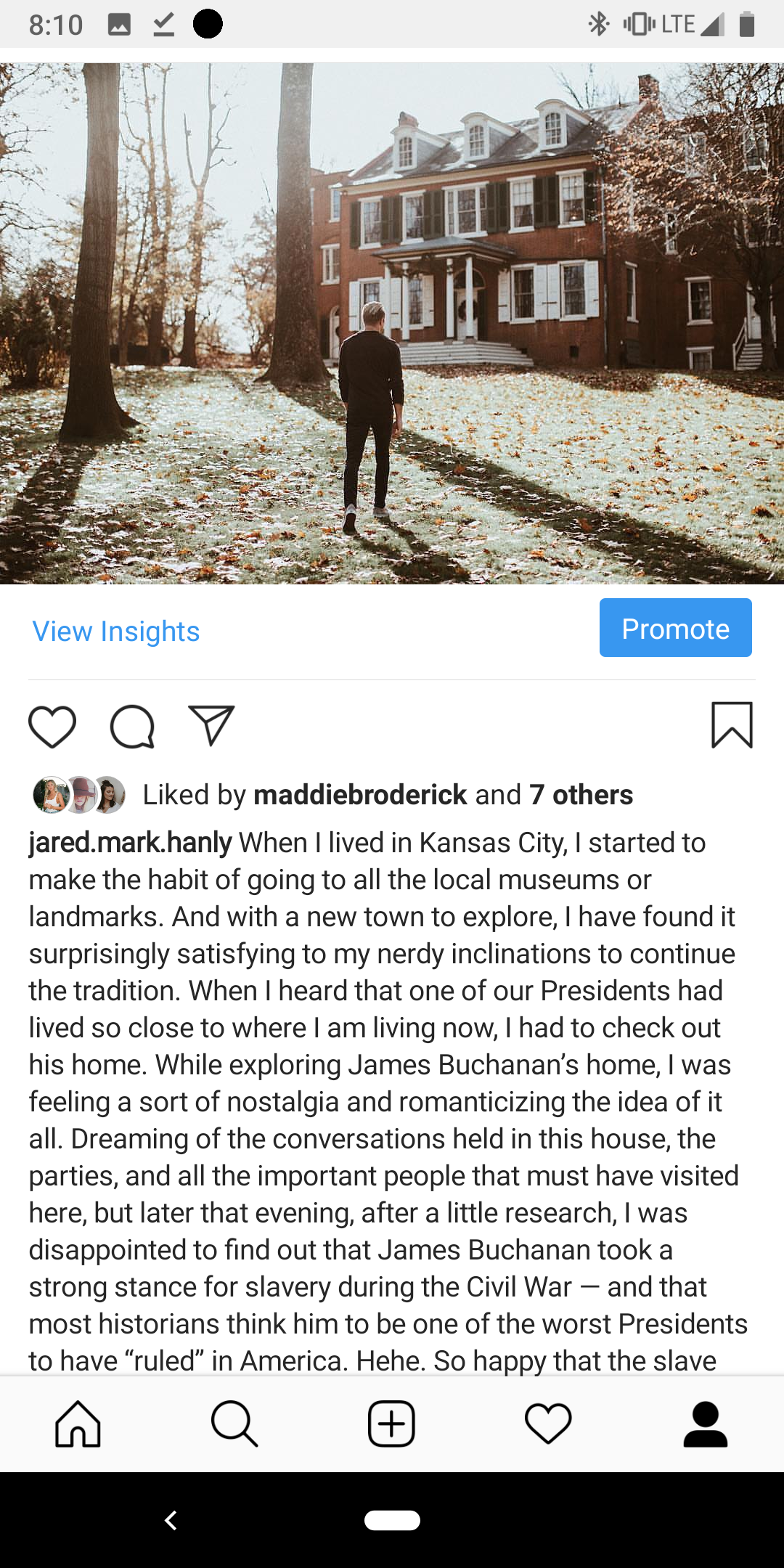
This post below is at President Buchanan’s Residence. Michael Clarkson was a clerk here. The building behind it just mentioned has these letters from Thaddeus Stevens and from Michael Clarkson… Even the one from Thaddeus Stevens to Abraham Lincoln recommending Thaddeus Stevens Clarkson for service in the war.
http://files.usgwarchives.net/pa/adams/history/area/chapter-xxv.txt
The Laws of the Commonwealth of Pennsylvania:
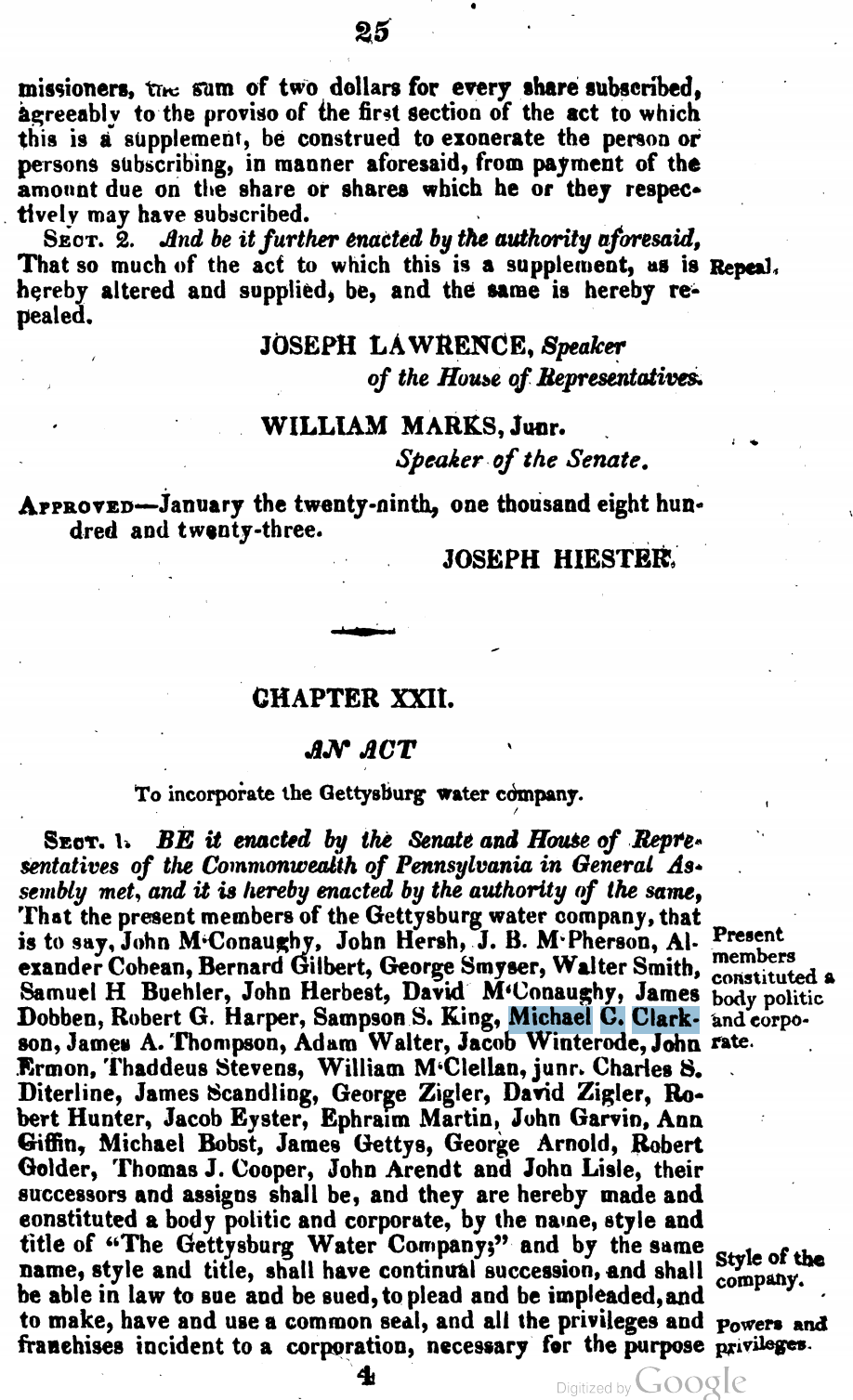
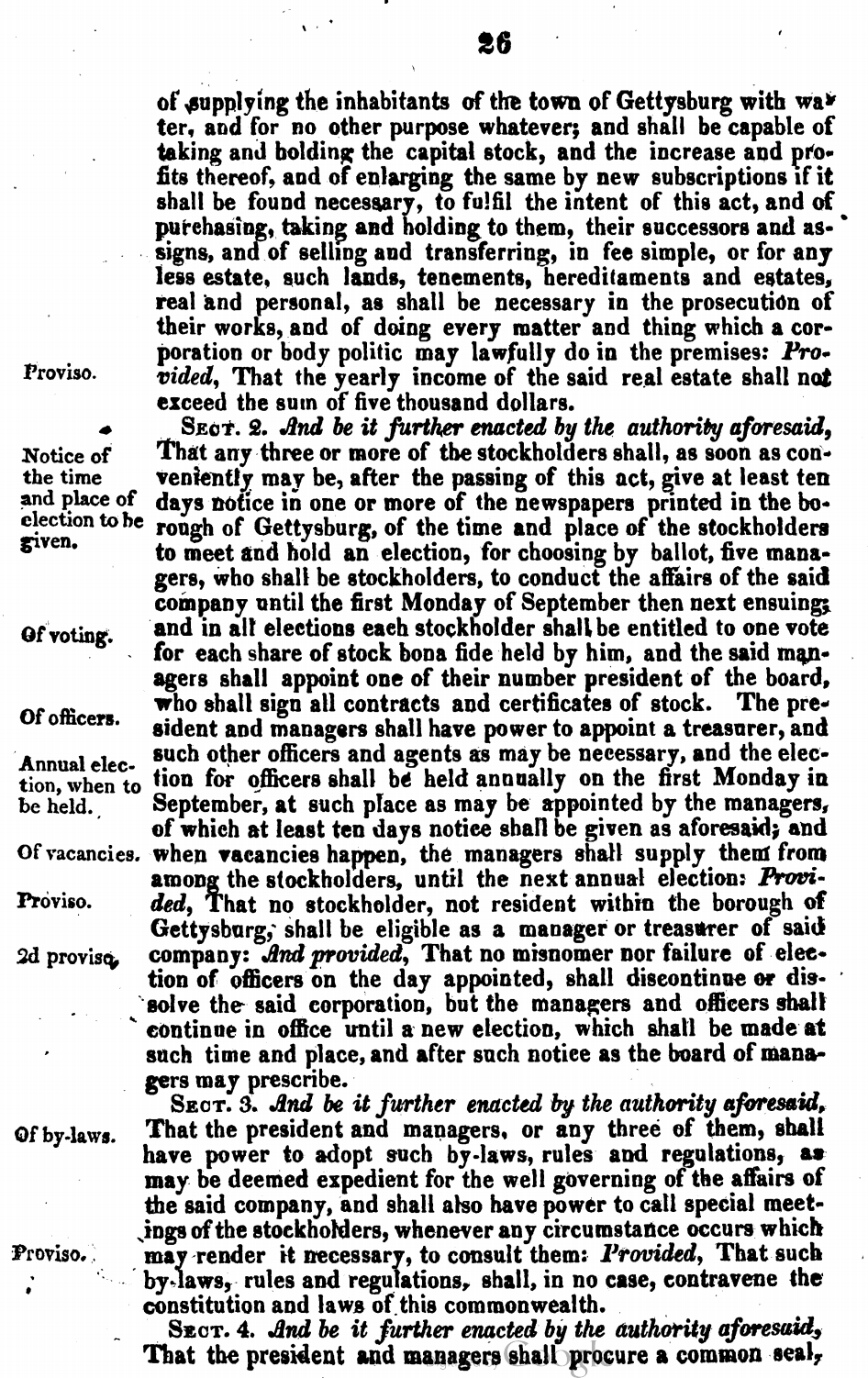
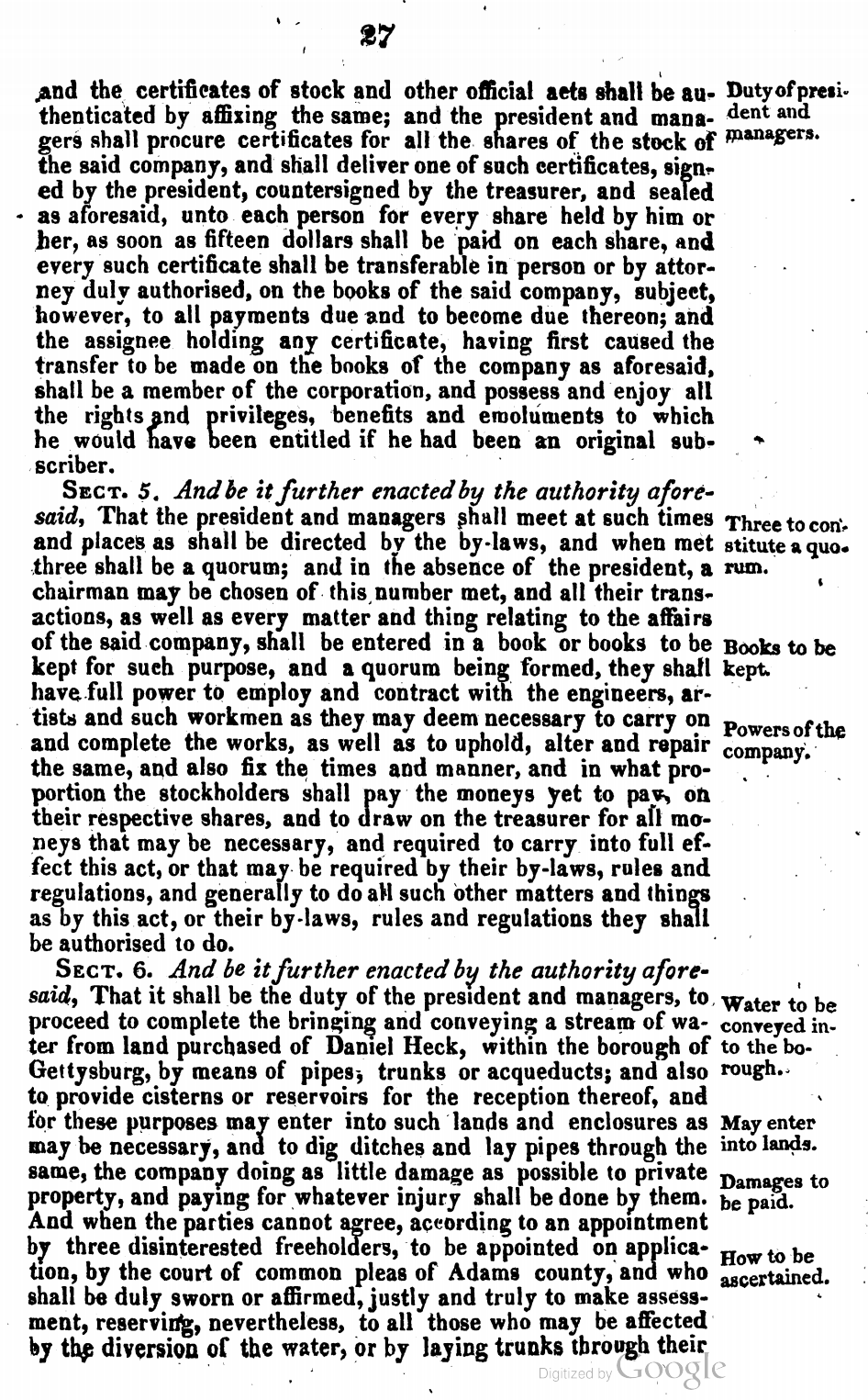
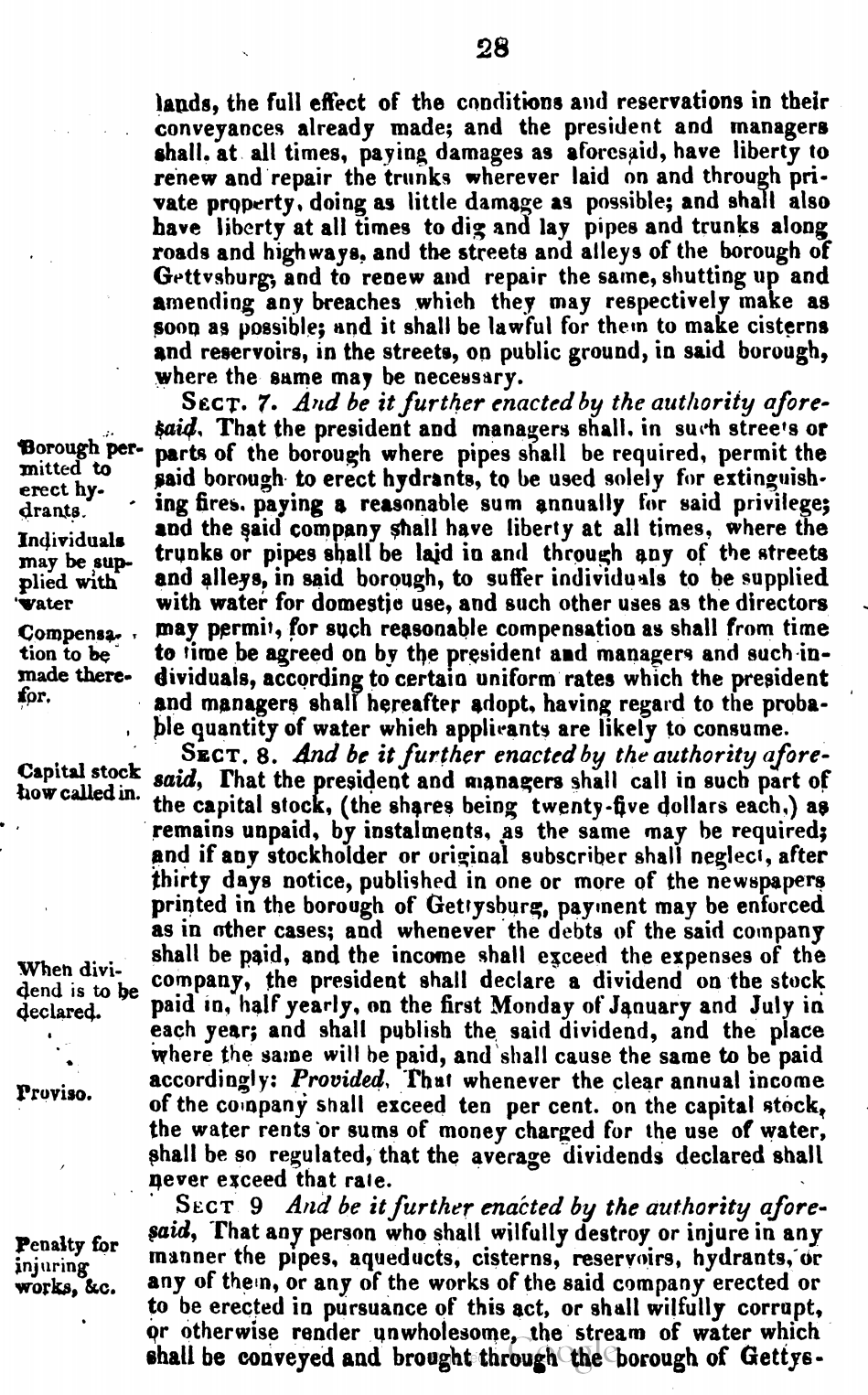
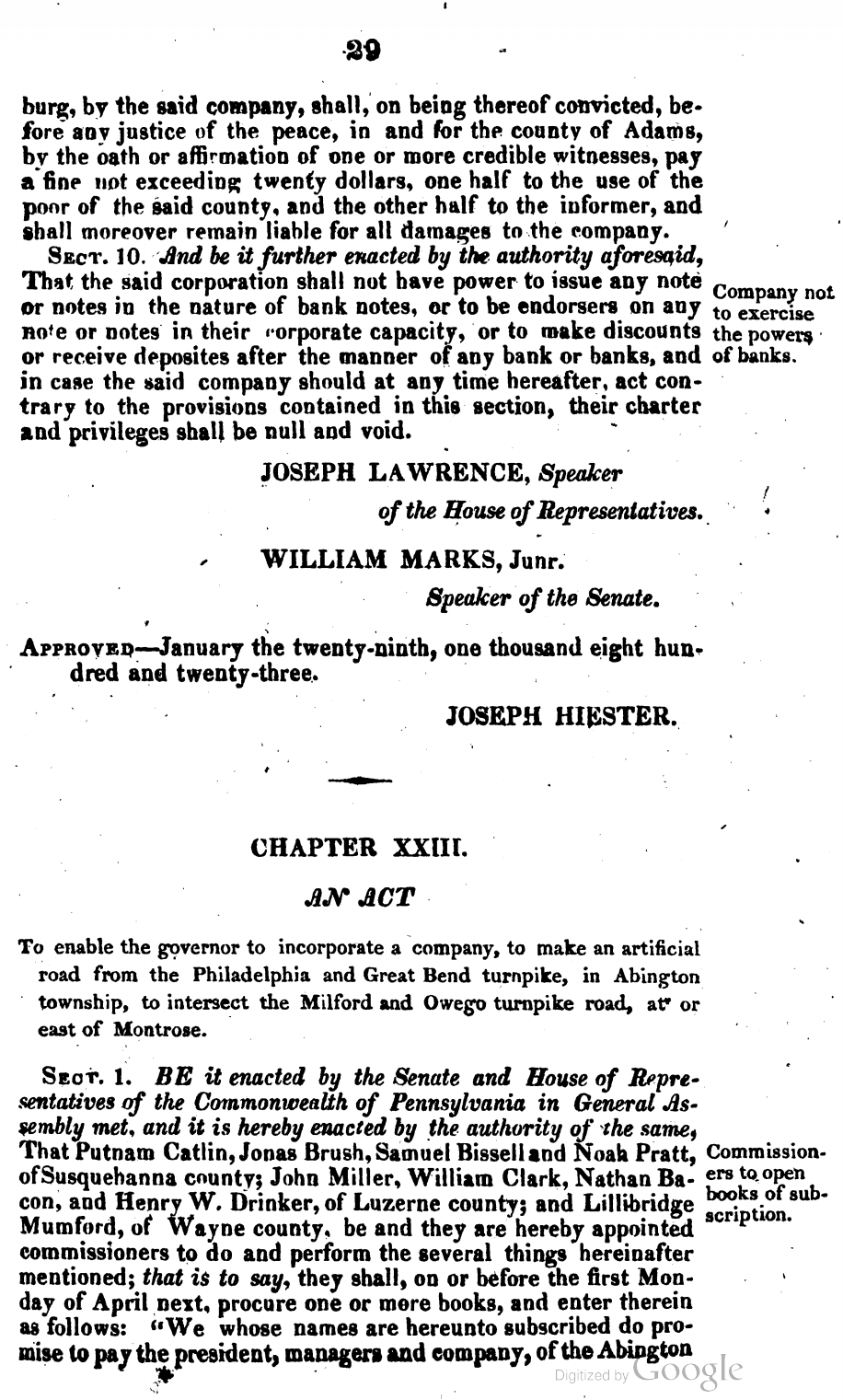
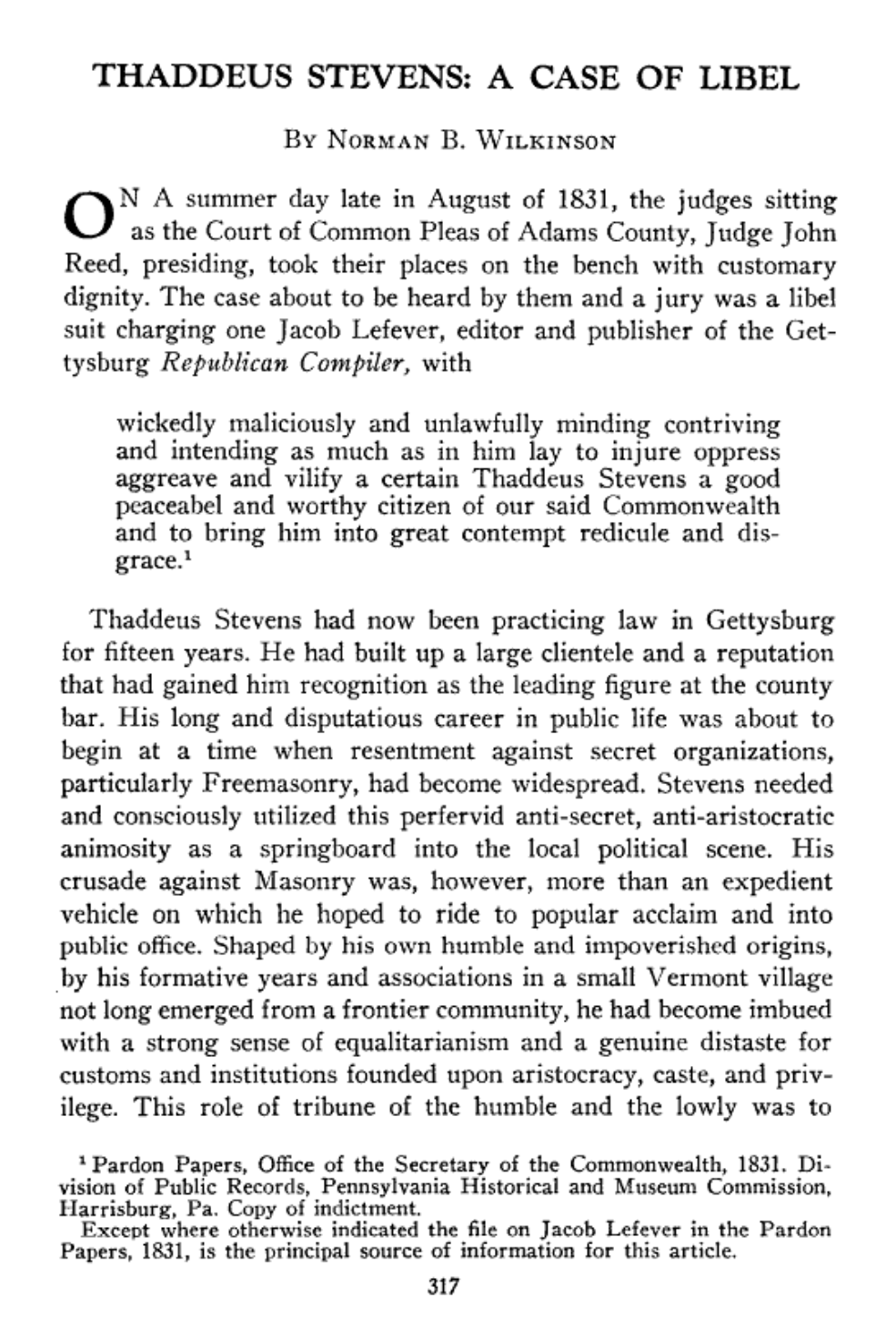
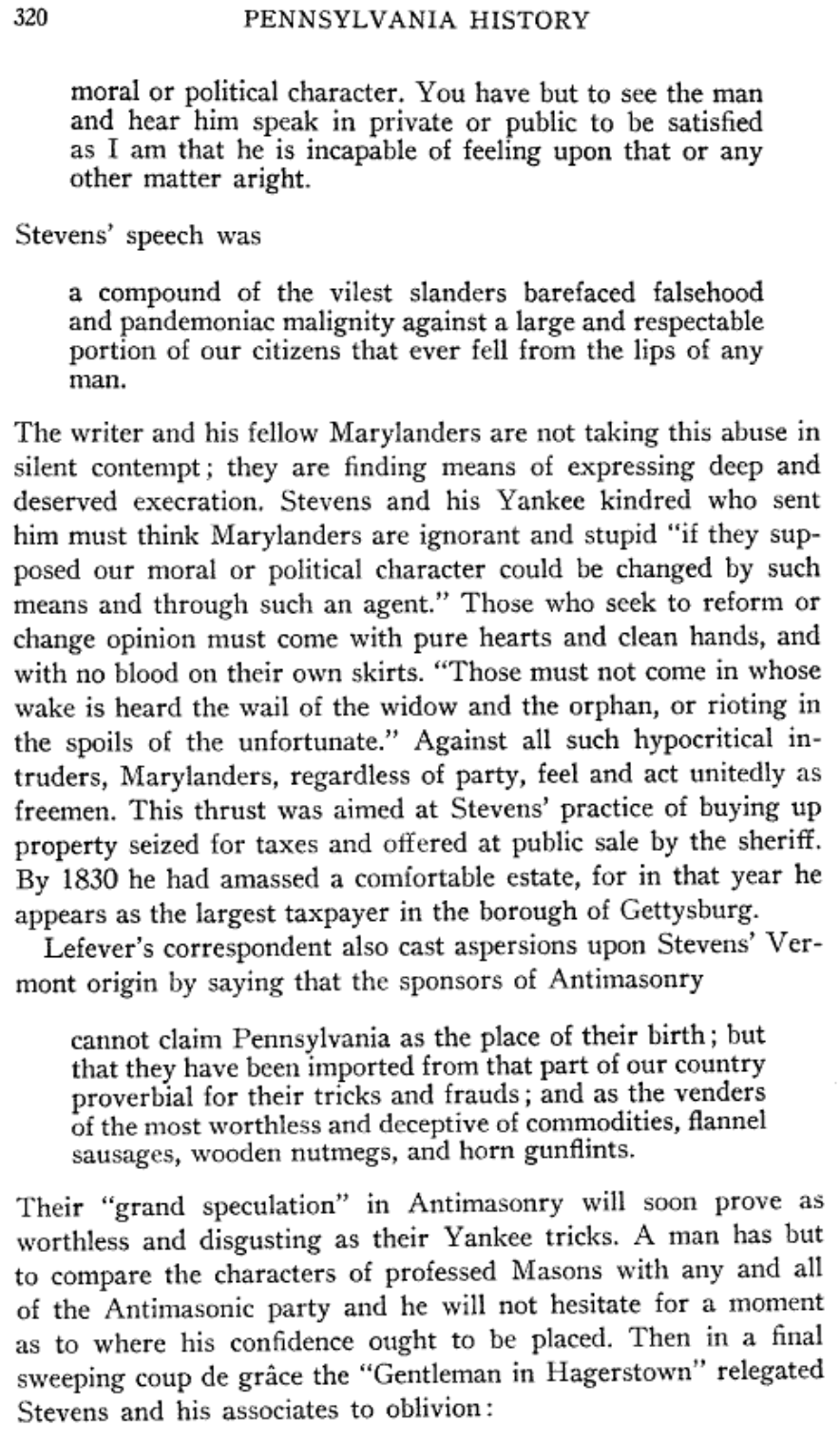
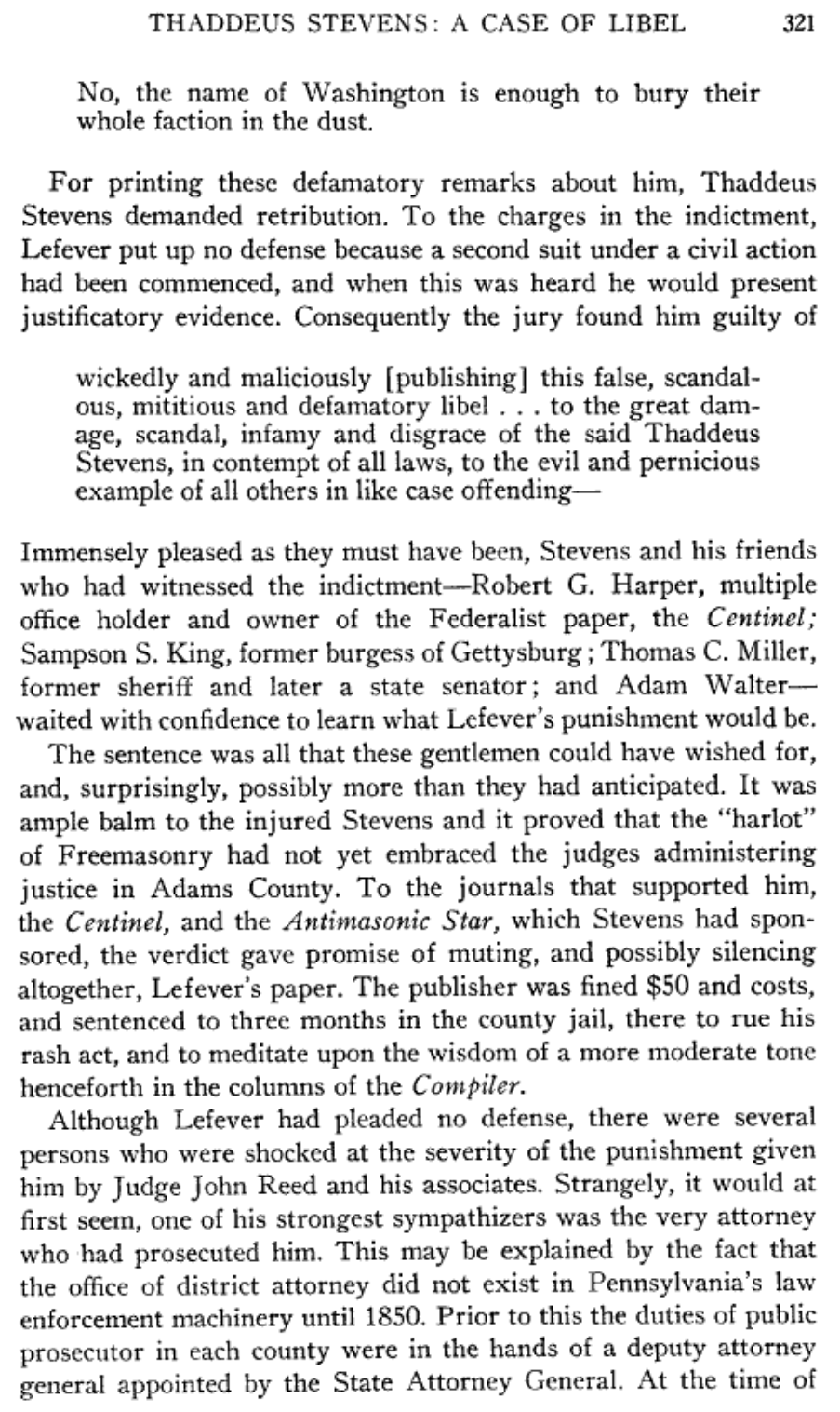
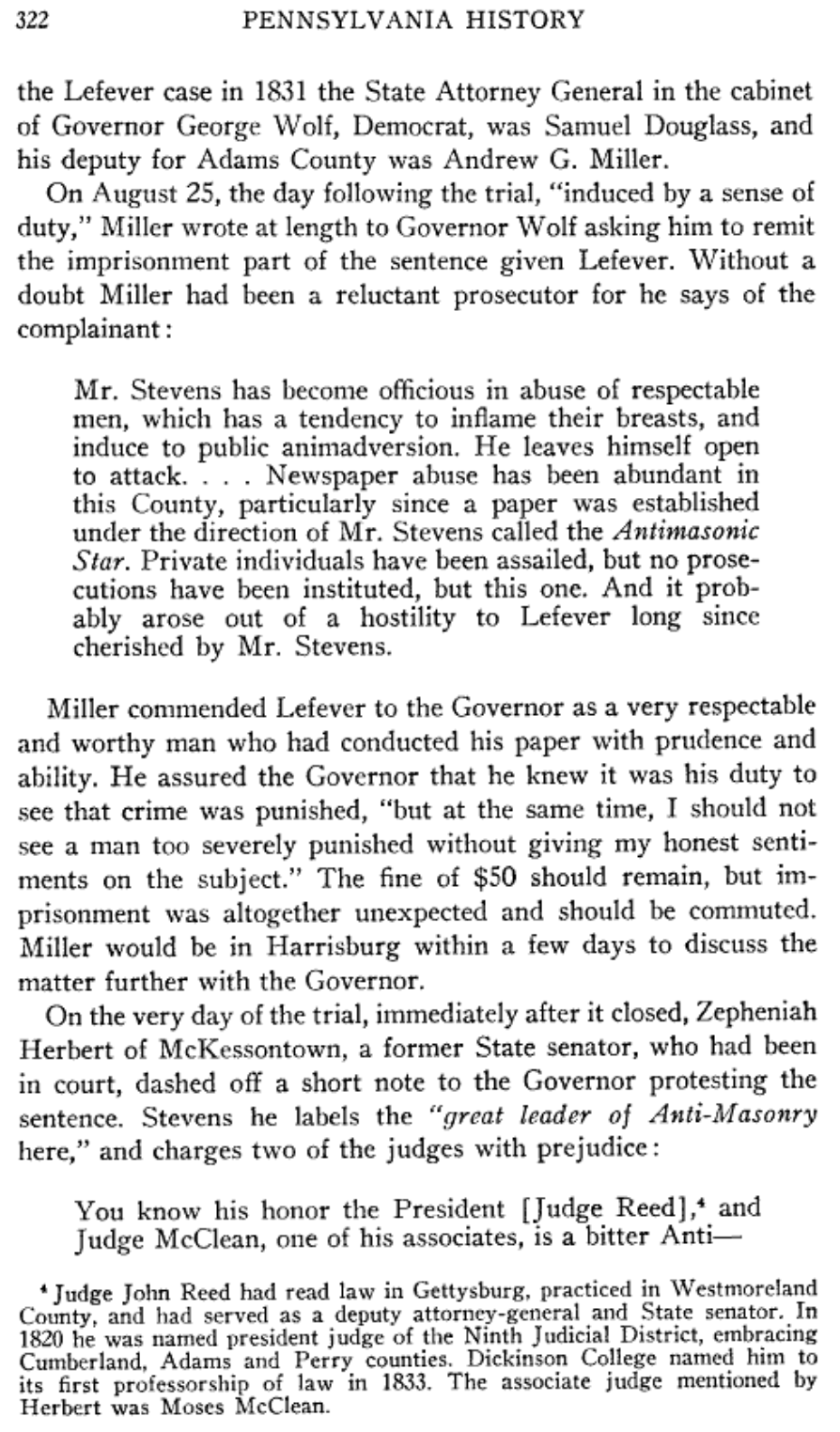
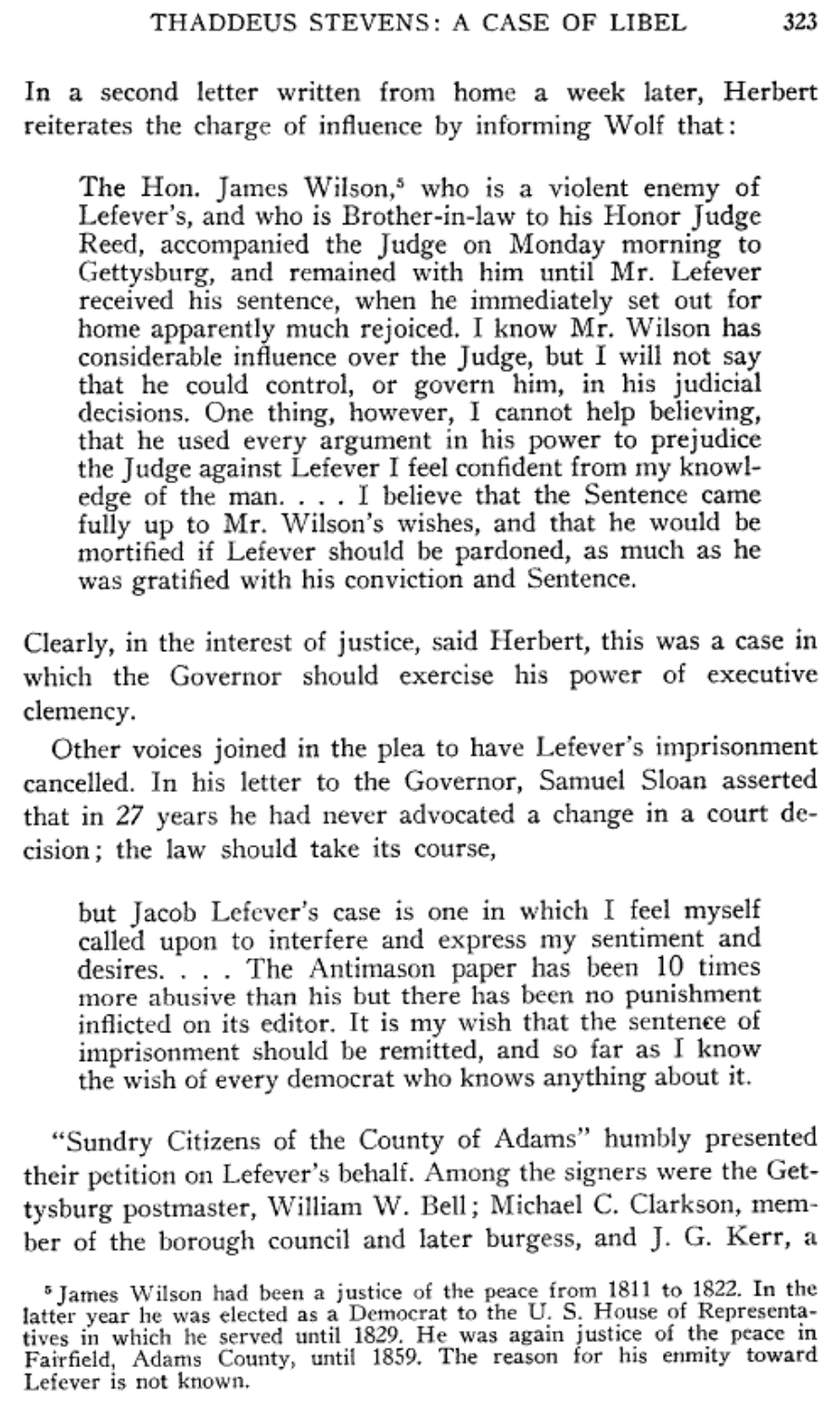
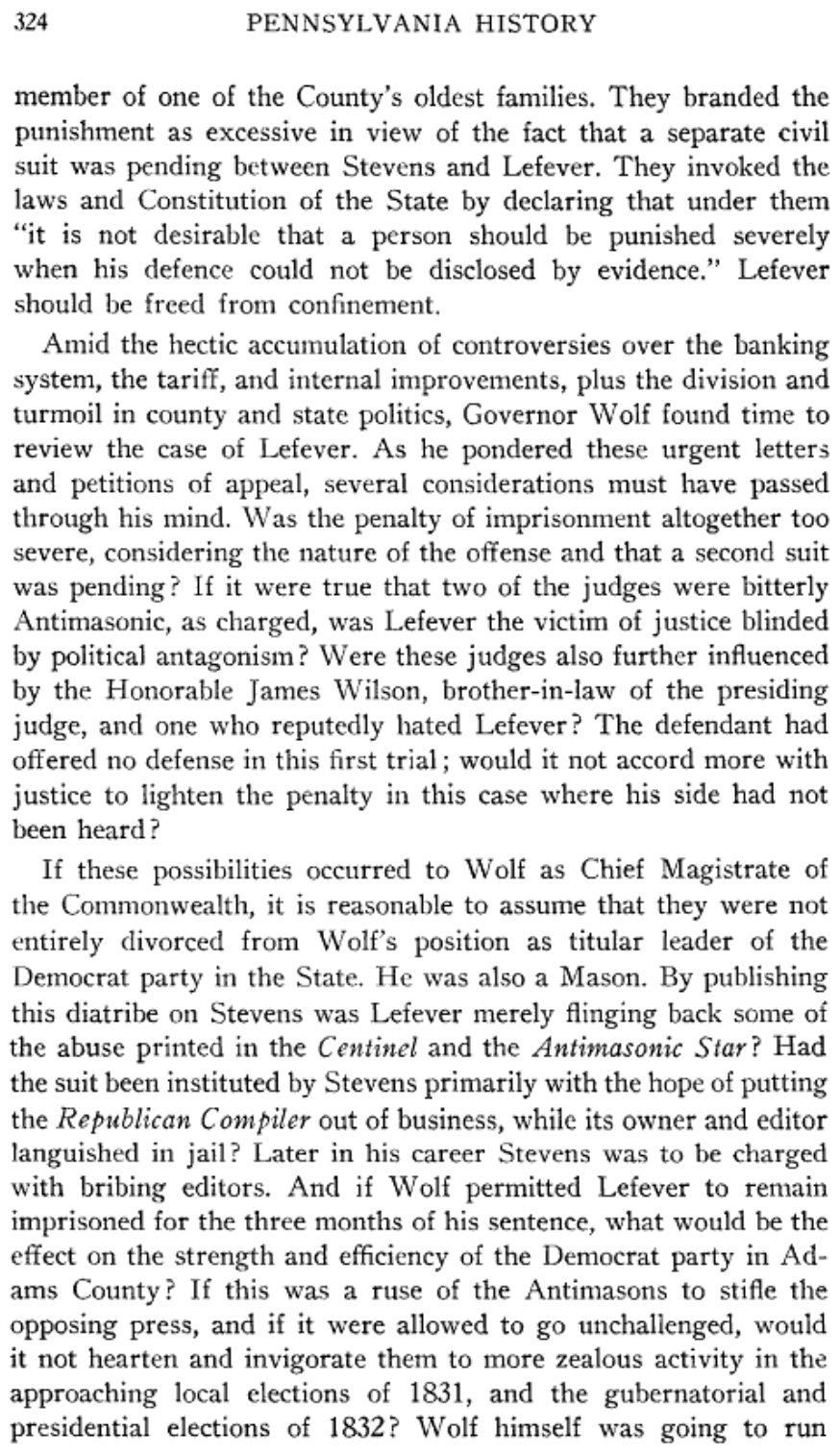
Thaddeus Stevens – A Case of Libel: Michael Clarkson on PG.323 – evidence that could show that Michael C. Clarkson was a freemason. Son Thaddeus Stevens Clarkson was.

 My Family tree to Saint Arnulf of Metz (582 - 640)