
a daughter of Sir Henry Holcroft, married David Clarkson.
Rev. David Clarkson:
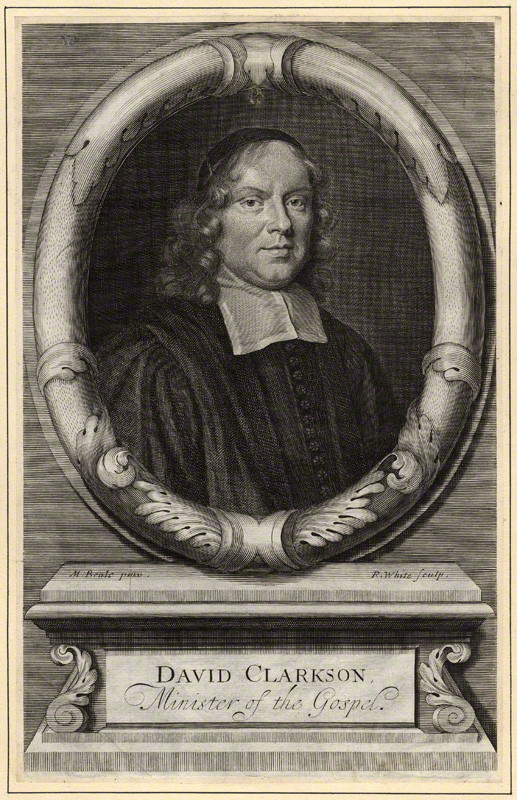
David Clarkson (1622 – 14 June 1686) was an English ejected minister.
Life:
The son of Robert Clarkson, he was born at Bradford, Yorkshire, where he was baptised on 3 March 1622. He was educated at Clare Hall, Cambridge, and by virtue of a warrant from the Earl of Manchester was admitted fellow on 5 May 1645, being then B.A. Clarkson had pupils until 26 March 1650, among them John Tillotson, who succeeded him in his fellowship about 27 November 1651.[1]
Clarkson obtained the perpetual curacy of Mortlake, Surrey, and held it till his ejection by the Uniformity Act 1662. After two decades of covert movement he became, in July 1682, colleague to John Owen as pastor of an independent church in London, and on Owen’s death in the following year he succeeded him as sole pastor. He died rather suddenly on 14 June 1686, and his funeral sermon was preached by William Bates.[1]
Works:
Clarkson published:[1]
- The Practical Divinity of the Papists proved destructive to Christianity, 1672.
- Animadversions upon the Speeches of the Five Jesuits, 1679.
- No Evidence for Diocesan Churches or any Bishops without the Choice or Consent of the People in the Primitive Times, 1681. In reply to Edward Stillingfleet.
- Diocesan Churches not yet discovered in the Primitive Times, 1682, in support of the previous work.
Posthumous were:[1]
- A Discourse of the Saving Grace of God, 1688 (preface by John Howe).
- Primitive Episcopacy, 1688; reissued 1689 (answered by Henry Maurice, in Defence of Diocesan Episcopacy,’ 1691).
- A Discourse concerning Liturgies, 1689 (French translation, Rotterdam, 1716).
- Sermons and Discourses on several Divine Subjects, 1696. This is one of the folio volumes sometimes found in old dissenting chapels, originally attached by a chain to a reading-desk (e.g. at Lydgate, Hinckley, Coventry).
- Funeral Sermon for John Owen, D.D., 1720, and in Owen’s Collection of Sermons, 1721.
Clarkson also contributed sermons to Samuel Annesley‘s Morning Exercise at Cripplegate, 1661, and to Nathaniel Vincent‘s Morning Exercise against Popery, 1675. His Select Works were edited for the Wycliffe Society by Basil Henry Cooper and John Blackburn, 1846.[1]
Family:
Clarkson married a daughter of Sir Henry Holcroft. Thomas Ridgley‘s funeral sermon for his daughter Gertrude was printed in 1701.[1]
Clarkson’s brother William held the sequestered rectory of Adel, Yorkshire, and died not long before the Restoration. His sister was married to Sharp, uncle of John Sharp, and father of Thomas Sharp, the ejected minister.[1]
Notes:
Stephen, Leslie, ed. (1887). “Clarkson, David” . Dictionary of National Biography. 10. London: Smith, Elder & Co.
External links:
This article incorporates text from a publication now in the public domain: Stephen, Leslie, ed. (1887). “Clarkson, David“. Dictionary of National Biography. 10. London: Smith, Elder & Co.
https://archive.org/details/memoirsofmatthew00hall
Advertisement
Rev David Clarkson
| BIRTH | Feb 1622England |
|---|---|
| DEATH | 14 Jun 1686 (aged 64)England |
| BURIAL | Bunhill Fields Burial GroundLondon Borough of Islington, Greater London, England |
| MEMORIAL ID | 109060918 · View Source |
SHARE SAVE TOSUGGEST EDITS
Son of Robert Clarkson of Bradford, Yorkshire and Agnes Lilly. Baptized at Bradford, Yorkshire 03 March 1622.
Husband of Elizabeth Holcroft, daughter of Sir Henry Holcroft of Long Acre and Lettice Aungier, daughter of Francis. Elizabeth was born in 1624 and died about 1662.
Secondly, second husband of Elizabeth Kenrick, daughter of Matthew Kenrick and Rebecca Percival. They married 15 Feb 1664 at St Lawrence, Jewry, London and had three sons and fur daughters; David, Matthew, Robert, Rebecca, Mary, Gertrude and Katherine.
David graduated from Cambridge University in 1644, and published many religious works. Richard Baxter commended David Clarkson for “solid judgment, healing moderate principles, acquaintance with the Fathers, great ministerial abilities, and a godly upright life” (Reliquiae Baxterianae, 1696, 3:97). Born at Bradford, in Yorkshire, Clarkson was educated at Trinity College, Cambridge (1641-45), and became a fellow of Clare Hall, Cambridge, in 1645. One of his pupils was John Tillotson, later the archbishop of Canterbury.
Clarkson served as rector of Crayford, Kent from 1650 to 1655, and of Mortlake, Surrey, from 1656 to 1661. For about a year, he served as assistant to Samuel Clark at St. Benet Fink, London, until he was ejected for Nonconformity in 1662. For the next decade, he ministered quietly wherever he could and continued studying and writing. Finally, in 1672, after the Declaration of Indulgence, he became pastor of a combined Presbyterian and Independent congregation at Mortlake. In 1682, he became co-pastor with John Owen in Leadenhall Street, London. Upon Owen’s death the following year, Clarkson became sole pastor. He died June 14, 1686. His funeral sermon was preached by William Bates.
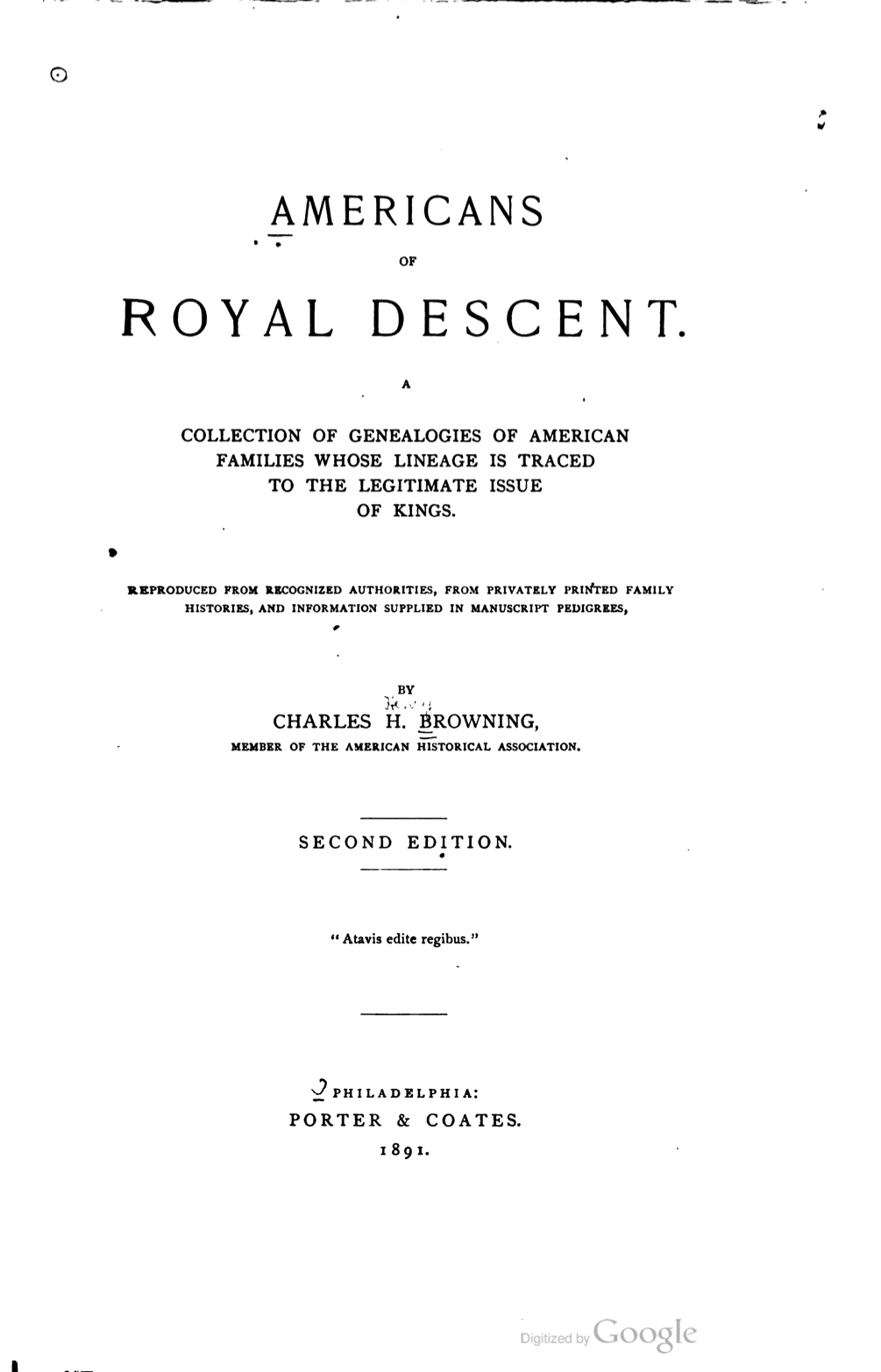
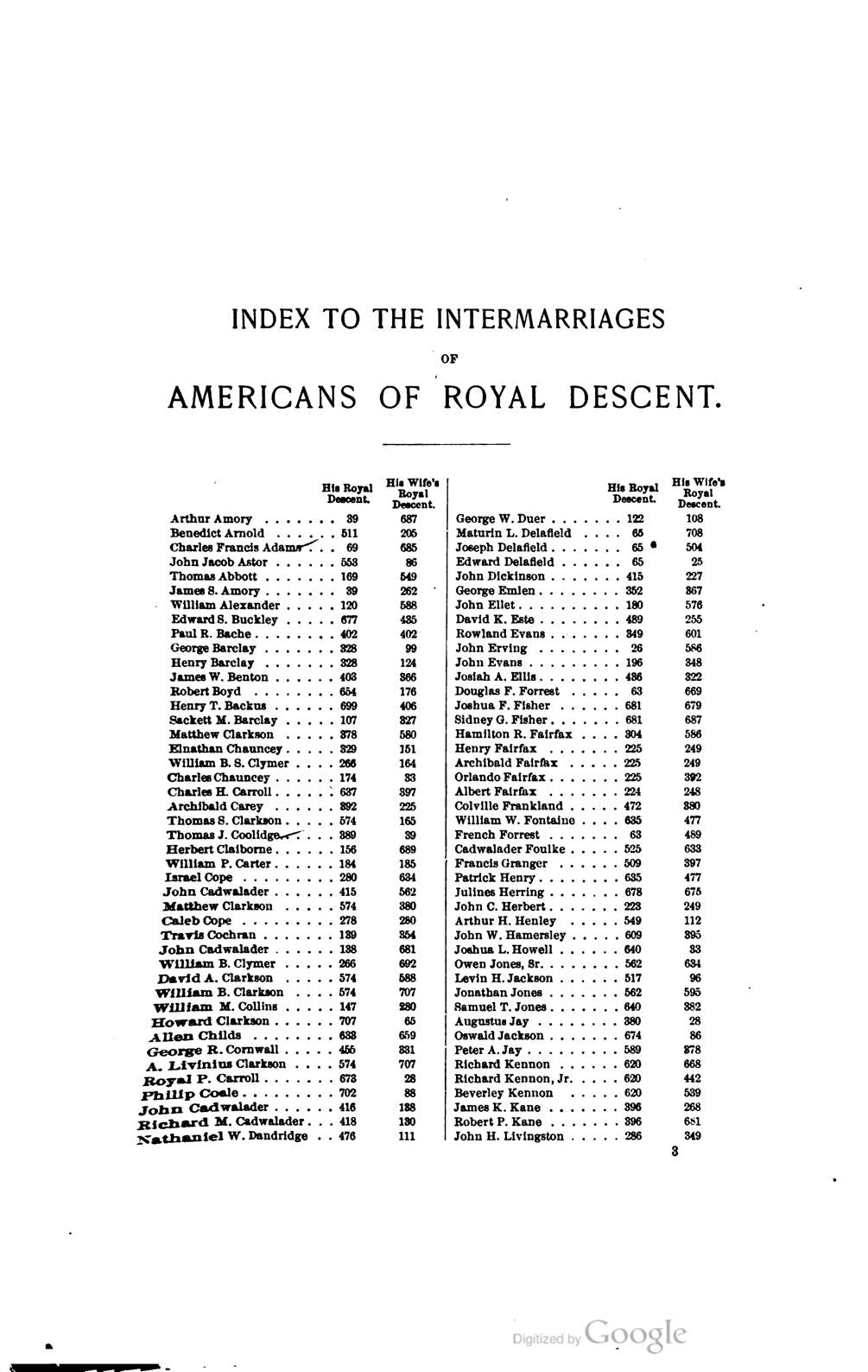
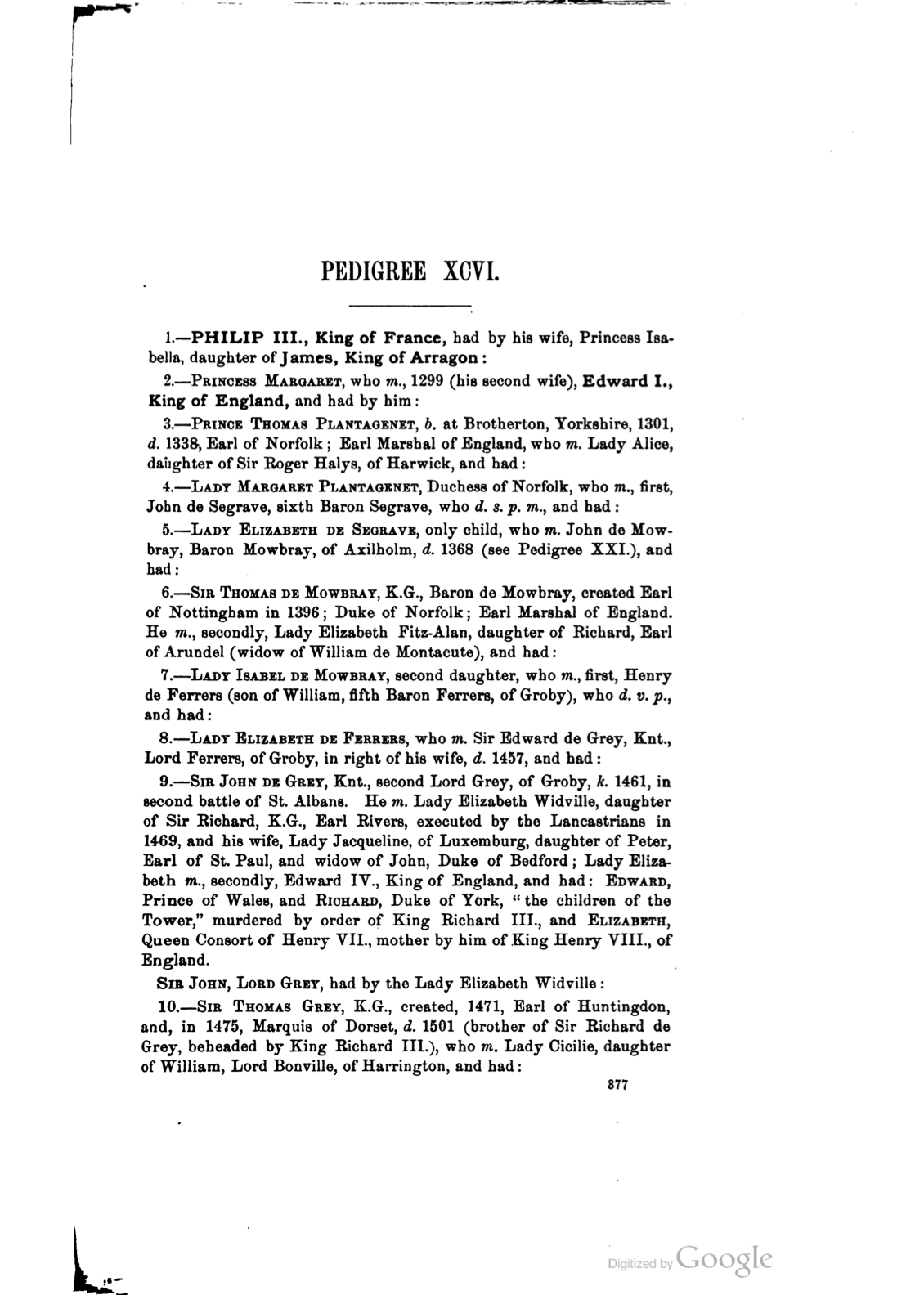
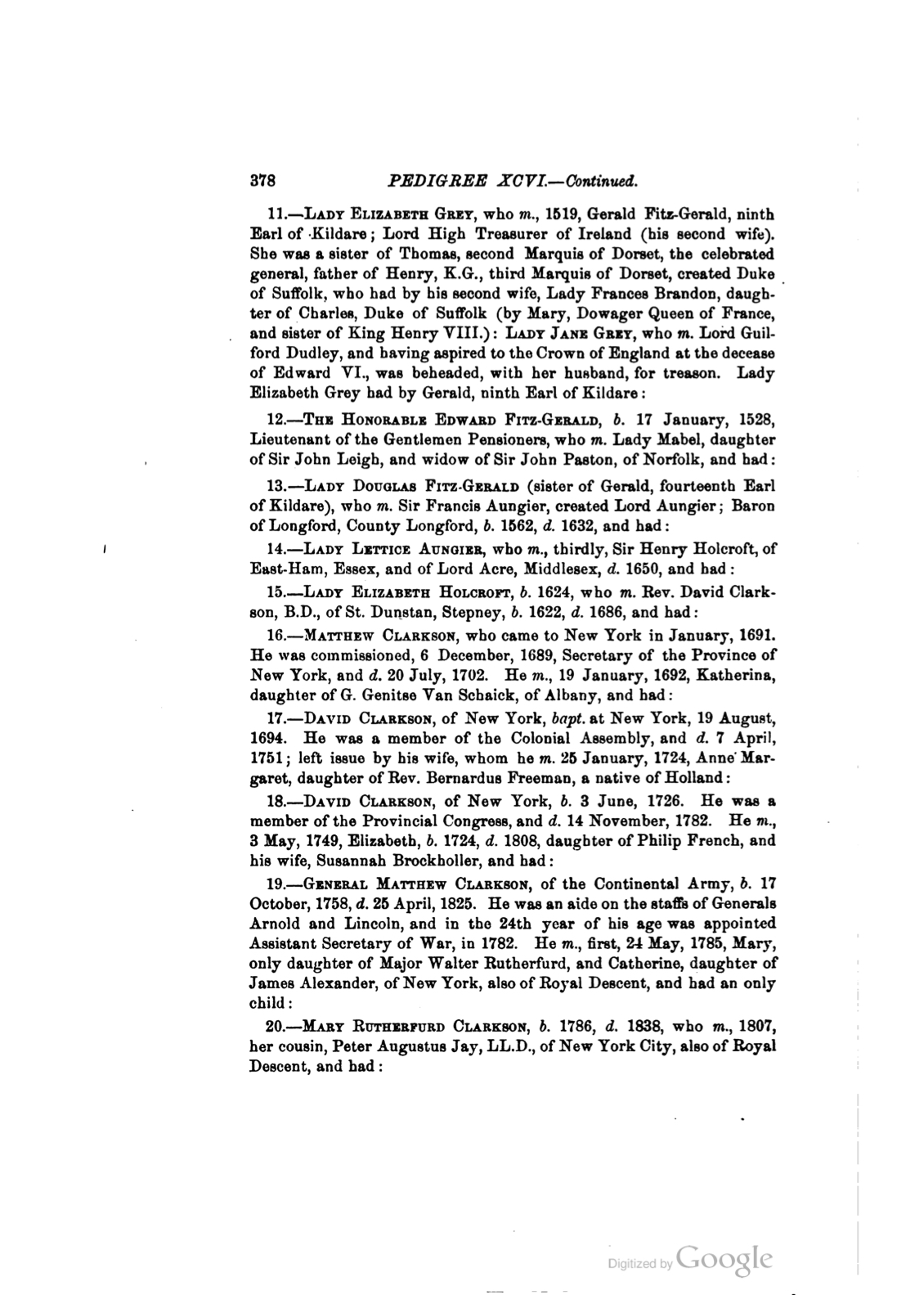
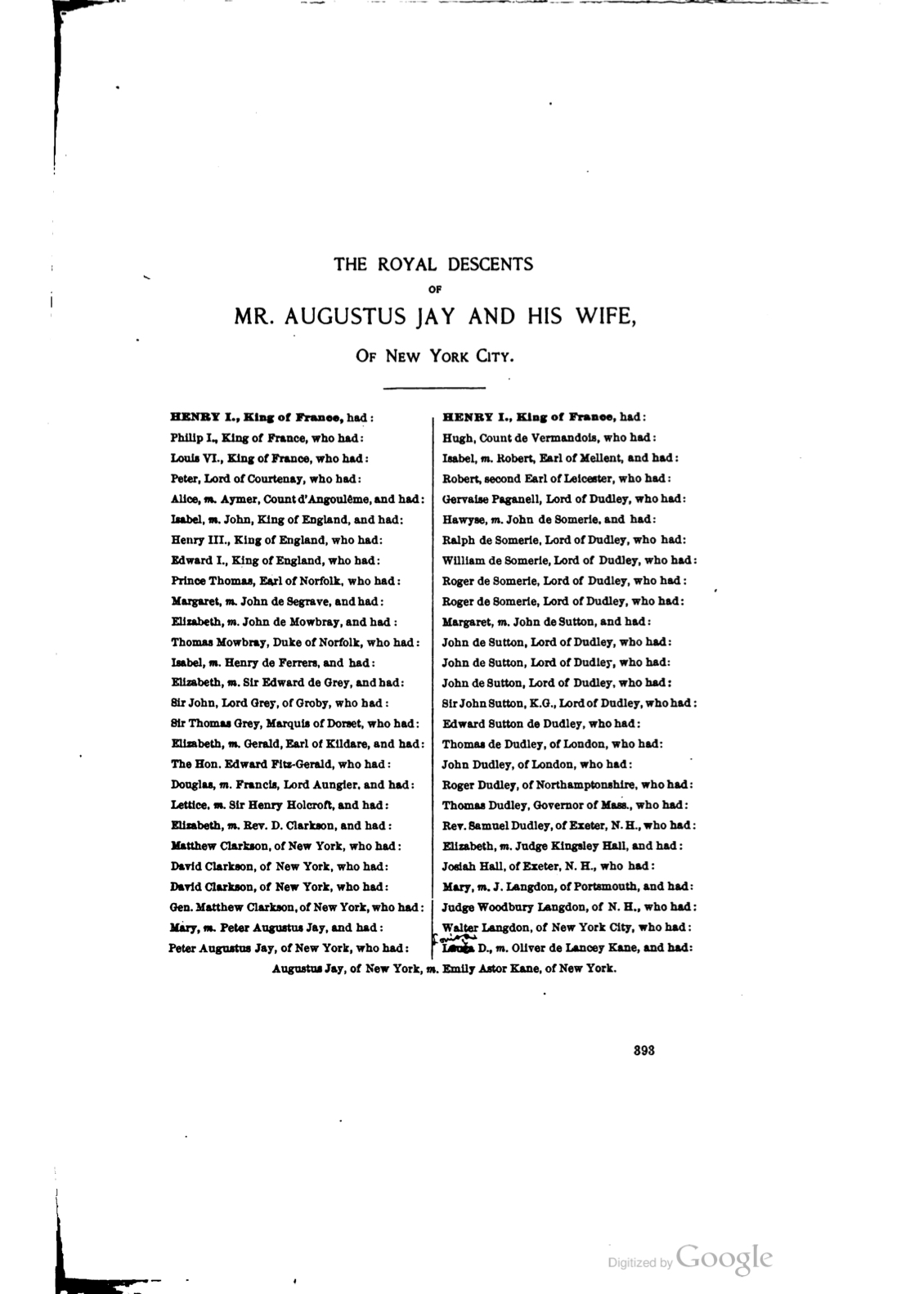
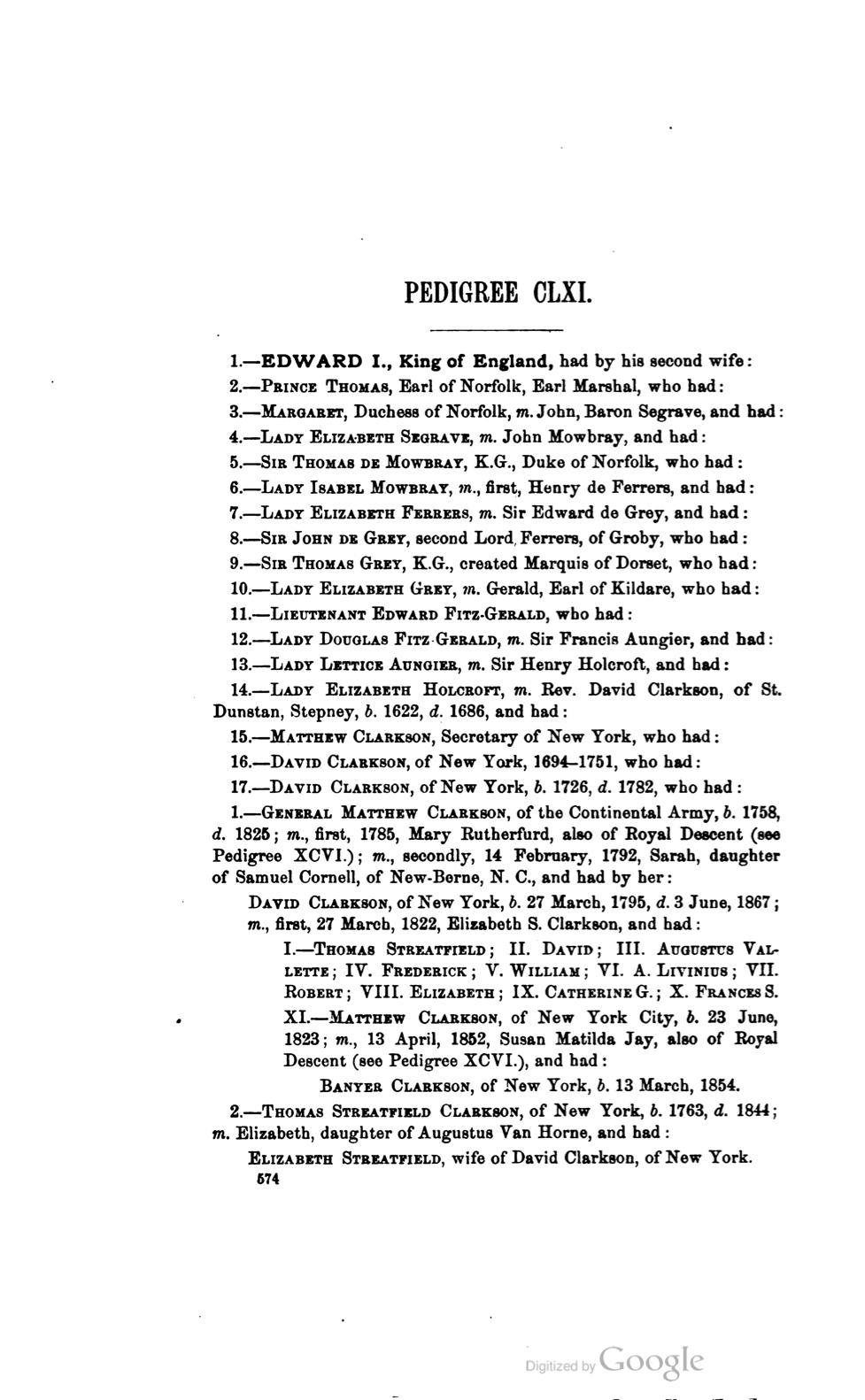
King Robert I of France married Beatrice of Vermandois: Beatrice is another connection to Charlemagne through King Bernard of Italy… Mentioned below.
Beatrice of Vermandois (c. 880 – after 26 March 931) was a Carolingian aristocrat, queen of Western Francia by marriage to Robert I, and mother of Hugh the Great.
Life:
Beatrice, born c. 880 was the daughter of Herbert I, Count of Vermandois.[1] She was also the sister of Herbert II, Count of Vermandois, and was a descendant in the male line of Charlemagne through King Bernard of Italy.[a][3] Through her marriage to Robert I, she was an ancestress of the Capetian dynasty. On 15 June 923 her husband Robert was killed at the Battle of Soissons shortly after which their son Hugh was offered the crown but refused.[4] Beatrice died after March 931.[1]
Marriage and issue:
She married c. 890, becoming the second wife of Robert, Margrave of Neustria, who became the King of France in 922.[5] They were the parents of:
- Hugh the Great, duke of the Franks, who was the father of Hugh Capet.[5][6]
Notes:
- ^ According to the Abbreviatio by Frater Andreas, Beatrice was a great-granddaughter of Bernard, king of Italy. Alberic of Trois-Fontaines, in the 1250s, knew of this descent: MGH SS 23.757.[2]
References:
- ^ Jump up to:a b Detlev Schwennicke, Europäische Stammtafeln: Stammtafeln zur Geschichte der Europäischen Staaten, Neue Folge, Band III, Teilband 1 (Marburg, Germany: J. A. Stargardt, 1984), Tafel 49
- ^ Andrew W. Lewis, ‘Dynastic Structures and Capetian Throne-Right: the Views of Giles of Paris’, Traditio, Vol. 33 (1977), pp. 246-47 n.94
- ^ The Annals of Flodoard of Reims, 919-966, ed. & trans. Steven Fanning; Bernard S. Bachrach (Toronto: University of Toronto Press, 2011), pp. xvi, 91
- ^ Pierre Riché, The Carolingians; A Family who Forged Europe, trans. Michael Idomir Allen (Philadelphia: University of Pennsylvania Press, 1993), p. 250
- ^ Jump up to:a b Detlev Schwennicke, Europäische Stammtafeln: Stammtafeln zur Geschichte der Europäischen Staaten, Neue Folge, Band II (Marburg, Germany: J. A. Stargardt, 1984), Tafel 10
- ^ Constance Brittain Bouchard, Those of My Blood: Creating Noble Families in Medieval Francia (Philadelphia: University of Pennsylvania Press, 2001), p. 112
Additional references:
- Patrick Van Kerrebrouck, Nouvelle histoire généalogique de l’auguste maison de France, vol. 1 : La Préhistoire des Capétiens (par Christian Settipani), 1993
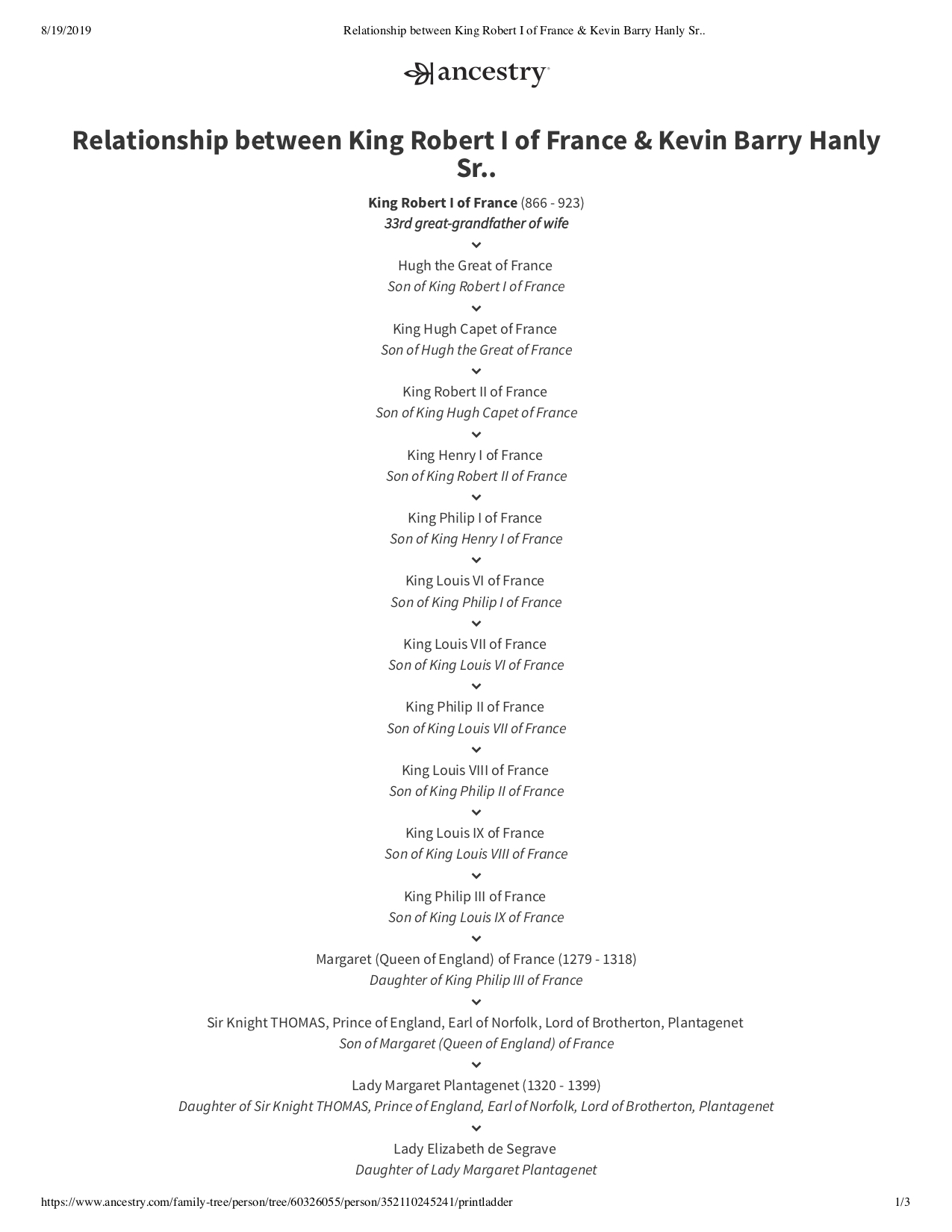
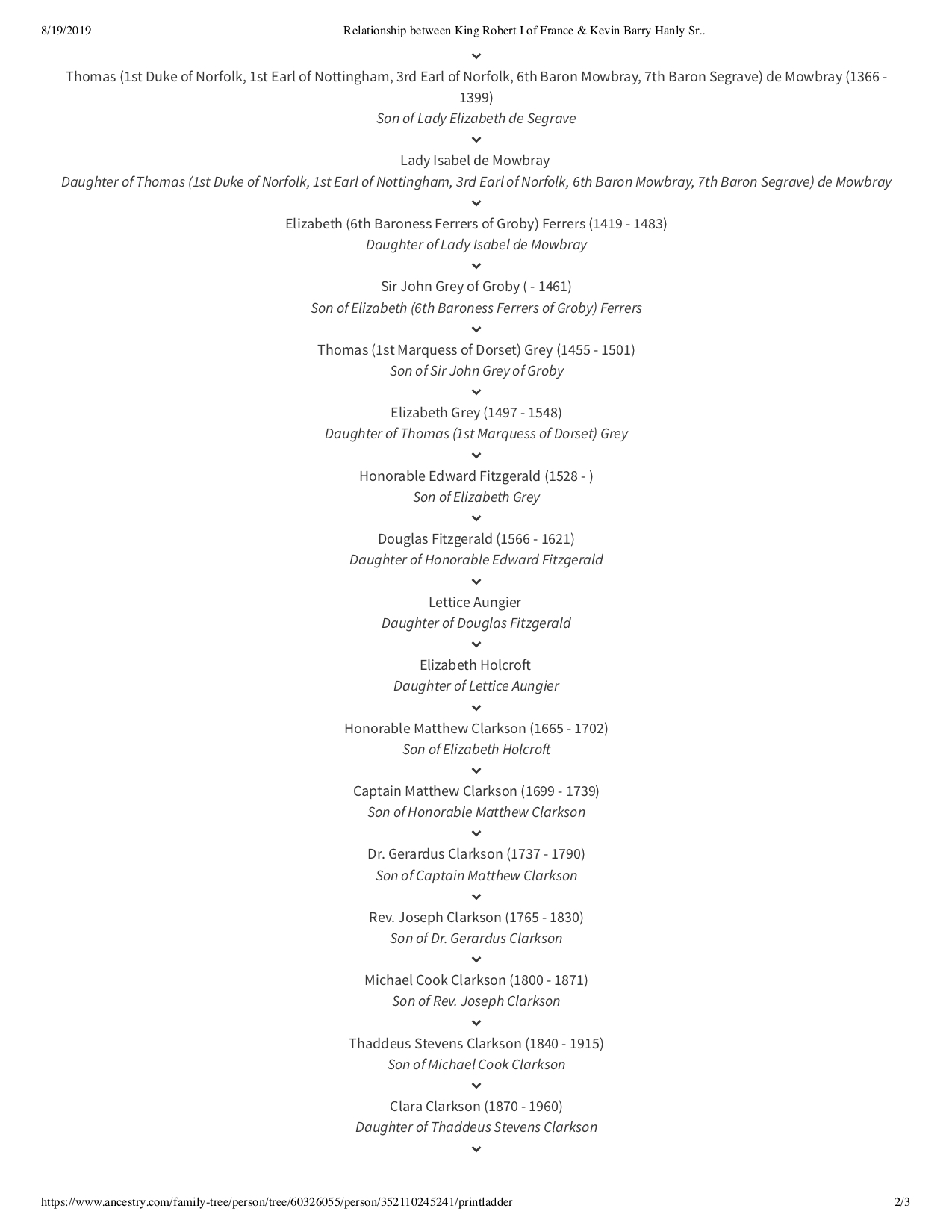

This is the line I follow on the blog links through Cecily Bonville who married Thomas Grey:
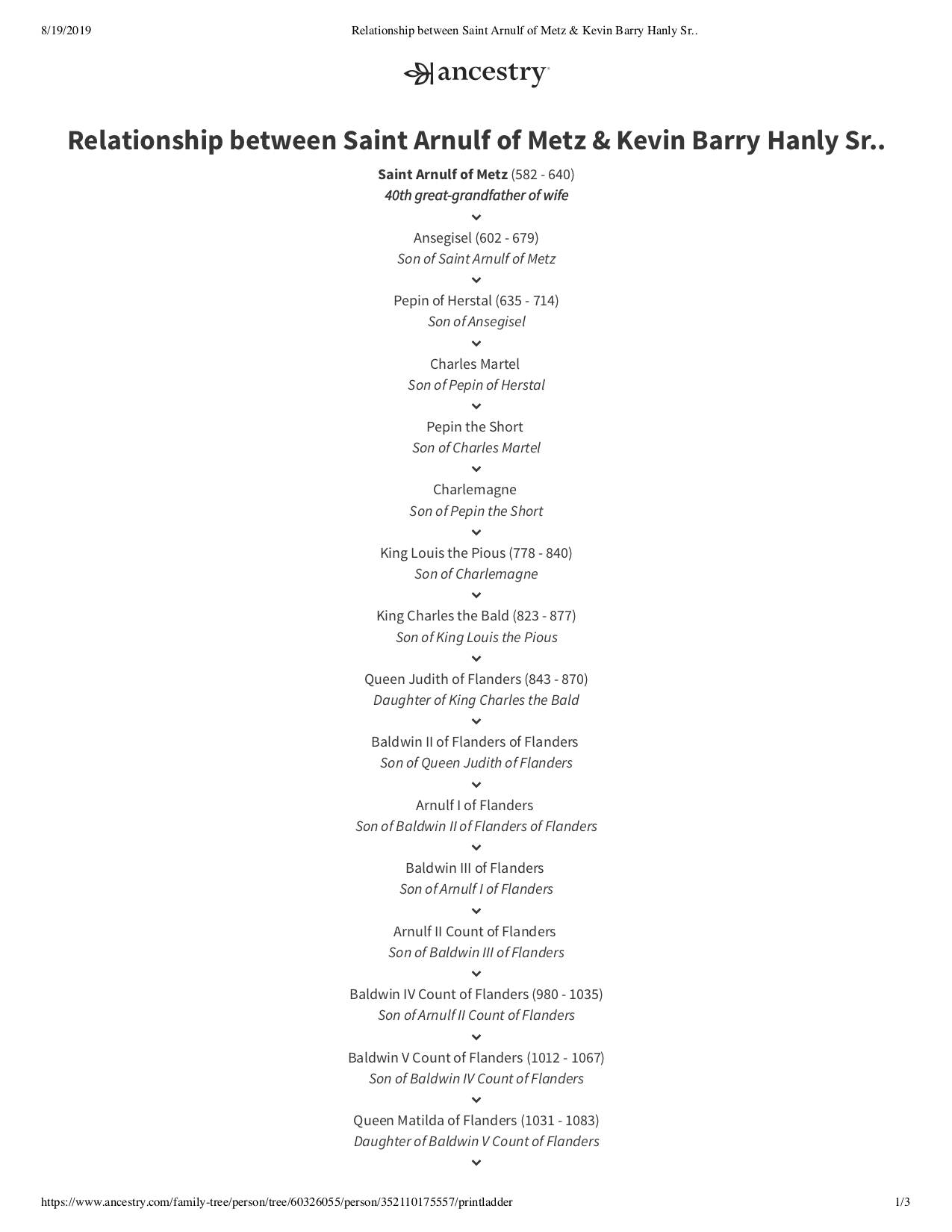
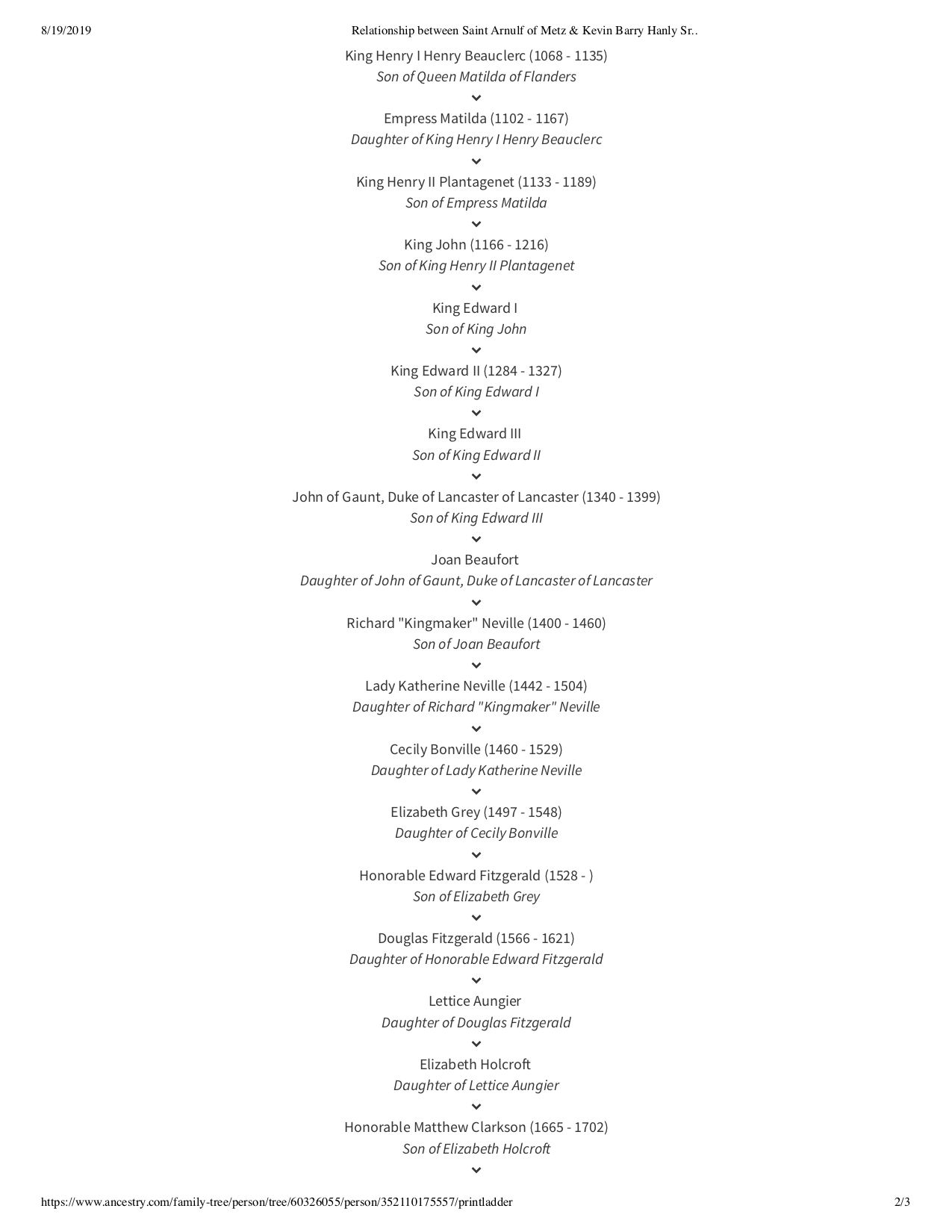
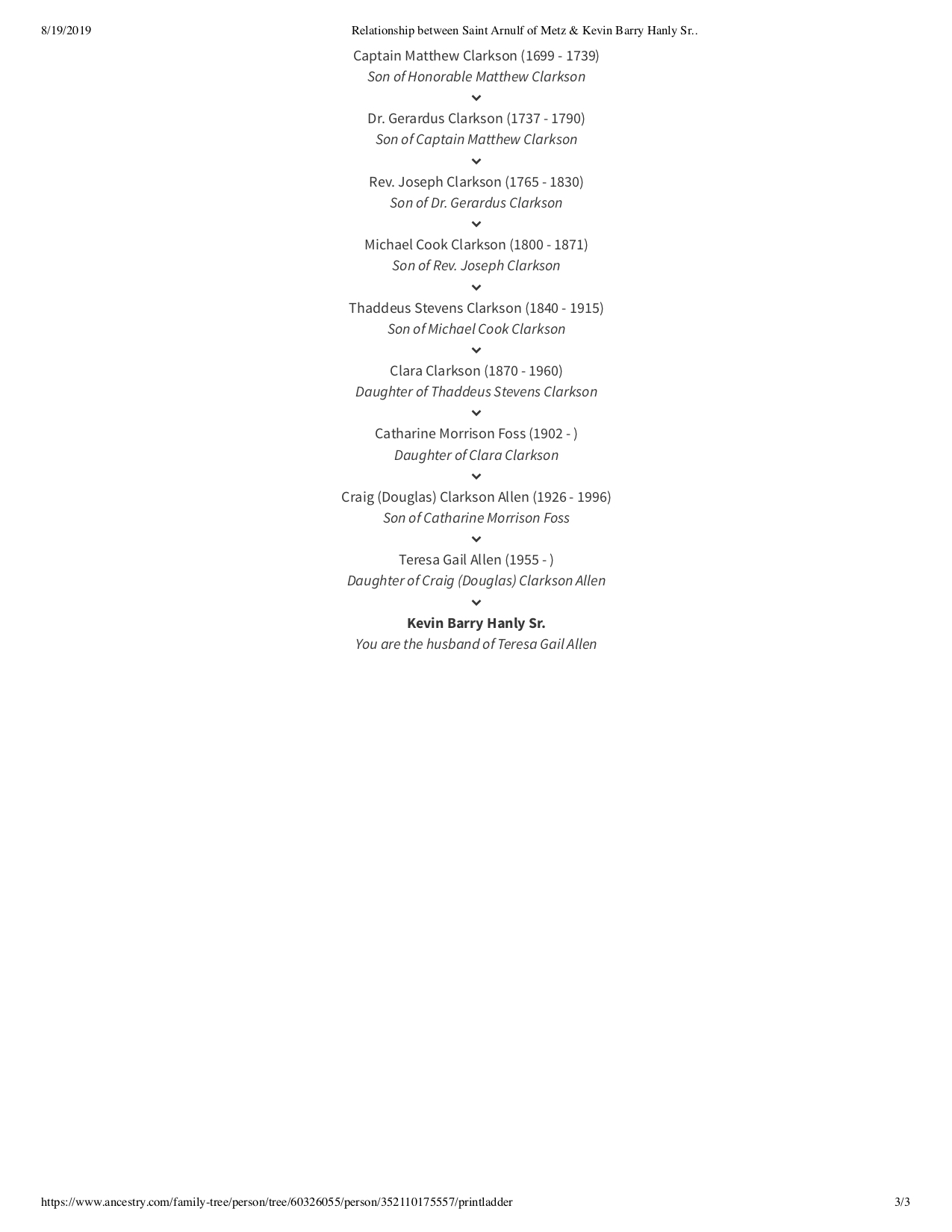
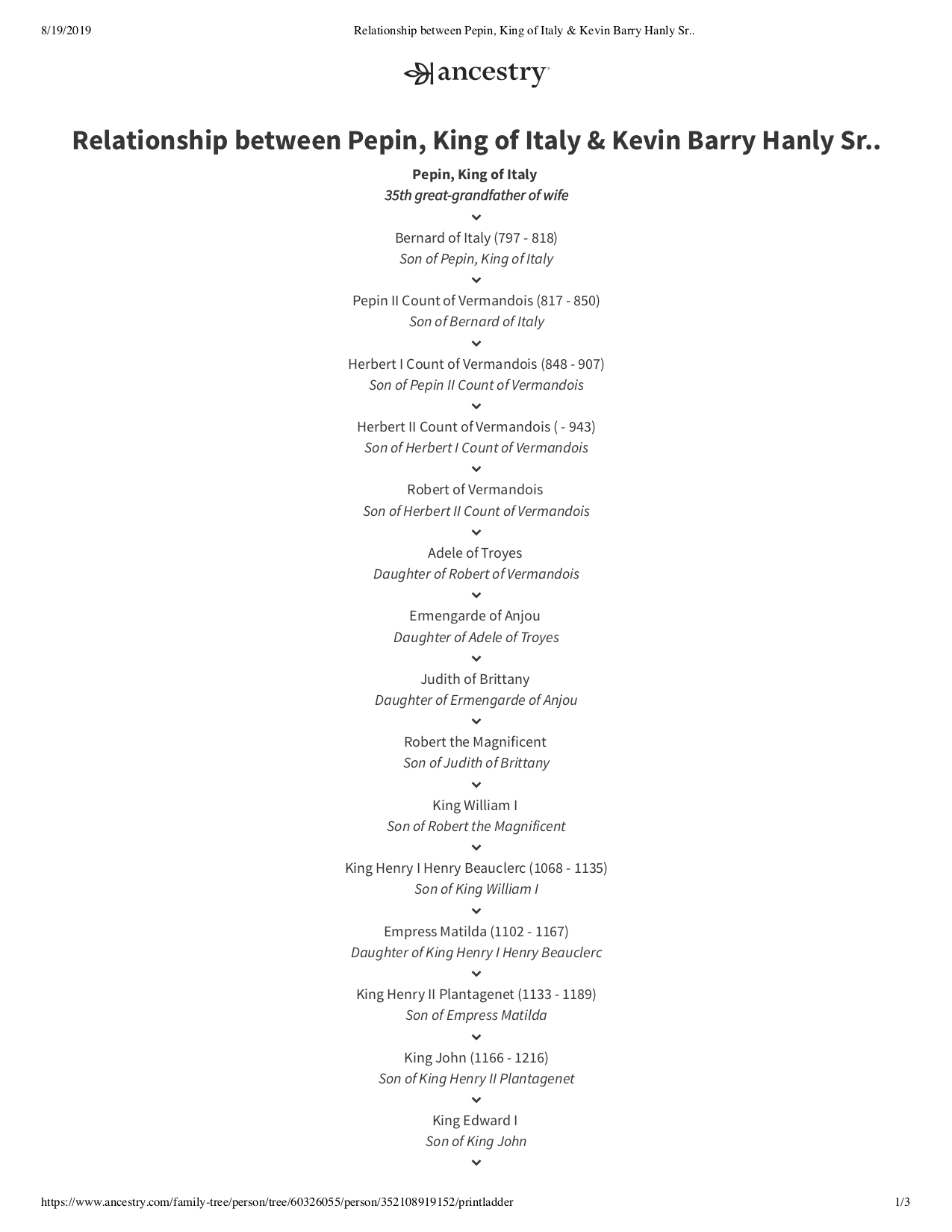
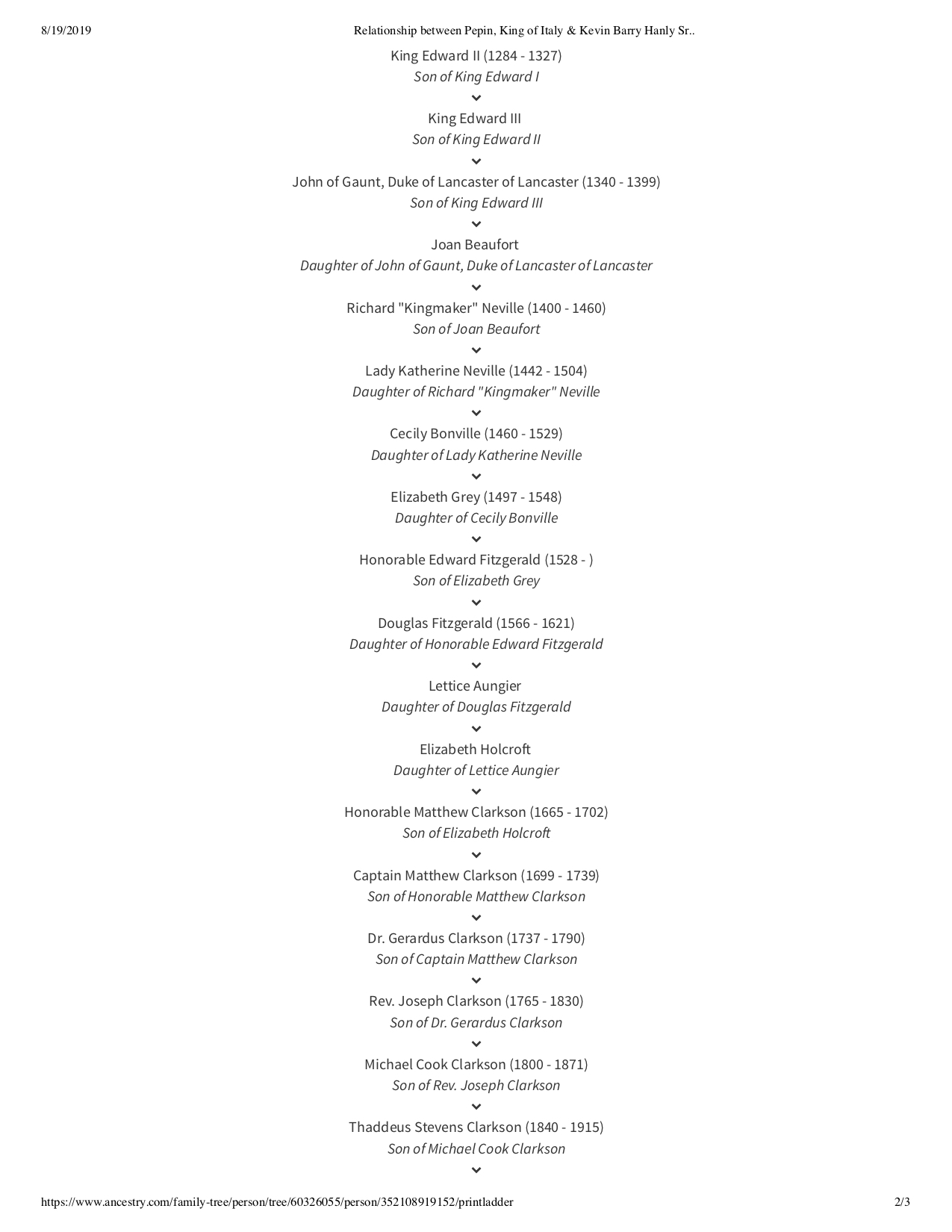
So both of these lines come from two of the three sons Charlemagne and his wife Hildegarde had; King Louis the Pious and Pepin, King of Italy. Their third child died of a stroke and had no issue. The only other heir Charlemagne had was through Himiltrude, Pepin the Hunchback, who was sentenced to death by Charlemagne in 811. So the only two children who are heirs we have a line from. Kind of cool.
I found another line to us that connects to Charlemagne through Pepin, King of Italy.

https://www.historyofparliamentonline.org/volume/1604-1629/member/holcroft-sir-henry-1586-1650
Family and Education
b. c.1586, 2nd s. of Thomas Holcroft† (d.1591) of Battersea, Surr. and Joan, da. and h. of Henry Roydon of Battersea, Surr.1 educ. St. John’s, Camb. c.1601; L. Inn 1604.2 m. by 1620, Lettice, da. of Francis Aungier†, 1st Bar. Aungier of Longford [I], wid. of Edward Cherry of Dublin and Sir William Danvers of Tockenham, Wilts., 5s. 4da. (1 d.v.p.).3 suc. bro. 1601;4 kntd. 1 May 1622.5 d. by June 1650.6
Offices Held
Groom of the privy chamber to Queen Anne 1603-16;7 sec. to Sir Oliver St. John*, ld. dep. [I] 1616-21;8 remembrancer for Irish affairs 1622-9;9 commr. review [I] 1625;10member, council of war 1643;11 commr. sale of Crown lands 1649;12 trustee for maintenance of ministers 1649-d.;13 member, High Ct. of Justice 1650.14
J.p. Essex 1639-d.;15 commr. assessment, Essex 1640, 1643-d., Westminster 1649-d.,16 sequestration, Essex 1643, levying money 1643, defence of Eastern Assoc. 1643, reqisitioning timber in Waltham Forest, Essex 1644;17 dep. lt. Essex by 1644;18 commr. New Model Ordinance, Essex 1645, militia 1648;19 elder, Becontree classis, Essex 1648.20
Biography
Holcroft came from an old Lancashire family that was outstripped by its junior Cheshire branch in Tudor times.21 His father, a younger son, entered the service of the future Lord Burghley in 1550, and sat for Midhurst in 1572.22 Holcroft’s elder brother, a soldier in the Low Countries, was killed at Ostend.23 Holcroft himself had greater ambitions than soldiering, and in 1603 obtained a minor post in the household of Anne of Denmark, which he occupied until 1616, when his stepfather Sir Oliver St. John* was appointed lord deputy on Buckingham’s intercession and took him to Ireland.24 He was immediately granted the reversion to the office of chancellor of the Irish Exchequer, but surrendered the patent shortly afterwards.25 In May 1620 he agreed to purchase the Irish remembrancership from Sir Francis Blundell*, a post which carried an annual salary of 200 marks but which also entitled its holder to various unspecified ‘profits’. He made an initial down-payment of £300, and promised to pay two further instalments of £600 each by 1622, when he was to assume office.26 Holcroft returned to England with St. John in 1621 and gave evidence to the Commons committee on Ireland.27 It was probably at around this time that he acquired a house in East Ham, Essex. In the following year he took up the Irish remembrancership despite having paid only one instalment of £600, and was knighted. The office brought him into friction with Sir George Calvert*, who as secretary of state perhaps resented the remembrancer’s encroachment upon his own jurisdiction; nevertheless Holcroft wielded considerable influence, as he informed St. John’s successor, Viscount Falkland (Sir Henry Carey I*):
I find … little (for matter of suit), if anything, done but by my hand. The king hath had occasion to declare in the presence of many that it is his pleasure I shall enjoy the benefit of my patent, which is to dispatch suits that can be dispatched … My lord admiral [Buckingham] is pledged to support and countenance me as his poor creature, and of that I think your lordship has seen some arguments, and that he trusts me. I have other good friends about His Majesty to assist me, who commend my service on occasion. When your lordship pleases to make trial of me, you shall find me honest, and no braggart.28
It is not clear why Holcroft’s presence in the last Jacobean Parliament was considered so indispensable that Court influence was exerted on his behalf in two constituencies. As a candidate for Pontefract on the nomination of Prince Charles’s Council he may have served as a stalking-horse for the less acceptable Robert Mynne, and even posed a threat to the local magnate Sir Thomas Wentworth*.29 At Stockbridge, where he also stood, he may have been nominated by his Essex neighbour William Fanshawe*, auditor of the duchy of Lancaster, although he perhaps also enjoyed the support of the Sandys interest through his cousin William Holcroft, a grandson of the second lord, who lived at Basingstoke but probably moved to Wiltshire sometime before the 1625 election.30Other than opting for the Hampshire borough, Holcroft left no trace on the parliamentary records.31 A petition from the electors of Stockbridge objecting to his election was dismissed by the privileges committee on 9 April.32
In the new reign Holcroft was forced to obtain a fresh patent for his Irish office, which he held only during pleasure.33 He does not appear to have stood either in 1625 or 1626, and in the following year Blundell’s widow began a Chancery suit to obtain the second instalment of £600.34 It was probably to gain some respite from these proceedings that Holcroft sought a seat in the Parliament in 1628. He found an opening at Newton in Lancashire through Sir Richard Fleetwood, the owner of the borough, who had recently acquired property in Ireland, and through the latter’s cousin Sir Miles Fleetwood*, a fellow Buckingham client. Holcroft was not appointed to any committees in the third Caroline Parliament, but occasionally joined in debate. In the argument over the precedence of the two universities on 31 May he urged the House to give both sides a hearing.35 On 6 June he refuted the allegation of his Newton colleague Sir Francis Annesley* that Irish Catholics had been offered command of companies in return for three subsidies. He also offered to look up the terms of the proposed toleration in the Council book, adding that there was ‘a general revolt from our religion in Ireland’.36
Holcroft’s influence at Court during the later 1620s is attested by a payment to him of £60 by the great earl of Cork for furtherance of a suit.37 During the recess he was occupied with preparations for an Irish Parliament, which in the event proved abortive. He took no part in the 1629 session at Westminster, and shortly after the dissolution the secretaries of state finally brought about the abolition of the remembrancership. To compensate Holcroft, in July 1629 the Privy Council recommended him for the Irish mastership of the Rolls, in succession to Francis Aungier*, even though the reversion was already held by Emmanuel Giffard*.38 However, lord deputy Wentworth insisted on the appointment of his henchman Christopher Wandesford*, and Holcroft held no further office under the Crown. Although his salary as Irish remembrancer was over a year in arrears, he was not in financial difficulties, for in 1630 Lady Blundell’s suit was dismissed, and his mother’s death in 1631 left him not merely in easy circumstances, but able to assist such west country magnates as Sir John Stawell* and Sir John Hele*.39
Holcroft supported Parliament in the Civil War. An active member of the Essex county committee and a Presbyterian elder, he was appointed a trustee for the maintenance of ministers by the Rump in 1649, and died in the following year.40 Shortly before his death he added a codicil to his will, which was proved on 28 June 1650.41 His three surviving daughters were assigned portions of £400 each, to be paid out of debts owing to him, but he could only afford annuities of £10 apiece for his four younger sons, one of whom, Francis, became a well-known nonconformist preacher. His will also mentions eight volumes of the works of St. John Chrysostom, and a portrait of himself, which is not known to survive. His wife outlived him and continued to reside at East Ham.42 He was succeeded by his eldest son St. John. No other member of the family sat in Parliament.
Ref Volumes: 1604-1629
Authors: Virginia C.D. Moseley / Rosemary Sgroi
Notes
- 1.Vis. Essex (Harl. Soc. xiii), 421; J.G. Taylor, Our Lady of Batersey, 46, 209.
- 2.Al. Cant.; LI Admiss.
- 3.Burke, Extinct Peerage, i. 18; Coll. Top. et Gen. iii. 158-9; F.N. Macnamara, Memorials of Danvers Fam. 541-2.
- 4.CSP Dom. 1601-3, p. 98.
- 5.J. Nichols, Progs. of Jas. I, iii. 761.
- 6.PROB 11/212/316v.
- 7.LR6/154/9, unfol.; SP14/86/180.
- 8.HMC Hastings, iv. 49-53; CSP Ire. 1615-25, p. 139.
- 9.C78/240/2; CSP Ire. 1625-32, pp. 18, 259; APC, 1621-3, p. 398; 1623-5, p. 455.
- 10.T. Rymer, Foedera, viii. pt. 1, p. 46.
- 11.CJ, iii. 191.
- 12.A. and O. ii. 170, 359.
- 13.Ibid. 143, 149.
- 14.Ibid. 365.
- 15.HMC Westmld. 507-10; C231/5, p. 356.
- 16.SR, v. 151; HMC 4th Rep. 276; A. and O. i. 91, 536, 638, 965, 1082; ii. 39.
- 17.A. and O. i. 112, 147, 229, 243, 292, 422.
- 18.CCAM, 388.
- 19.A. and O. i. 621, 1237; ii. 34.
- 20.W.A. Shaw, Hist. Eng. Church 1640-60, ii. 374.
- 21.J.P. Rylands, Holcroft Fam. Notes, 6, 30, 39, 41.
- 22.Lansd. 118, f. 35.
- 23.CSP Dom. 1601-3, p. 98.
- 24.CCSP, i. 12; R. Lockyer, Buckingham, 38-9.
- 25.R. Lascelles, Liber Munerum Publicorum Hiberniae, i. 48-9.
- 26.C78/240/2.
- 27.CJ, i. 595a.
- 28.SP14/138/79; Sloane 3827, f. 27.
- 29.R. Ruigh, Parl. of 1624, pp. 61, 104.
- 30.Vis. Hants (Harl. Soc. lxiv), 197; Wilts. IPMs ed. G.S. and A.E. Fry (Brit. Rec. Soc. xxiii), 136.
- 31.CJ, i. 716a.
- 32.Ibid. 759a.
- 33.C66/2395.
- 34.C78/240/2; C231/4, f. 200.
- 35.CD 1628, iv. 48.
- 36.Ibid. 157, 169.
- 37.Lismore Pprs. (ser. 1) ed. A.B. Grosart, ii. 270.
- 38.APC, 1628-9, pp. 107, 111, 192; CSP Ire. 1629-32, p. 471.
- 39.PROB 11/159, ff. 1, 105v; SP16/180/17; LJ, vii. 645; HMC 6th Rep. 80; B. Whitelocke, Memorials of Eng. Affairs (1682), p. 337; CSP Dom. 1653-4, p. 325.
- 40.VCH Essex, ii. 61; Eg. 2646, ff. 218, 232; Stowe 189, ff. 16, 22-31, 33-5, 37; HMC Portland i. 179, 187.
- 41.PROB 11/212, f. 316v.
- 42.VCH Essex, vi. 13.
 My Family tree to Saint Arnulf of Metz (582 - 640)